

Parents often spend thousands of dollars each year on daycare, after-school programs, and summer camps, making every available tax break worth revisiting. The child and dependent care credit can reduce your tax bill if you qualify, but many families miss out because they misunderstand the rules or overlook key details. With tax laws continuing to evolve, it’s smart to review the latest requirements before filing your return. Here are eight child and dependent care credit rules every parent should recheck to avoid costly mistakes.
1. Make Sure Your Child Still Qualifies
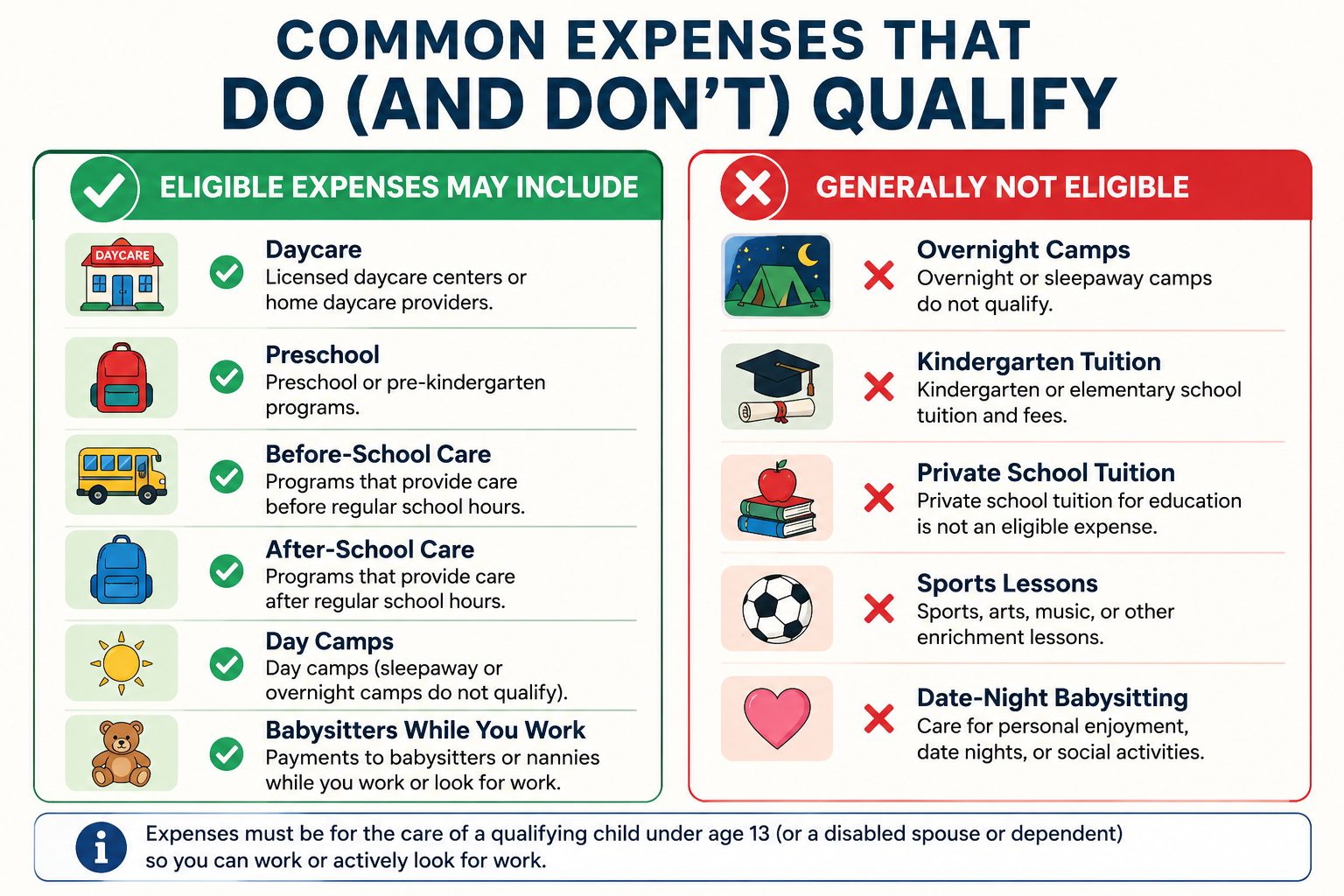
The child and dependent care credit generally applies to children under age 13 who need care while you work or actively look for work. It may also apply to a disabled spouse or dependent who cannot care for themselves. For example, if your child turned 13 during the year, only qualifying expenses incurred before their birthday may count. Double-check your dependent’s eligibility before assuming all childcare costs qualify. This simple review can prevent filing errors and unexpected IRS questions.
2. Your Care Expenses Must Be Work-Related
The credit is designed to help working parents, not reimburse every childcare expense. You must pay for care so you, and your spouse if filing jointly, can work or actively seek employment. A parent paying for daycare while attending a job interview or working full-time generally meets this requirement. Hiring a babysitter for a date night or personal errands, however, does not qualify. Understanding this distinction is one of the most important child and dependent care credit rules.
3. Not Every Care Provider Is Eligible
Many parents assume they can pay any relative and claim the credit, but that’s not always true. Payments made to your spouse, your child’s other parent, a dependent you claim, or your child under age 19 generally don’t qualify. Professional daycare centers, licensed providers, and many unrelated caregivers typically do qualify if they meet IRS reporting requirements. Keep the provider’s taxpayer identification number because you’ll need it when filing.
Day camps can qualify if they’re work-related childcare expenses, but overnight camps do not qualify for the credit—even if the camp allows parents to work during the week.
4. Know the Dollar Limits Before Filing
Many families are surprised to learn the credit is calculated using up to $3,000 in qualifying expenses for one dependent or $6,000 for two or more qualifying dependents. The actual credit equals a percentage of those expenses based on your adjusted gross income. Even if your daycare costs exceeded $20,000 during the year, only the eligible expense limits are used in the calculation. Reviewing these caps helps set realistic expectations about your tax savings.
If you spent $12,000 on childcare for one qualifying child during the year, you generally can’t calculate the credit using the full amount. The IRS limits qualifying expenses to $3,000 for one child or $6,000 for two or more, with your actual credit depending on your income and the applicable percentage.
5. Keep Detailed Records All Year
Good recordkeeping can make tax season much less stressful. Save receipts, invoices, canceled checks, electronic payment confirmations, and annual daycare statements. If the IRS ever requests documentation, organized records can support your claim quickly. Many parents also find it helpful to keep a spreadsheet tracking payments throughout the year. Spending a few minutes organizing paperwork now could save hours later.
6. Coordinate the Credit With Your Dependent Care FSA
If your employer offers a Dependent Care Flexible Spending Account, you may already be using pre-tax dollars to cover childcare costs. However, you generally cannot claim the child and dependent care credit on the same expenses used for your FSA benefit. Families with high annual childcare costs may still qualify for both by applying different eligible expenses to each benefit. Reviewing your payroll deductions before filing can help maximize your overall tax savings.
Families using both a Dependent Care FSA and the Child and Dependent Care Credit should coordinate carefully because the same childcare expense generally can’t be used for both tax benefits. However, households with childcare expenses that exceed their FSA benefits may still qualify to claim the credit on additional eligible expenses.
7. Married Couples Should Review Filing Requirements
Most married couples must file a joint return to claim the credit. There are limited exceptions for certain spouses who live apart and meet specific IRS requirements, but they are relatively uncommon. Couples should also remember that both spouses generally need earned income unless one is a full-time student or incapable of self-care. Reviewing these rules early can prevent unpleasant surprises when preparing your return. Filing status remains one of the most overlooked child and dependent care credit requirements.
8. Don’t Assume Last Year’s Rules Are Enough
Beginning with the 2026 tax year, Congress increased the maximum credit percentage for many eligible families while keeping the qualifying expense limits at $3,000 for one qualifying person and $6,000 for two or more. Because the credit percentage now varies under updated income thresholds, families who qualified in previous years may want to revisit their expected tax savings rather than assuming the credit works exactly the same way it did before.
Your Next Tax Return Could Be More Valuable
The child and dependent care credit remains one of the most valuable tax breaks available to working families, but only if you understand how it works. Reviewing eligibility, provider requirements, filing status, expense limits, and documentation can reduce mistakes and improve your chances of claiming every dollar you deserve. A little preparation before tax season often makes filing faster and less stressful.
Have you claimed the child and dependent care credit before, or did one of these rules surprise you? Share your experience or questions in the comments and join the conversation.
What to Read Next
Why Gentle Parenting Doesn’t Meet Every Neurodivergent Child’s Needs
Child Tax Credit: Many Families Expected It to Fall to $1,000 in 2026—Here’s What Actually Happened
10 Popular Discipline Techniques That Have Been Quietly Discredited
The post 8 Child and Dependent Care Credit Rules Parents Should Recheck appeared first on Kids Ain't Cheap.