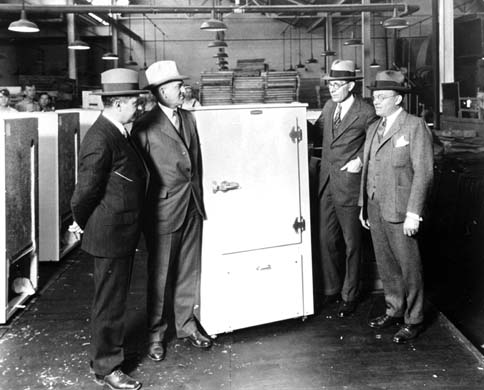
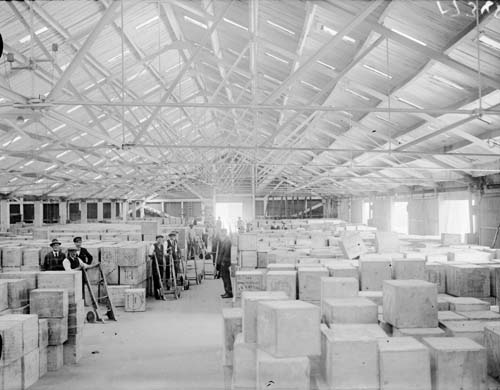
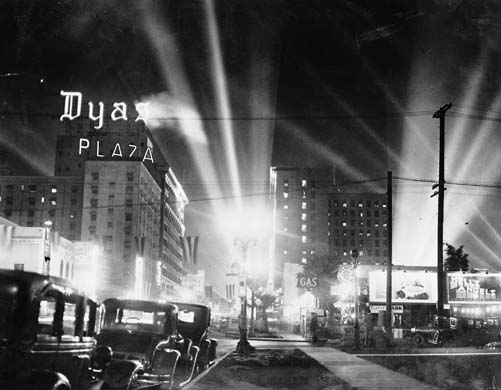
The one-millionth Frigidaire refrigerator is proudly displayed as it comes off the assembly line in Dayton, Ohio, in 1929. The over-production of some goods played a part in the crashPhotograph: APMen at work in the cargo stores at the Port of London Authority Docks. Trading conditions were made difficult with the introduction of tariffsPhotograph: Fox Photos/GettyHollywood boulevard in Los Angeles emblazoned in electric lights, during a premiere of a new film in the late 1920s. Although the decade had seen huge economic growth, the was still a great divide between the rich and poorPhotograph: Bettmann/Corbis
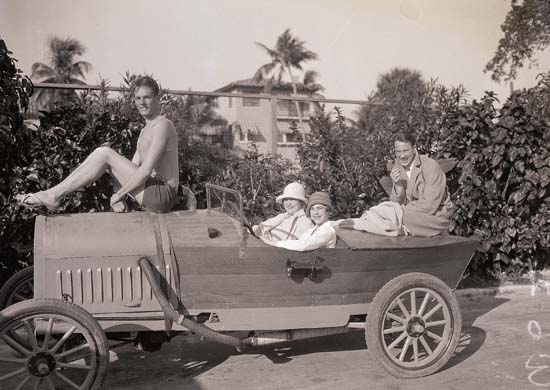
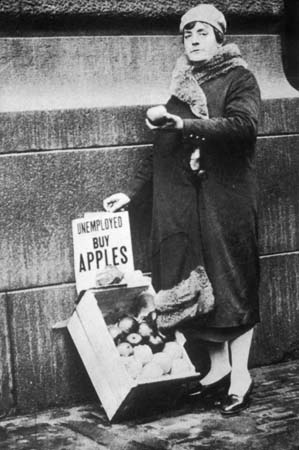
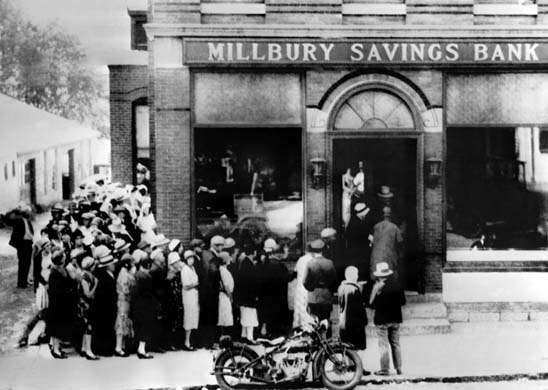
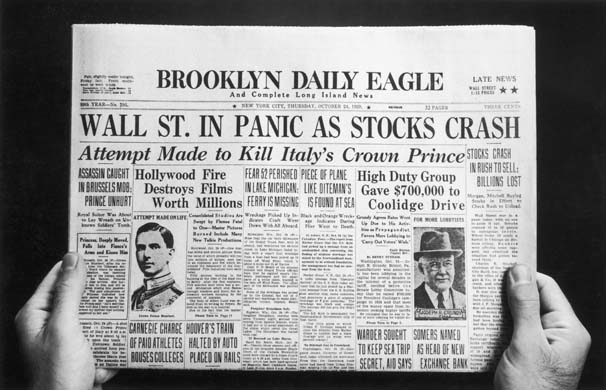
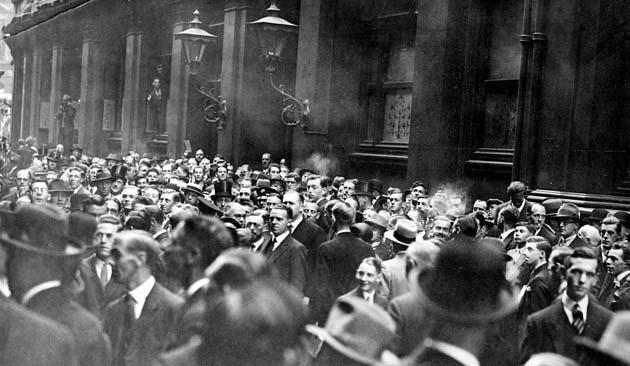
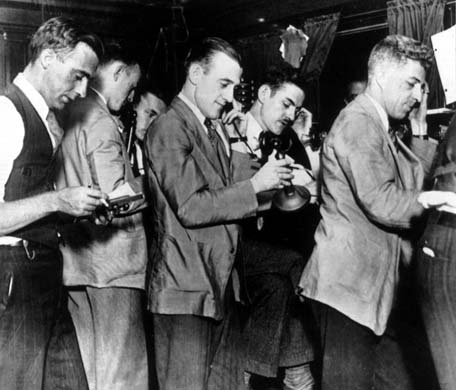
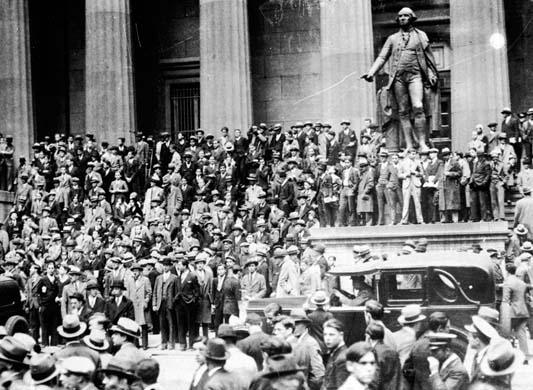
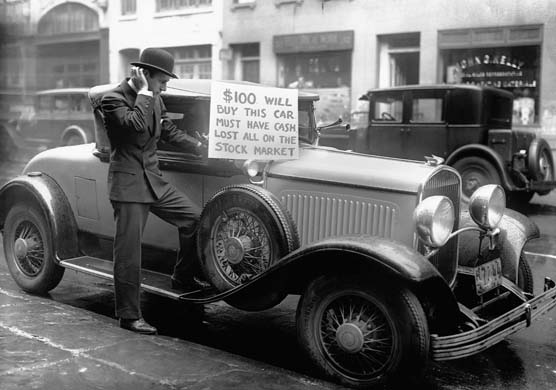
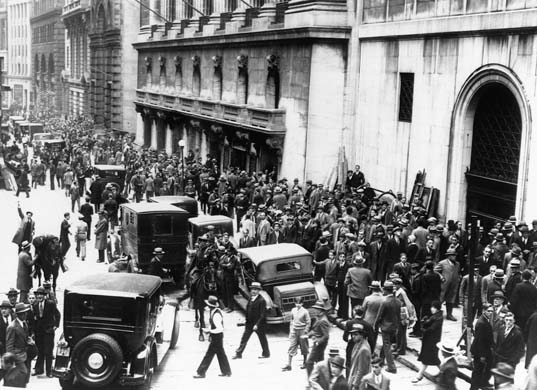
Wealthy New Yorkers out for a 'sail' in a 'steam yacht' in the 1920sPhotograph: Bettmann/CorbisMany formerly wealthy people struggled to make ends meet ....Photograph: Hulton Archive/GettyThe crisis sparked a run on America’s banks, as panic-stricken savers tried to withdraw their money — as shown here in Millbury, MassachusettsPhotograph: AFPThe Brooklyn Daily Eagle newspaper with the headline Wall St. In Panic As Stocks Crash published on October 24 1929Photograph: FPG/Hulton Archive/GettyDespite the crisis, those gathered outside the exchange apparently behaved in an orderly wayPhotograph: Roger-Viollet/Rex FeaturesStock brokers at work in the New York Stock Exchange on October 25, 1929 as panic selling continues from the previous day Photograph: APHuge crowds outside the stock exchange at the time of the Wall Street CrashPhotograph: Keystone/Getty ... and were forced to sell treasured possessions. Here bankrupt investor Walter Thornton tries to find a taker for his luxury roadster carPhotograph: Bettmann/CorbisThe crisis began on Thursday 24 October 1929. After a bull market that had lasted most of the decade, shares began to fluctuate dramatically. On Black Thursday, panic set in. Nearly 13m shares changed hands — then a record — as investors tried to get out of the marketPhotograph: Bettmann/Corbis
Sign up to read this article
Read news from 100’s of titles, curated specifically for you.