
Depending on what side of the pond you happen to live on, words like “afternoon tea,” “lift,” and “chips,” all mean something different. So it stands to reason that memes, jokes and other funny little bits of everyday life will be different as well.
The “Great London Meme” Instagram page is a wonderful repository of posts and content about the hilarious and painfully relatable parts of life in the UK. So get comfortable as you scroll through, upvote your favorites and be sure to share your thoughts and experiences in the comments down below.
More info: Instagram
#1
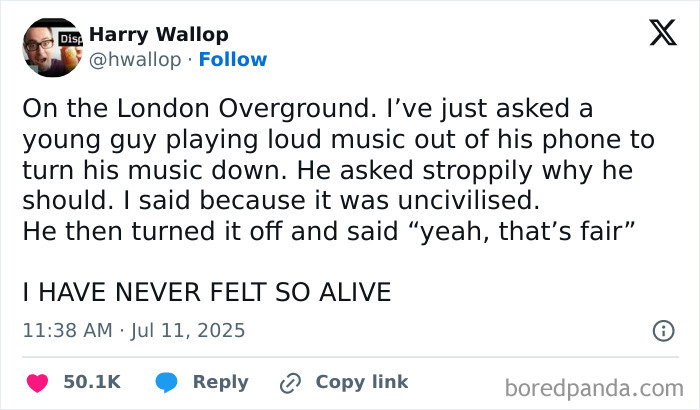
Image credits: @hwallop
#2
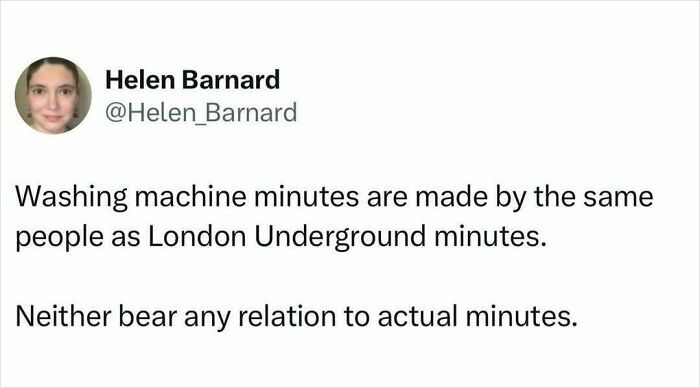
Image credits: greatlondonermeme
#3

Image credits: greatlondonermeme
One of the most hilarious aspects of comparing UK and American English is that you know right away you can speak the "same" language and miss half a conversation. The words, spellings, and even rhythms of speech diverged as the two cultures split apart, and what seems normal in one country sounds quaint, confused, or even funny in the other.
Vocabulary is the most obvious difference. A Brit puts petrol in a car’s bonnet while an American puts gas in the hood. If you’re in the UK, you stand in a queue, in the US, you wait in line. An American might wear pants to work, but in Britain “pants” means underwear, so trousers is the safer choice if you don’t want raised eyebrows. Holiday and vacation, lift and elevator, lorry and truck, the list of mismatched everyday words is long enough to keep travelers blundering for years.
#4

Image credits: @emofiat500
#5

Image credits: greatlondonermeme
#6
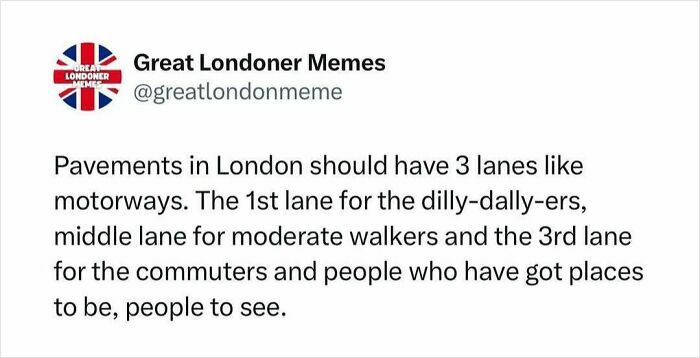
Image credits: greatlondonermeme
Spelling, too, has its quirks, many of them leftovers from Noah Webster, who in the 19th century sought to simplify and standardize American English. Colour lost its "u" and turned into color, centre to center, defence to defense, and organise borrowed the "z" of organize. The British like an additional "i" in spelling aluminium, whereas Americans keep aluminum. All of them are incorrect, they are just a product of two different histories of reform and opposition.
#7
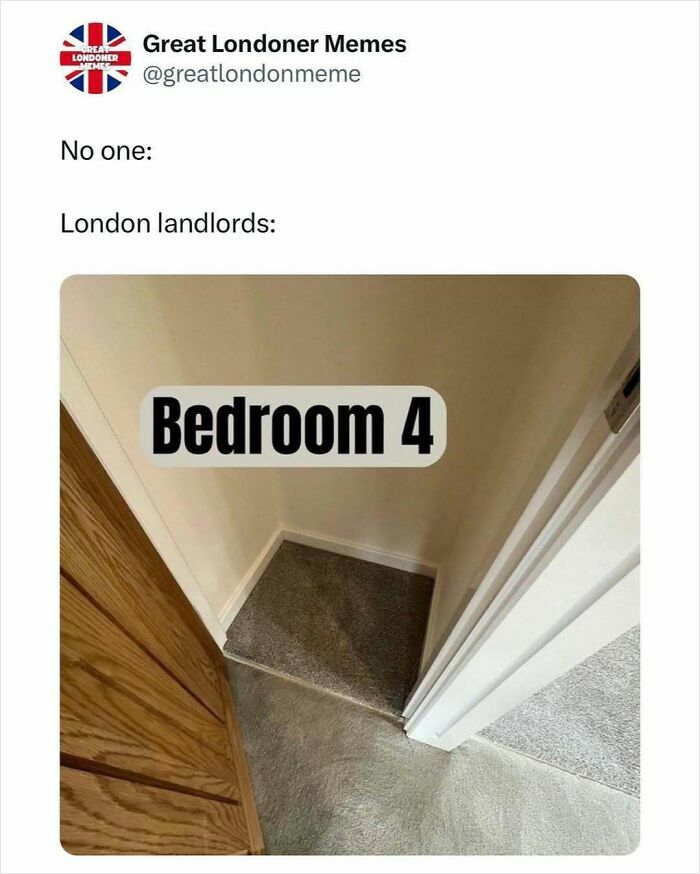
Image credits: greatlondonermeme
#8

Image credits: greatlondonermeme
#9
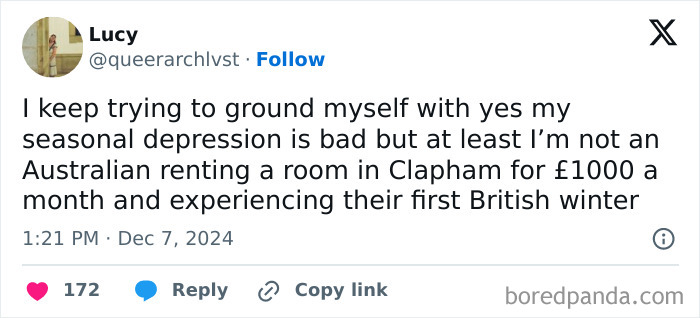
Image credits: @queerarchlvst
Pronunciation makes more subtle but equally revealing distinctions. Americans always pronounce their "r" sounds distinctly, whereas most British accents omit or mumble them. Stress falls in varied places as well: Americans pronounce "ad-VER-tise-ment," whereas Brits tend to use "AD-ver-tis-ment." Even herb names are not exempt, in America the "h" in "herb" does not get pronounced, whereas it gets pronounced in the UK.
#10
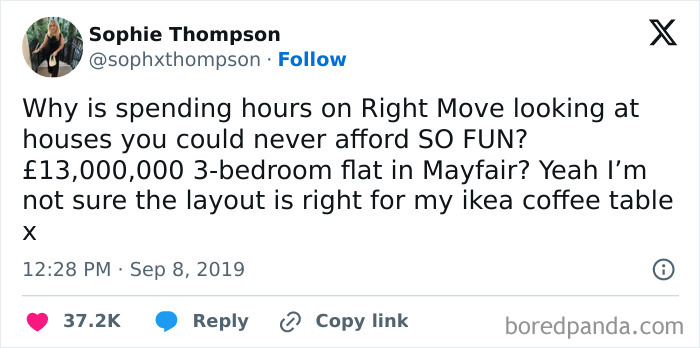
Image credits: @sophxthompson
#11
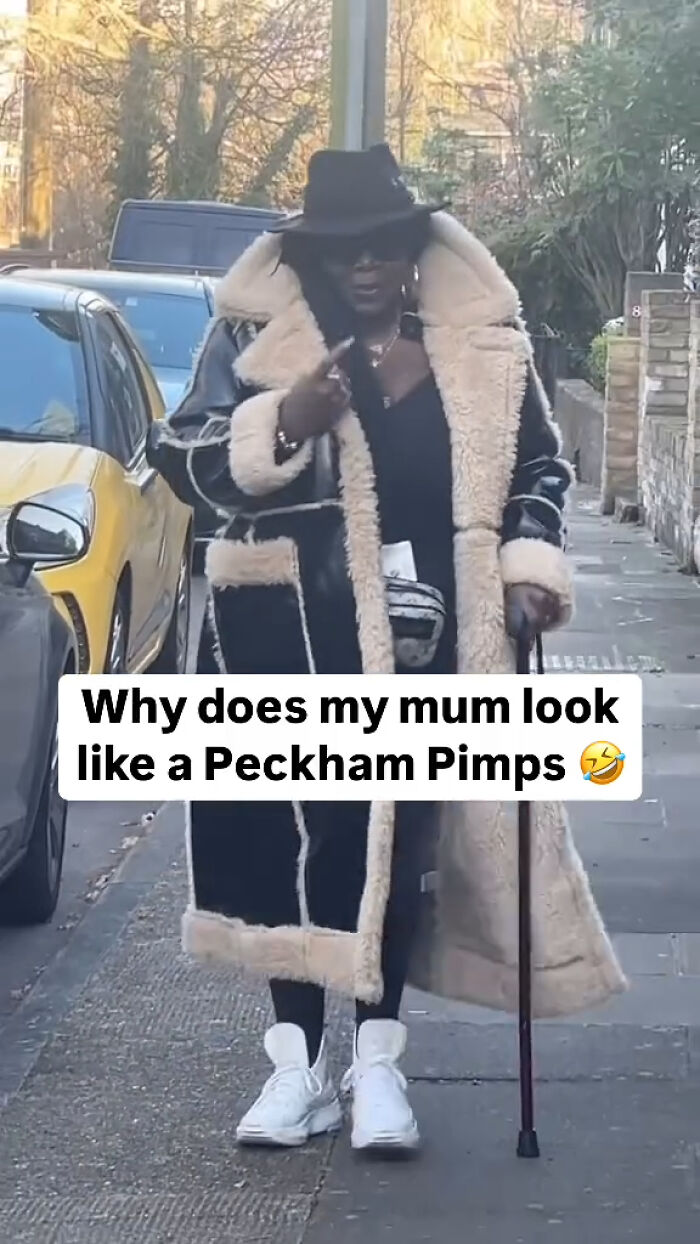
Image credits: greatlondonermeme
#12
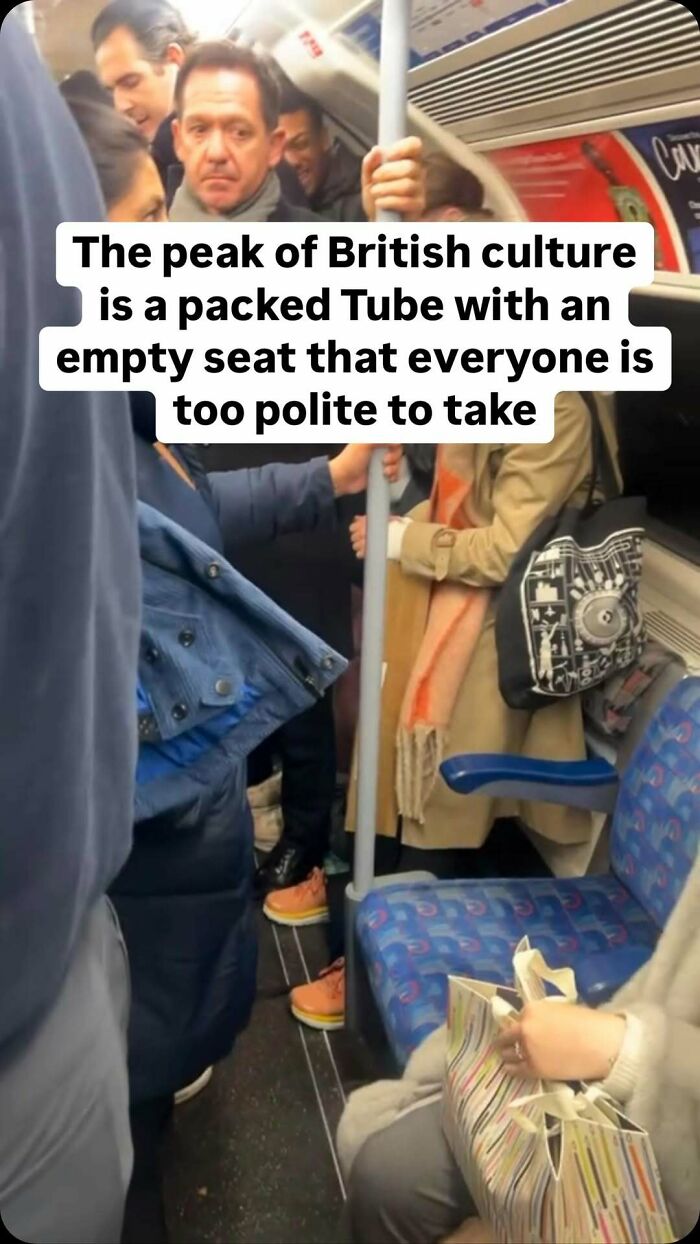
Image credits: greatlondonermeme
Then there are the idioms and cultural references. An American who says they’re “mad” usually means angry, in Britain “mad” is more likely to mean eccentric or mentally off. A British “public school” is an elite private institution, which sounds like nonsense to an American ear. Slang is another minefield: chips are fries in the US, but crisps are chips in the UK, a rubber is an eraser in Britain but something very different in the States.
#13
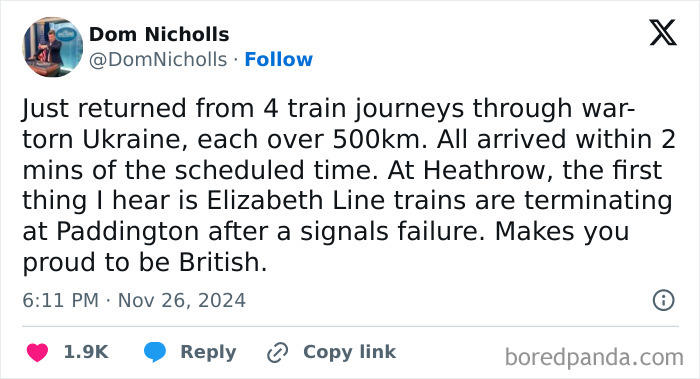
Image credits: @DomNicholls
#14
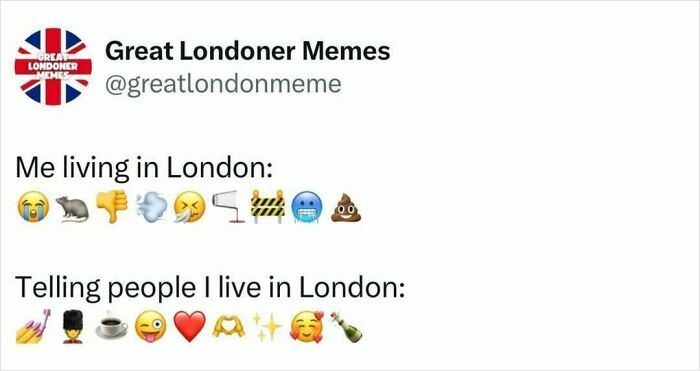
Image credits: greatlondonermeme
#15
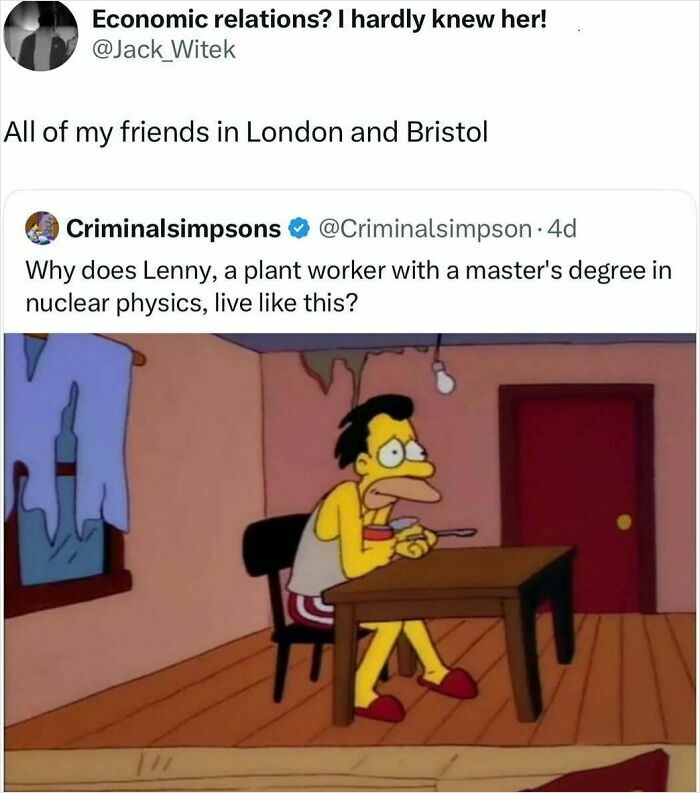
Image credits: greatlondonermeme
Even punctuation and grammar show differences. Americans often place the period inside quotation marks, while British writers may put it outside unless it’s part of the original quotation. Collective nouns take plural verbs in the UK (“the team are winning”) but singular verbs in the US (“the team is winning”). These variations don’t usually stop understanding, but they subtly shape how writing feels.
#16
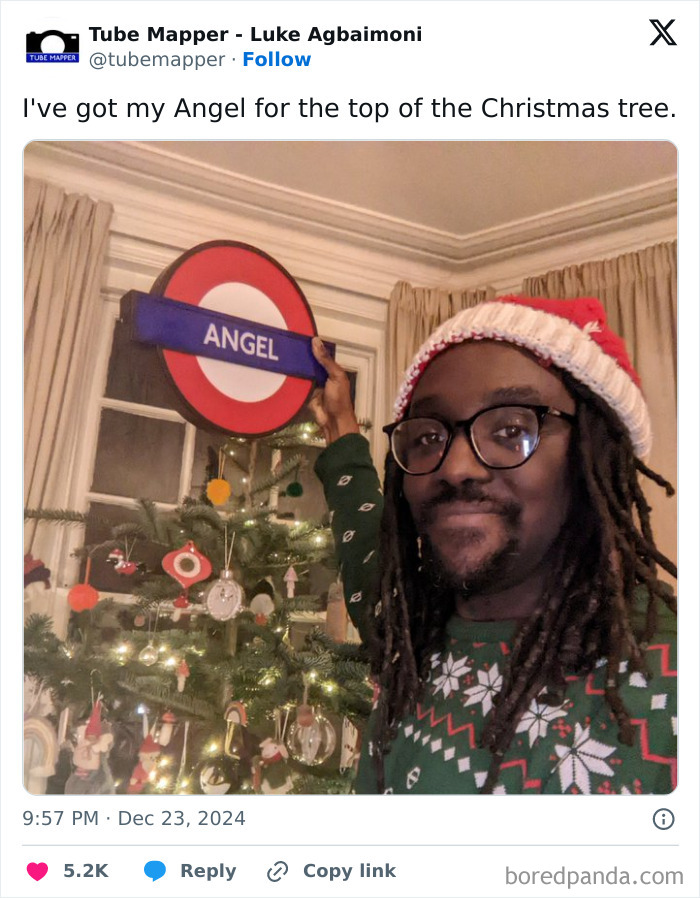
Image credits: @tubemapper
#17
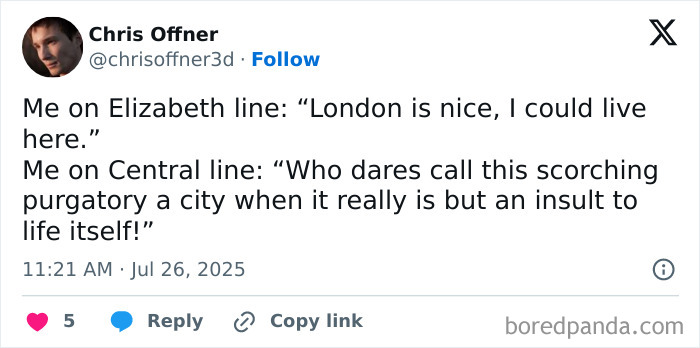
Image credits: @chrisoffner3d
#18
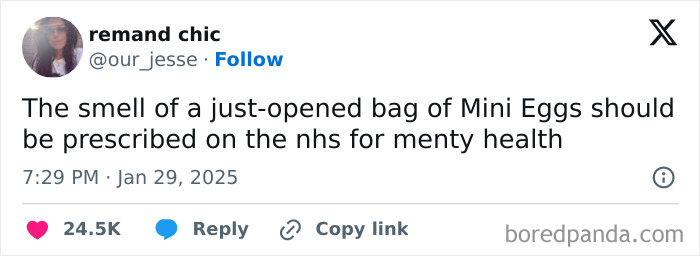
Image credits: @our_jesse
The charm of this is that neither is necessarily "more correct." They both draw on centuries of shared history, marked by geography, reformers, books, and popular culture. Modern media blurs the line even further now, Brits pick up Americanisms from Hollywood, and Americans pick up British slang from music and streaming shows. The result is a playful congruence in which words shift, meanings alter, and "English" once more proves it has more personas than any one speaker can possibly handle.
#19
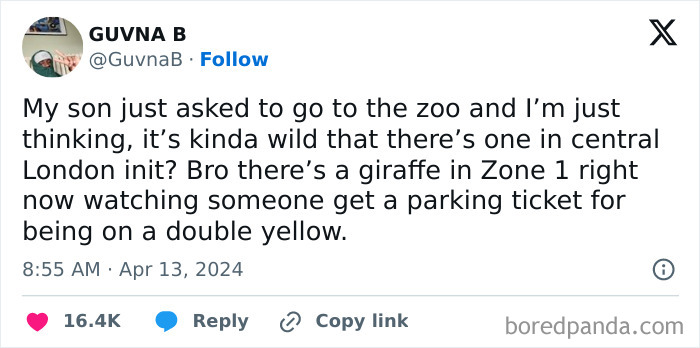
Image credits: @GuvnaB
#20
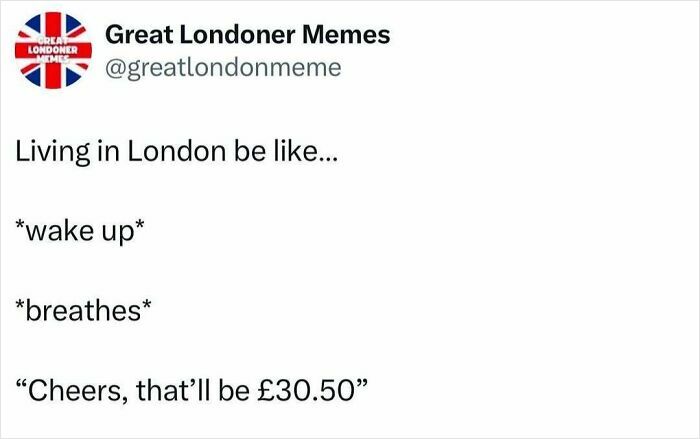
Image credits: greatlondonermeme
#21
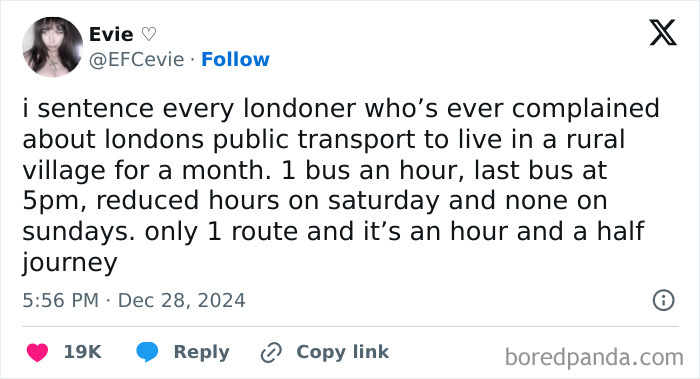
Image credits: @EFCevie
#22
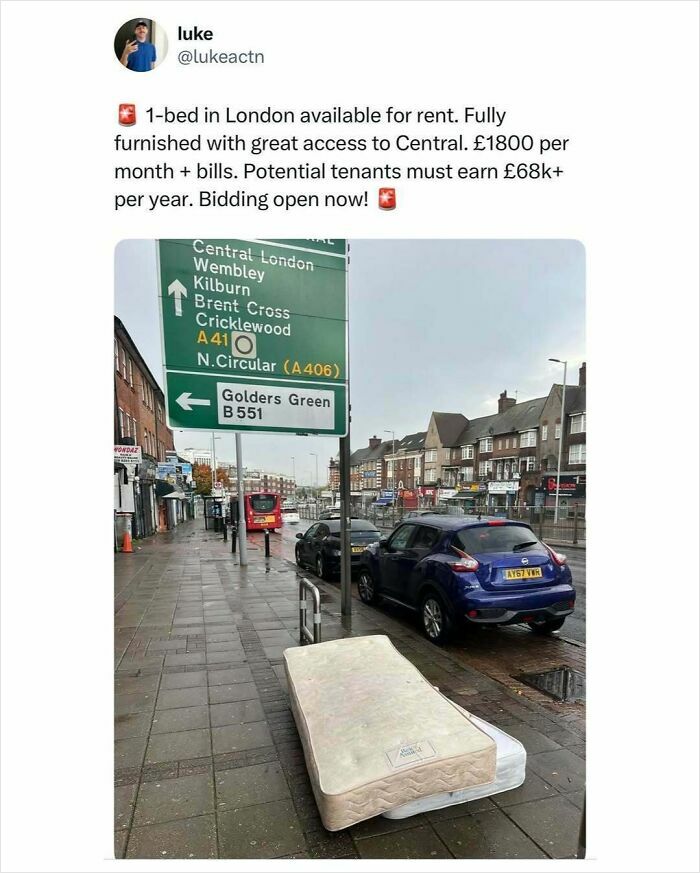
Image credits: greatlondonermeme
#23
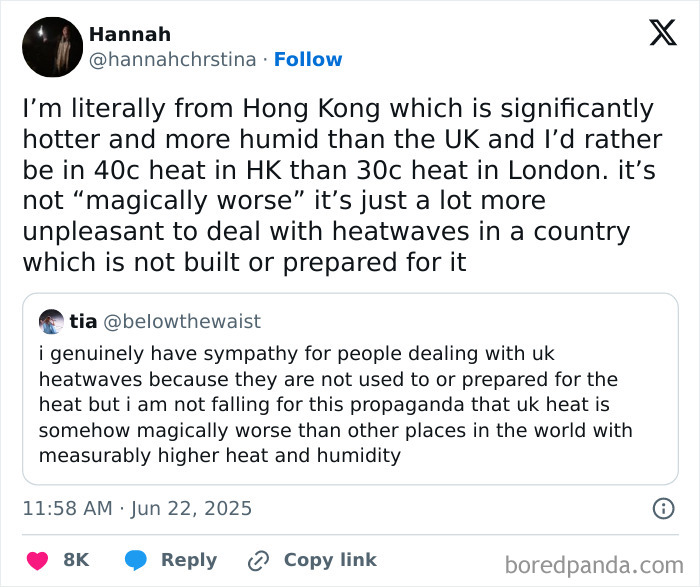
Image credits: @hannahchrstina
#24
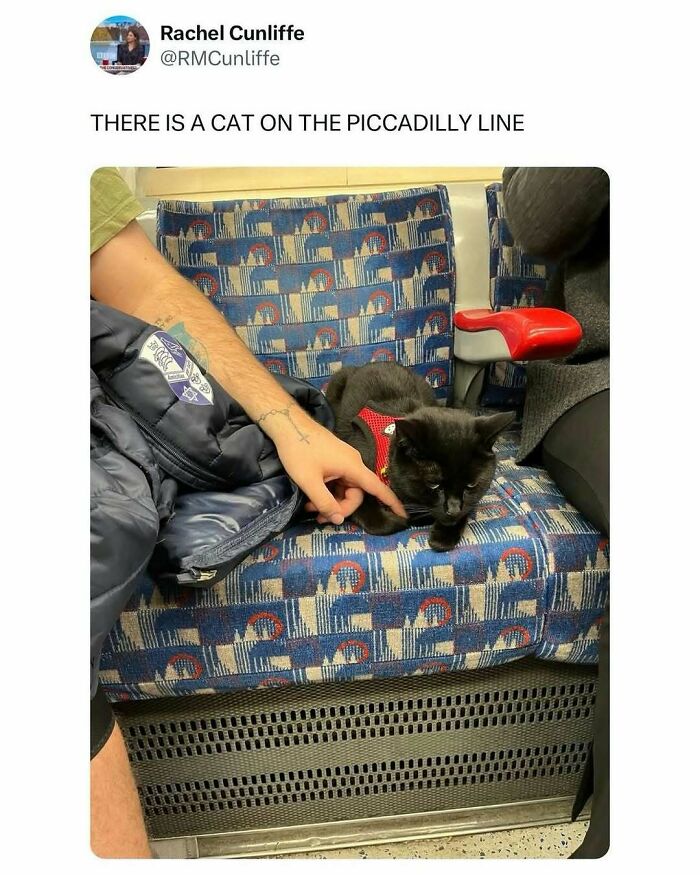
Image credits: greatlondonermeme
#25

Image credits: greatlondonermeme
#26
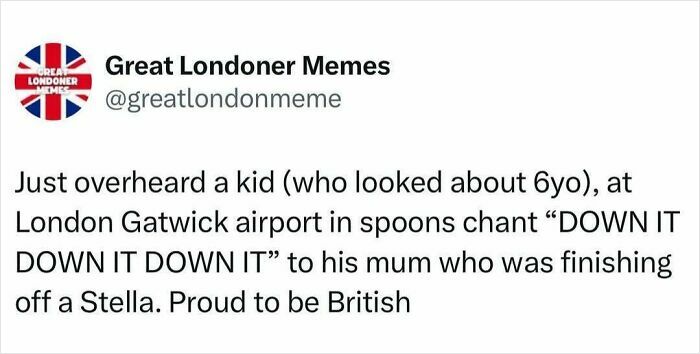
Image credits: greatlondonermeme
#27
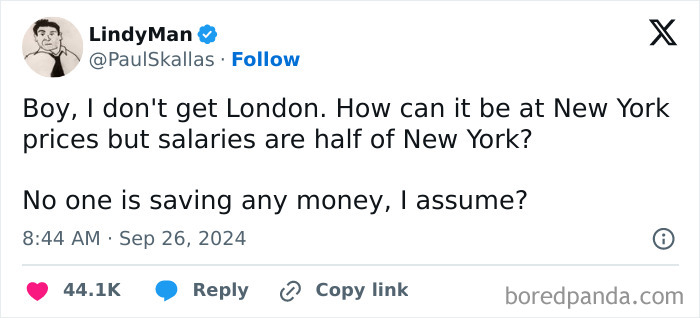
Image credits: @PaulSkallas
#28

Image credits: greatlondonermeme
#29
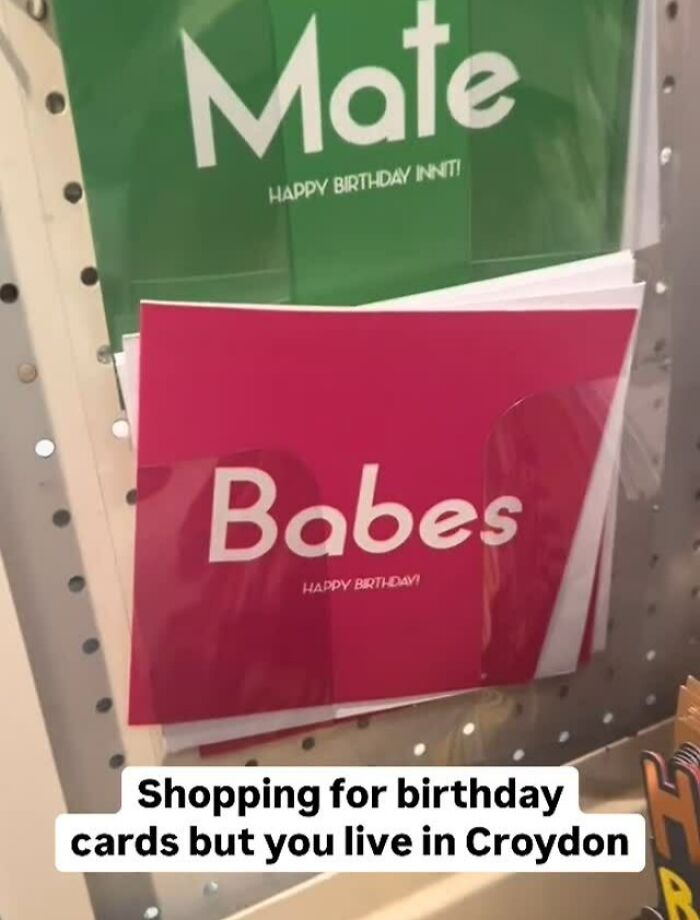
Image credits: greatlondonermeme
#30
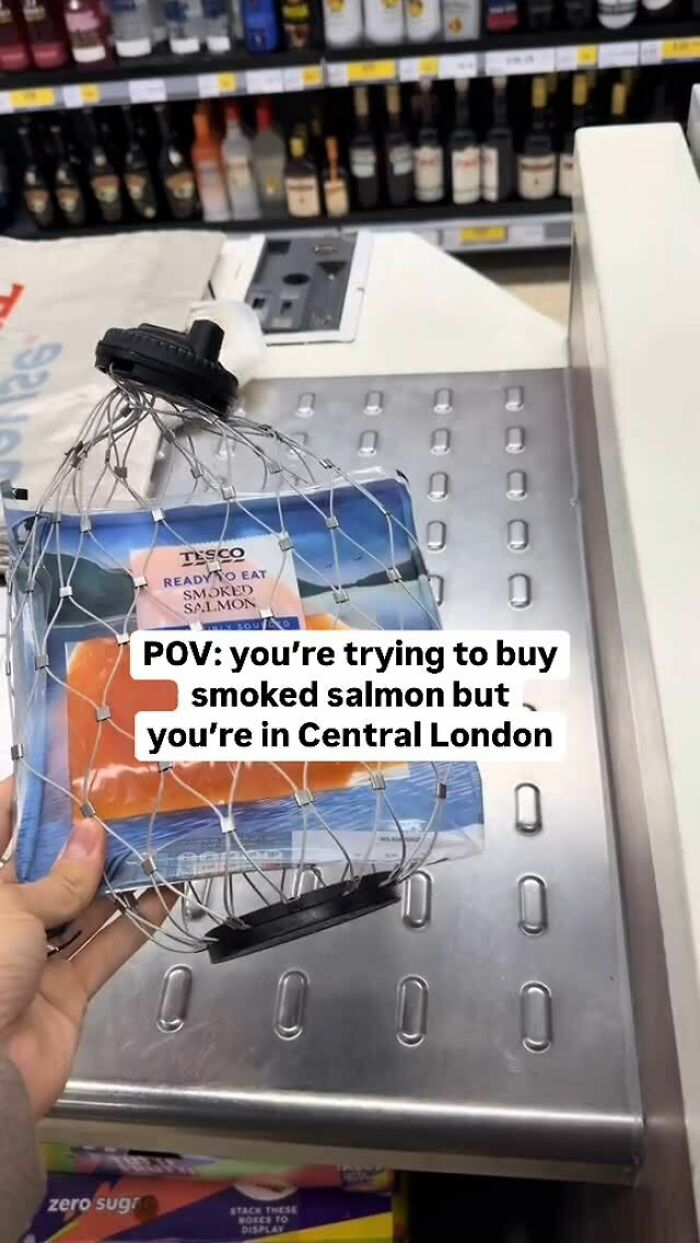
Image credits: greatlondonermeme
#31
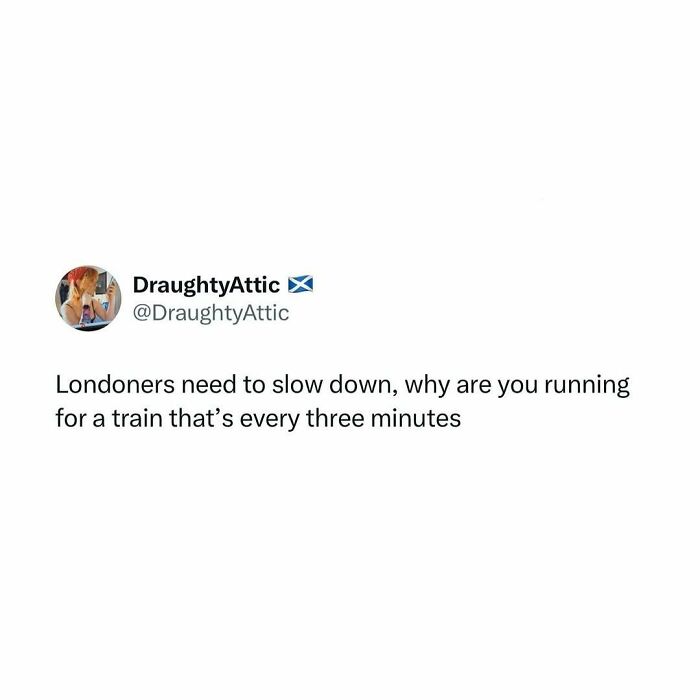
Image credits: greatlondonermeme
#32
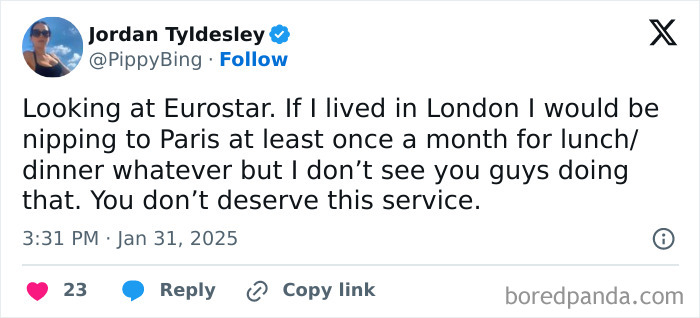
Image credits: @PippyBing
#33
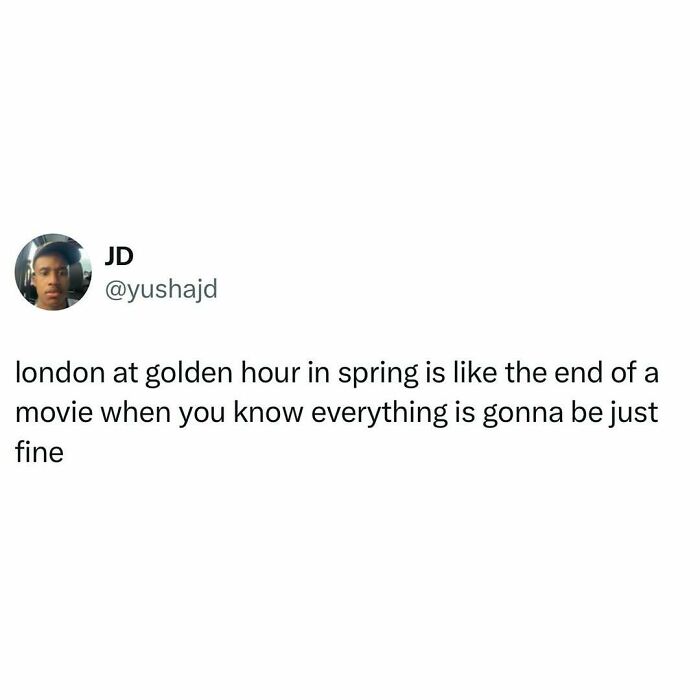
Image credits: greatlondonermeme
#34

Image credits: basbitsudania
#35

Image credits: greatlondonermeme
#36
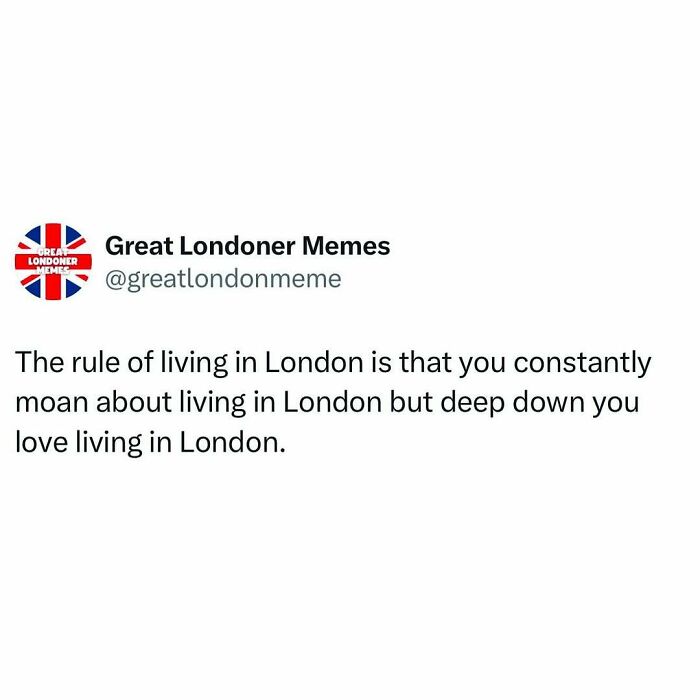
Image credits: greatlondonermeme
#37
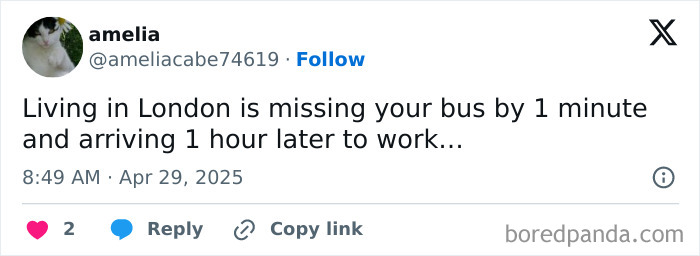
Image credits: @ameliacabe74619
#38

Image credits: greatlondonermeme
#39
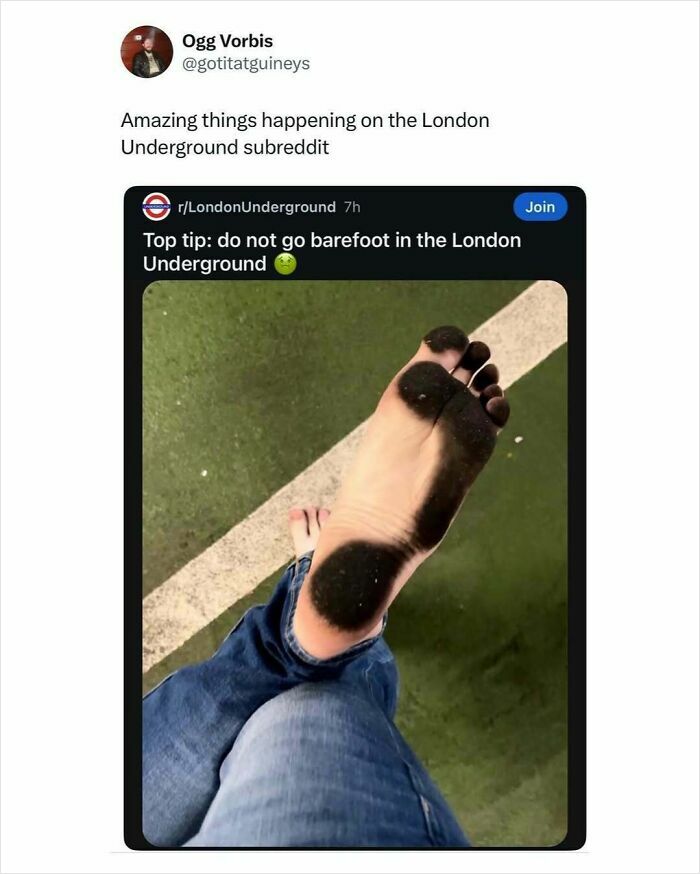
Image credits: greatlondonermeme
#40
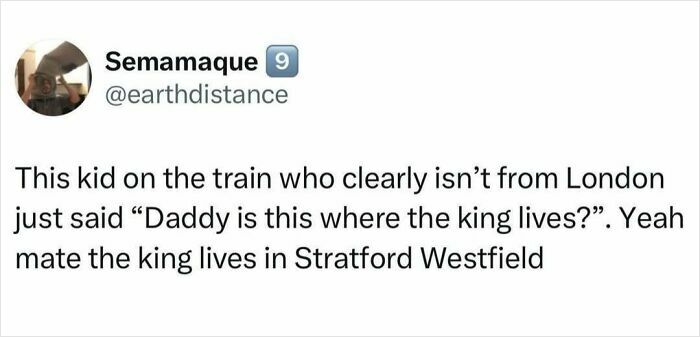
Image credits: greatlondonermeme
#41
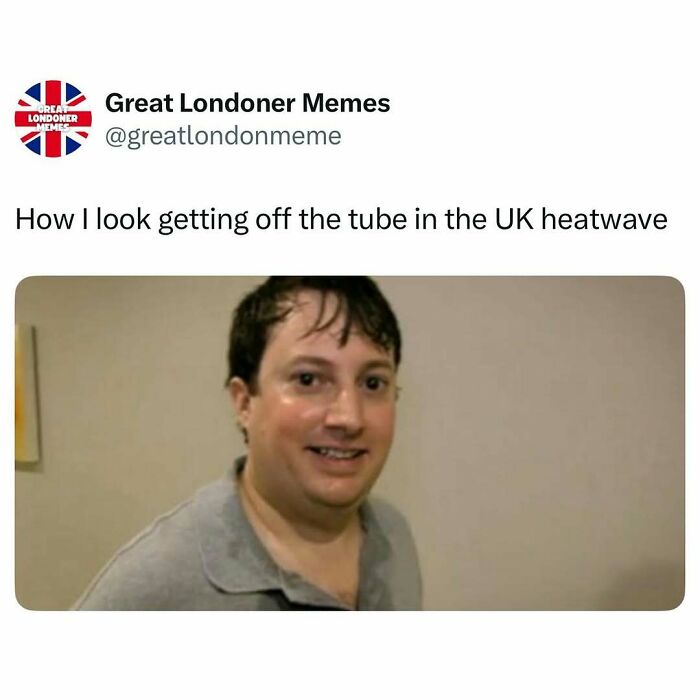
Image credits: greatlondonermeme
#42
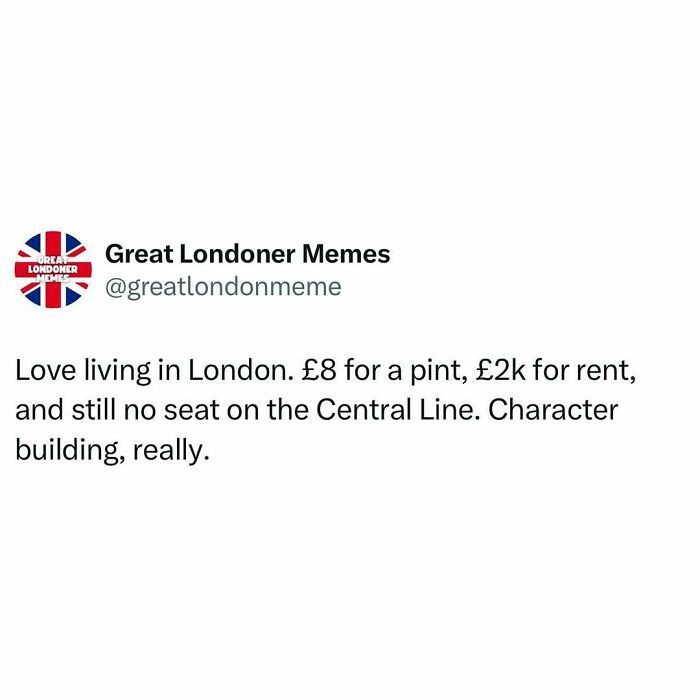
Image credits: greatlondonermeme
#43
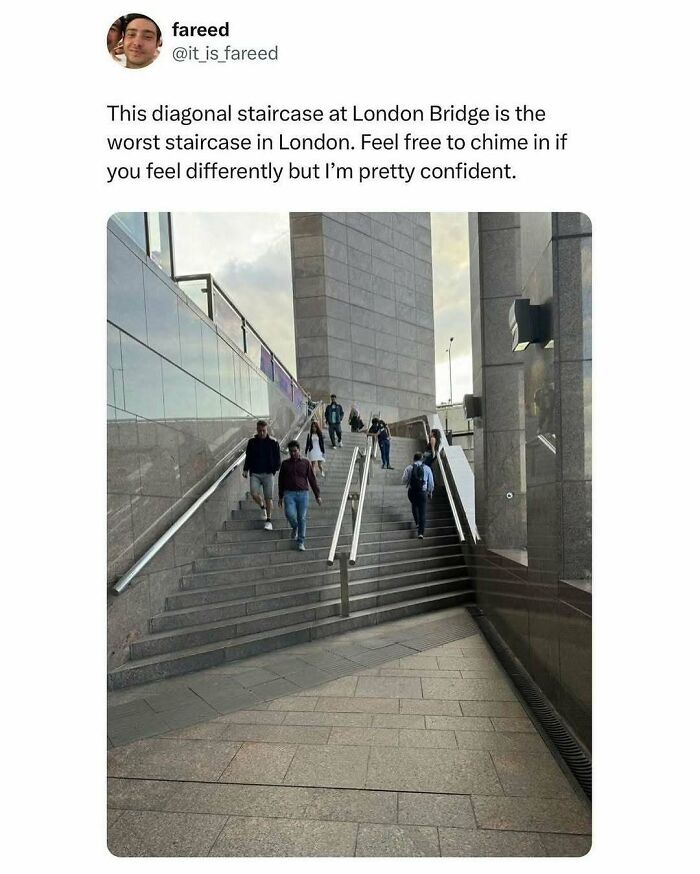
Image credits: greatlondonermeme
#44

Image credits: greatlondonermeme
#45
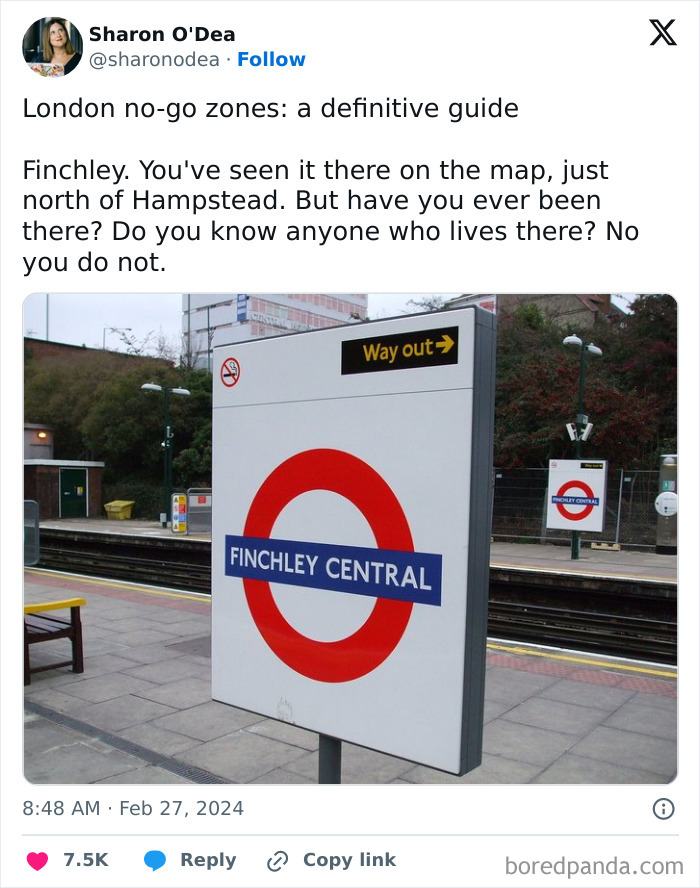
Image credits: @sharonodea
#46
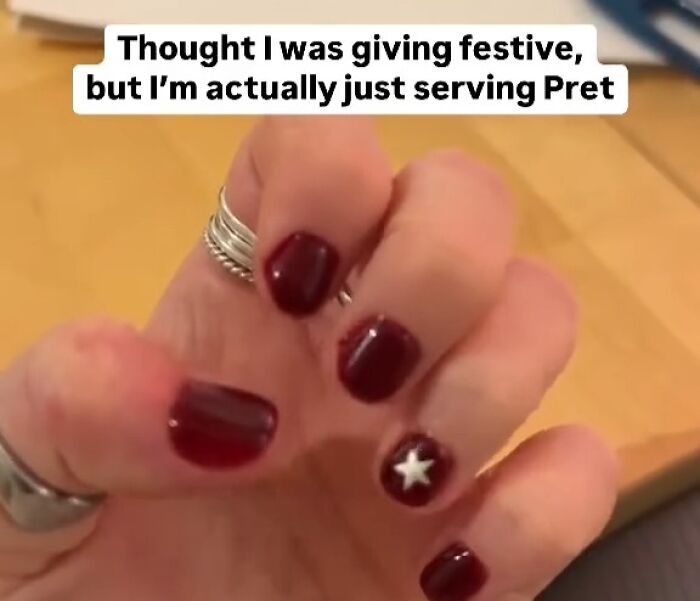
Image credits: greatlondonermeme
#47
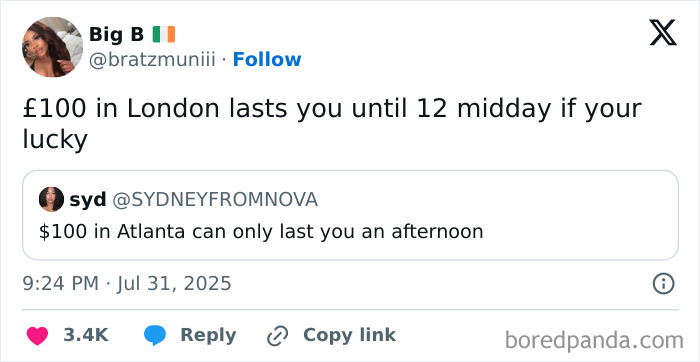
Image credits: @bratzmuniii
#48
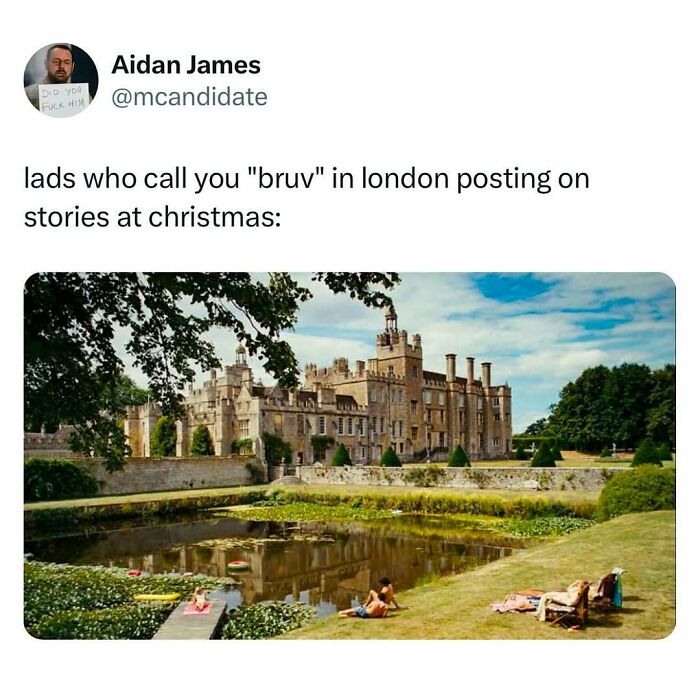
Image credits: greatlondonermeme
#49

Image credits: greatlondonermeme
#50
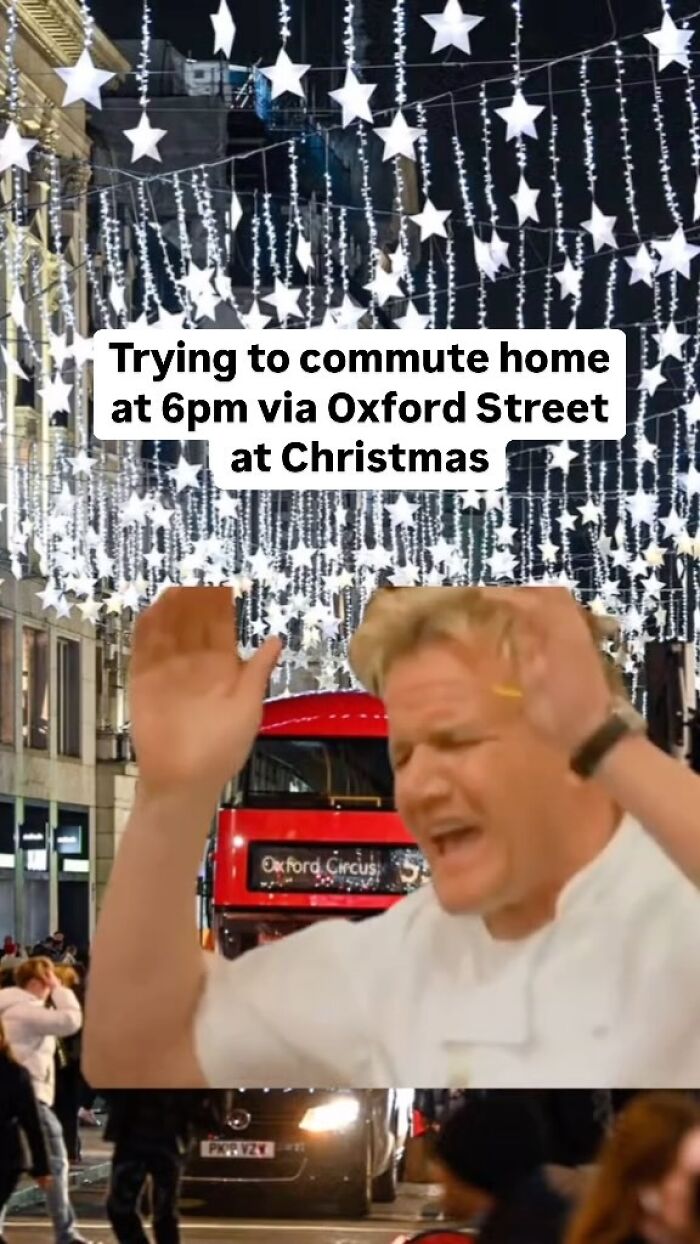
Image credits: greatlondonermeme
#51
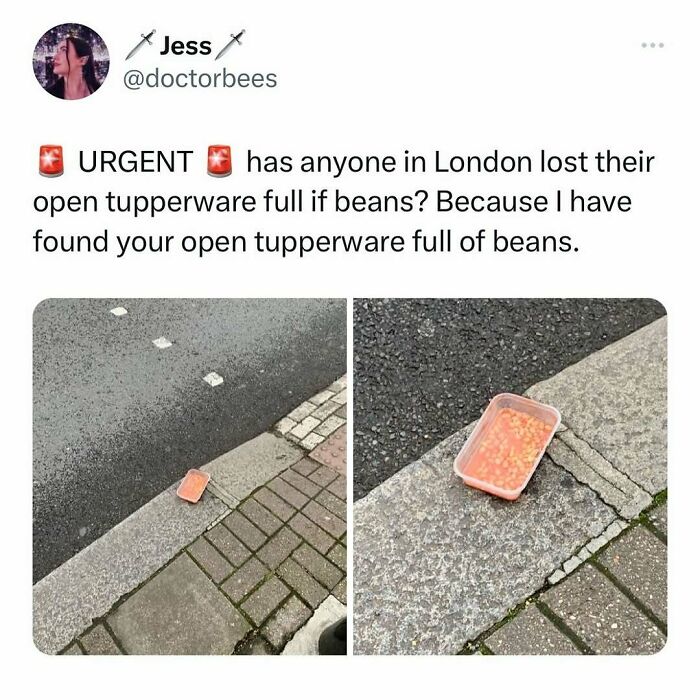
Image credits: greatlondonermeme
#52
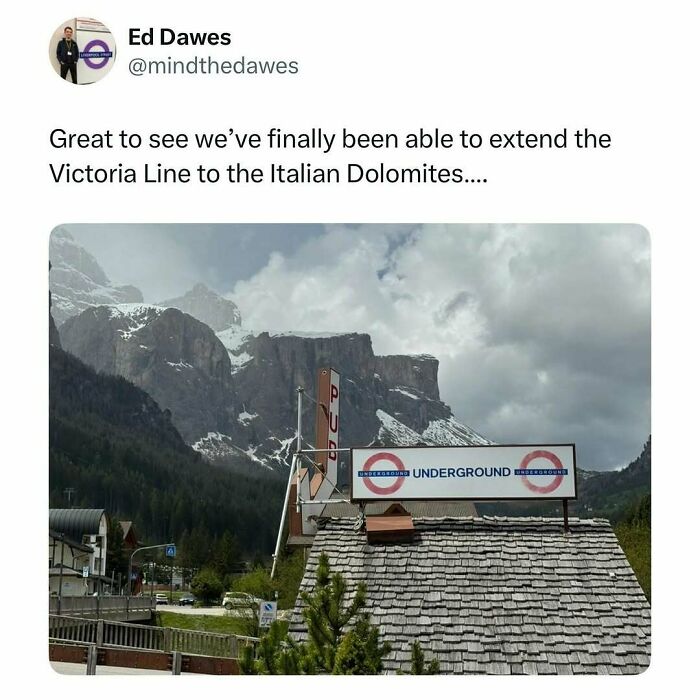
Image credits: greatlondonermeme
#53

Image credits: greatlondonermeme
#54
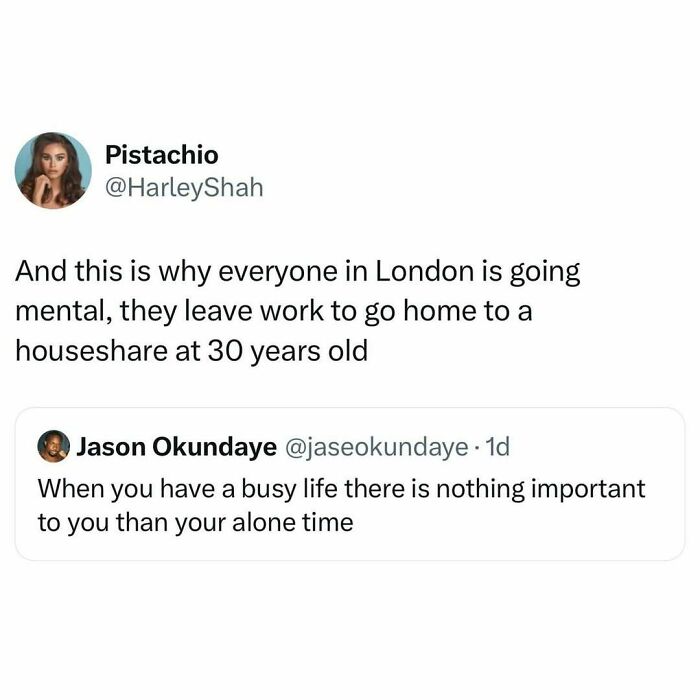
Image credits: greatlondonermeme
#55

Image credits: greatlondonermeme
#56

Image credits: greatlondonermeme
#57
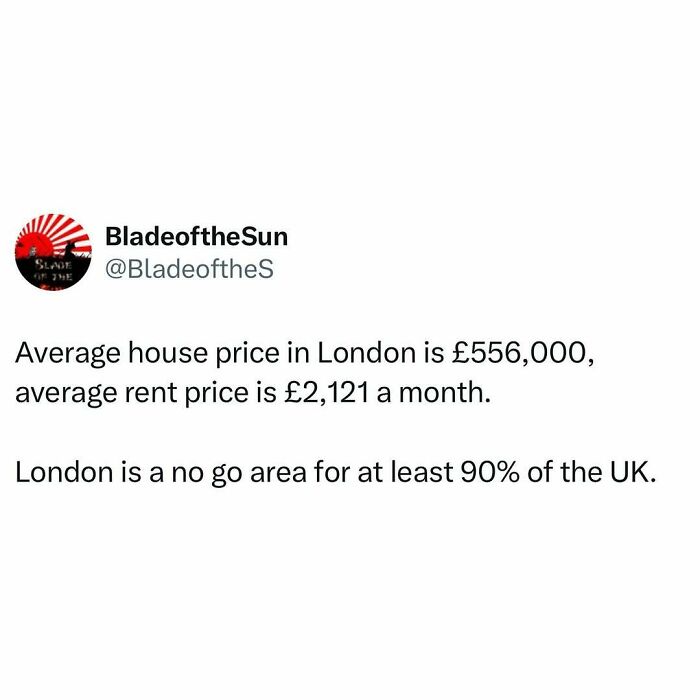
Image credits: greatlondonermeme
#58
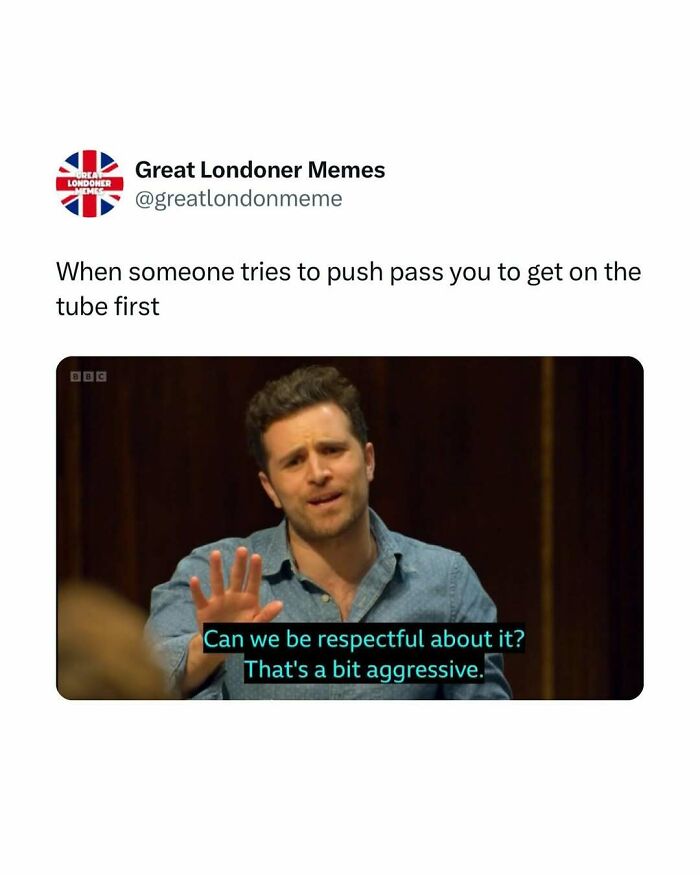
Image credits: greatlondonermeme
#59

Image credits: greatlondonermeme
#60

Image credits: greatlondonermeme
#61
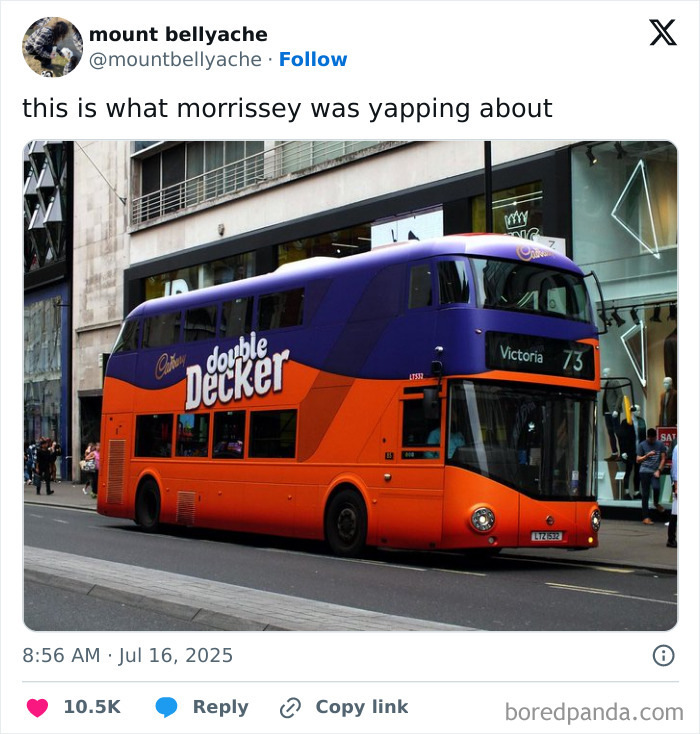
Image credits: @mountbellyache
#62
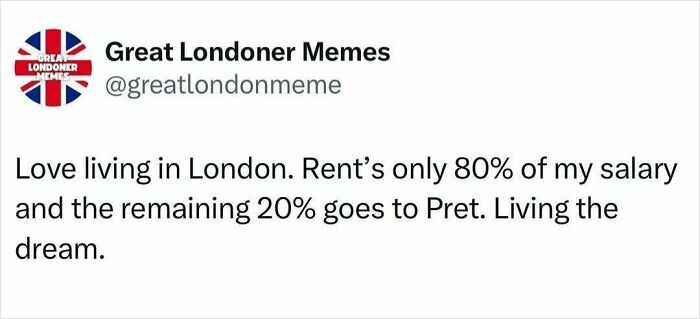
Image credits: greatlondonermeme
#63
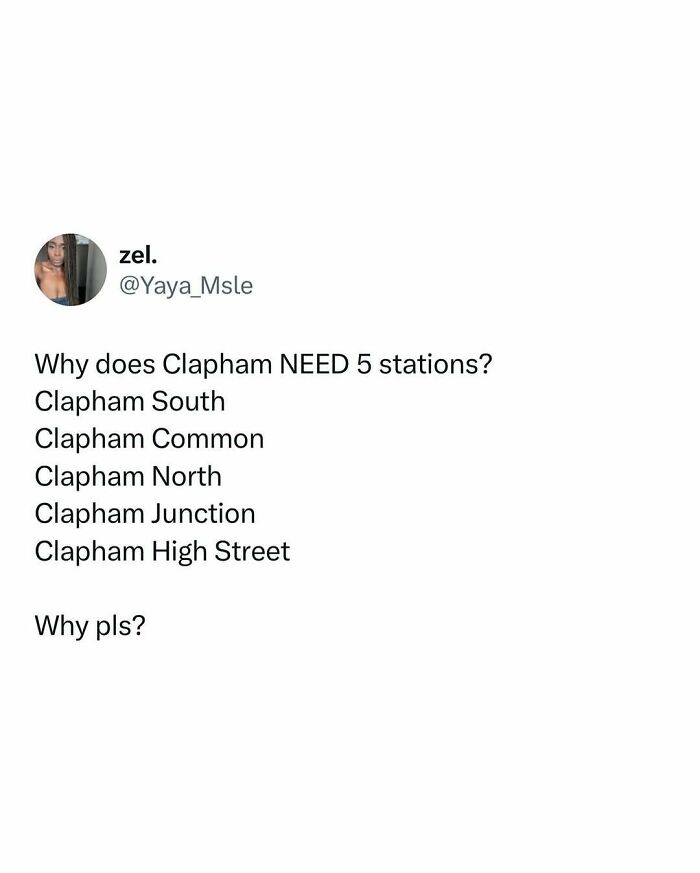
Image credits: greatlondonermeme
#64
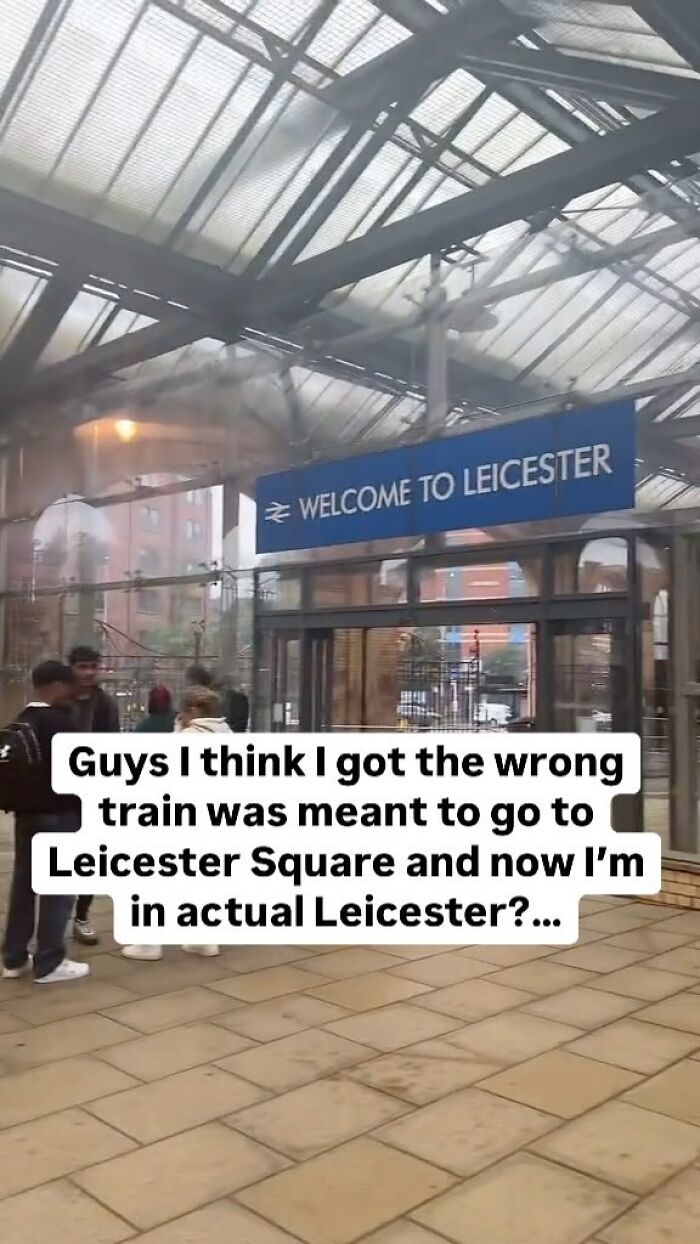
Image credits: greatlondonermeme
#65

Image credits: greatlondonermeme
#66

Image credits: greatlondonermeme
#67
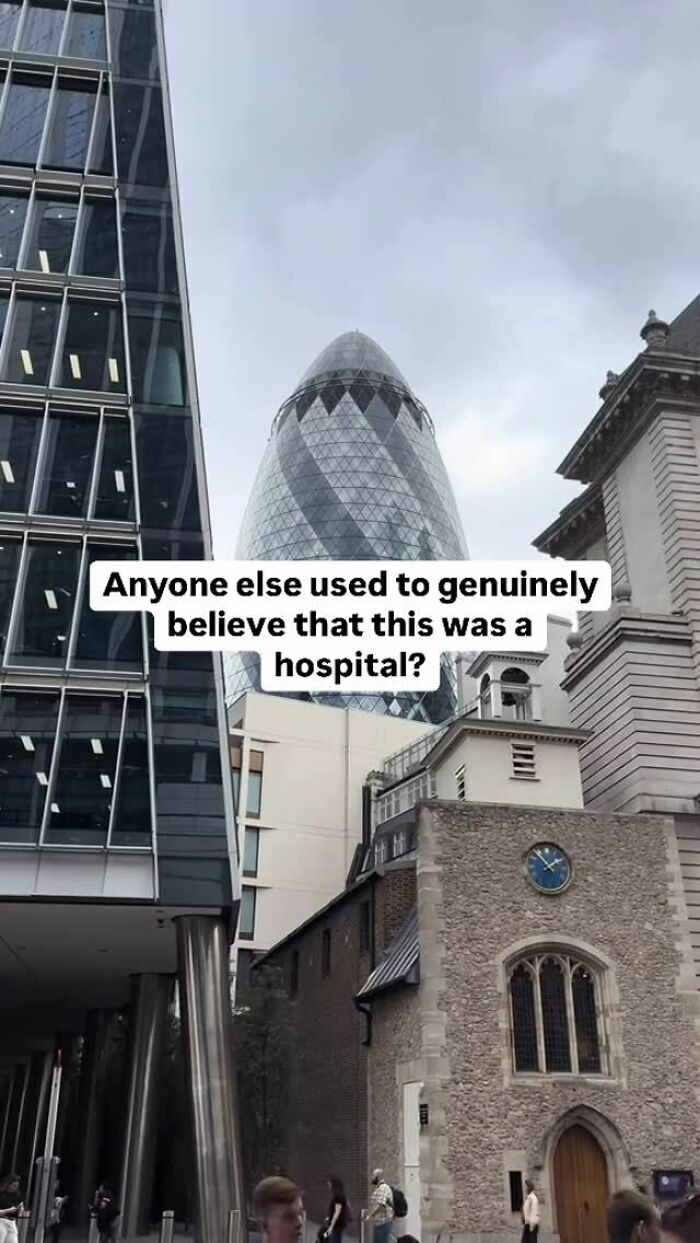
Image credits: greatlondonermeme
#68

Image credits: greatlondonermeme
#69
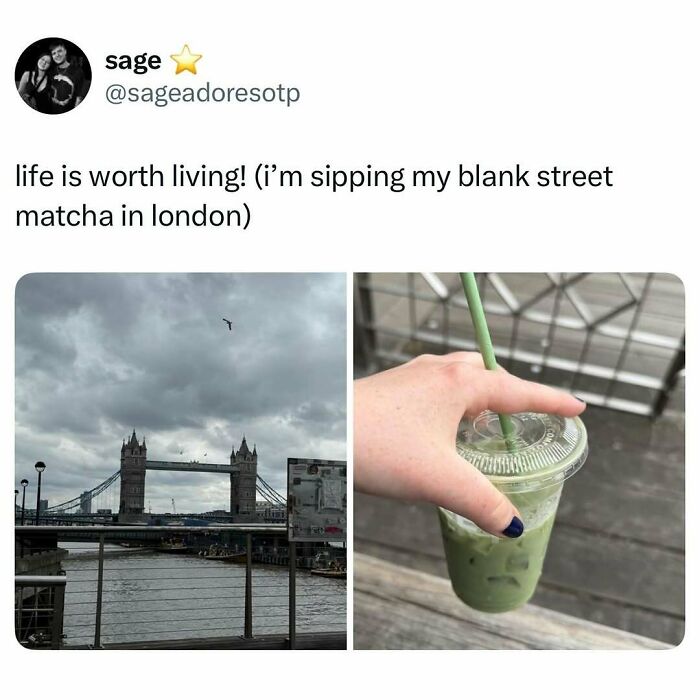
Image credits: greatlondonermeme
#70
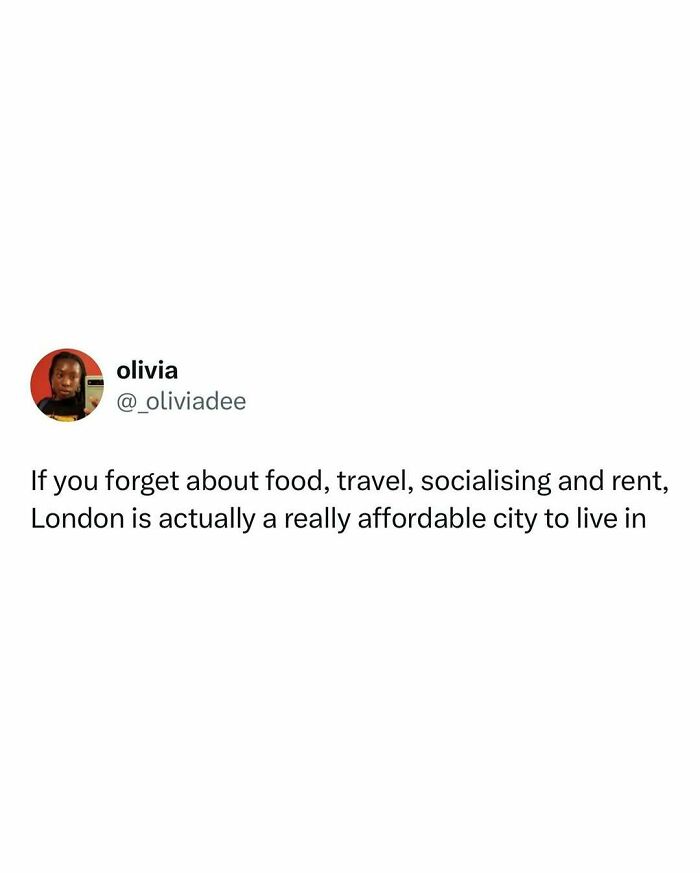
Image credits: greatlondonermeme