Modern British life is lonely, isn’t it? From its digital echo chambers and its headphones-on-the-tube, to its feedback loops of rage, anxiety and conspiracy, we’ve never been quite so stimulated but so siloed. So it’s depressingly fitting that Britain’s most humane, compassionate documentary series – one that’s spent more than 60 years celebrating our shared commonality amid our material differences – is coming to an end just when we need it most.
7 Up, which has followed a dozen or so Brits every seven years since 1964, was not going to last forever. That was part of its majesty. Its subjects fell in and out of love, had dreams that were dashed, took pathways few expected. We knew we’d see them age, wilt and retire, likely die. A handful already have. As well as the filmmaker Michael Apted, who directed all but the first run in the series, and who died in 2021. But the announcement of a final visit, to be broadcast on ITV this year and under the direction of Asif Kapadia, offered no indication of why the decision was made to end it at this particular time, with its participants now in their seventies (but hardly ancient). Nor was there a hint of a modern follow-up with new children, either, despite how fascinating and significant it would be to start this experiment over again. Instead the news is just sad, and a reminder of how obsolete this kind of television has become.
The series began as a social experiment, one designed to highlight class in Britain and its long-term significance – “Give me a boy at the age of seven and I will show you the man,” went the expression that formed its premise. Some participants were working-class girls who dreamt of jobs in Woolworths. Others were eerily articulate private school children with a firm grip on what they wanted from life and the means to achieve it. The show was anthropological, if slightly detached – it oscillated between viewing these children as individuals and case studies. But as the series went on, its participants achieving academic and then professional success, or alternatively struggling through life, it became far warmer in its approach. And with it a new focus emerged, borne of the shared experiences of these people rather than their differences – the great joys, the big disappointments, the sheer fickleness of life.
Nothing conveyed that last one better than the story of Neil Hughes, the Liverpudlian introduced in 7 Up with dreams of becoming an astronaut, who over the course of the project has experienced academic disappointment, homelessness, mental health struggles and religious salvation – as well as a brief period as a Liberal Democrat councillor. His story became a kind of one-man history lesson of British life in the 20th century.
We don’t have things like this anymore on television. I imagine some of it is due to ethical concerns – would it be right, really, to put the inner lives of young children on primetime ITV today? (Well the ones without famous parents, at least – from Gordon Ramsay to Katie Price and Peter Andre, celebrity offspring are seemingly fine to be plastered everywhere now.) Or the lives of ordinary adults, many of whom have admitted feeling uncertain about their 7 Up experience? (One of the most powerful scenes in 2005’s 49 Up saw participant Jackie Bassett directly challenge Apted over his framing of her over the years.)
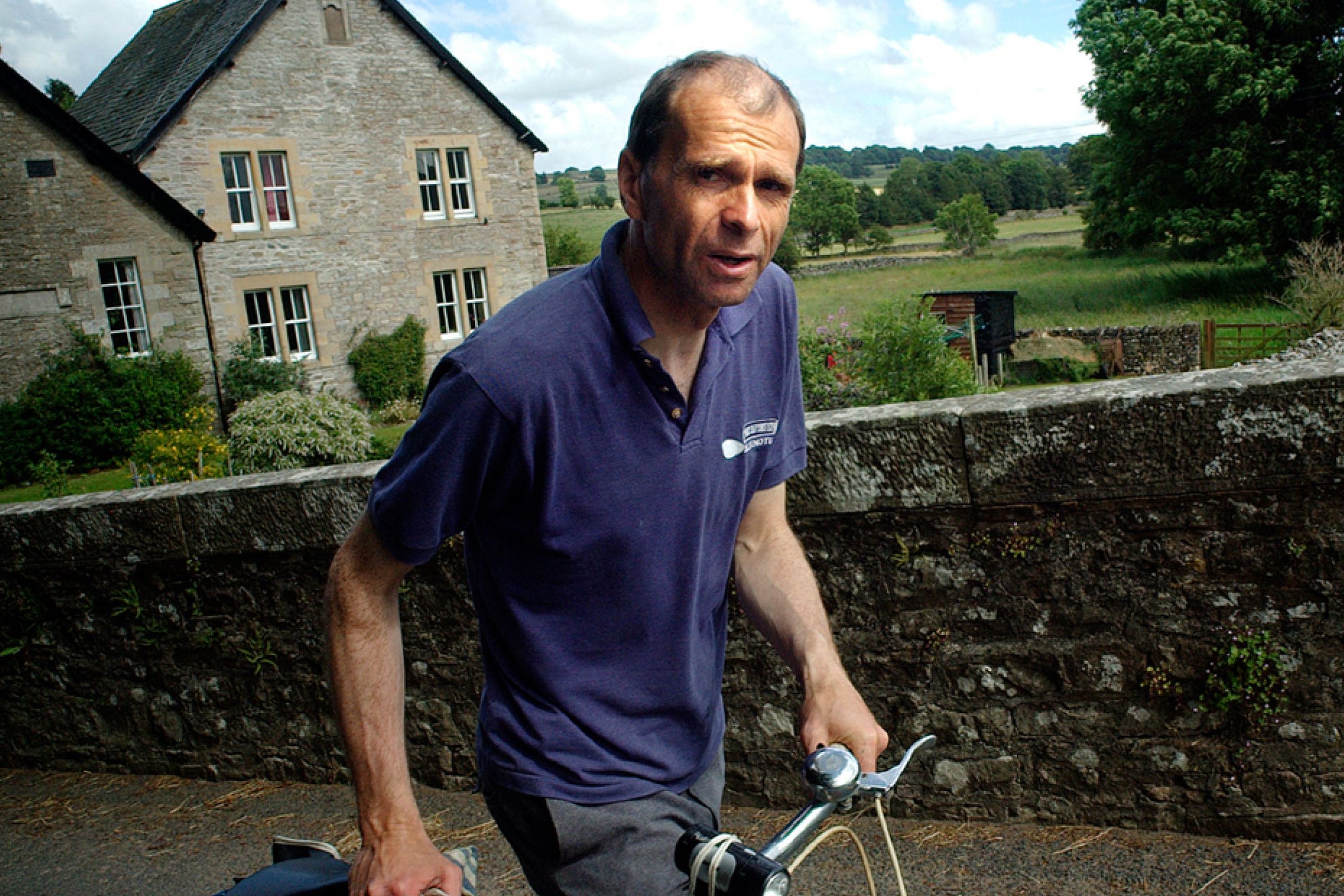
But I also wonder if it speaks to our incuriosity about ourselves, at least in modern broadcasting – that the mundane is somehow considered tedious, that snapshots of ordinary lives aren’t worthy of our attention. Remember when game shows didn’t mainly have celebrities on them? One of the best things I watched on the BBC last year was Three Salons at the Seaside, a documentary about neighbouring Blackpool beauty parlours, and the various characters flitting in and out of them. It was howlingly funny and gentle, and also something I found on the arse-end of iPlayer and exhumed from 1994. Because of course something so endearingly observational and quiet could never be made today.
What does it do to a nation when we don’t really see ourselves anymore? Surely nothing good. So what a shame to witness the end of 7 Up, a daring, moving experiment by us, for us and about us, and at a time when so much of our national identity seems scattershot and uncertain and subsequently seized upon by nefarious forces. Something will eventually fill the void, but I can’t be alone in feeling scared about what it might be.