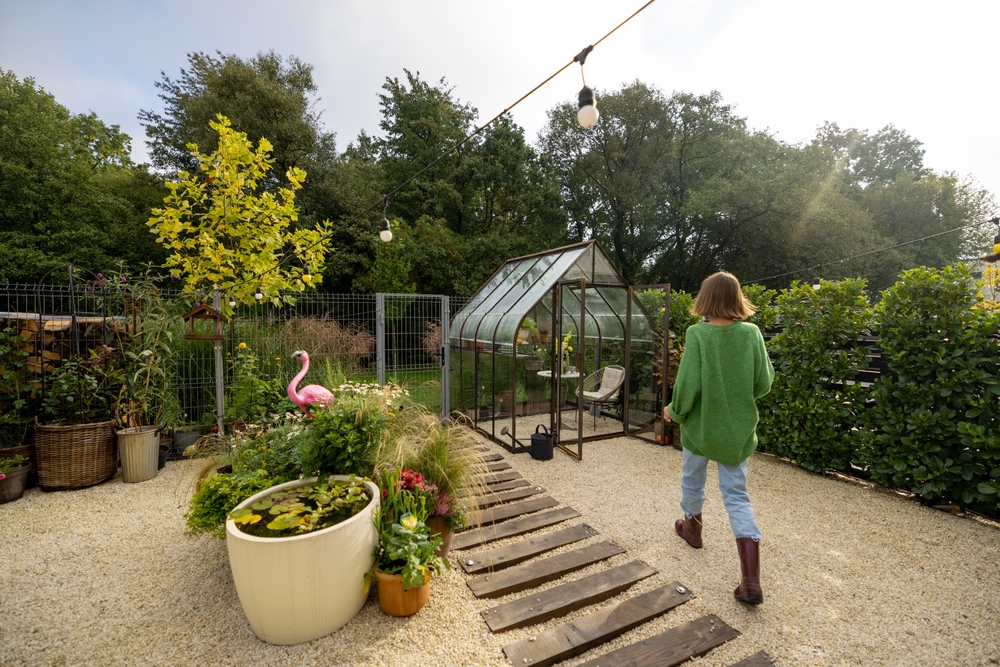
The growing number of people living in cities results in reduced backyard space, forcing homes to be built closer together. The close arrangement of houses makes people believe that outdoor spaces lose their significance. Small sections of soil can be turned into useful green areas with proper management. The design of compact gardens creates a positive impression of the entire property by establishing boundaries, creating gentle transitions between rigid edges, and redirecting viewer attention away from a feeling of being trapped. The right design elements help garden owners build functional retreats in their small outdoor spaces, combining visual appeal with practical features.
1. Vertical Greens on a Blank Fence
A flat fence can dominate a small yard. It reads as a wall rather than a backdrop. A vertical arrangement of herbs and low-maintenance plants shifts that balance. The fence becomes a living surface that breaks the monotony and adds a sense of height to the yard. In many tight spaces, tiny gardens like this work because they grow upward rather than outward.
The effect is immediate. A thin frame holds pots or panels, leaving space on the ground for seating or storage. The plants soften the fence line and create a more controlled sense of enclosure. It’s a compact system that adds depth without taking valuable floor space.
2. A Corner Plot Turned Micro Orchard
Unused corners often trap leaves and nothing else. In one backyard, a single raised bed tucked into a corner created a micro orchard with dwarf fruit trees. It required little soil volume but offered structure and seasonal change. Small yards benefit from elements that shift through the year, because movement makes the space feel alive.
Tiny gardens with fruit trees need pruning to maintain scale, but that work keeps them manageable. The payoff comes in texture: branches, blossoms, and fruit that create purpose in an area once written off as dead space.
3. A Narrow Bed Along the Patio
Patios in small yards often feel like slabs, more functional than inviting. A narrow planting bed carved into the edge changes that. Even a strip less than a foot wide can hold grasses, succulents, or small shrubs. Those plants act as a buffer, breaking the visual line between the hard surface and the fence.
This layout works especially well in tiny gardens because it retains usable patio space while adding softness. The plants draw the eye sideways and make the yard feel longer than it is. Movement from wind or shifting light gives the area dimension that concrete alone can’t provide.
4. A Raised Bed that Doubles as Seating
Furniture consumes limited real estate fast. A raised bed built to bench height solves that problem. It adds planting depth and structural support while offering a place to sit. Flowers or edibles grow at arm’s reach, and the edges serve as gathering points.
Tiny gardens benefit from dual-purpose elements like this. They force every inch to work harder. The raised bed frames the yard, creates order, and supplies a sense of permanence. The yard feels intentional instead of improvised.
5. A Pocket Garden Beside the Back Door
Small yards often have awkward spots near the back door, where nothing seems to fit. Filling that space with a pocket garden changes the daily path through the yard. Low groundcover, compact perennials, and a single focal plant create a moment of calm right at the entry.
Tiny gardens near doorways make the yard feel connected to the home. The shift in mood happens immediately. A once-overlooked strip becomes a small but steady visual anchor.
6. A Shaded Niche Turned Fern Garden
Shade frustrates many homeowners, especially when the yard is already small. But ferns, hostas, and shade-loving groundcovers thrive where sun fails. Carving out a shaded niche with these plants changes the space’s tone. It feels deliberate, not like a problem area.
This approach works well for tiny gardens because shade plants grow thick but not tall. They fill the area without overwhelming it. The yard gains a cool, textured patch that contrasts with the brighter sections and adds balance to the layout.
7. A Simple Gravel Path Framed by Green
A path in a small yard sounds counterintuitive. It takes up space and forces a grid into a limited area. But a narrow gravel path edged with compact plants guides movement and gives the yard direction. It creates structure where there was none.
Tiny gardens that include a path feel larger because the eye follows the line. Even a short walkway creates the suggestion of zones. It makes the space feel organized rather than crowded.
An Outdoor Shift in Scale
I notice that tiny gardens change how the backyard feels, even when the square footage stays the same. The tiny gardens set boundaries, soften lines, and break up surfaces. Each group of plants works like a hinge. Moves the eye from a tight space to a design. The yard feels less scattered.
I notice that these changes start small and carry weight. These changes show that space constraints do not limit what a backyard can offer. These changes require attention, patience, and a willingness to experiment with scale. Tiny gardens push us to think with precision rather than abundance.
I am curious. What small change made the difference in your own backyard?
What to Read Next…
- How Homeowners Associations Are Targeting Retirees With Fines
- Why Are So Many DIY Projects Actually Illegal In Your County
- 7 Popular Cleaning Products That Can Destroy Your Plumbing
- The Subtle Home Smells That Real Estate Agents Say Ruin Sales
- Can You Really Be Fined For Not Shoveling Your Sidewalk Anymore
The post 7 Tiny Gardens That Completely Transformed Backyards appeared first on The Free Financial Advisor.