
Kitchen benchtops are one of the most hard-working surfaces in your home. There are the more obvious uses to kitchen benchtops, such as food prep. But as the central point in the heart of the home, benchtops regularly morph into whatever we need. They’re a space for homework, an impromptu office desk, a gathering place when entertaining, leading to frequent wine, coffee and food spills.
Whatever your lifestyle, it’s a highly trafficked zone, so finding the right material is crucial. This means the kitchen benchtop materials need to be both practical and good-looking, whether you are an enthusiastic gourmand, a short-order family cook, or a takeaway connoisseur. Nothing gets a bigger workout than your benchtop.
We’ve compared 7 popular kitchen benchtop materials (and their pricing!) to help you choose wisely and decide on the best surface material for your needs.
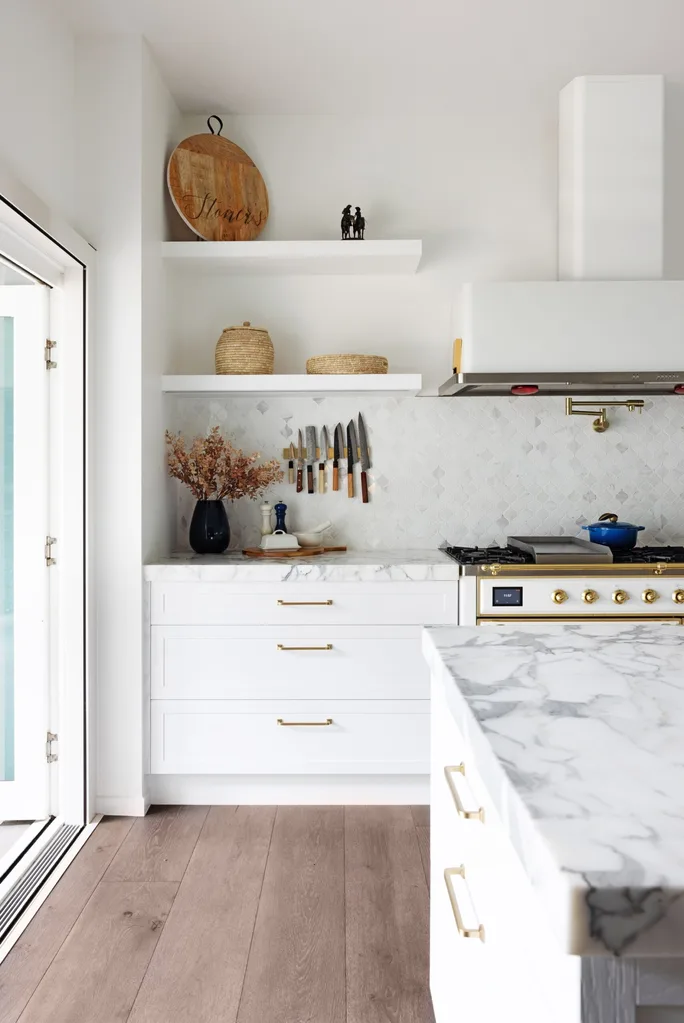
How to choose the right benchtop material
Whatever your lifestyle, the kitchen is a highly trafficked zone, so finding the right material is crucial. Danielle Bonello, founder and principal designer of Danielle Victoria Design Studio, encourages owners to think of it as an investment. “You want to be able to cook without worrying about damaging the benchtop,” she says. “All materials mark and scratch, however, choosing a hardwearing surface is a key factor in the design selection.”
Different materials suit many different applications, so before you get swept away choosing a colour, consider how your kitchen is used. Most materials are durable and hard-wearing, but some require a little more care than others.
Budgeting for your benchtop
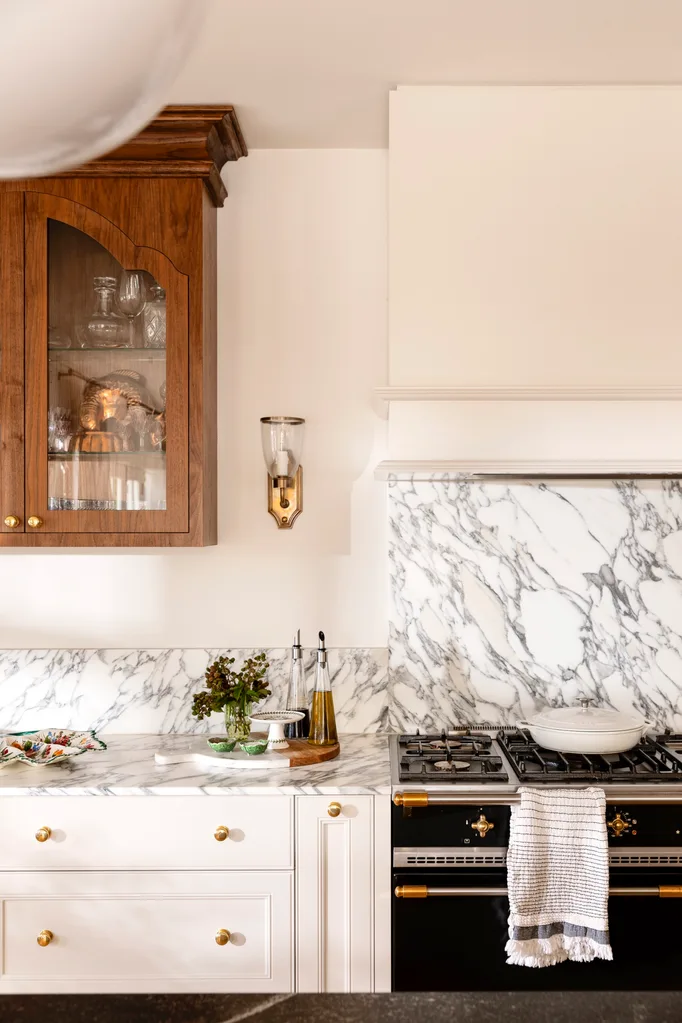
Cost is a big consideration, not just for the material but also for installation. Porcelain, for example, requires specialised tradespeople.
“Because it is so hard and dense, if it was dropped, it would just shatter,” says Prue Gordon, interior architect at Melbourne’s Bryant Alsop Architects.
“It needs special tools to cut it and stonemasons who are happy working with engineered stone are not necessarily happy cutting porcelain.” Always make sure your estimate includes installation before you sign on the line.
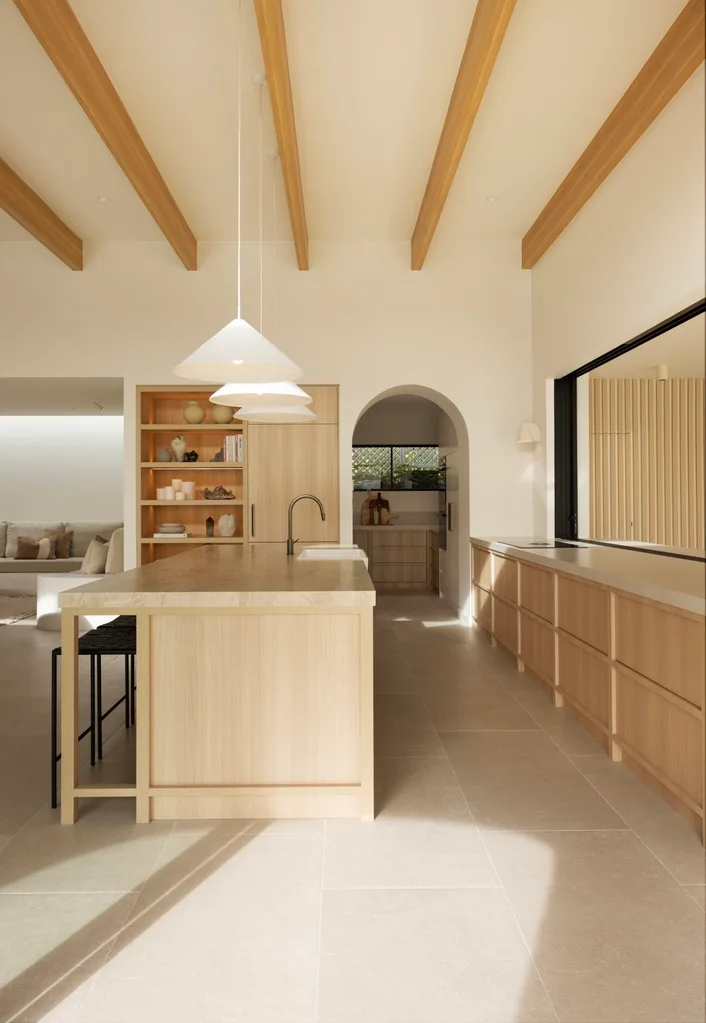
Matching your benchtop to your home’s style
The final step is finding a look you’ll love. Prue Gordon of Bryant Alsop Architects, takes her benchtop lead from the flooring.
“It’s a case of who’s using the kitchen, whether there are kids, and what the home’s design style is,” she says.
Consider too, how the colour and finish will flow throughout your home, a factor particularly important in an open-plan zone.

Kitchen benchtop materials compared (with pricing)
1. Natural stone benchtop materials
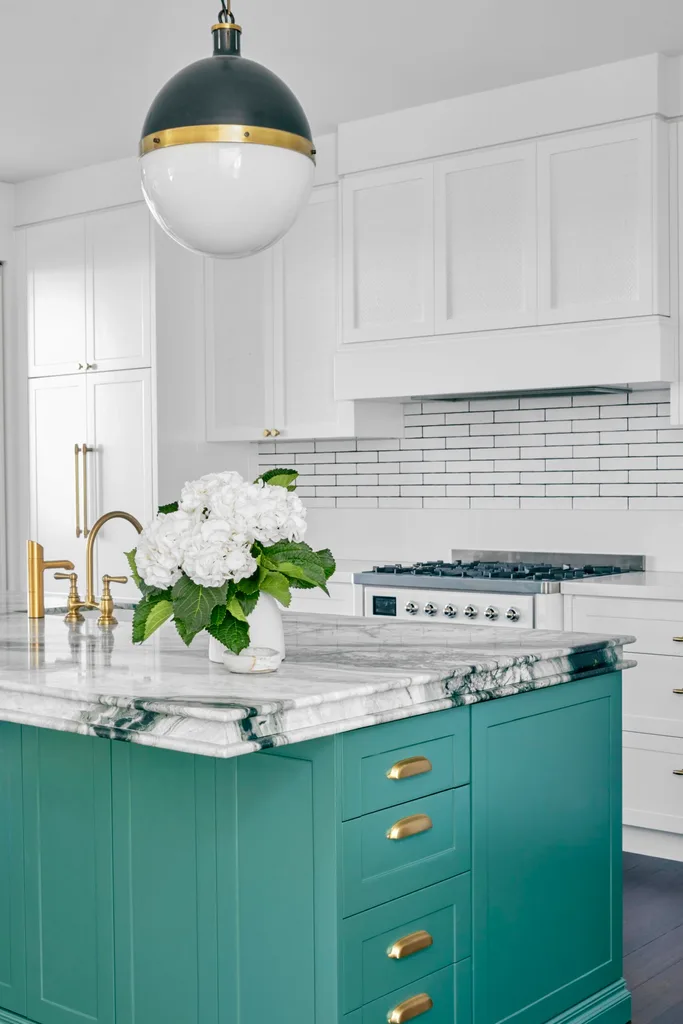
The beauty of stone – such as Statuarietto marble or Juparana granite – is as a natural material, each slab is unique. This materials provides a luxurious, striking and timeless look to your kitchen.
Marble is popular but it’s easily stained by things such as red wine, vinegar, coffee, spices (hello, turmeric!). This is due to its porous nature meaning sealing is required to prevent staining and heat damage. However, Neolith offers benchtops that are made from sintered stone, not quarried stone, resulting in minimal maintenance and no sealing.
“Unlike quarried stone, Neolith does not involve direct mining from the earth,” explains Kate Deakin-Bell, marketing manager at Neolith. “Instead, we source high-quality minerals and combine them in a carbon-neutral environment to create Neolith surfaces. Our production process is highly sustainable: we recycle waste by reusing discarded content, utilise up to 98% recycled water, and capture any carbon produced during manufacturing to reuse as an energy source. In essence, Neolith encapsulates the best properties of every natural stone and marble, all within a single, eco-friendly surface product that is much gentler on the earth and far more resistant.”
When it comes to maintenance, cleaning is easy (although staining is hard to avoid over the entire lifetime of your benchtop). “You can use standard surface sprays or a simple mixture of soap and warm water,” adds Kate Deakin-Bell. Avoid very abrasive cleaning products.
The finish for either marble benchtops or stone benchtops can be gloss (polished) or honed (matt) and it’s best to visit the warehouse and choose the slab you want so you know exactly what you’re getting.
Cost of natural stone benchtop materials
Since natural stone is at the higher end of the price range, interior designer Danielle Bonello suggests contrasting it with another material, “so that your natural stone island pops and becomes the feature.”
Pricing depends on where the stone is from, what type it is and the thickness of the slab. Neolith ranges from $300/sqm to $700/sqm. Marble ranges from $800 to $3000 per square metre and granite from about $700 to $1700 per square metre, including installation, but will attract additional costs for cuts for undermount sinks, where edges need to be carefully finished. A sink cut-out usually costs $250 and drainage grooves about $350. “The cost for natural stone is in the fabrication and installation and the complexity of joins, edges and profiles,” adds Danielle.

2. Stainless steel benchtop materials
Stainless steel gives a sleek, minimalist and modern look to a kitchen. As an alloy of iron that has been treated to be rust-resistant, it is also heat- and stain-resistant, and flexible enough to be shaped however you desire.
The material is very hard-wearing and hygienic, which is why it’s used in restaurant kitchens. Splashbacks and sinks can be completely integrated, so there’s no cracks for nasties to loiter in. Going for high-grade, thicker stainless steel benches mean they can be re-polished every five to 10 years, giving you the look of a brand new benchtop. “I love stainless steel, but you have to be the type of person who’s happy with the little scratches after a couple of years,” said Prue Gordon.
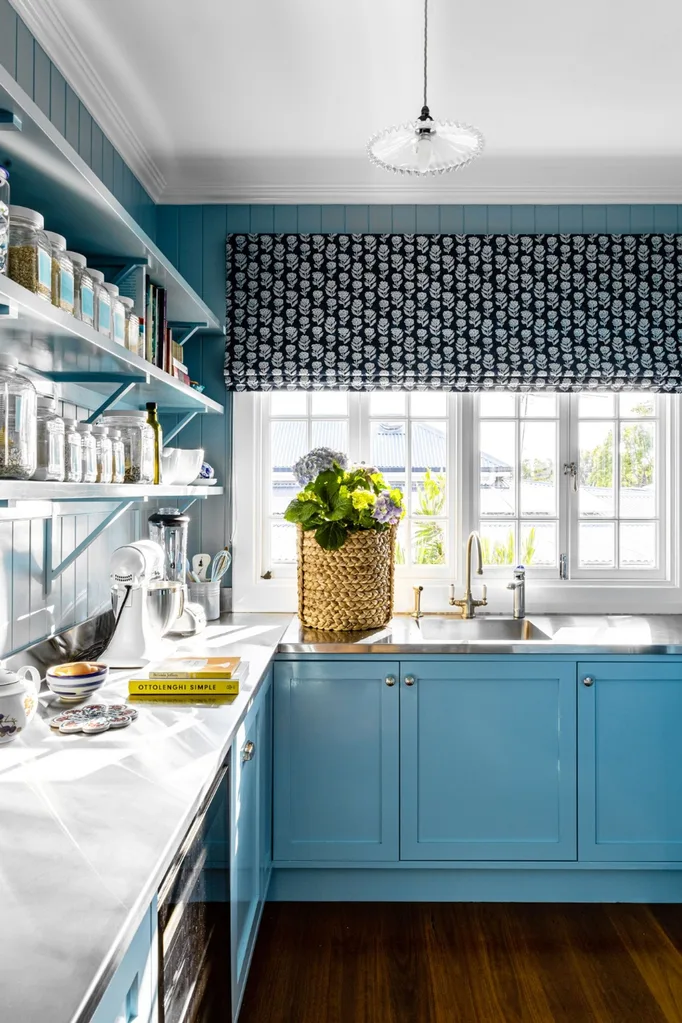
As far as daily maintenance goes, Kylie Forbes, creative director of Cantilever Interiors says, “It needs a wet, then dry cloth to soak any water marks. A feature that can be polarising is the patina that it attracts over time. Fine scratches develop, but with time settle into a worn-in feel.”
Cost of stainless steel benchtop materials
While stainless steel can be associated with more utilitarian looks, Kylie says, “introducing curves into the design enhances its softness”. It carries a premium price point, ranging from $1200 to $3600/lineal metre, including manufacture, supply and installation.
3. Polished concrete benchtop materials
Concrete benchtops are formed and poured on site, and considering their weight, you may require additional sub-floor structural work for support. However, they have a wonderfully raw finish (that’s now being imitated by other materials) and can even have heating built into them.
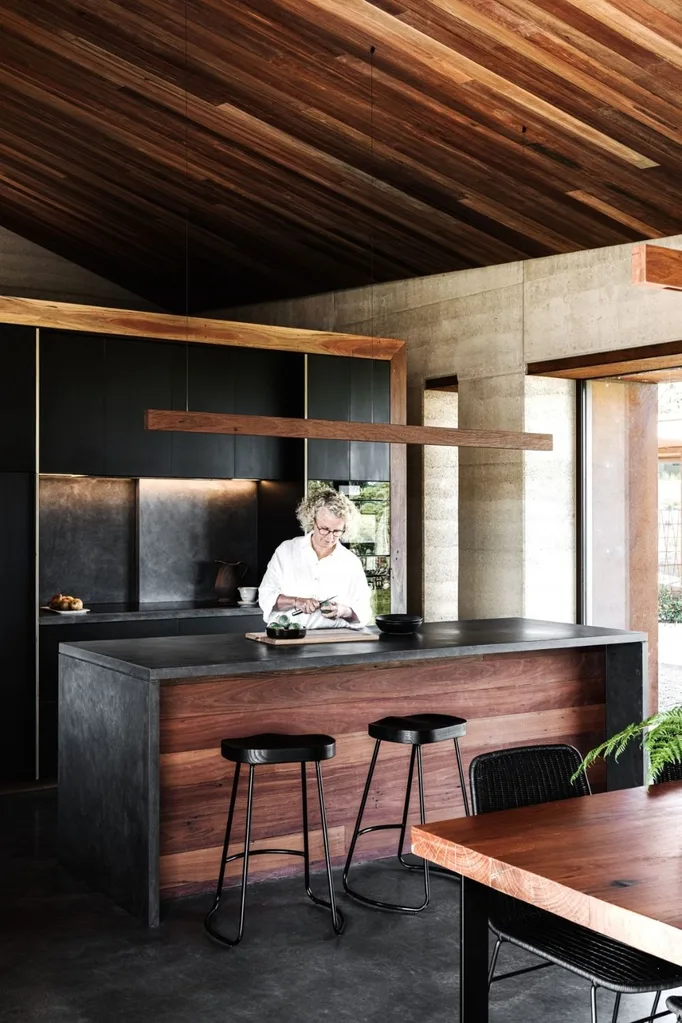
Concrete benchtops also need to be sealed before using and finishes can vary from very rough to more refined, plus they can be coloured by tinting the mix.
Cost of polished concrete benchtop materials
“This is definitely a project best done by professionals,” warns Danielle, “and will cost about $1000 to $1750 per square metre depending on the complexity of the formwork, finishes and joins.”

4. Timber benchtop materials
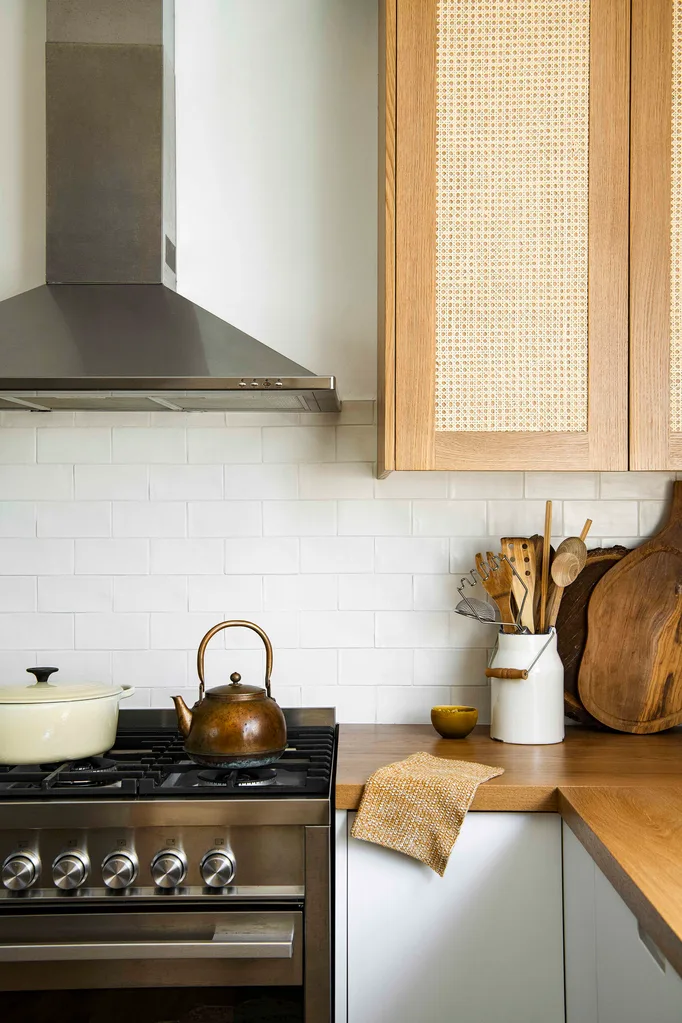
Timber benchtops, such as American Oak top, are formed from one solid length or pieces that have been laminated together (butcher’s block style). The surface of wooden/timber benchtops needs to be finished before using and, if oiled, will absorb spills.
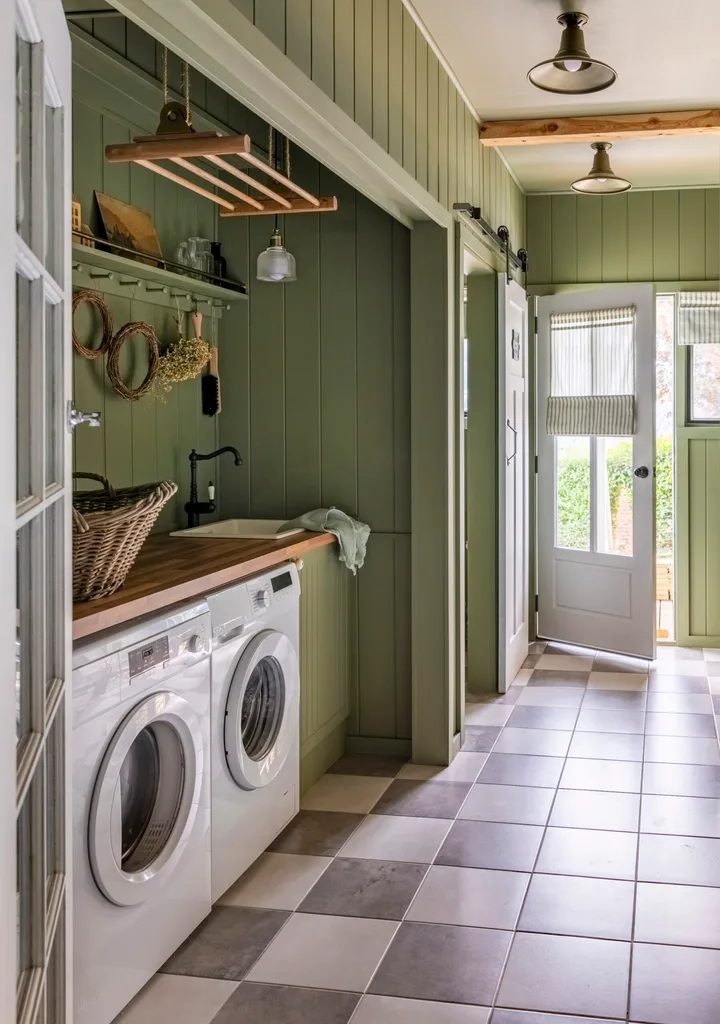
Warm and characterful, timber adds beautiful, organic appeal to the kitchen. Similar to the veining in stone, the grain of timber can create texture and visual interest. Style-wise, timber is a versatile material that can look equally at home in contemporary settings as well as country-style kitchens. As it can be painted or stained, it can suit a wide range of colour palettes, too. Another benefit is the patina – as timber acquires nicks and dents, it looks more unique and charming.
Bamboo benchtops are on the rise in the timber market. Hardwoods, like walnut, oak and beech are always popular, while native materials include blackbutt, spotted gum and jarrah. Kaboodle Kitchen mainly uses American oak and bamboo. As far as maintenance goes, Giorgia Manenti from Kaboodle Kitchen recommends resealing timber every two years. “This ensures they’re resistant to moisture and stains.”
The big advantage of this material is that every couple of years you can have it re-finished to remove any marks, and the benchtop will be as good as new.
Cost of timber benchtop materials
It depends on the type of timber you choose, and whether you go to a kitchen specialist, Bunnings or IKEA but prices range from $550 to $950 per square metre.
5. Engineered stone benchtop materials
Appearing under brand names including Caesarstone, Silestone, Quantum Quartz in Gobi Black and Essastone, engineered stone is made from mostly crushed quartz held together with resin. It is available in a variety of colours and finishes. It is also sold by the slab, which does limit its length to 3000mm.
The engineered stone ban
Silica dust is found in a lot of different materials (even natural stone) but engineered stone has a much higher percentage of silica (think 97% silica as opposed to marble which can have 2% silica). This can cause silicosis, a rare, long-term lung disease for people working with the material. Here’s everything you need to know about engineered stone’s silicosis risk.
As such, a nation-wide ban was put in place in 2024, preventing persons from carrying out work on, or with, engineered stone including manufacturing, supplying, processing and installing engineered stone.
As a result of this ban, companies such as Cesarstone have committed to silica-free surfaces. Caesarstone’s mineral crystalline silica-free surfaces are made using natural minerals and recycled materials, such as glass. Here’s more information on the engineered stone ban.
Cost of engineered stone benchtop materials
According to Danielle, Prices for reconstituted stone, such as Trend Stone range from $650/sqm to $1350/sqm, including basic fabrication and installation. For porcelain, slabs costs are generally much lower and range from $400/sqm to $1050/sqm, for very basic fabrication and installation. “But being a specialised material,” she adds, “fabrication costs are much higher.“

6. Laminate benchtop materials
Laminate is incredibly customisable, so there’s no one classic look. The material involves layers of printed paper or fabric being infused with resin and then bonded together. The material is then glued to a particleboard or MDF substrate to form the laminate. Laminates are budget-friendly and offer a seemingly endless range of colours and finishes, including marble and stone-look that are almost as good as the real thing.
This material is generally easy to clean, requiring only a mild detergent and water. However, be sure not to use harsh or abrasive cleaners, which can damage the surface of the laminate.
“If you’re clever with your design, you can use laminates beautifully. Forget spending $8000 on a stone benchtop, let’s spend $1500 and do something amazing!,” said Brett Patterson.
Cost of laminate benchtop materials
Laminates are generally sold by the linear metre and in various widths (from 600mm to 1200mm), with prices from $120 per linear metre for a 600mm benchtop in a standard finish to $440 per lineal metre for a 1000mm to 1200mm benchtop in a premium finish.
7. Porcelain benchtop materials
Newly arrived on the benchtop scene, porcelain is marketed under the brand name Neolith. Made of powdered clay and coloured pigments and bonded together at very high temperatures, porcelain can be created with different textures, from glossy to matt, and can also be printed with finishes that resemble stone, timber, concrete and rusted metal.
It is extremely dense and non-porous, plus it’s very resistant to heat, which means it’s great to use around cooktops. Another advantage is it can be used outdoors, so your alfresco kitchen can have the same look as indoors.
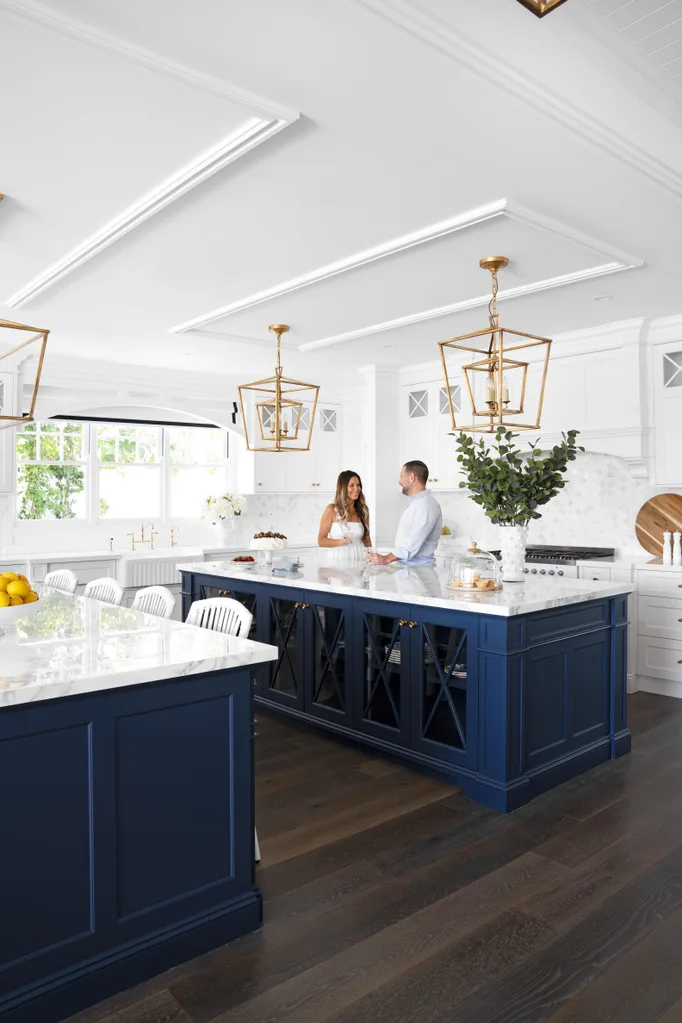
Double island benches are topped in Laminam Arabescato porcelain slabs supplied by Embassy Stone in this Hamptons style kitchen. (Photography: Louise Roche | Styling: Kylie Jackes)
Porcelain is made in larger slabs than engineered stone and in much thinner profiles. This taps into the current trend away from slab-like benchtops. However, it’s extremely heavy and you will need to work with your joiner to ensure cabinetry can take the weight.
Cost of porcelain benchtop materials
“Supply costs are generally lower than engineered and natural stone,” explains Danielle. “However costs are much more for fabrication and installation, as it requires specialist installers and tools.”
This article originally appeared on Home Beautiful and is republished here with permission.