
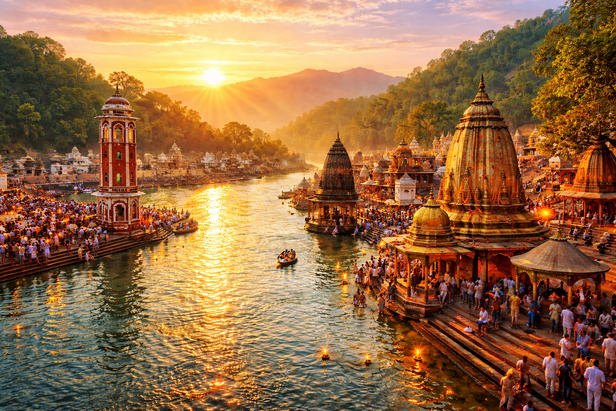
“न तीर्थं न नदी पुण्या न देवालयमुत्तमम्।
यत्र साक्षात् हरिः सन्निहितो नित्यं स देशः सनातनः।”
That land is eternal where the Divine presence is felt at all times.
Ask a priest in Haridwar and a scholar in Kashi which place is older, and you may not get the same answer. Historically, Kashi is clearly one of the oldest continuously inhabited cities in the world. Archaeology and literature support this without doubt.
Yet across centuries, a parallel belief has quietly survived. Many traditions, stories, and local understandings make Haridwar feel older than Kashi. Not older as a city, but older as a sacred idea.
This difference between history and belief is important. Haridwar’s age is not measured in ruins or timelines. It is measured in thresholds, crossings, and beginnings. Below are seven beliefs that shape this perception and explain why Haridwar is often felt to be more ancient in spirit, even if not in fact.
1. Haridwar Is Seen as a Gateway, Not a Settlement
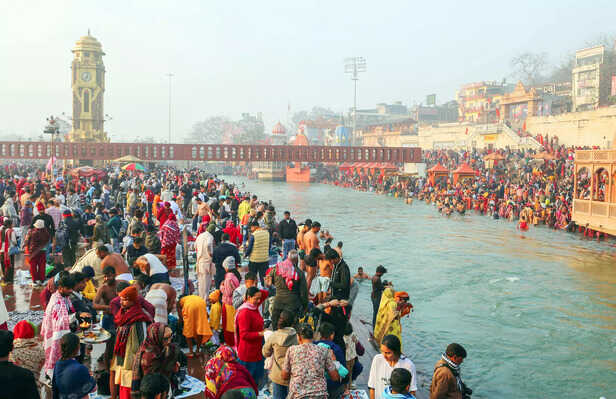
The very name Haridwar means the Gate of Hari. In Sanskrit, dvara means doorway. A doorway exists before what lies beyond it. In belief, gateways are not built after destinations. They are the first markers of a sacred path.
Haridwar is traditionally described as the entry point from the plains into the Himalayan sacred zone. Pilgrimages to Badri, Kedarnath, Kailash, and the upper reaches of the Ganga are said to begin here. Because it marks the start of spiritual movement, Haridwar is often imagined as existing before cities like Kashi, which represent arrival and settlement.
This idea makes Haridwar feel older in purpose, even if not older in structure.
2. Haridwar Is Counted Among the Oldest Tirthas, Not Cities
Hindu tradition distinguishes between a city and a tirtha. A city is inhabited. A tirtha is a crossing point between worlds.
Texts like the Skanda Purana and Padma Purana describe Haridwar primarily as a tirtha. Tirthas are believed to appear and disappear across cosmic cycles. They are not bound by continuous habitation.
Kashi is described as Avimukta Kshetra, a city never abandoned by Shiva. Haridwar is described as a crossing that manifests when needed. This gives rise to the belief that Haridwar existed in previous ages even if it did not exist in visible form.
3. Haridwar Is Linked to the First Descent of Ganga
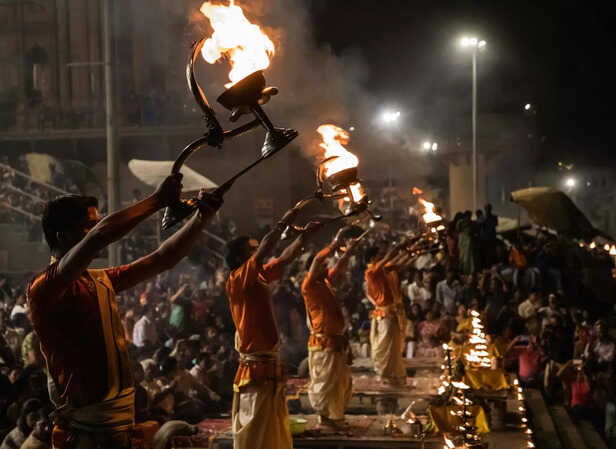
One of the strongest beliefs comes from the story of the descent of Ganga. While Bhagiratha’s penance is associated with Gangotri, Haridwar is described as the place where Ganga first fully enters the human realm.
The plains begin here. The river changes character here. This transition gives Haridwar the role of first contact between divine flow and human society.
Because first contact often carries the weight of beginnings, Haridwar is imagined as predating other sacred river cities that developed further downstream, including Kashi.
4. Some Traditions Place Shiva and Parvati’s Early Earthly Presence Here
Local Shaiva traditions speak of
Lord Shivaand
Goddess Parvatimoving through the Haridwar region during their early wanderings on earth.
These stories do not claim formal residence, as Kashi does, but they place divine presence here before cities were established. Shiva is often described as roaming before settling. Kashi represents his permanent seat. Haridwar represents movement before settlement.
This narrative reinforces the sense that Haridwar belongs to an earlier phase of sacred history.
5. Haridwar Is Said to Have Been Destroyed and Renewed Many Times
Unlike Kashi, which is believed to remain intact across ages, Haridwar is often described as vulnerable to time. Floods, shifting river courses, and cosmic cycles are said to erase and reveal it repeatedly.
This belief leads to the idea that Haridwar has existed across many yugas but not continuously in visible form. What disappears and returns is often perceived as older than what remains unchanged.
This cyclic existence contributes to the feeling that Haridwar’s roots extend further back than recorded memory.
6. Kumbh Tradition Ties Haridwar to Cosmic Time
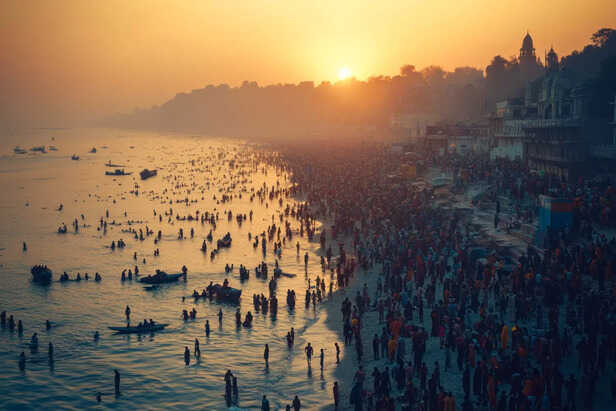
Haridwar is one of the four Kumbh Mela sites. The Kumbh is not linked to historical events but to cosmic alignment.
The belief that drops of amrit fell here during a divine event places Haridwar within a time frame far beyond human history. Kashi, while sacred, is not part of this cosmic rotation.
This association with celestial cycles rather than earthly chronology makes Haridwar feel older in scale and scope.
7. Haridwar Represents Beginning, Kashi Represents Completion
Perhaps the most important belief is symbolic rather than literal.
Haridwar is associated with beginnings, entry, purification, and preparation. Kashi is associated with endings, liberation, and release.
In Hindu philosophy, beginnings are placed closer to creation itself. Endings are closer to transcendence. Because Haridwar represents the first step and Kashi the final step, many people intuitively feel Haridwar belongs to an earlier stage of sacred time.
This is not about which is superior. It is about where each stands in the spiritual journey.