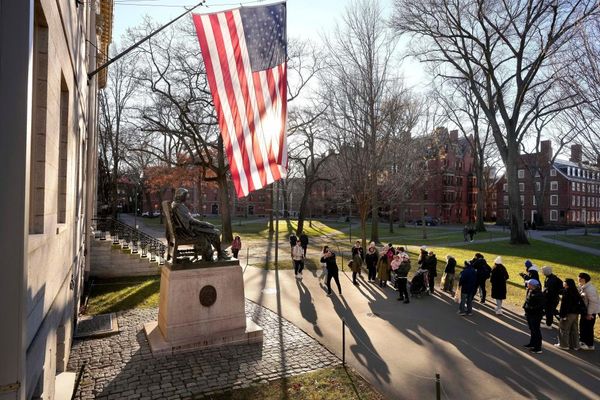
NEW HAVEN, Conn. _ Counselors were converging on the New Haven green Thursday to aid members of the homeless population affected by Wednesday's mass overdose of the synthetic marijuana drug known as "K2." Officials Thursday morning reported three arrests in connection with the overdoses.
"This is not falling on deaf ears," Rick Fontana, New Haven's emergency management director, said Thursday morning about the 76 reported overdoses. "We want to get a handle on it."
By late morning Thursday, public safety had six new overdoses reported in the area of the green with people with similar symptoms to earlier K2-related illness, Fontana said.
Gerald Douglas, 64, summoned police and medics when he saw two men on the green smoking, "and then they started to shake and pass out." Douglas walked across the green, made contact with police officers and pointed them toward the stricken men.
"Would have been on my conscience if I didn't," said Douglas, of New Haven.
"It is crazy, it is ugly _ you don't know what you're doing, you don't know where you are," said Douglas, saying this was the worst drug crisis he's ever seen.
"I stopped doing drugs in 1991. That's a plus for me. I'm glad I did, or else I'd probably be out here using, or dead."
From Tuesday night through Wednesday evening, police, fire and emergency medical teams responded to so many sick people _ some unconscious _ that Mayor Toni Harp had an on-site command center on the green.
The state health department provided 50 doses of the opioid overdose antidote Narcan as the city of New Haven ran out of their Narcan supplies over the course of 24 hours.
Fontana said the K2 analysis was done by the federal Drug Enforcement Administration, which responded to assist local police investigating the cluster of overdoses. No one died in the outbreak but six people were listed in serious condition Wednesday.
"Only a few required admittance to the hospital and most were discharged or left before any treatment," he said.
One of the admitted patients tested positive for fentanyl in his toxicology screen but it isn't clear if the person had ingested that opioid earlier, Fontana said.
Fontana said New Haven is a hub for shelter services with many over the course of each year from across the state seeking beds, meals and treatment. He said the city had among the most shelter beds of any municipality in the state, spending about $1.3 million a year on beds and staff. The soup kitchens are always busy, he said, and there are about 2,000 medical calls a year on or around the green, most related to alcohol and drugs.
In about 12 hours Wednesday, more than 30 people _ most of whom had been on the New Haven green _ were treated for overdoses of a drug known as "K2" laced a with a synthetic opioid, police said. The total number of overdose cases grew to 76.
By late Wednesday afternoon, Harp had increased police presence on the green, and directed that the New Haven Fire Department and AMR ambulance maintain an around-the clock incident-command center there. She also asked that the city be given larger supplies of the opioid antidote Narcan from the state Department of Public Health, said city spokesman Laurence Grotheer.
Gov. Dannel P. Malloy said the state Department of Public Health and the Department of Mental Health and Addiction Services assisted in New Haven in the midst of the overdoses. "Today's emergency is deeply troubling and illustrative of the very real and serious threat that illicit street drugs pose to health of individuals," Malloy said. "The substance behind these overdoses is highly dangerous and must be avoided."
Authorities said the patients had smoked "K2," a synthetic cannabinoid, mixed with the powerful opioid fentanyl. The patients were taken to area hospitals for overdose-related respiratory illnesses, Officer David Hartman said.
Fire Department first responders were handling so many calls that they were experiencing "compassionate-care fatigue" and had to be rotated off the engine companies, said New Haven Fire Chief John Alston.
He said this was the single largest concentration of overdose victims that the department had experienced. The city mounted a mass-casualty response, including fire, police, ambulances, emergency management, city health department and Yale New Haven Hospital personnel, Fontana said.
Alston said drug overdoses in New Haven, as in other cities, are at epidemic proportions and that the city is in the grip of a public health crisis.
Harp said that on Wednesday, "New Haven was on the front lines of a coast-to-coast struggle to combat the public health menace of illicit distribution and use of what appear to be tainted street drugs. ... I'm extremely grateful for the timely and effective work of first responders who helped revive, transport and save these victims."
She said toxicology tests will help investigators learn more about the nature of the drug.
Nationally, overdose deaths reached a record level of 72,000 in 2017, according to a recent federal report.
Authorities said most of the New Haven patients responded to high doses of Narcan given at the hospital and they were released. But some overdosed again, including one person who was treated for three separate overdoses.
Two former addicts said almost any drug can be sprayed on K2, or even dribbled out of eye droppers. The additives boost the high, but can create a dangerous, sometimes deadly cocktail. K2 is illegal, but can still be bought in some shops and corner stores.
Many of the victims were homeless and unemployed and represented a wide range in age. Alston said many contend with mental health issues, making the drug abuse a medical issue in addition to a legal one. The New Haven green is a meeting place for the homeless population in the city. Grotheer disputed the notion that the green was evolving into anything like a tent city at night.
Officials said Wednesday's response was a tremendous drain on the fire department. One engine company, for example, responded to eight separate overdoses.
Alston said some people were unconscious and in respiratory distress, and others were vomiting. He said there were a dozen overdoses in 40 minutes on the green on Wednesday morning. As Fontana was talking to reporters late in the morning, the fire radio crackled with reports of two more people down on the green, and police, medics and firefighters ran or drove to aid the latest victims a few hundred yards away.
The Drug Enforcement Administration is assisting with the investigation and will send drug samples to a federal lab for analysis.
The DPH provided 50 doses of naloxone as the city of New Haven ran out of their supplies over the course of 24 hours.
Carol Cruz, a drug counselor at the South Central Rehabilitation Center, went to the green to see if she could help get some of the drug users into inpatient recovery _ but she noted that it is hard to help K2 abusers because the drug is usually laced with other substances that may not be known.
"There is no playbook," she said.
The overdoses prompted the Office of Emergency Medical Services to issue a "Situational Awareness Advisory" about K2 to all EMS organizations in the state.
The alert also reminds people of the symptoms of overdoses: The person won't wake up; has blue lips or fingernails; has clammy, cool skin; shallow, slow breathing or is suffering from seizures, the EMS office said.
More than a dozen people overdosed on synthetic marijuana July 4 in New Haven, The Associated Press reported at the time. Most of those overdoses also happened at the New Haven green, the wire service said.