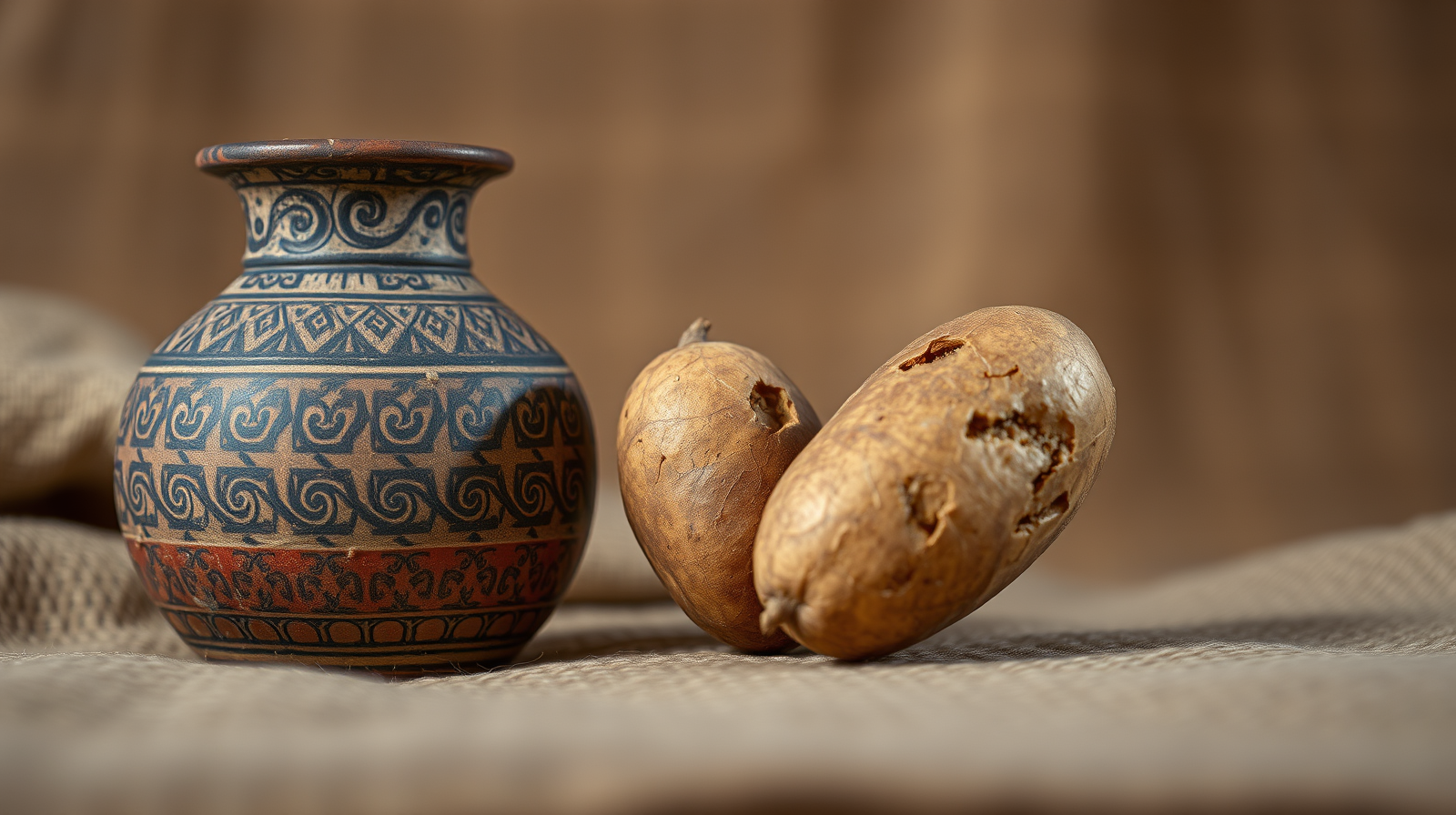
Two small, wrinkled lumps of potato were found buried inside a ceramic jar on the floor of an ancient storage room on the arid southern coast of Peru, and they turned out to be roughly 500 years old, dating back to the height of the Inca Empire. The potatoes are a form of traditional Andean freeze-dried food known as chuño, and their discovery at a coastal site is what makes the find so archaeologically significant. Chuño can only be produced in the freezing highlands of the Andes mountains, hundreds of kilometres away from where these particular examples were unearthed, which means their presence at the coastal site is direct physical proof that the Inca were transporting preserved food across enormous distances to feed the workers and soldiers who kept their empire running. The study describing the find was published in the Journal of Field Archaeology by archaeologist Lidio Valdez of the University of Calgary and independent researcher Katrina Bettcher.
Get breaking news anytime, anywhere. Download the TOI app now!
How chuño is made and why it is rarely found at archaeological sites
Chuño is not simply dried potato. It is the product of a precise and labour-intensive process that exploits the extreme temperature swings of the high Andean plateau, where nights can plunge well below freezing even in warmer months while days bring strong sun and dry air. Whole potatoes are left outside overnight to freeze solid, then thawed in the morning sun, then trampled underfoot to press out the moisture, and this cycle is repeated multiple times before the potatoes are finally left to dry out completely in the cold, thin air of the mountains. The variety of potatoes used to make the chuño found at Tambo Viejo was naturally toxic in its raw state and would have required several additional weeks of soaking in water after the freeze-drying process to neutralise those toxins before they could safely be eaten. The result of this entire process is a rock-hard, lightweight, shelf-stable product that can last for years and even decades when stored correctly, which is precisely what made it so valuable to the Inca state. Despite this impressive longevity, chuño is extraordinarily fragile as an archaeological object and rarely survives in a form that can be recovered and identified after centuries underground, making this discovery only the second time it has been found at an Inca site in more than a hundred years of excavation.
The Tambo Viejo site and what was found inside the storage room
The discovery was made during the 2024 field season at Tambo Viejo, an Inca provincial administrative centre in the Acarí Valley of southwestern Peru, where Valdez's team had already been excavating for several years. Inside a small structure that appeared to have functioned as a storage facility, the archaeologists found a clay pot that had been sunk directly into the floor, a deliberate method of underground storage designed to regulate temperature and protect contents from the elements. Inside the jar were the two chuño, found alongside an Inca pottery fragment and a broken spindle whorl used for spinning raw wool into thread. Valdez recalled the moment of discovery clearly, noting that it was immediately obvious this was not just any find but something exceptional, a reaction that proved correct once the potatoes were formally identified. The preservation the team described as excellent, with the two pieces retaining their shape and colour in a way that made them look, in photographs, strikingly similar to modern dried produce sitting on a kitchen shelf rather than relics from a vanished civilisation.
How the Inca Empire used chuño to fuel an entire imperial economy
The presence of chuño at a coastal site like Tambo Viejo is significant precisely because it could not have been made there. The production process requires mountain frost, and the Acarí Valley sits at low elevation in one of the driest regions on Earth. This means the potatoes began their journey somewhere in the high Andes, were processed, then stored in state-controlled highland warehouses called qollqas, and eventually transported to the coast in llama caravans as part of the systematic food distribution network that the Inca state used to feed the enormous workforce it mobilised for construction, military campaigns and administrative tasks across its territory. Valdez explained in the published study that because the Inca state carried out countless large-scale projects across its realm, involving thousands of workers who had to be fed at state expense, officials would regularly mobilise large volumes of chuño from highland warehouses and dispatch it via llama caravan to wherever the labour was being directed. At Tambo Viejo, the potatoes appear to have been placed underground specifically to prevent food waste and extend their storage life even further, which suggests the people managing this facility understood perfectly well how to maintain an already durable food supply in optimal condition.
What future chemical analysis might reveal about these specific potatoes
Researchers say the story of these two particular potatoes does not end with their physical identification. Future chemical analysis of the chuño may be able to determine the specific mountainous region where the potatoes were originally grown, based on trace elements and isotopic signatures absorbed from the soil and water of their place of origin. That kind of geochemical fingerprinting would allow archaeologists to map precisely where in the Andes these specific tubers began their journey before ending up buried in a jar on the Peruvian coast, adding a level of logistical detail to the Inca food distribution story that no written colonial document could provide on its own. Valdez has indicated plans to continue excavating at Tambo Viejo, a site he considers uniquely valuable for understanding how the Inca economy actually functioned at the ground level, and he expects that further work at the site and others along Peru's south coast will eventually surface more evidence of chuño and the long supply chains that carried it.
Why chuño still matters in the Andes today
The story of chuño does not end with the fall of the Inca Empire in the sixteenth century. The practice of making freeze-dried potatoes has continued without interruption in Andean communities for centuries, and chuño remains a staple food in parts of Peru, Bolivia and Argentina today, valued for the same reasons the Inca prized it so highly: its durability, its lightweight portability and its nutritional density in a region where food security across harsh mountain winters has always been a serious concern. The rediscovery of these 500-year-old examples at Tambo Viejo is a reminder that some technologies born in the ancient world are not simply historical curiosities but genuinely functional solutions that have outlasted the civilisations that invented them, continuing to serve the same basic human need across half a millennium of political, cultural and climatic change.
Two wrinkled lumps of potato in a ceramic jar have more to say about how an empire fed itself than most administrative records ever could. The Inca left no written language, but chuño buried in a coastal storeroom is its own kind of document, patient, durable, and still legible five hundred years later.