
In 2023, the post-apocalyptic drama is decidedly in. We've grown used to seeing unshowered people in torn clothing scramble through the woods, a terrifying monster on their heels. Just this year we had The Last of Us, Knock at the Cabin, and the upcoming zombie thriller The Last Train to New York. Recent years have given us dozens of other survival dramas that revolve around humanity's downfall, including Station 11, the Tom Hanks-led Finch, and Bird Box.
The genre is hardly new, but it seems pop culture is more interested in the end of the world than ever, and one of the hallmarks of the contemporary post-apocalypse is a quieter, more thoughtful approach to what the world's end could really mean for humanity. The explosive, action-driven apocalypse thriller has mostly made way for a more nuanced approach, and A Quiet Place was at the helm of this shift.
A Quiet Place was written and directed by John Krasinski, who also starred alongside his real-life wife, Emily Blunt. They play a married couple who, along with their three children, live in a future where sightless, violent aliens roam the world, and the surviving humans live in perpetual, anxious silence. The family survives thanks to their knowledge of ASL; their daughter, Regan (Millicent Symmonds), is deaf.
It's an inventive premise that led to a marked step forward in inclusivity, and a remarkable cinematic experience built on the threat of sound and the suspense of silence. The film's impressive sound design means that with every tiny noise, from the breaking of a twig to a sharp exhale, the audience draws an apprehensive breath. It's a film dominated by silence, and it demands a gripped silence from viewers too, the kind where you don’t touch your popcorn or your phone.
Films like 28 Days Later, Planet of the Apes, and The Day After Tomorrow gave us the immense drama of our world's final moments, complete with high-octane action and sweeping shots of cities falling to pieces. But unlike many of its post-apocalyptic predecessors, A Quiet Place is interested in portraying the domestic shifts of a changed world. There are still plenty of action scenes, but in between we get a glimpse into a remarkably inventive vision of humanity's future.
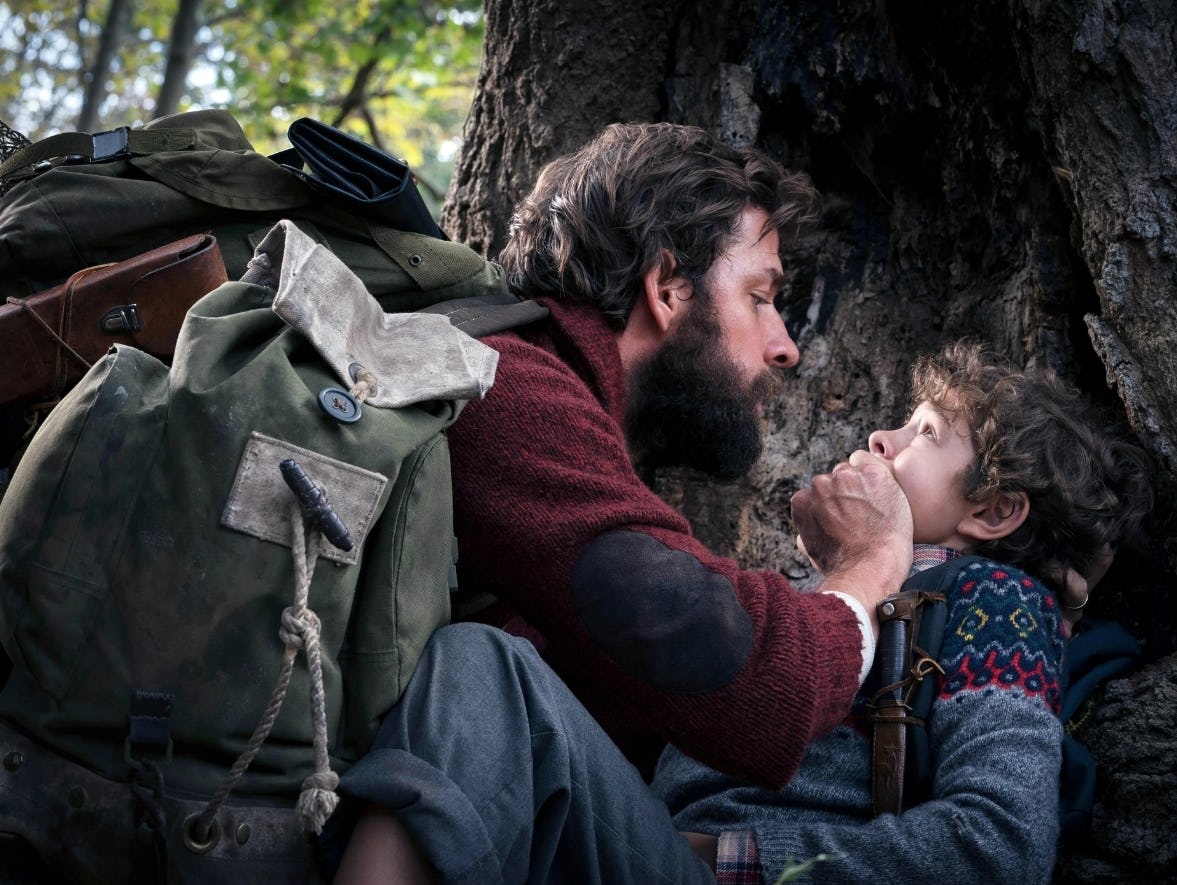
Our heroes have found new ways of living in a hostile world. In addition to sign language, the family walks barefoot on handmade sand paths to soften their footsteps. They communicate using an elaborate system of fairy lights strung up around their farm, eat with their fingers from plates of lettuce, and play board games with soft, hand-knit dice. It's charming to see this family find ways to not only survive, but to live full lives as the world falls apart around them.
In the context of the current post-apocalypse crop, A Quiet Place feels like a trendsetter. In The Last of Us and Station 11, the focus remains on the continuation of humanity, rather than our mere survival. It's no secret many of us feel like the world is teetering; we've just been through a pandemic, political divides are growing, and climate change looms. The world feels a little breakable. Maybe it's that sense of fragility that's spurred our newfound fascination with the philosophical post-apocalypse, but regardless of the source, A Quiet Place remains a haunting examination of life after the world's collapse.