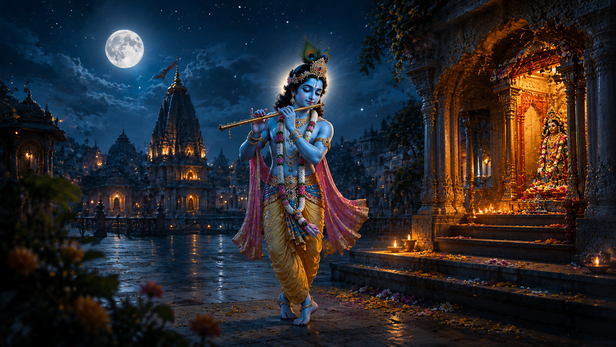
Across the sacred landscape of India, there are temples where devotion does not end when the final evening aarti is completed. In certain ancient Krishna temples, generations of priests and devotees have preserved mysterious beliefs that Lord Krishna still spiritually visits these holy places after nightfall. For millions of devotees, Krishna is not merely a historical or mythological figure. He is an eternal divine presence whose leelas continue beyond human understanding. In many Vaishnava traditions, it is believed that Krishna never truly leaves the places where he was worshipped with complete love and surrender.
Some temples are especially surrounded by extraordinary stories. Priests speak softly about hearing anklet sounds in empty corridors. Temple doors are sealed at night because devotees believe Krishna still arrives to rest, walk, or accept offerings invisibly. Certain sanctums are never disturbed after specific hours because of centuries old traditions connected to divine presence. Whether viewed through devotion, faith, or spiritual mystery, these temples continue attracting pilgrims who believe that Krishna’s divine energy is still alive within their walls.
1. Shri Banke Bihari Temple, Vrindavan
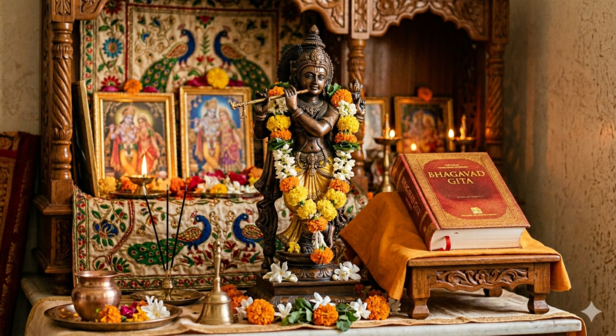
Among all Krishna temples in India, few carry as much mystery and emotional devotion as the famous Banke Bihari Temple in Vrindavan. Dedicated to Banke Bihari Ji, a beloved form of Lord Krishna, this temple is deeply connected to the bhakti traditions of Swami Haridas, the saint believed to have witnessed Krishna’s divine appearance in Nidhivan. One of the most powerful beliefs associated with the temple is that Krishna still spiritually visits nearby Nidhivan at night. According to local tradition, after the evening rituals conclude, the sacred area of Nidhivan becomes inaccessible because devotees believe Krishna continues his divine raas leela there with Radha Rani and the gopis.
The atmosphere surrounding this belief is so strong that many locals avoid entering Nidhivan after dark. Priests and devotees speak of unexplained sounds, disturbed objects, and a divine presence that cannot be explained through ordinary logic. The Banke Bihari Temple itself reflects this deep emotional connection. Devotees often describe feeling overwhelming devotion during darshan, believing Krishna’s presence there is unusually alive and intimate. For countless worshippers, Vrindavan is not simply a city. It is Krishna’s eternal spiritual playground.
2. Nidhivan, Vrindavan
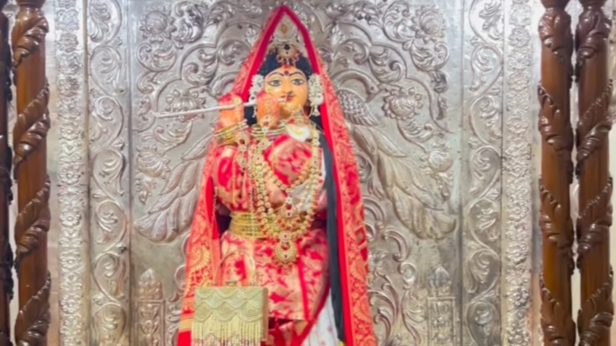
Although technically not a conventional temple structure, Nidhivan remains one of the most spiritually mysterious places associated with Lord Krishna. Located in Vrindavan, Nidhivan is believed by many devotees to be the sacred site where Krishna still performs his nightly raas leela with Radha and the gopis in divine form. Every evening, priests perform rituals and prepare offerings inside the Rang Mahal area before closing the premises completely. Local traditions strongly maintain that no human is permitted to remain inside Nidhivan after nightfall. According to long standing devotional belief, Krishna and Radha spiritually arrive there during the night. Stories surrounding the site have circulated for generations, including claims that food offerings appear disturbed by morning and that objects inside the temple mysteriously change positions.
The twisted trees of Nidhivan themselves contribute to the mystical atmosphere. Devotees believe the trees transform spiritually into gopis during Krishna’s divine dance. While such beliefs are matters of faith rather than scientific verification, Nidhivan continues to be one of the most emotionally powerful Krishna sites in India. For many devotees, merely entering the sacred grove creates a feeling that Krishna’s divine leela still continues beyond human sight.
3. Dwarkadhish Temple, Dwarka
The ancient Dwarkadhish Temple in Gujarat is one of Hinduism’s most revered Krishna temples and a central part of the Char Dham pilgrimage tradition. Dwarka is traditionally believed to be the kingdom established by Lord Krishna after leaving Mathura. Even today, devotees feel the city carries the spiritual energy of Krishna’s royal presence. Among local devotional traditions, there is a deep belief that Krishna still spiritually protects Dwarka and continues blessing sincere devotees who visit the temple with devotion.
The nighttime rituals of the Dwarkadhish Temple hold special emotional significance. Priests treat the deity not merely as an idol but as a living divine king. The temple’s final rituals before closing are performed with great care and intimacy, reflecting the belief that Krishna continues residing there spiritually. Many devotees describe the temple atmosphere at night as deeply powerful and emotionally overwhelming, especially during shayan aarti, when the deity is ceremonially prepared for rest. For worshippers, this is not symbolic worship alone. It is living devotion directed toward a deity believed to remain spiritually present in his sacred city.
4. Sri Krishna Janmabhoomi Temple, Mathura
Mathura, the birthplace of Lord Krishna, occupies one of the holiest positions in Hindu devotion. The Sri Krishna Janmabhoomi Temple is believed to stand near the sacred prison site where Krishna was born to Devaki and Vasudeva during the reign of Kansa. For devotees, the emotional energy of the temple becomes especially intense during nighttime prayers and Janmashtami celebrations. Many worshippers believe Krishna’s spiritual presence never leaves his birthplace.
Stories passed down among devotees describe moments of unexplained peace, divine experiences, and overwhelming spiritual emotion while visiting the temple after evening rituals. Mathura itself is not viewed merely as an ancient city. In Vaishnava belief, it is eternally connected to Krishna’s divine existence. This belief creates a powerful emotional bond between devotees and the temple, especially for those who visit seeking spiritual comfort, blessings, and closeness to Krishna.
5. ISKCON Temple, Vrindavan
The Krishna Balaram Mandir established by the International Society for Krishna Consciousness in Vrindavan has become one of the world’s most famous Krishna temples. Although modern compared to many ancient temples, the spiritual atmosphere inside the temple has attracted devotees from across the globe. Daily kirtans, nonstop chanting of the Hare Krishna maha mantra, and deeply emotional devotional worship create an atmosphere many devotees describe as spiritually transformative.
Within Gaudiya Vaishnava tradition, sincere chanting of Krishna’s holy names is believed to invite Krishna’s divine presence directly into the hearts of devotees. Many pilgrims visiting the temple at night speak about experiencing unusual calmness, emotional release, and a powerful feeling that Krishna’s presence remains active within the temple surroundings long after evening worship concludes. For devotees, the temple represents not just architecture or ritual, but living bhakti connected to Krishna’s eternal mercy.
Why These Beliefs Continue Inspiring Millions
The belief that Lord Krishna still walks spiritually through certain sacred places continues because Krishna bhakti is deeply emotional rather than purely philosophical. In Hindu devotional tradition, Krishna is often worshipped as:
- a divine friend
- protector
- child
- king
- beloved
- eternal companion
This personal relationship makes devotees feel Krishna remains close to humanity even today. Temples associated with living divine presence create powerful emotional experiences for worshippers. Whether through ancient rituals, sacred legends, devotional music, or overwhelming spiritual atmosphere, these places help devotees feel connected to something eternal and beyond ordinary life. For believers, Krishna’s presence is not limited by time, logic, or physical visibility.
Conclusion
India’s sacred Krishna temples continue inspiring awe because they represent far more than historical monuments. For millions of devotees, they are living spaces of divine energy where Lord Krishna’s presence is still experienced through faith, devotion, and spiritual emotion. From the mysterious nighttime traditions of Nidhivan to the emotionally charged worship of Vrindavan and Dwarka, these temples remain deeply connected to the belief that Krishna never truly abandoned the world he blessed through his divine leelas. For devotees walking through these sacred spaces, the feeling is simple yet profound: somewhere beyond human sight, Lord Krishna still walks among those who remember him with pure devotion.
Unlock insightful tips and inspiration on personal growth, productivity, and well-being. Stay motivated and updated with the latest at My Life XP.