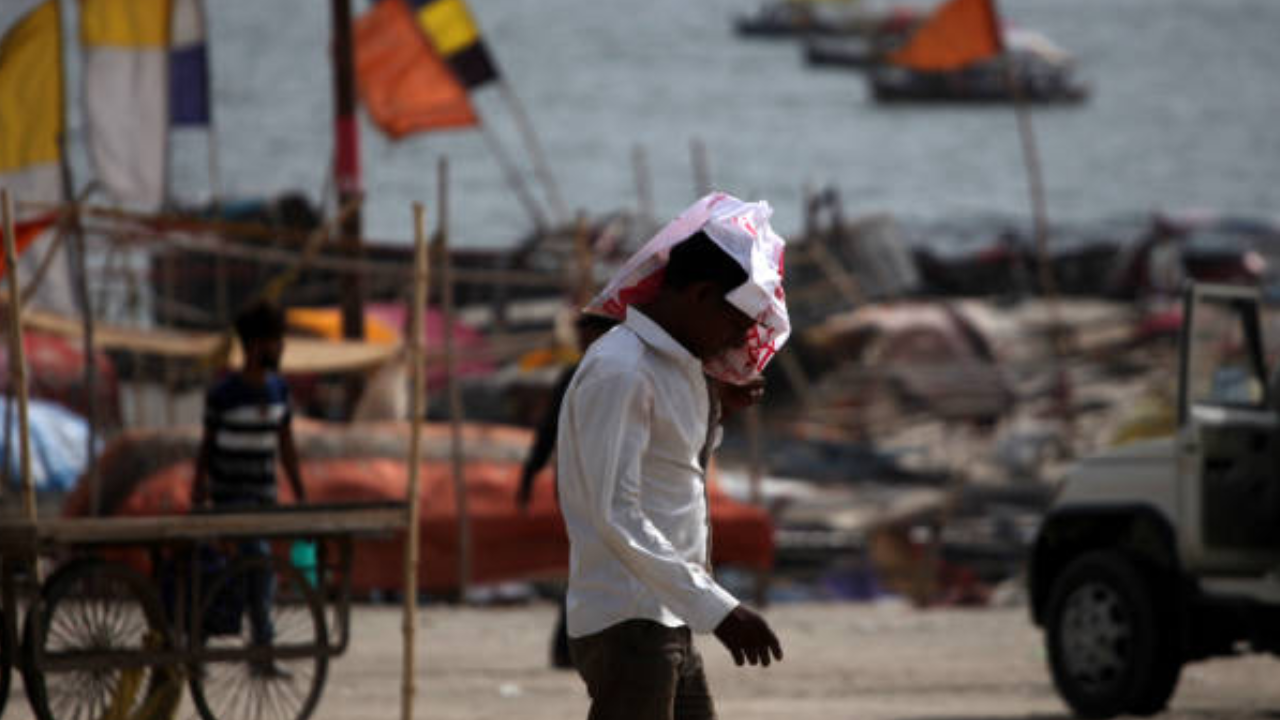
The India Meteorological Department (IMD) predicts a severe heatwave to persist across northwest India's plains, including north Madhya Pradesh and Gujarat, over the next five days. West Rajasthan is experiencing the most intense conditions, with significant impacts in east Rajasthan, Gujarat, and west Madhya Pradesh. Haryana, West Uttar Pradesh, Punjab, and Himachal Pradesh are also affected. Since mid-May, regions like Gujarat, Saurashtra, Kutch, Punjab, Haryana, Delhi, Uttar Pradesh, and Rajasthan have faced extreme heat.
Daytime highs range from 44-48°C in Rajasthan and slightly lower in Haryana, Madhya Pradesh, and Gujarat. Temperatures are 2-4°C above normal, with further increases expected.
The hottest places in the country right now are:
Barmer (Rajasthan) - 48.0
Sirsa (Haryana) - 47.7
Bhatinda (Airport) (Punjab) - 46.6
Kandla (Gujarat) - 46.1
Ratlam (Madhya Pradesh) - 45.0
Jhansi (Uttar Pradesh) -45.0
Akola (Maharashtra) -44.8
Una (Himachal Pradesh) -43.0
Nuapada (Odisha) - 43.0
What is a red alert?
Red alert is the highest warning sign issued by the IMD. This alert is issued when the severe heat wave persists for
more than 2 days with the total number of heat/severe heat wave days exceeding 6 days. The impact of the heat wave will affect all age groups. "Very high likelihood of developing heat illness and heat stroke in all ages and extreme care is needed for vulnerable people," IMD has warned.
Precautions to be taken (IMD recommended)
Extreme heat wave causes heat cramps which is characterized by swelling and syncope and a fever below 102F. It can also lead to fatigue, weakness, dizziness, headache, nausea, vomiting, muscle cramps and sweating.
Avoid going out in the sun, especially between 12:00 noon and 3:00 p.m.Drink plenty of water frequently, even if not thirsty.Wear lightweight, light-colored, loose, and porous cotton clothes. Use protective gear like goggles, an umbrella or hat, and appropriate footwear.Avoid strenuous activities and outdoor work during peak heat hours (12:00 noon to 3:00 p.m.).Carry water while traveling.Avoid alcohol, tea, coffee, and carbonated soft drinks, as they can dehydrate the body.Avoid high-protein and stale food.If you work outside, wear a hat or use an umbrella, and use a damp cloth on your head, neck, face, and limbs.Do not leave children or pets in parked vehicles.If you feel faint or ill, seek medical attention immediately.Use ORS and homemade drinks like lassi, torani (rice water), lemon water, and buttermilk to rehydrate.Keep animals in the shade with plenty of water.Keep your home cool with curtains, shutters, or sunshades, and open windows at night.Use fans, damp clothing, and take frequent cold baths.