
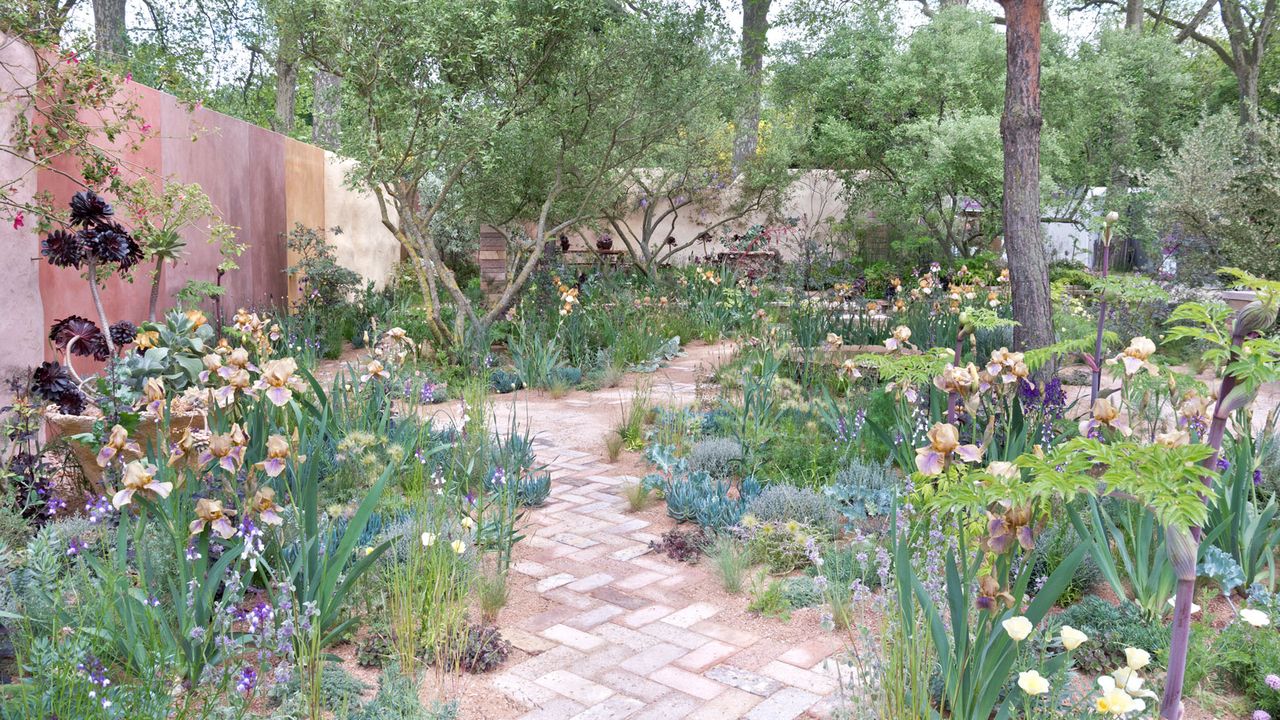
Spring is a great time of year to consider making adjustments to your garden design as the bare bones have been revealed all winter, allowing you to work out exactly what needs fixing. You can see at a glance if a border needs renovating, the color scheme of your planting has become too haphazard, or your garden is lacking a statement feature to pull the design together more seamlessly.
Before you fall into the trap of making one of the common spring garden design mistakes it's worth listening to advice from landscape designers who can advise you on the best ways to fix these problems. If you've decided you want to refresh a garden border, introduce a more cohesive layered look to your planting, or integrate more containers into your design these spring garden ideas will help shape your decisions.
Planting is everything in garden design and often the first thing to look at if things aren't working. So find out how to make better use of color, structure, and scale to give your yard a stunning spring makeover. We asked leading landscaping experts to share their thoughts on how to avoid six of the most common spring garden design mistakes and what to do instead.
1. Straight, Tidy Rows Vs Lush Layered Beds
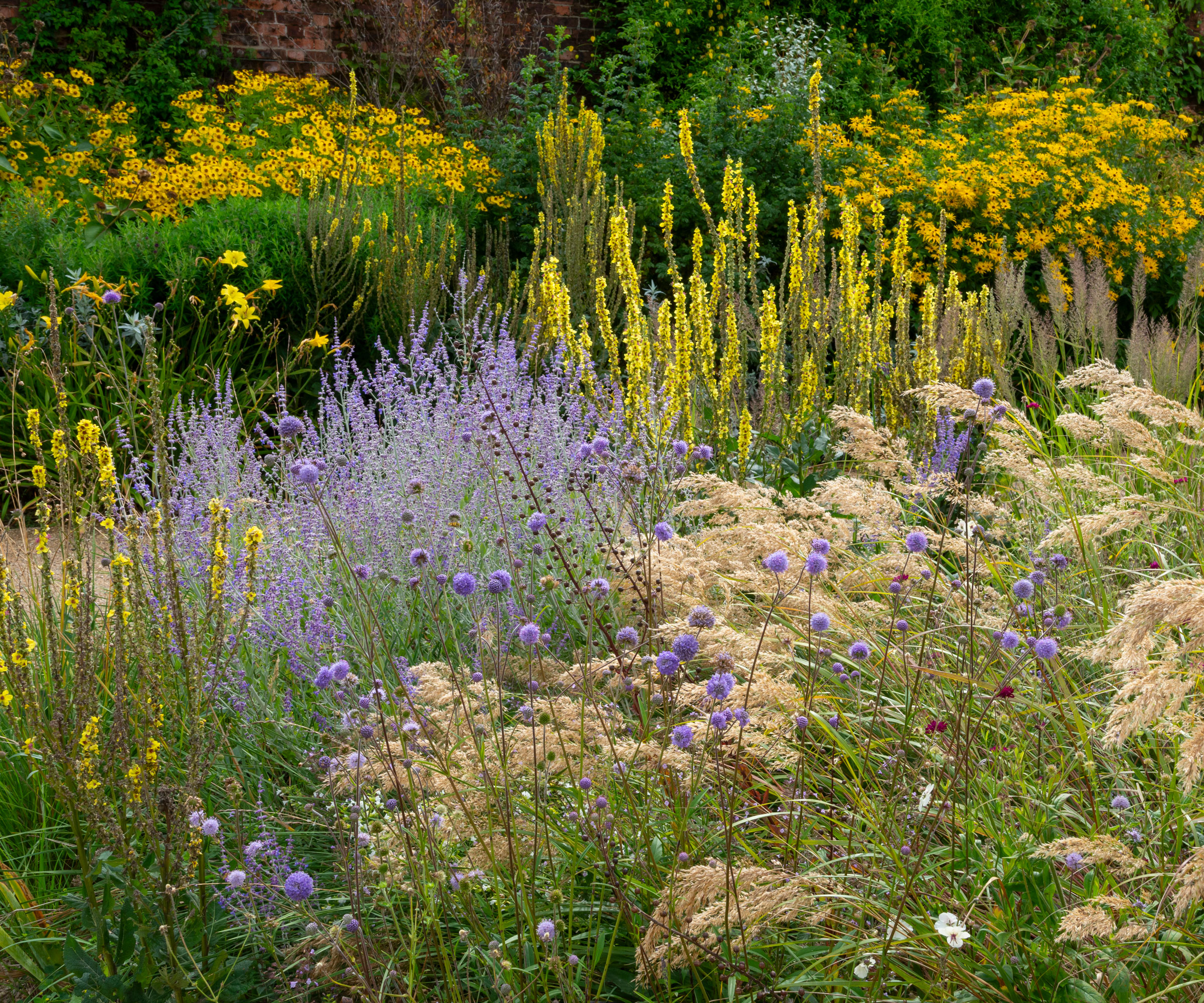
Sticking with straight, rigid lines in flowerbeds feels very old-fashioned, especially as the trend for spring garden ideas is now lush layered planting that features a mix of heights for depth and visual interest.
'Currently homeowners are looking to embrace more natural and organic styles in flower beds, such as cottage garden and meadow garden designs,' says Laura Janney, CEO of The Inspired Garden Masterclass.
'This type of lush landscaping works better with soft curves as opposed to straight, rigid lines. When you're marking out a new border think of a flowing stroke rather than straight edges by gently sweeping out a curved area.'
Lining plants up like little soldiers gives the space a formal and stuffy feel. When every plant is exactly in a row, it doesn’t allow plants to come together and play off each other.
'Instead design in gentle drifts and zig-zag groupings,' says Laura. 'Plant in loose triangles or slightly offset clusters, repeating the same flower so your eye naturally wanders through the bed.'
You can’t get that abundant, layered look without staggering heights, and this is where whimsical perennial plants such as salvia, geum and achillea, plus ornamental grasses are the go-to for adding lush detail.
The idea is to use tall plants at the back of the bed, medium-height plants to fill in the center, and low trailing plants to soften the edges. Spring is the ideal time to plant many of these varieties.
'When you have only one layer, no matter how pretty the flowers are the garden falls flat and lacks depth,' says Laura. 'Go for at least three layers to give your garden dimension and interest.'
Shop Whimsical Perennials for Layering
With vibrant bright rose-pink petals on tall flower spikes, this salvia variety will be covered in dramatic upswept spires from spring right through summer.
The light peachy-orange flowers last all summer. This tall upright plant works as a thriller in flowerbeds and attracts pollinators too.
This compact perennial has an outstanding flowering display that lasts for many months with plenty of dark rose-pink petals. Spreads nicely to fill bare spots.
2. Random Color Choices Vs Curated Color Palettes
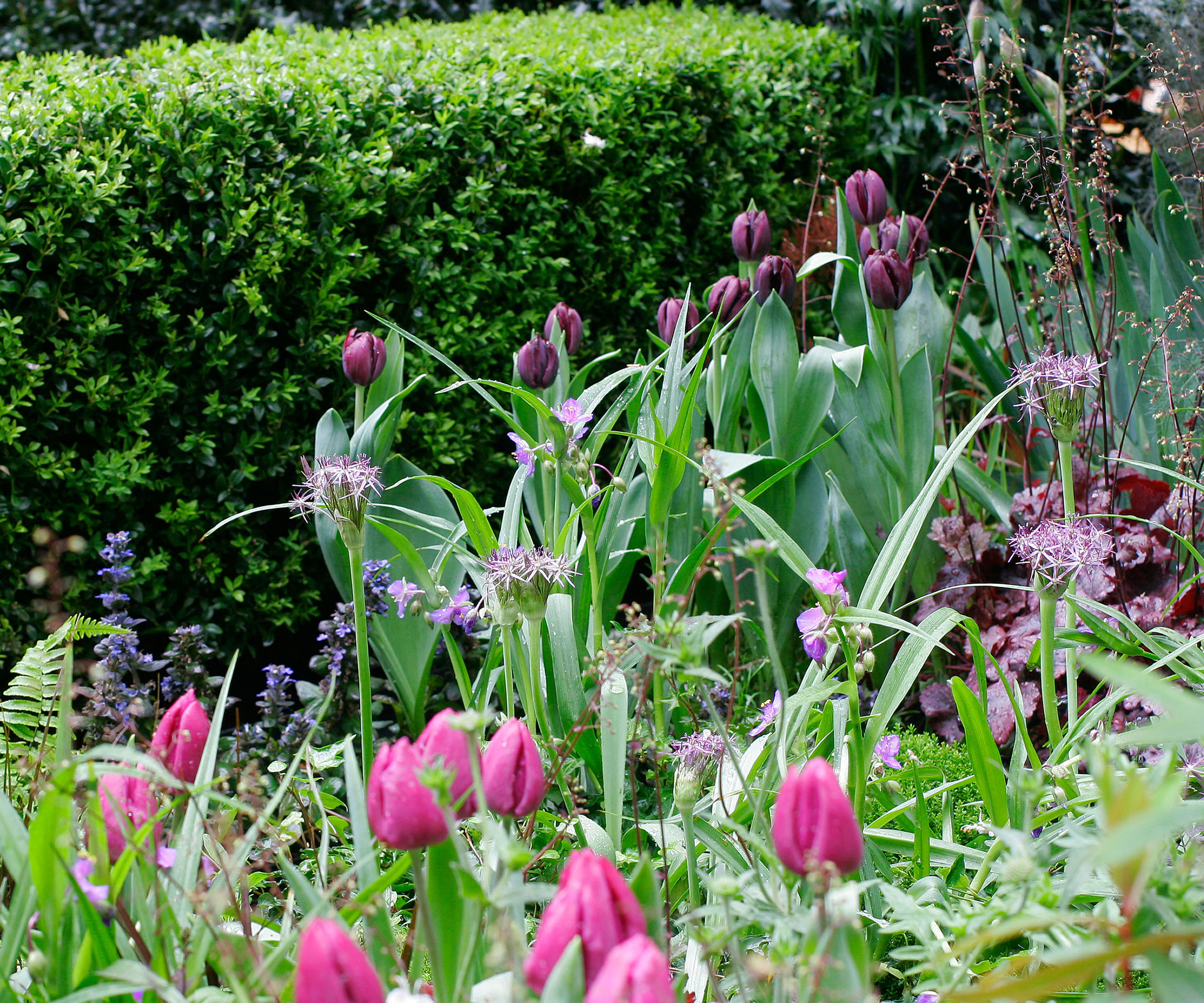
Garden designers plan color combos seasonally to offer year-round interest so flowerbeds look cohesive and full. Spring is the best planting season to pull together your creative ideas.
'When you have every color of the rainbow, the landscaping feels chaotic and not put together,' says Laura Janney. 'On the flip side, when it's too monochromatic, the blooms get lost.'
Laura suggests keeping the overall color palette focused on just a few main hues so it feels calm and cohesive, then weaving in the occasional pop of brighter or deeper tones. 'If you use every color, it can start feeling overwhelming and hard on the eye. Also try not to put the same color of blooms next to each other. That way each flower will stand out on its own.'
Another idea is to use specimen plants with spring blooms in a bed surrounded by neutral winter tones. 'Spring colors do not have to stand alone to become a highly valued attention grabber,' says landscape architect JD Zimmerman.
'One way to address this issue is by utilizing existing contrasts in the garden. Allowing our desired plant colors to be framed by contrasting colors lets them to pop out at us in the landscape, especially when compared to a backdrop of muted gray winter tones.'
JD suggests using dark evergreen shrubs like holly to provide a visual frame that emphasizes the new flush of spring blooms on a foregrounded plant. 'Utilizing this idea successfully requires a basic understanding of color theory, but once the foundation is established, using this as a tool for spring planning becomes straightforward.'
This strategy works at many different scales in the garden. 'A spring blooming tree might contrast against a building, while smaller plants like tulips can stand out against a dense hedge of boxwoods,' says JD. 'Some emerging ferns have fronds that can exhibit bronze, copper, or reddish colors before greening later in the season.'
By paying attention to contrast, gardeners can ensure that spring’s earliest colors don’t fade into the background but instead stand out as vivid signals of the season’s return.
3. Lack Of Focal Point Vs One Statement Feature
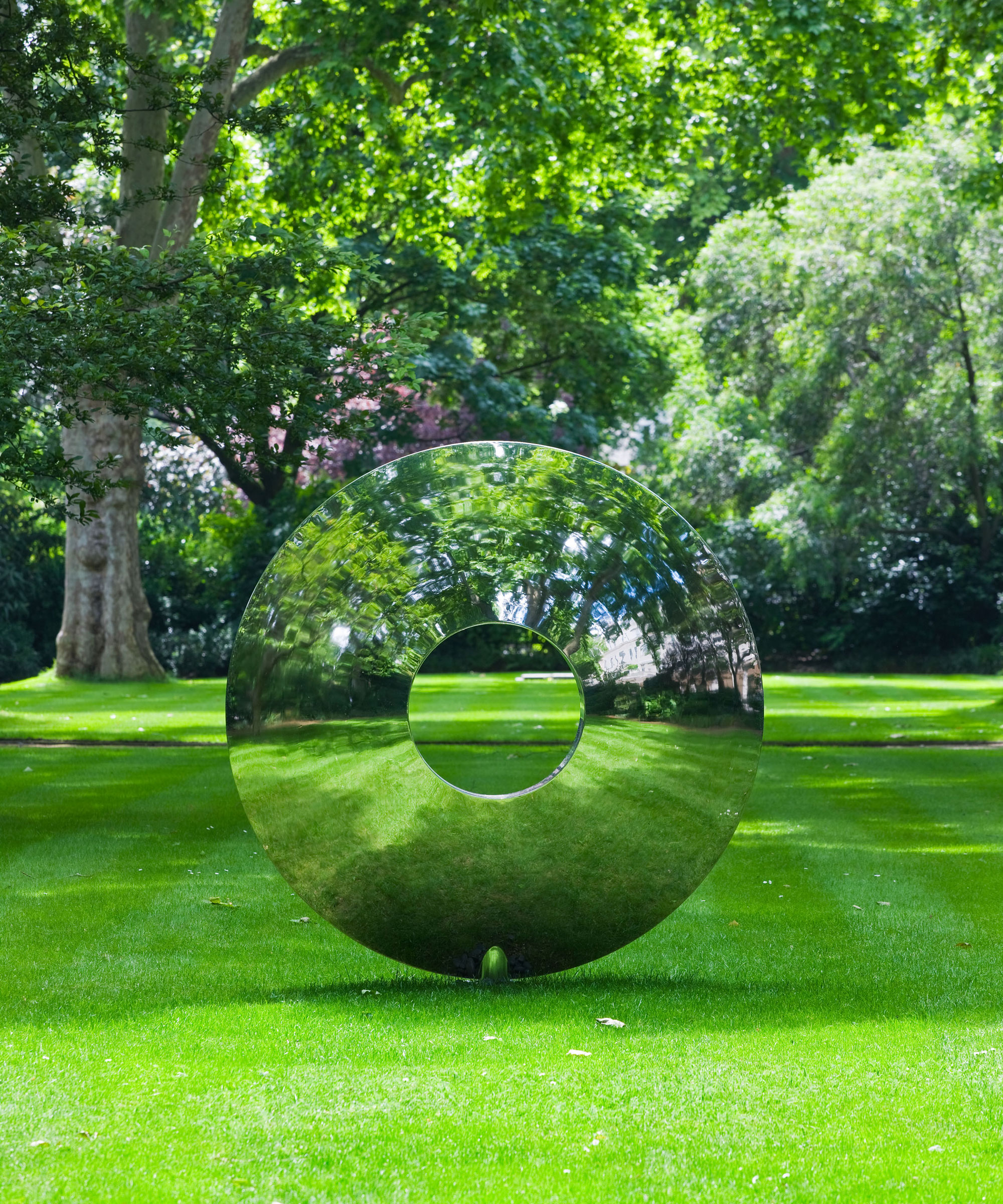
Adding an eye-catching metal or stone sculpture, contemporary water feature, or statement stone or iron urn will give your garden a clear visual anchor that works year round. This means it will look instantly curated like a professionally designed garden, offering interest right through the seasons.
You can also use ornamental trees as a defining moment in your garden landscaping. 'Think of every garden space as it will be viewed throughout the entire year,' says landscaping expert Jim Stucchi.
'Create a main focal point using a leading actor that can be surrounded with a star-studded supporting cast. A specimen tree with exfoliating bark and a strong-intricate branching structure will carry you through the winter months, especially if you use up-lighting to highlight those branches.'
Jim suggests choosing a tree such as Cornus officinalis ‘Kintoki’ (Cornelian Cherry dogwood). 'This is a perfect choice to create the year-round effect. Not only does it check the above-mentioned boxes but it also has a cheerful yellow bloom in early spring and carries bright red small fruit that attracts and feeds songbirds late into the winter.'
Eye-Catching Focal Points
A stately addition to the garden, this cast iron planter pairs a minimalist silhouette with a beautifully weathered finish.
Handcrafted from thick metal these are finished in black and gold to add an elegant focal point to your yard.
This hand-crafted stone fountain is a striking statement piece that adds the serenity of running water to your garden.
4. Crowded Borders Vs Clean Lines
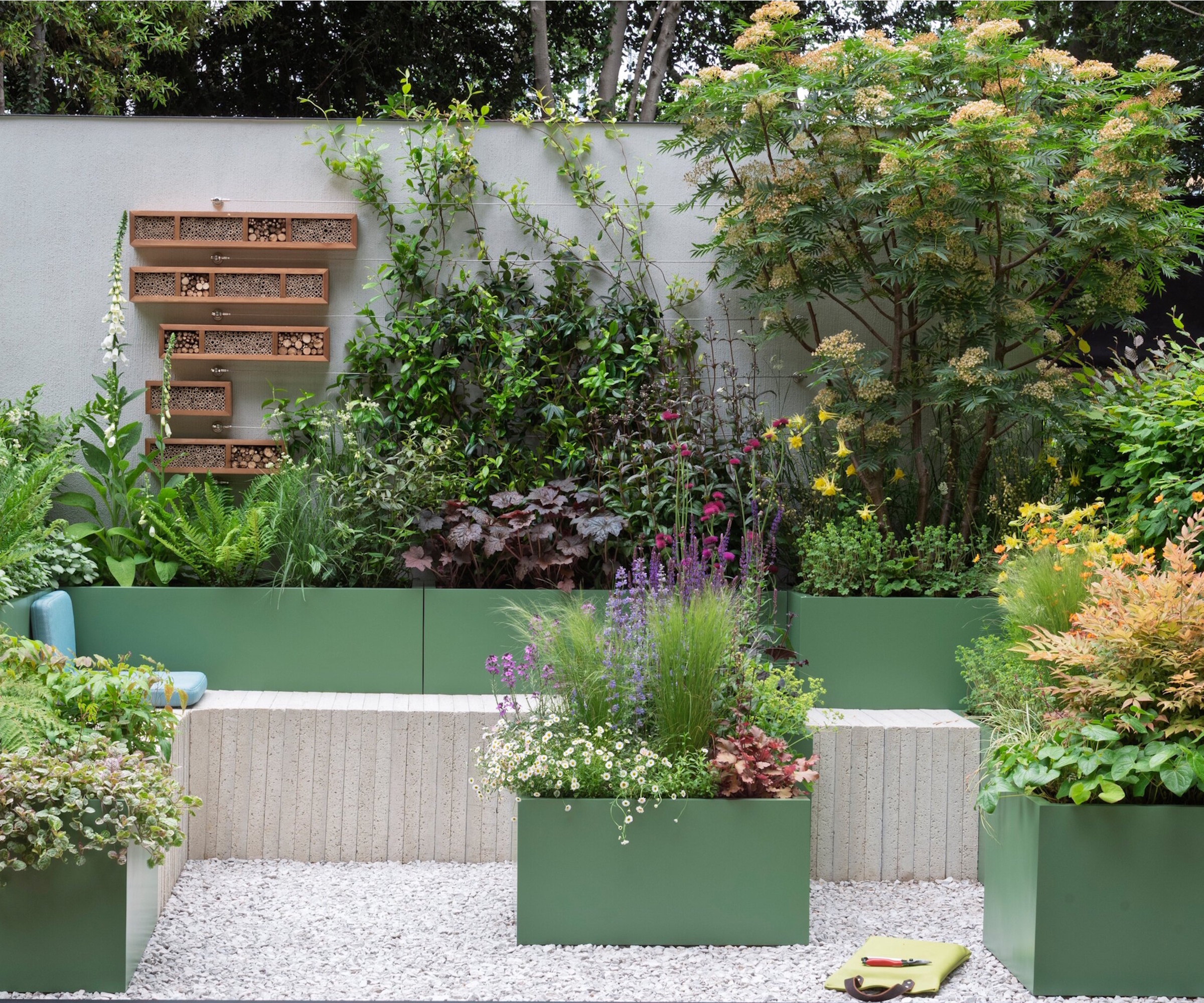
When starting a garden renovation designers will always tidy and modify borders, especially if they look busy and are lacking cohesion if you're using too many different kinds of plants. So work in the same way as designers do by editing your collection but ensuring your retain some standout plants.
'A good way to refresh a tired border is to restructure and simplify,' says garden design expert Lydia Beaumont. 'Redefining the boundaries with clean lines, using steel or stone edging ideas is a great way to bring structure and sharpen the space. You can also use a neatly cut lawn edge for a more natural finish.'
Another design trick is using a more layered approach to create a cohesive look and one of the easiest ways to do this is by adding containers to create the illusion of a bigger, more structured space. It's also a good idea to repeat plants in key groups throughout borders and with spring flowers for pots to pull the look together.
Introducing raised garden beds is another simple way to clean up messy plantings and define garden borders with clean lines for spring. 'Notched concrete blocks make it easy to add boards to create a raised garden bed and can be stacked to raise it even higher,' says landscaping expert Joe Raboine.
'Additional modern materials like concrete panel systems provide an updated twist on a classic raised garden bed for homeowners concerned about a dated aesthetic.'
Adding vertical interest with taller plants or decorative elements will help create a layered, immersive feel.
5. Ignoring Plant Sizes Vs Balanced Visual Hierarchy
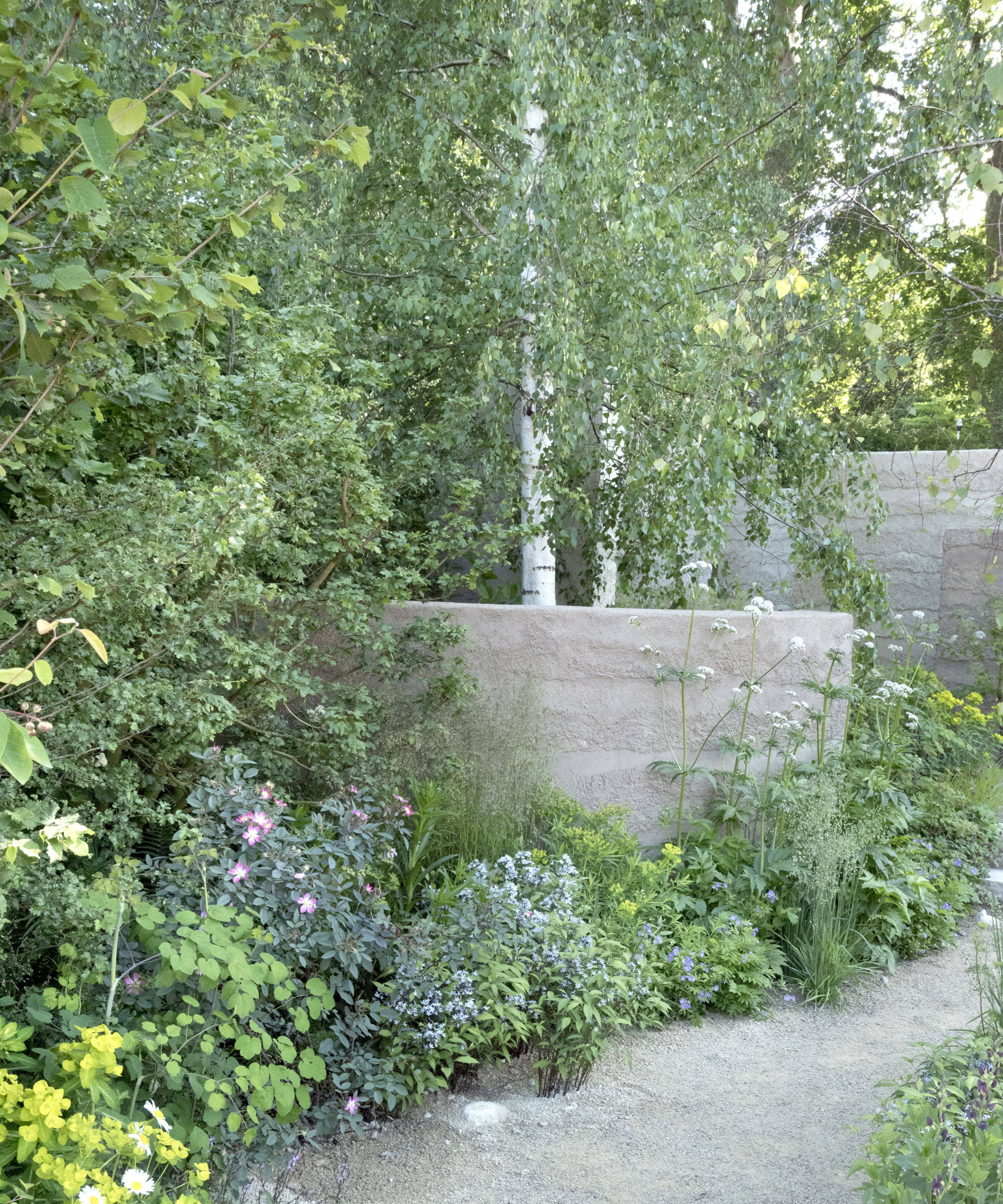
It's one of the easiest spring garden design mistakes you can make: not taking into account scale and proportion when it comes to planting.
Overlook this key principle and it's easy to end up with either lots of uniformly oversized shrubs dominating your garden or conversely masses of tiny plants that make the overall design look inconsequential.
Planting ideas should always stick to a plan rather than being a random addition. Aim to match plant sizes to garden scale by using big specimens to anchor beds, and fill in any gaps and soften edges with smaller plants to avoid mismatched proportions. This will result in a far more polished look.
'Use appropriately sized shrubs as a supporting cast under the tree canopy,' says Jim Stucchi. 'Use the scale size of the tree to determine the shrubs for the underplanting. Use the same theory for the perennial plants below the shrubs.'
Jim is a big fan of ground cover plants too. 'Masses of low evergreen or semi evergreen plants such as Japanese garden juniper [find here at Nature Hills], vinca minor ‘Bowles’ [find here at Nature Hills], or even the native low bush blueberry {find here at Nature Hills] will create a striking first layer to contrast your shrub layer against.'
Get planting scale and proportion right and your garden will look like it was professionally designed rather than pulled together in a haphazard fashion.
Avoid making any further spring garden design mistakes by checking out our spring gardening checklist if you're thinking about how to landscape a backyard in spring.
Love inspiring garden ideas, outdoor advice, and the latest news? Sign up for our newsletter and get the latest features delivered straight to your inbox.