When most people are dissatisfied with products or services, they complain to the companies or simply take their business elsewhere. A select few file lawsuits. Sometimes lawsuits are merited, but frequently court cases appear to be fueled by plaintiffs' desire to earn a quick buck.
Here are five such cases.
STARBUCKS
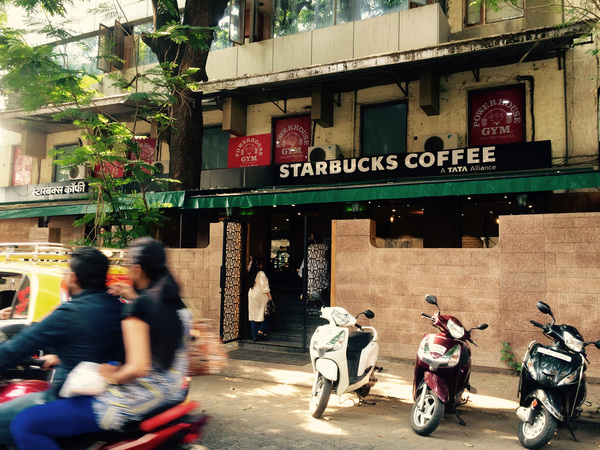
Stacy Pincus of Chicago filed a $5 million class-action lawsuit against Starbucks in April 2016, claiming the company puts too much ice in its cold drinks. The lawsuit accused Starbucks of advertising iced drinks as 24-ounce beverages, when the cup contained only 14 ounces of fluid.
Named the most frivolous lawsuit of 2016 by the U.S. Chamber of Commerce Institute for Legal Reform, it was dismissed by a Chicago federal judge in October 2016.
THE HERSHEY COMPANY
Robert Bratton of Missouri is battling Hershey in court, claiming that the company intentionally sells partially full packages of Whoppers, Reese's Pieces and other products. In May 2017, his $5 million class-action lawsuit was given the green light to move forward by U.S. District Judge Nanette Laughrey.
SUBWAY
In 2013, a group of Subway customers filed a class action lawsuit against the chain, claiming its foot-long subs didn't always measure up to 12 inches. Before the lawsuit was consolidated, some plaintiffs were seeking up to $5 million from the sandwich chain. U.S. District Court Judge Lynn Adelman called the case "quite weak" and Subway was cleared of deceptive marketing practices, but agreed to make sure subs are the proper size in the future, and pay $525,000 in attorney fees and $500 to each of the 10 plaintiffs.
HOME DEPOT
A group of Chicago plaintiffs filed a class action lawsuit against Home Depot this year, because the store's four-by-four lumber actually measures o 3.5 inches by 3.5 inches. Home Depot and other lumber suppliers have explained that four-by-four is just the names of the boards, as the industry standard dimensions actually are 3.5 inches by 3.5 inches. Nevertheless, the plaintiffs seek more than $5 million in damages.
MCDONALD'S
California resident Webster Lucas sued the company for $1.5 million in 2014, because he only received one napkin with his meal. After an argument with the manager, Lucas was offered free burgers, but he claimed the incident left him emotionally distressed and unable to work. Unlike the McDonald's hot coffee lawsuit of 1994, no one got hurt in this case.