The new year started with the novel coronavirus surging as strong as ever. But many people went shopping for annual bargains and attended traditional sporting events. People are urged to gauge the risk of infection in each situation into which they put themselves.
One of the most odious characteristics of the coronavirus is that it can be transmitted even by infected people who show no symptoms. Secondary infections are regarded as most likely to occur from three days before the onset of symptoms to five days after. But in the case of asymptomatic people, it is difficult to discern who is infected and who is not.
The infection risk varies based on the wearing of a mask and the extent of vocalizing. In a thesis published in a British medical journal, researchers from the University of Oxford and other institutions deduced five conditions that influence the risk of being infected by an asymptomatic person.
The conditions are: whether a mask is worn; location; crowdedness; the extent of vocalization (such as yelling or singing); and duration of person-to-person contact. Based on a combination of these five, the risk can be categorized on a three-tier scale of "low," "moderate" and "high."
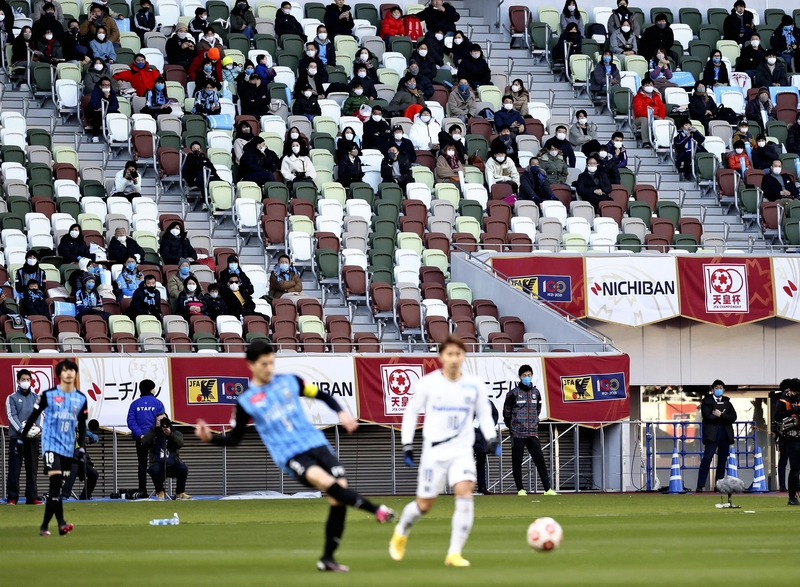
According to the paper, masks that prevent the spread of droplets are effective in reducing the risk of infection. By wearing a mask outside and avoiding crowds, the risk is low. For example, going to a park and keeping a distance from others is unlikely to lead to problems. When attending a sporting event, it is advisable to avoid crowding together in the stands and to not shout while cheering on the team.
Conversely, just talking in a poorly ventilated room with the windows closed raises the risk of infection, even when a mask is worn. One should be especially careful when taking off a mask to eat and drink. Young people attending coming-of-age ceremonies and then going out to celebrate present a high risk of infection for grandparents. Visits to exchange New Year's greetings should be as short as possible.
"First of all, it's important to take basic measures of wearing a mask, maintaining social distancing and avoiding the 3Cs [closed spaces, crowded places and close-contact settings]," said Prof. Atsuo Hamada of Travelers' Medical Center at the Tokyo Medical University Hospital, a specialist in infection control measures.
"Even if it doesn't involve going far away, the risk of infection increases by eating together with relatives or friends whom you don't usually see. If you plan to have a party to start the new year, it should limited to family members you live with."
For anyone planning to go out, it is urged that they check again what activities they need to be careful about.
-- Extra caution needed for dining
The coronavirus spreads easier when people take off their masks to eat and drink. The government's coronavirus task force has called for caution among the public regarding get-togethers during the holiday season, calling it a "critical point" in curbing the number of infections.
According to data presented by the task force on the location of clusters from June to mid-December 2020, restaurants and other types of eateries stood out far more than medical facilities, schools and other such institutions.
Particularly noticeable were occasions that involve drinking alcohol. When people get drunk and their spirits are high, they let down their guard. As their hearing also declines, they tend to speak in louder voices. Dining in large groups and for longer times further increases the risk of infection. In gatherings of five or more, the distance between people becomes wider, so they tend to raise their voices, making droplets more likely to be dispersed.
The National Institute of Infectious Diseases analyzed cases of clusters arising from dining occasions. It found a common point among the cases that people within an arm's length of an infected person contracted the virus. In some cases, people were suspected to have been infected through saliva by sharing spoons, while in others, infections could have been prevented if people had sat diagonally across from each other.
The task force has urged people to refrain from going out to eat in areas where infections are surging. When meeting others socially, it recommends to do so in small groups and for short periods of time, limit such outings to people whom you usually spend time with, and avoid heavy drinking and bar-hopping while limiting alcohol consumption to adequate amounts.
Refrain from using communal chopsticks and cups, instead having one set for each person. In terms of seating arrangement, it is best to sit diagonally instead of directly in front of or next to others.
Selecting appropriate restaurants and eateries is also important. It is vital to choose those establishments that have properly ventilation and follow established guidelines for preventing infections.
-- Don't hesitate seeing a doctor
According to a medical care guide created by infectious disease specialists and released by the Health, Labor and Welfare Ministry, the initial symptoms of a coronavirus infection include fever, coughing and lethargy -- similar to those of influenza or the common cold. Such symptoms are said to remain mild in 80% of cases, with recovery taking about a week.
But for the remaining 20%, the worsening of conditions, such as developing pneumonia, could require hospitalization. The health ministry urges people to be particularly cautious if they feel a cold coming on, and immediately consult their family doctor.
For those who do not have a family doctor, or if your family doctor is unavailable on weekends or at night, there are hotlines set up by local governments. Nurses and other staff will ask about your symptoms and make referrals to medical institutions that can carry out diagnosis and testing.
It takes about 30 minutes to obtain the result of an antigen test using saliva. For a PCR test, the result in most cases is available the following day. Those testing positive will be either admitted to a hospital or taken to a hotel or confined to their home for recuperation.
If your family doctor's practice is located in a medical institution that treats and tests COVID-19 patients, you can receive consultation during a visit.
Many local governments do not disclose the names of designated institutions in order to prevent a rush of patients. But even if your family doctor is not affiliated with such an institution, you will be referred to one that provides care and testing for the disease.
Read more from The Japan News at https://japannews.yomiuri.co.jp/