
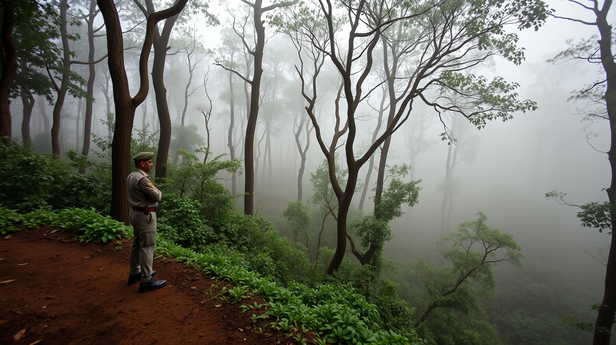
Dampa Tiger Reserve, Mizoram
Dampa sits in the far west of Mizoram, sharing a border with Bangladesh, and receives a fraction of the footfall that Kaziranga or Corbett pulls in any given weekend. The reserve covers roughly 500 square kilometres of semi-evergreen and moist deciduous forest, and tigers are present, though sightings are rare enough that most visitors come for the forest itself rather than a checklist moment.
What Dampa actually delivers: hoolock gibbons calling at dawn, clouded leopards on camera traps, and a near-total absence of other tourists. Permits are issued through the Mizoram Forest Department in Aizawl, and accommodation is limited to the forest rest house at Teirei. Book that well in advance. The approach road from Mamit is rough, and that roughness is precisely what keeps the crowds out.
Dibru-Saikhowa National Park, Assam
Most visitors to Assam stop at Kaziranga. Dibru-Saikhowa, about 12 kilometres from Tinsukia in the far east of the state, sits largely off that circuit. The park is a floodplain ecosystem of grasslands, semi-evergreen forest, and river islands formed by the Brahmaputra and Lohit rivers, and it holds one of the last populations of feral horses in India, descended from animals left behind during World War II.
The birding here is exceptional. Bengalese florican, Pallas's fish eagle, and the Jerdon's babbler have all been recorded. The park is accessible only by boat across the Lohit, which limits daily visitor numbers by geography rather than policy. Gangetic river dolphins are occasionally spotted in the channels. Stay in Tinsukia and arrange a local guide through the forest office, the internal trails are not marked, and the terrain shifts with every monsoon.
Namdapha National Park, Arunachal Pradesh
Namdapha is India's third-largest national park and one of the most biodiverse protected areas on the planet. It holds four big cat species, tiger, leopard, clouded leopard, and snow leopard, in a single contiguous forest. Almost nobody goes there. The nearest town is Miao, connected to Dibrugarh by a full day's drive on roads that close in heavy rain.
The trekking inside Namdapha is serious. The trails to Haldibari and beyond require multiple days, a registered local guide, and your own supplies. The forest ranges from tropical rainforest at lower elevations to alpine meadows above 4,500 metres. Hornbills are common. Red pandas have been documented in the upper zones. The Inner Line Permit required for Arunachal Pradesh adds one more administrative layer that filters out casual visitors, which, for anyone willing to do the paperwork, means the forest is essentially yours.
The Lisu community villages inside the buffer zone sometimes offer homestays. These are not advertised. Ask at the Namdapha Tiger Reserve office in Miao.
Rani Jhansi Marine National Park, Andaman Islands
The Andamans draw divers and beach tourists to Havelock and Neil islands. Rani Jhansi Marine National Park, in the Ritchie's Archipelago north of Port Blair, draws almost no one. Entry requires a permit from the Chief Wildlife Warden's office in Port Blair, and access is by chartered boat only, no scheduled ferry service runs there.
The coral cover in the park's protected zones is among the best-preserved in Indian waters. Dugongs have been recorded in the seagrass beds. Nesting sea turtles use the beaches. The absence of resort infrastructure is not an oversight; it is the condition that keeps the reef intact. Serious snorkellers and divers who make the logistical effort find visibility and coral health that the more accessible Andaman sites lost years ago.
Kawal Wildlife Sanctuary, Telangana
Kawal was upgraded to a tiger reserve in 2012, but it still receives a sliver of the attention that Nagarjunasagar-Srisailam commands in the same state. Located in Adilabad district near the Maharashtra border, Kawal covers teak and mixed deciduous forest along the Godavari river system. The terrain is gentler than the northeast sanctuaries, accessible by road from Nizamabad, and the safari infrastructure, while basic, functions.
Tigers have been photographed here with increasing frequency since the reserve's protection status improved. Sloth bears, wild dogs, and gaur are more reliably seen. The sanctuary also sits on a migratory birding corridor, and winter months bring species that don't appear in the more-visited peninsular reserves. The forest rest houses at Jannaram are bookable through the Telangana Forest Department website, and the absence of a branded resort ecosystem means the experience stays close to what a forest actually is.
What connects these five places is not remoteness for its own sake. Dampa and Kawal are reachable without extraordinary effort. Dibru-Saikhowa is an hour from Tinsukia. The thing they share is that the tourism economy around them never scaled, and in that gap, the forest remained the main event rather than the backdrop. The wildlife in these sanctuaries didn't get better because people stopped coming. It stayed because the infrastructure to manage large crowds was never built, and the animals filled the space that was left.