
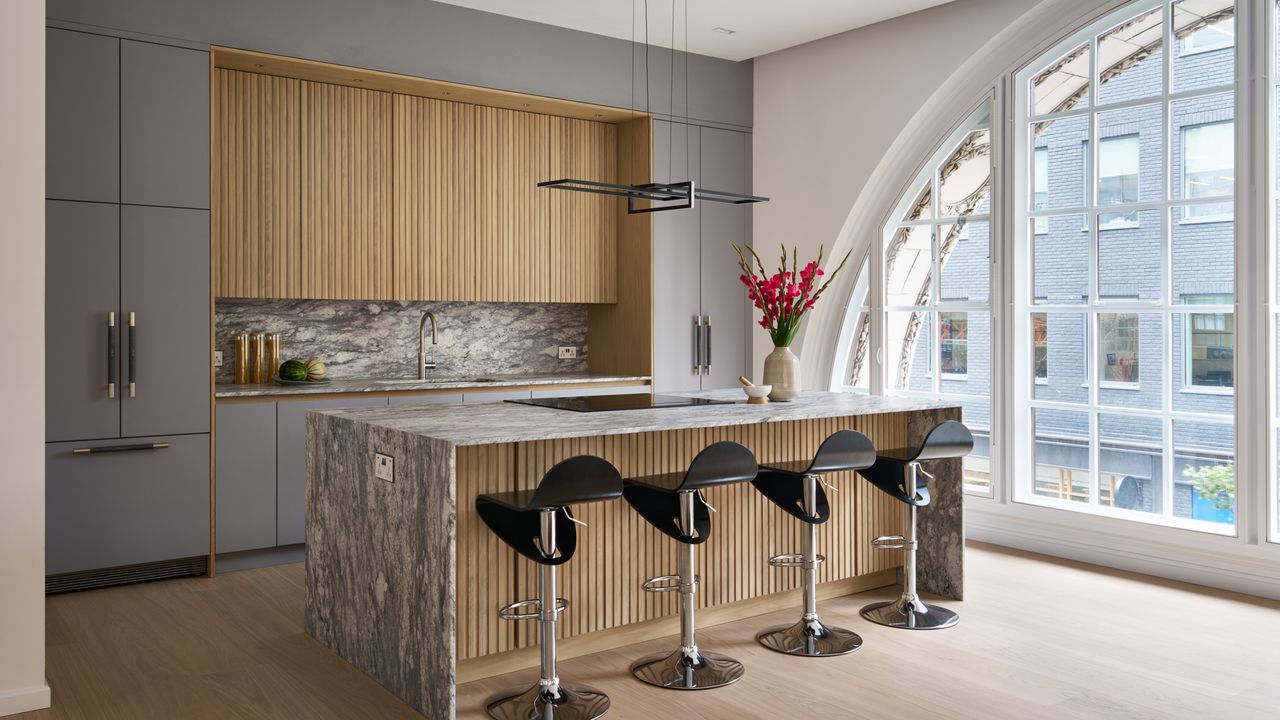
If you're trying to make a small kitchen look bigger, your kitchen cabinet color might seem inconsequential. The right shade, however, can do more than elevate your style — it can subtly shift perception, blur boundaries, and make even the most compact layout feel open and airy. But not all colors work the same way, and some can have the opposite effect, so it's important that you choose your kitchen cabinet shade wisely.
The key to this is knowing the difference between advancing and receding kitchen colors. The former — warm tones like red and yellow — tend to visually come forward, making surfaces feel closer than they are. Receding colors, by contrast, sit on the cooler end of the spectrum. Colors like blue and green appear to move away from the eye, creating a sense of depth that helps compact spaces feel more expansive. It's these shades that make a space feel more capacious when used on walls and cabinetry.
So if you're keen to make your kitchen feel more spacious and roomy without switching up your floor plan, I asked interior designers which five colors they turn to when they want to create the illusion of more space. From soft neutrals that create a sense of serenity to light-reflecting hues that bring personality to your space, here are the kitchen cabinet colors to choose to maximize light, flow, and visual depth.
1. Light Blues
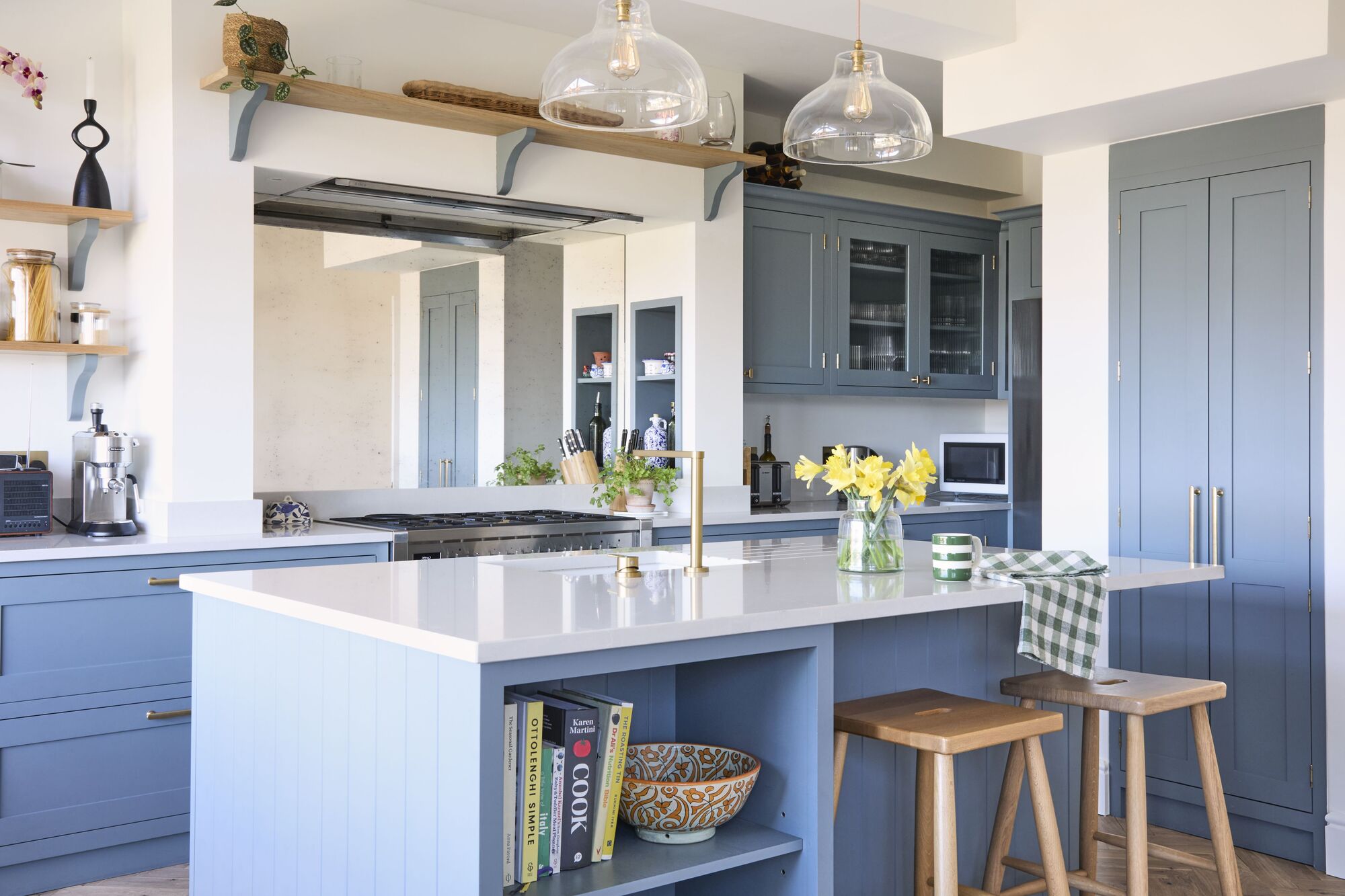
Light blue shades have dominated kitchen cabinet color trends in recent years, but they're more than just a stylish color choice for the most functional room of your home — the right shade of blue can work wonders at making your kitchen feel bigger.
Wondering what tone to choose? Interior designer Nina Lichtenstein recommends blue-greens with a touch of gray. "These tones mimic the expansive feeling of the horizon where water meets sky, which can subconsciously make a room feel more open," she says. "Colors such as Sherwin-Williams Sea Salt or Benjamin Moore Palladian Blue are particularly effective because they carry enough softness to reflect light beautifully."
Al Bruce, founder of kitchen makers Olive & Barr, also recommends light blues for the job. "Shades of blue will give your kitchen a calming and serene scheme, making it feel open and airy," he says. "Those feeling bold could consider color drenching, following the same color from their cabinets onto the wall and ceiling to give the illusion of more space."
2. Soft, Warm White
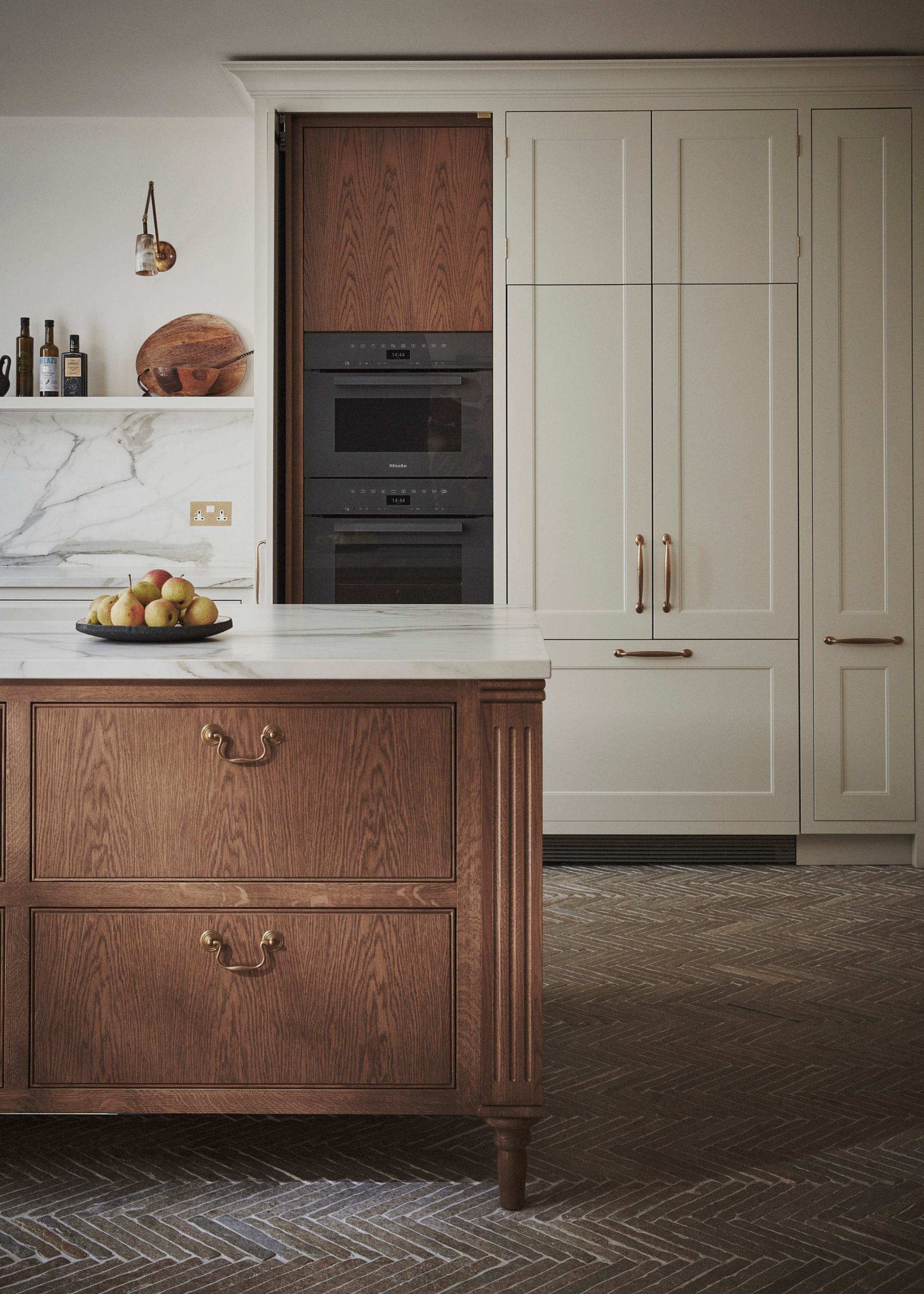
Timeless and classic, white is often the default choice for kitchens, but stark, clinical variations should be avoided. If you want to make a small kitchen look bigger, consider soft, warm whites instead.
"Soft warm whites are one of the most reliable ways to visually expand a kitchen because they reflect natural light while still feeling inviting," Nina explains. "Cooler whites can sometimes feel stark, but warm whites create brightness without harsh contrast."
To maximize the effect, she recommends extending the cabinetry close to the ceiling and pairing the color with subtle tonal materials such as honed marble or light quartz. "Keeping the backsplash and countertops within a similar light palette allows the eye to move continuously across the space, which visually enlarges the room," she adds.
3. Sage Green
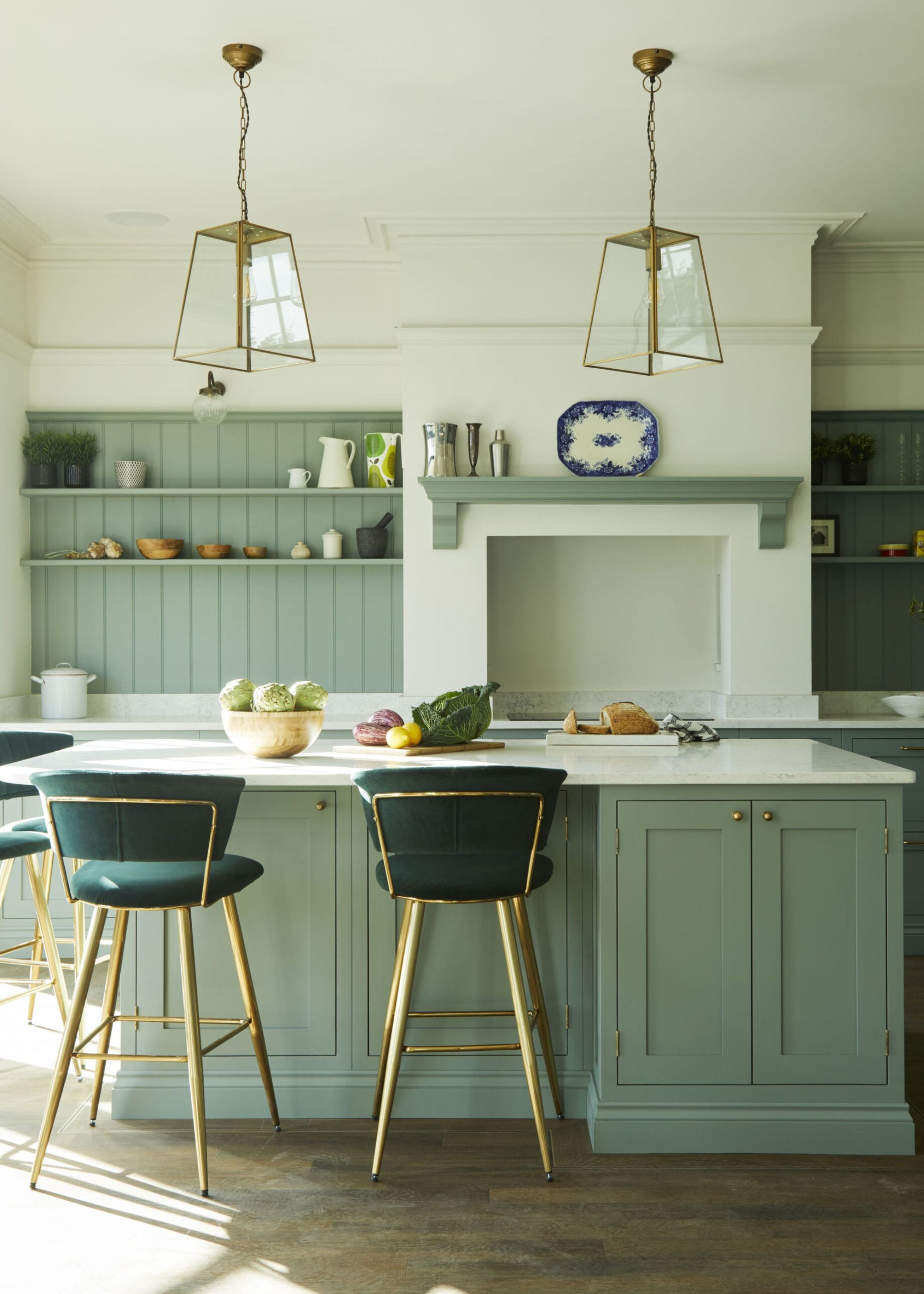
Sage green kitchens may have had their heyday, but there's a reason this enduring shade was one of the most popular hues over the past decade. Sage green is an excellent receding color, adding visual depth to a kitchen, while also adding a sense of serenity to a room that needs it most.
Besides its receding properties, Al points out that green brings life, nature, and freshness to a kitchen, which can help it feel more roomy. "This color is particularly suitable for modern, minimalistic, or rustic kitchens, depending on the intensity and saturation," he says. "It also helps to connect the kitchen to the outside space, blending the two areas and giving a more open feeling."
The trick here is to avoid greens with warm undertones or that appear too saturated. "Unlike darker greens that can absorb light, muted sages have a subtle gray undertone that keeps them airy and refined," Nina says. "Using sage on the lower cabinets while keeping the uppers light or open can also help anchor the room without making the kitchen feel visually heavy."
4. Pale Greige
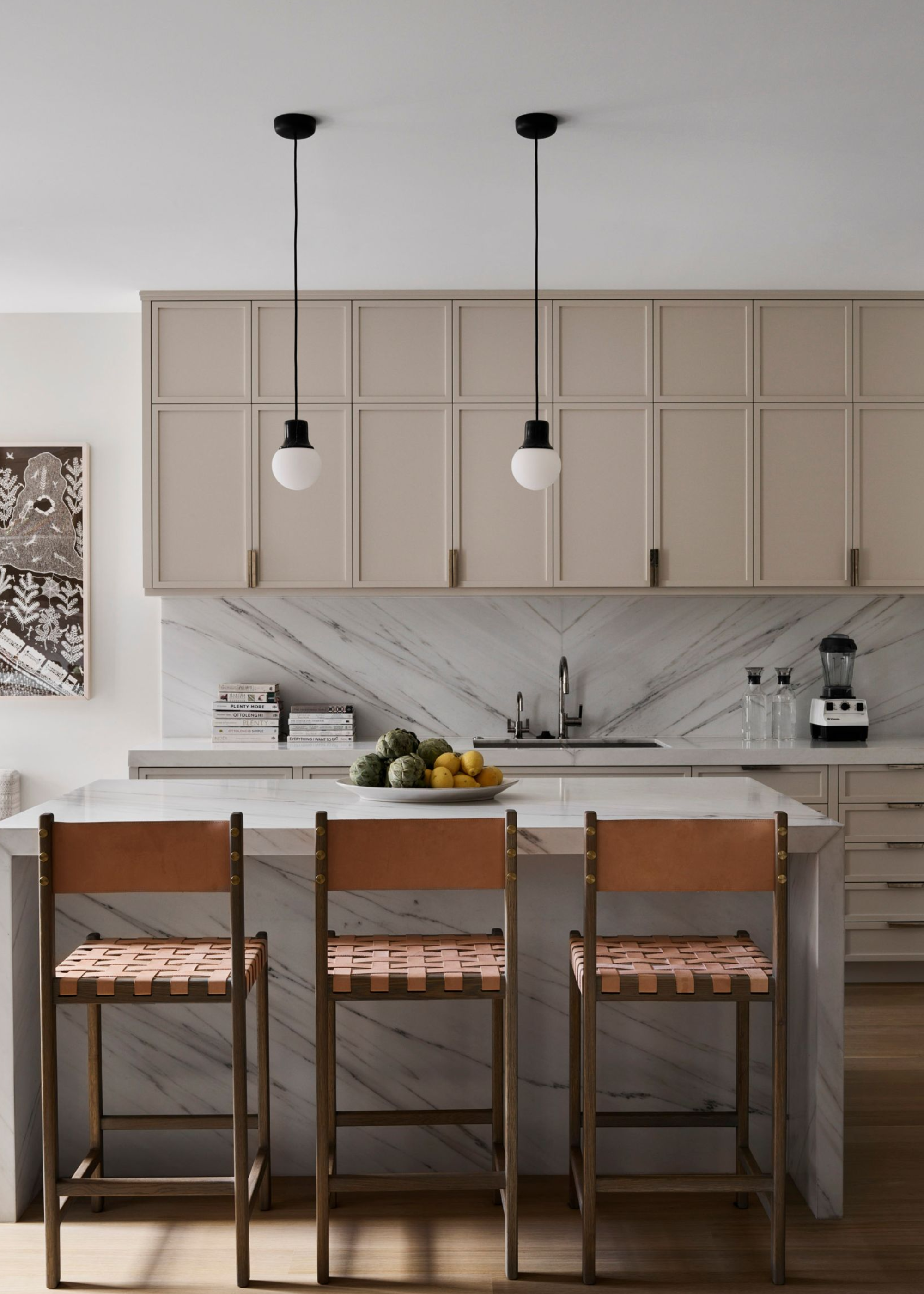
If you're a maximalist who wants to imbue your kitchen with personality and character, you can skip this one, but there's actually a lot to love about greige when it comes to adding depth and space to a room. It brings the warmth of off-white, but with enough contrast to avoid closing the space.
"Because greige sits between gray and beige, it reflects light softly while blending beautifully with a wide range of materials," says Nina. "It works especially well in smaller kitchens when paired with light wood accents or brushed metal hardware. Keeping upper cabinets in the same tone as the walls can blur visual boundaries, allowing the cabinetry to feel more integrated into the architecture rather than visually crowding the space."
For maximum impact, choose a glossy finish rather than matte to help bounce even more light around your kitchen. It's also best when paired with a light backsplash and countertop (as seen above) for a more continuous, tonal scheme.
5. Black or Charcoal
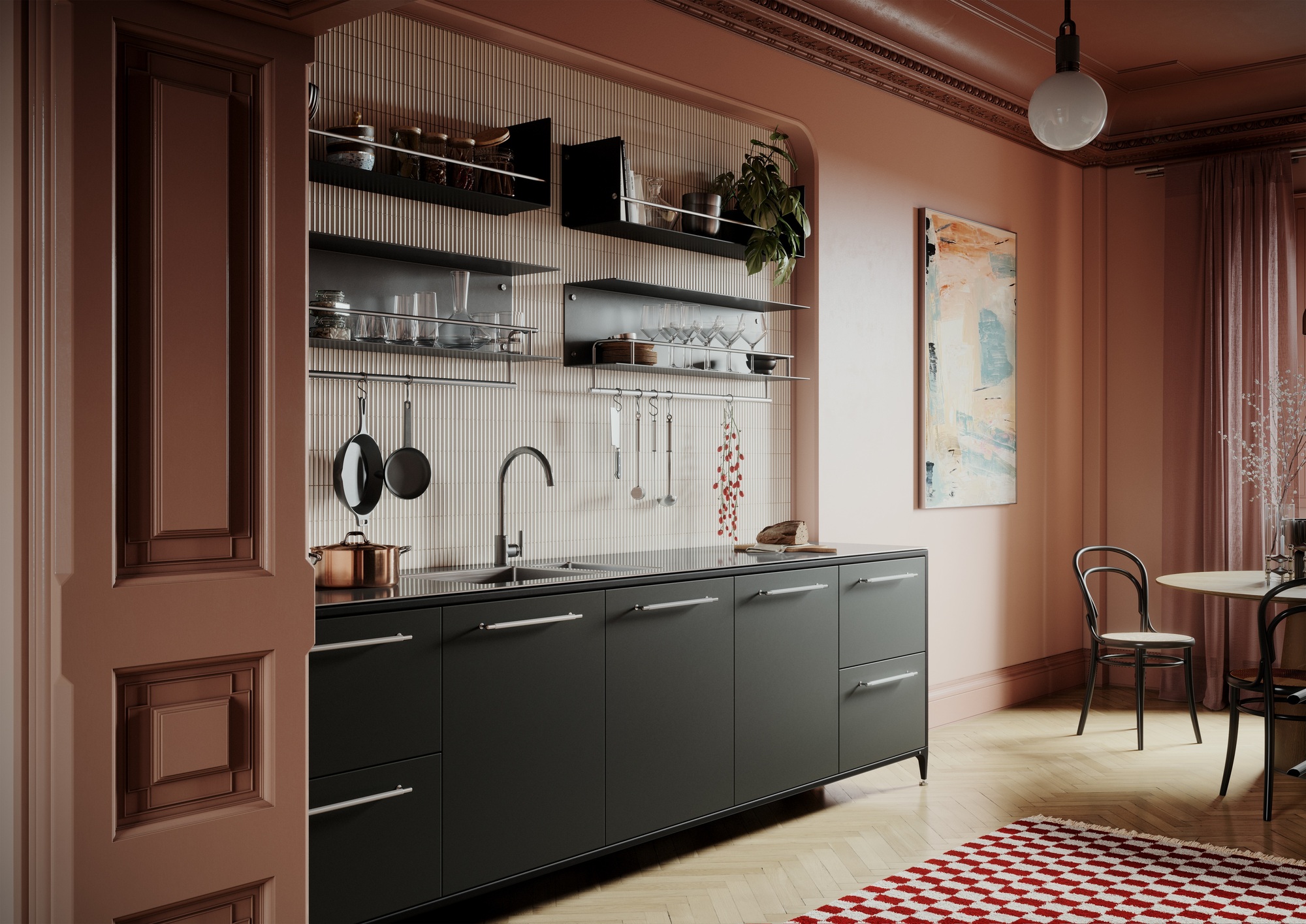
Now, I know what you're thinking — black may not seem like a wise choice for your kitchen cabinets if you want to create the illusion of a more capacious kitchen. Dark colors always absorb light, which means they can shrink a space. Intuition tells us this makes them a bad choice for a kitchen.
According to Massimo Buster Minale at Buster + Punch, however, that's not always the case. As long as they're used wisely, contrastive black or dark gray can actually make a small kitchen look and feel more expansive.
"While lighter cabinet colors may make a space feel light and airy, an off-black cabinet against a soft, pale wall doesn’t close a space down; it sharpens it," he says. "The contrast creates depth, making the room feel more expansive, and black becomes a backdrop for the hardware to stand out, while the wall color helps to lift and open the space."
If you love warm tones but want your kitchen to feel bigger, consider adding a pop of personality with a bright red cabinet handle like this one from Plank Hardware.
For a monotone look, add this emerald green cabinet pull to your sage green kitchen cabinets. It creates a tonal effect that maximizes the color's receding qualities.
Add a hint of modernity to your kitchen with these round hooks. They complement light blue cabinets excellently, or use them as a contrastive accent to greige or off-white.
Ultimately, making a kitchen feel bigger isn't just about square footage; it's about perception. The right cabinet color can add depth, soften boundaries, and amplify light, making a kitchen feel far more expansive without altering the floorplan at all.
When choosing kitchen colors for your cabinetry that carry these illusory effects, stick to receding shades that aren't too saturated and pair with streamlined cabinetry styles for a space that feels calm, cohesive, and continuous. It's a reminder that good design doesn't necessarily require more room, just smarter choices.
For more design inspiration, sign up for the Livingetc newsletter, and it will land straight in your inbox.