
In an era of shrinking package sizes and rising sticker prices, the most effective weapon a consumer wields is the concept of economies of scale. Retailers and manufacturers rely on the fact that most shoppers prioritize short-term cash flow over long-term value, pricing small convenience packages at a significant premium per ounce. This phenomenon creates a “poverty tax” where buying the smallest version of a product is mathematically the most expensive way to feed a family. However, by shifting your purchasing strategy to target specific shelf-stable categories in bulk, you can drastically lower your average cost per meal. While buying in volume requires a higher upfront investment, the return on that capital is often better than the stock market, delivering immediate and guaranteed savings on these five essential foods.
1. White and Brown Rice
Rice serves as the dietary backbone for billions of people, yet the price disparity between a one-pound bag and a twenty-pound sack is staggering. A standard small bag of rice at a major supermarket often retails for nearly two dollars per pound, driven up by the costs of packaging, branding, and shelving labor. In contrast, stepping into the ethnic aisle or visiting an Asian market to purchase a twenty or fifty-pound sack can drop the price to under fifty cents per pound. Since raw rice has an indefinite shelf life when kept dry and cool, buying the larger “pillow” sack essentially locks in a year’s worth of carbohydrates for the price of a few weeks’ worth of small bags.
2. Dried Beans and Lentils
While canned beans offer undeniable convenience, they are one of the least efficient purchases in the grocery store. When you buy a can of black beans, you are primarily paying for the metal can, the water inside, and the shipping weight of that liquid. Switching to dried beans bought in bulk eliminates these costs. A single pound of dried beans yields roughly three times that amount when cooked, meaning a bulk bag provides exponentially more servings than a stack of cans. The savings are massive, often reducing the cost per serving from nearly a dollar to mere pennies, and the dried product will remain edible for years in a simple airtight container.
3. Rolled Oats

Breakfast cereal is notorious for its high markup, but rolled oats offer a loophole for the budget-conscious shopper. The convenient instant packets or small cardboard canisters of “old-fashioned” oats often cost four to five dollars for a relatively small amount of grain. However, browsing the bulk bins at a health food store or buying the massive institutional-sized boxes at warehouse clubs reveals the true market price of oats, which is incredibly low. By purchasing oats in five or ten-pound quantities, you secure a nutrient-dense breakfast base that can be used for porridge, granola, cookies, and even savory dishes for a fraction of the packaged price.
4. Spices and Dried Herbs
The tiny glass jars in the baking aisle represent perhaps the highest markup percentage in the entire supermarket. When you pay five dollars for two ounces of cumin, you are paying almost exclusively for the glass jar and the plastic shaker top. If you venture to the international foods section or a store with bulk spice bins, you will find spices sold in plastic bags for a fraction of the cost. It is not uncommon to find a bag containing four times the amount of product for half the price of the glass jar. Smart shoppers buy the glass jar once and then refill it perpetually from the cheap bulk bags.
5. Meat Family Packs and Primal Cuts
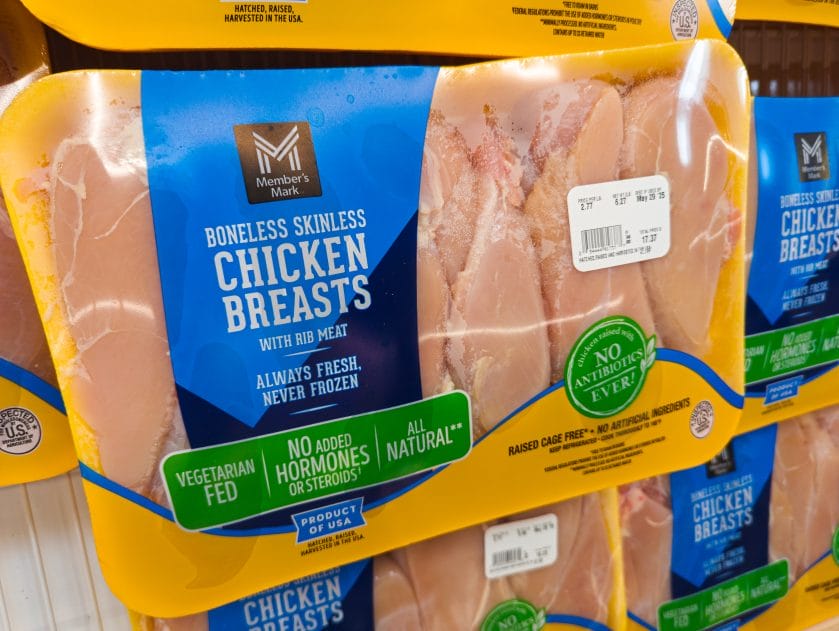
The meat counter operates on a labor-based pricing model. The more the butcher has to touch the meat—slicing, trimming, or packaging it into small portions—the more it costs per pound. Consequently, buying “family packs” or large primal cuts allows you to bypass these labor costs. A whole pork loin is significantly cheaper per pound than pre-cut pork chops, even though they are the same meat. By purchasing the large vacuum-sealed sub-primal and spending ten minutes slicing it yourself at home, you instantly save thirty to forty percent on your protein costs.
Investing in Storage
To maximize these savings, you must view your pantry as a savings account. The initial cost of buying these large quantities may feel high, but the math is undeniable. Investing in a few food-grade buckets or high-quality glass jars allows you to store these bulk items safely, protecting your investment and ensuring that your cost-per-meal remains rock bottom for months to come.
What to Read Next
10 Cheapest Protein Options to Add to Your Grocery List This Month
5 Cheap Meals That Make Great Leftovers
8 Foods That Are Suddenly Cheaper Due to Overstock
9 Frozen Foods That Are Cheaper Now Than in December
Why Coffee Prices Keep Climbing Even When Beans Get Cheaper
The post 5 Foods That Are Cheapest When Bought in Larger Quantities appeared first on Grocery Coupon Guide.