
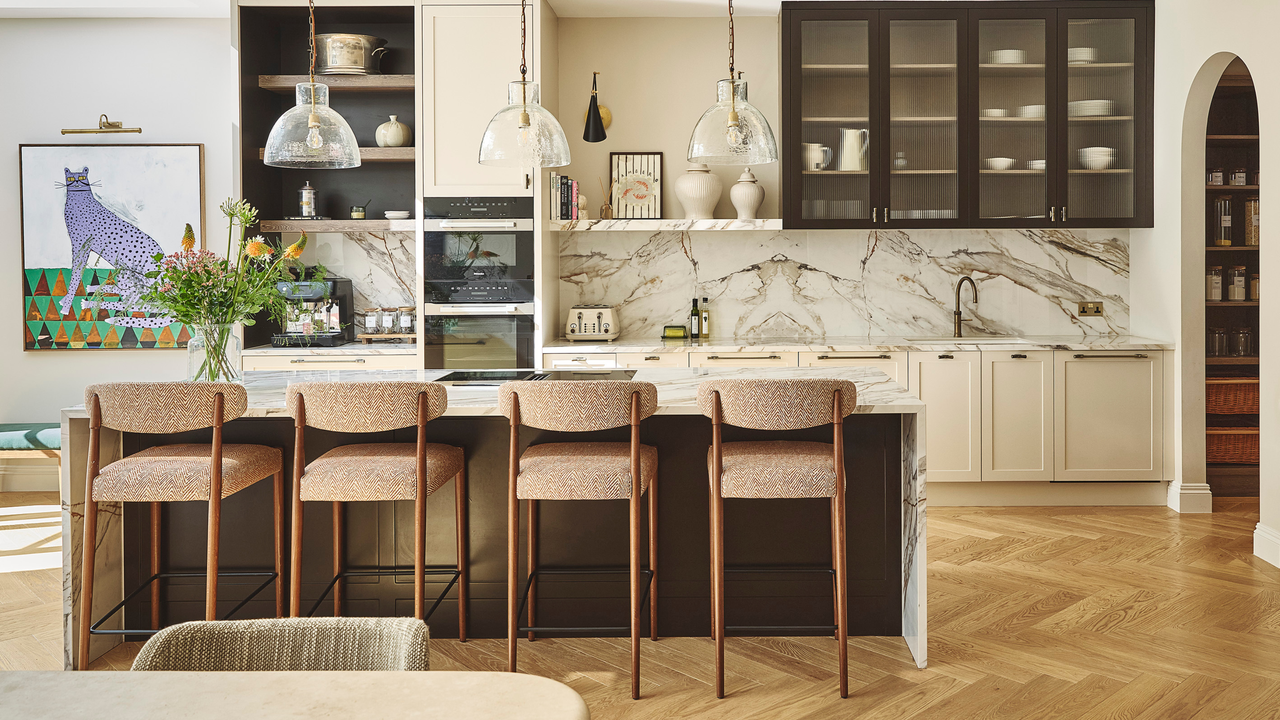
Planning your kitchen design is a careful balancing act between aesthetics and function, and no time is this clearer than when deciding the placement and positioning of your kitchen appliances. It's a tricky line to walk, and can quickly result in one of these common appliance positioning mistakes.
The best kitchens are the ones that understand the importance of respecting the natural workflow of the space and place the appliances accordingly. And that doesn't just mean following the same old work triangle; it's all about taking a more individual, personal approach to your kitchen design, and knowing where to place kitchen appliances in a way that reflects the way you actually use them. Frequent coffee drinker? Place that machine front and center. Chronic back pain sufferer? Raise your dishwasher off the floor, and eliminate the need to constantly bend over when unloading.
I asked the experts to share the mistakes they most frequently encounter when designing kitchens, as well as all the tips they recommend for counteracting these errors.
1. Cramping the Kitchen With too Much

In a small kitchen, it can feel tricky to figure out how to fit all your appliances in, which can often result in a slightly haphazard, illogical approach.
As Sam Donnelly, from Mercantile and Merchant, says, when it comes to positioning mistakes, "'Cramping' appliances is a big one."
While this is more common in narrow kitchens, even those of us with a more generous amount of space can easily fall victim to it. Instead of considering how you'll actually use the space, you just place it wherever it fits, ultimately ruining your chance of a well-organized, enjoyable kitchen space.
"Think about flow and think about how you actually use the appliance," recommends Sam. "Is there room to stand in front of the dishwasher to unload it? Is the dishwasher too far from the storage for the plates and glasses? Is your range next to a tall cupboard so you feel claustrophobic when cooking? Think about the use of the appliance as well as how it looks when not in use."
2. Not Planning Your Kitchen Around Ventilation

While considering the flow of the space is one of the most important things when planning your kitchen appliance positioning, another equally important thing to consider is the practical matter of ventilation.
"Poor ventilation planning is another common mistake we’re seeing," admits Paul Dore, from County Stone Ltd.
This is becoming even more prevalent with the growing trend of Crittall doors and other similar styles. "With so many modern kitchens featuring bifold, French, or sliding doors — and often no opening windows, such as a static roof lantern — achieving good and effective ventilation can be challenging," explains Paul. "And this is especially noticeable in winter, when doors tend to stay firmly shut against the cold."
While it makes sense that people want to keep their kitchens as cozy as possible during the colder months, this can often result in even more issues later down the line. "That’s why we always advise people to consider extractor fans early in the design process," says Paul. "Treating kitchen ventilation as an afterthought or choosing an underpowered extractor can quickly lead to a buildup of grease, grime, and lingering odours. But extractor fans aren’t what they used to be."
While we still have the image of bulky, unattractive extractors, so many modern models offer style-forward solutions.
3. Failing to Correctly Plan Height

Kitchens are inherently personal spaces, and no time is this more obvious than when planning the placement of your appliances, and even more specifically, their height.
Think about it, it doesn't make sense for a 6'8" basketballer to have an identical kitchen layout to someone of shorter stature. Standard heights and sizing aren't always reflective of the individual user experience, so holding this in mind when you design your space will ultimately give you a better kitchen experience.
"I see so many microwaves installed so high that it's really tricky to actually use them, especially when unloading hot liquids that are too high up," comments Sam.
Another common issue in the same vein is the dishwasher placement and washing machines. Floor-height machines have become a standard in kitchens, but for anyone with back issues, a raised dishwasher can be a real lifesaver.
4. Placing the Fridge in the Corner
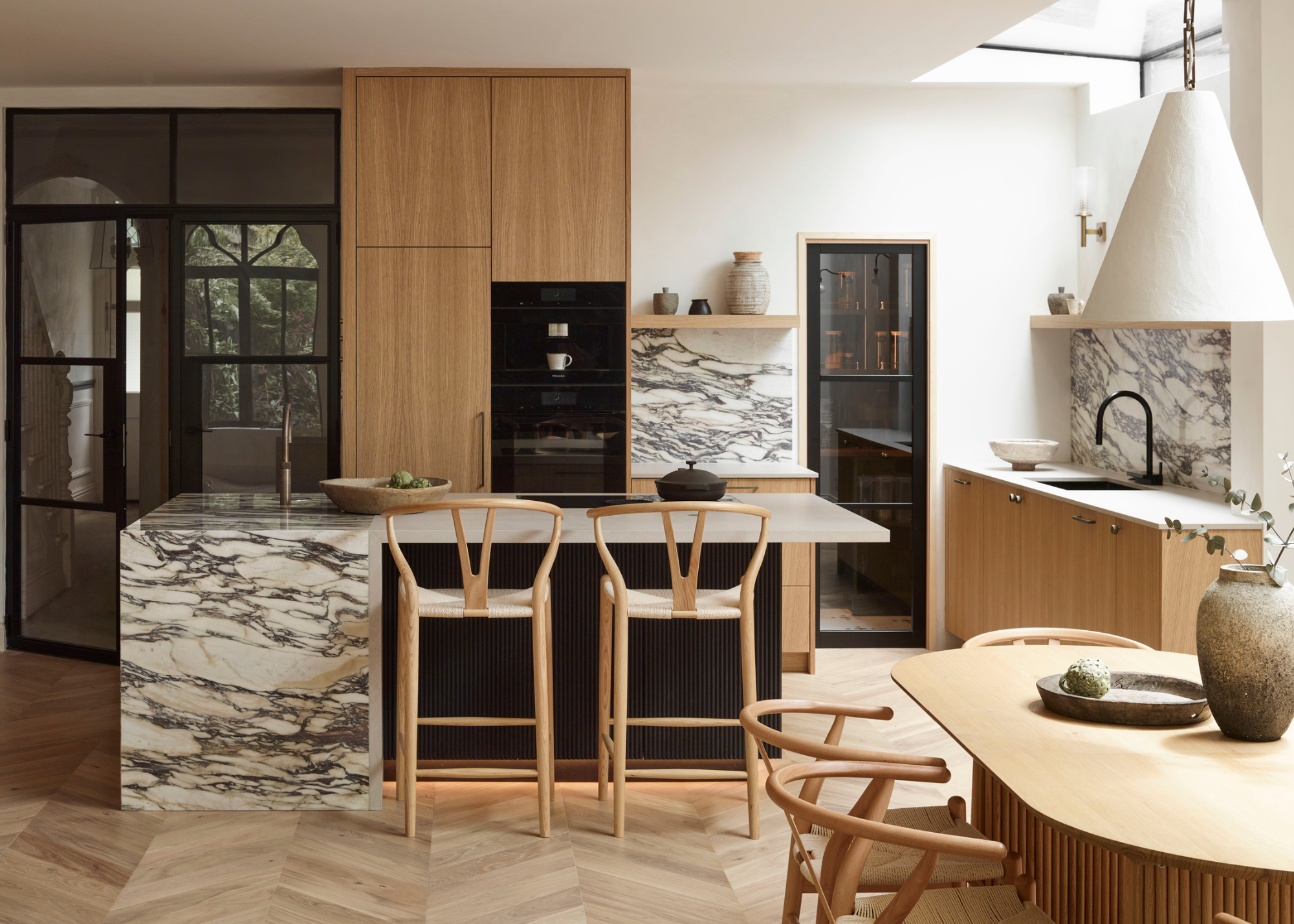
I understand the struggle of feeling as if there's no space for a fridge in your kitchen; it's why so many apartments offer under-counter, mini fridges instead. And while a half fridge can be a good solution for single-occupant households, when you have a few more mouths to feed, this can feel slightly limiting, which can, instead, often result in a make-do approach to your fridge placement.
"One of the biggest mistakes we continue to see is placing the fridge in a corner against the wall," comments Paul McManus from McManus Kitchen and Bath.
Explaining the issues with this placement, Paul says, "Modern fridge doors are 6-8" (15-20 cm) thick and open to 120 degrees. When you put a fridge against a wall, the door can not open all the way. This can prevent your crisper drawers from being removed or opened all the way, and you risk banging your door against the wall."
Not only will this quickly become a constant cause of irritation, but it will also damage your walls, leaving you with a whole other problem to deal with.
5. Rejecting the Kitchen Triangle
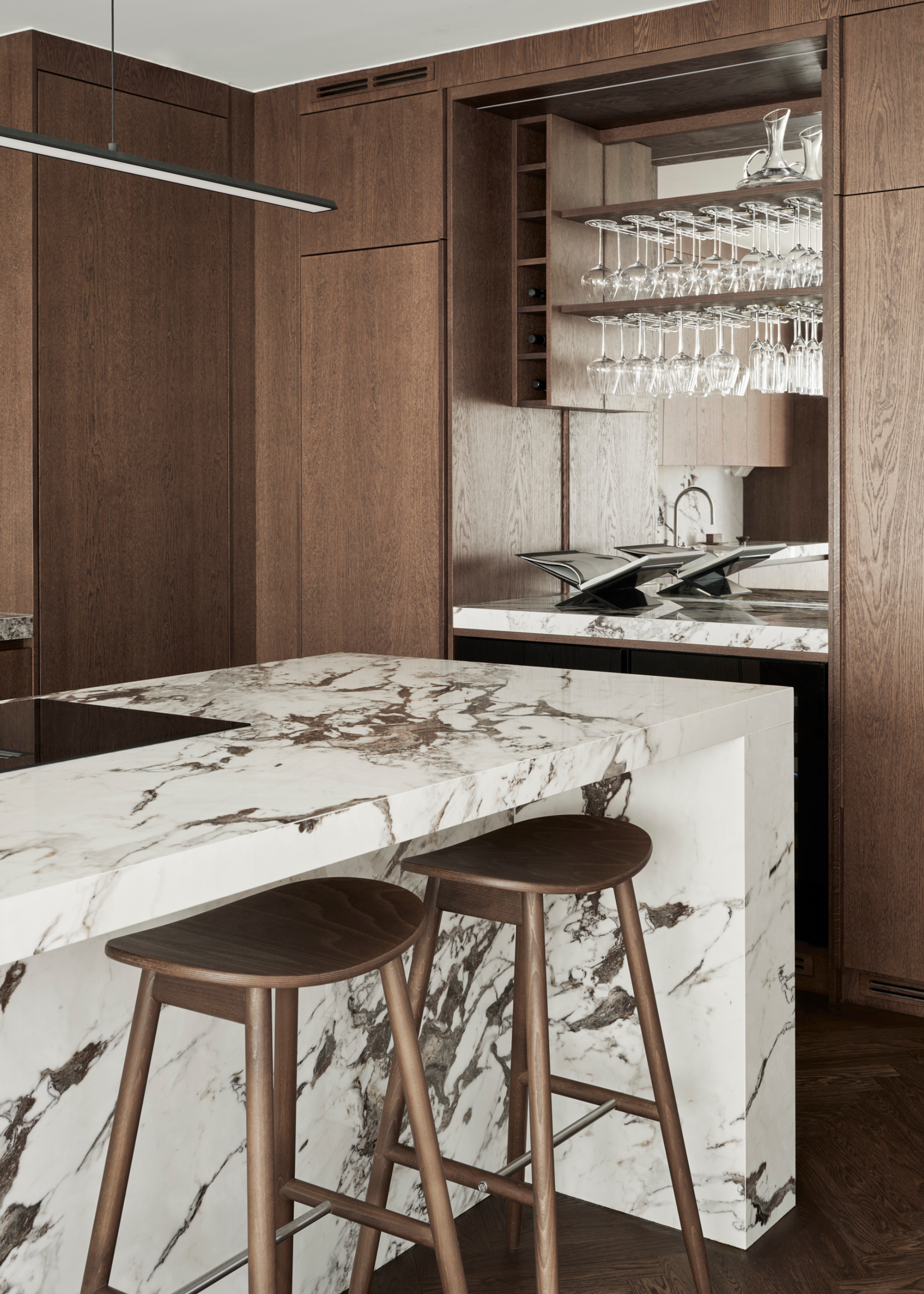
"While the ‘kitchen triangle’ isn’t always right for everyone, I always tell people to start with it — the fridge, sink, and hob — and work backwards from there," says Paul Dore.
Although some people may argue that the kitchen work triangle is outdated, it's a classic rule for a reason, and there's plenty of legitimacy behind the concept. And while you don't have to follow it religiously, rejecting it entirely might be a decision you come to regret.
"When we review new kitchen plans, most issues stem from appliance placement rather than the cabinetry itself," comments Richard Davonport, managing director at Davonport. "Fridges positioned too far from the main preparation area, ovens without a safe landing space nearby, or dishwashers that block access to drawers or bins are all common mistakes. These problems are avoidable when appliances are planned as part of the layout from the start, rather than fitted around it at the end."
Planning your kitchen around natural flows of movement is the inherent idea behind the work triangle, and the key to any well-designed kitchen. However, customizing this to reflect your personal habits is an easy way to elevate the work triangle beyond the basics.
"Good placement is about creating a sequence that supports how you work," says Richard. "The fridge should sit close to the point where ingredients are unpacked and prepared. The hob needs an uninterrupted kitchen worktop on at least one side so pans have somewhere practical to land. The oven benefits from a clear surface close by for hot trays, and the dishwasher performs best when it opens towards the sink with easy access to crockery storage."
He continues, "These sound like small details, but they shape how comfortable and intuitive the kitchen feels in daily use."
A handy sliding tray can quickly transform your kitchen cupboards into an appliance garage, saving you space and making your kitchen look more sleek.
If you're on the lookout for some kitchen appliances that you won't have to hide away when you're not using them, Our Place has hit the nail on the head. Their take on the air fryer has the cutest retro design, and it comes in a couple of different colors to choose from.
I love the happy, sunny color of this coffee machine, and would be more than happy to see this sitting proudly on my kitchen counters every day.
Now that you know where and where not to place your kitchen appliances, it's time to get clued up on all the hottest kitchen appliance trends.