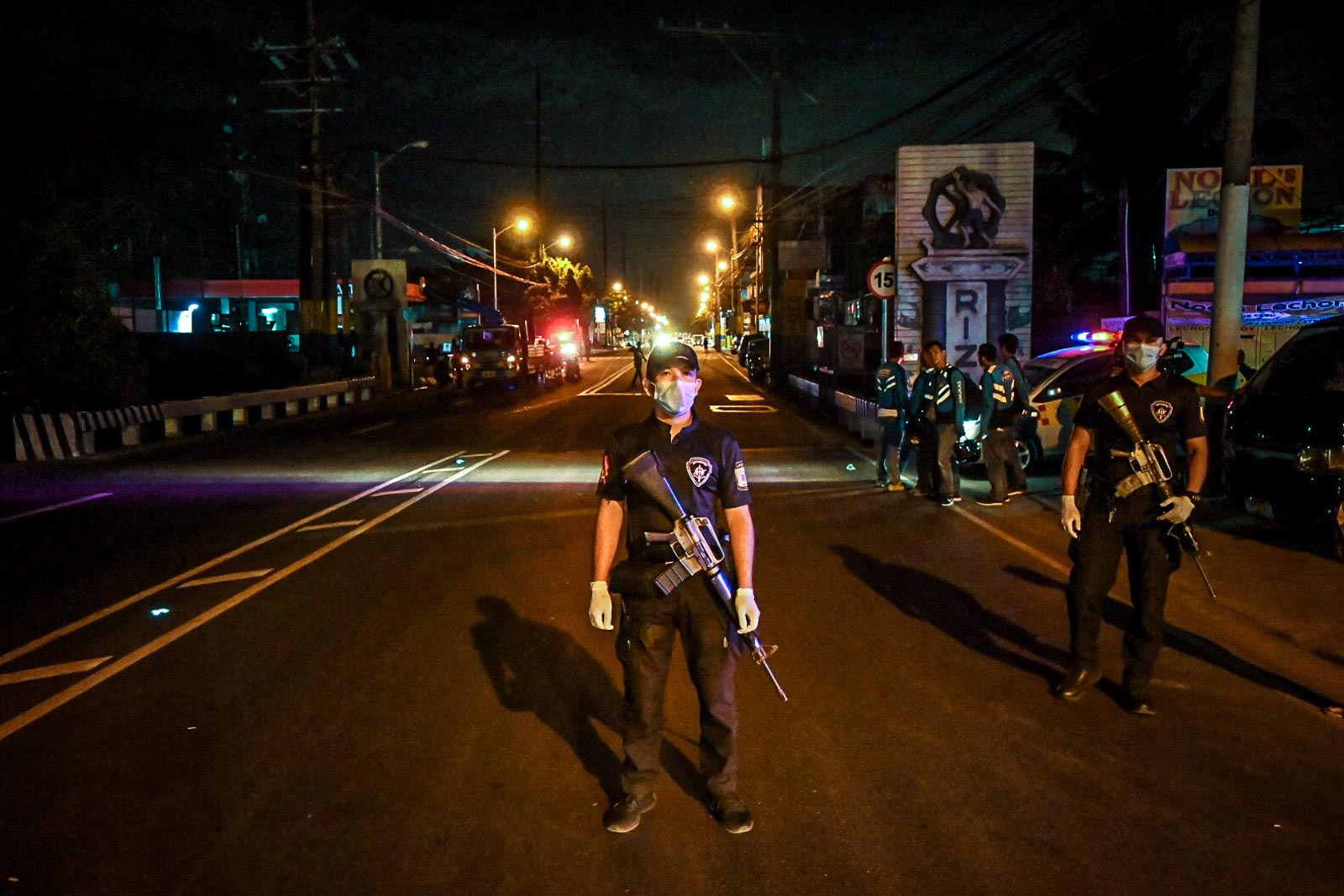
MANILA, Philippines – At 11:59 pm Sunday, April 12, millions of residents of Luzon, the Philippines’ largest island group, are supposed to see the end of a sudden month-long lockdown put in place to contain the spread of the novel coronavirus.
In the capital region of Metro Manila, strict quarantine measures are supposed to last two days longer – with restrictions to movement being lifted on Tuesday, April 14.
At stake is the risk of experiencing a deadly increase in coronavirus cases and the need to restart the economy whose downtime has left thousands jobless and hungry.
While earlier set to end on Easter Sunday, the lifting of the Luzon-wide lockdown by April 12 is not yet final.
With less than a week to go before the lockdown ends, health experts say it is still too early to tell whether or not the lockdown could be lifted. In nearly 4 weeks, cases have increased more than tenfold from 187 at the start of the lockdown on March 17 to 3,660 cases as of April 6.
Cabinet Secretary Karlo Nograles, spokesperson of the Inter-Agency Task Force (IATF) on the outbreak, could only offer the public assurances that the government has been trying to come up with a decision at the soonest possible time.
During his address to the nation on Monday evening, April 6, President Rodrigo Duterte said he was inclined to extend the lockdown in Luzon until the end of the month. But his tone carried uncertainty.i
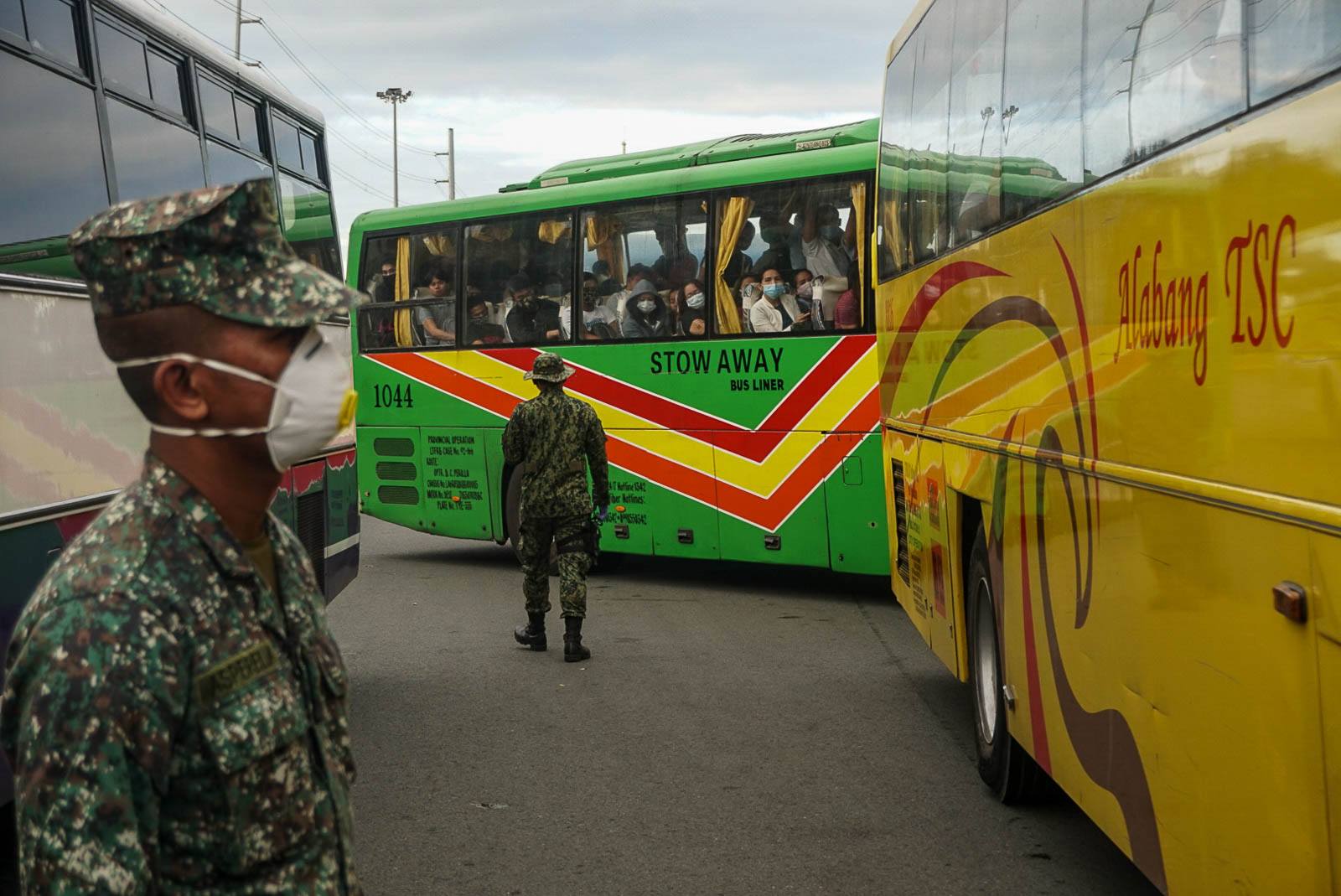
Public health experts have stressed, however, that there is no ideal timeline for a lockdown.
What countries usually look for are a sustained record of "no new cases" or a decline in new cases at a level when it can start to ease restrictions.
How close are we to seeing that happen? The answer is still hazy as data on how many people have been tested – and what the true picture of the disease looks like in the Philippines at present – remains limited.
Like most countries on lockdown, the Philippines faces a balancing act: calibrating its response to ensure that the health system does not buckle from a surge in coronavirus cases, and making sure that those who are most adversely affected by draconian measures are able to survive a prolonged quarantine.
There are fears, too, that risks from social distancing measures – like upended routines, growing hunger, and lost jobs – are quickly taking their toll on the public, while benefits from the lockdown have not been in place long enough to arrest the spread of infection.
Here are at least 4 known options that officials are considering in relation to the Luzon lockdown, each with its own risks and benefits. They are as follows:
- Lockdown continues until April 30
- Modified quarantine measures are implemented after April 12
- Lockdown measures are extended throughout the Visayas and Mindanao
- Lockdown is lifted after April 12

But first, how is the government assessing the lockdown?
The government’s coronavirus task force adopted the following parameters proposed by its sub-technical working group on data analytics in deciding the fate of the lockdown:
- Trends in the COVID-19 epidemiological curve, which include, among others, the doubling time, acceleration, or deceleration of new cases.
- Capacity of the health care system, which includes, among others:
- Number and availability of quarantine, isolation, and treatment facilities (LIST: National quarantine centers)
- Capability to mount contact tracing (The health department has identified some 259 people from its offices and another 16,221 primary care personnel).
- Availability of Personal Protective Equipment (PPE) for frontliners, and the testing capacity of the country (Local production of some 10,000 PPEs daily will start on April 13, while "massive testing" of suspected coronavirus patients is to start mid-April).
- Social factors
- Economic factors
- Security factors
A sub-technical working group led by the Department of Health, with the National Economic and Development Authority (NEDA), Philippine Institute for Development Studies, Department of Science and Technology; and technical experts from the academe, health, economic, and security sectors have convened to assess the lockdown and provide recommendations.
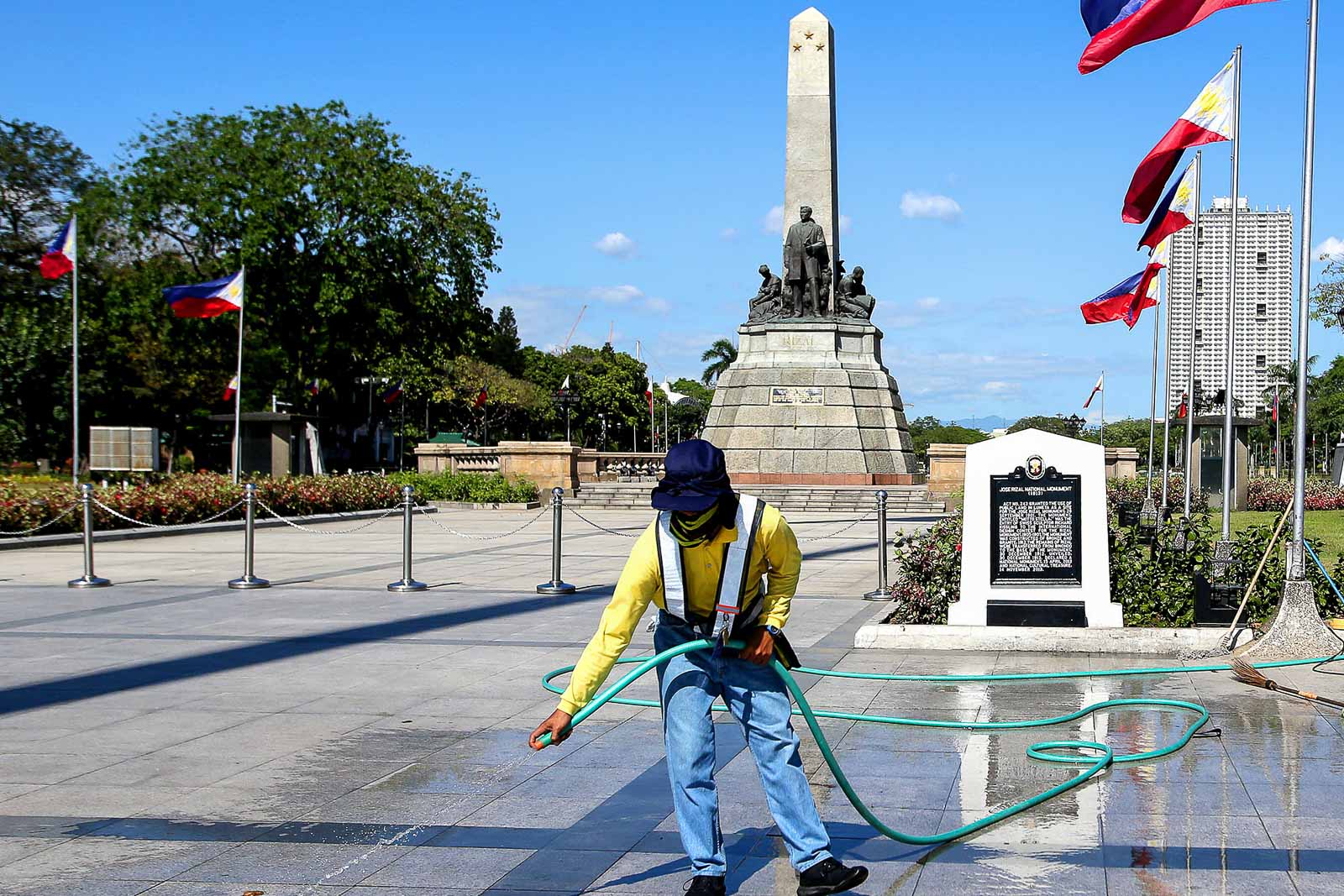
Option 1: Lockdown continues until April 30
The President indicated a seeming, though not explicit preference for this option.
In this case, the status quo remains: strict home quarantine for all 57 million residents in the 8 regions of Luzon will continue, while land, sea, and air travel restrictions will stay in place.
The movement of people will likewise remain limited to purchasing essential goods and reporting to work deemed essential by the government.
The option is similar to those taken by other countries like the United States, Italy, and Malaysia which extended lockdowns after cases continued to increase. This is reminiscent of other nations that recently put in place physical distancing measures like Singapore, Japan, and India.
Health experts said earlier projected cases could peak by the time the Luzon-wide lockdown is lifted on April 12. If this does happen, choosing this option avoids crippling the Philippines' already weak health system.
A recent study from the University of the Philippines (UP) COVID-19 Pandemic Response Team also found this option would flatten the curve the most.
But if the government decides to extend the Luzon lockdown for another two weeks, it must be able to give assurances the need for food and financial assistance can be delivered to those most affected by quarantine measures.
Hundreds of Filipinos have already pleaded for the government’s help, saying they no longer have food or the means to last until the lifting of the lockdown period.
While the Department of Social Welfare and Development started to deliver aid to residents, relief is either lacking or can’t come quickly enough due to red tape and logistical gaps.
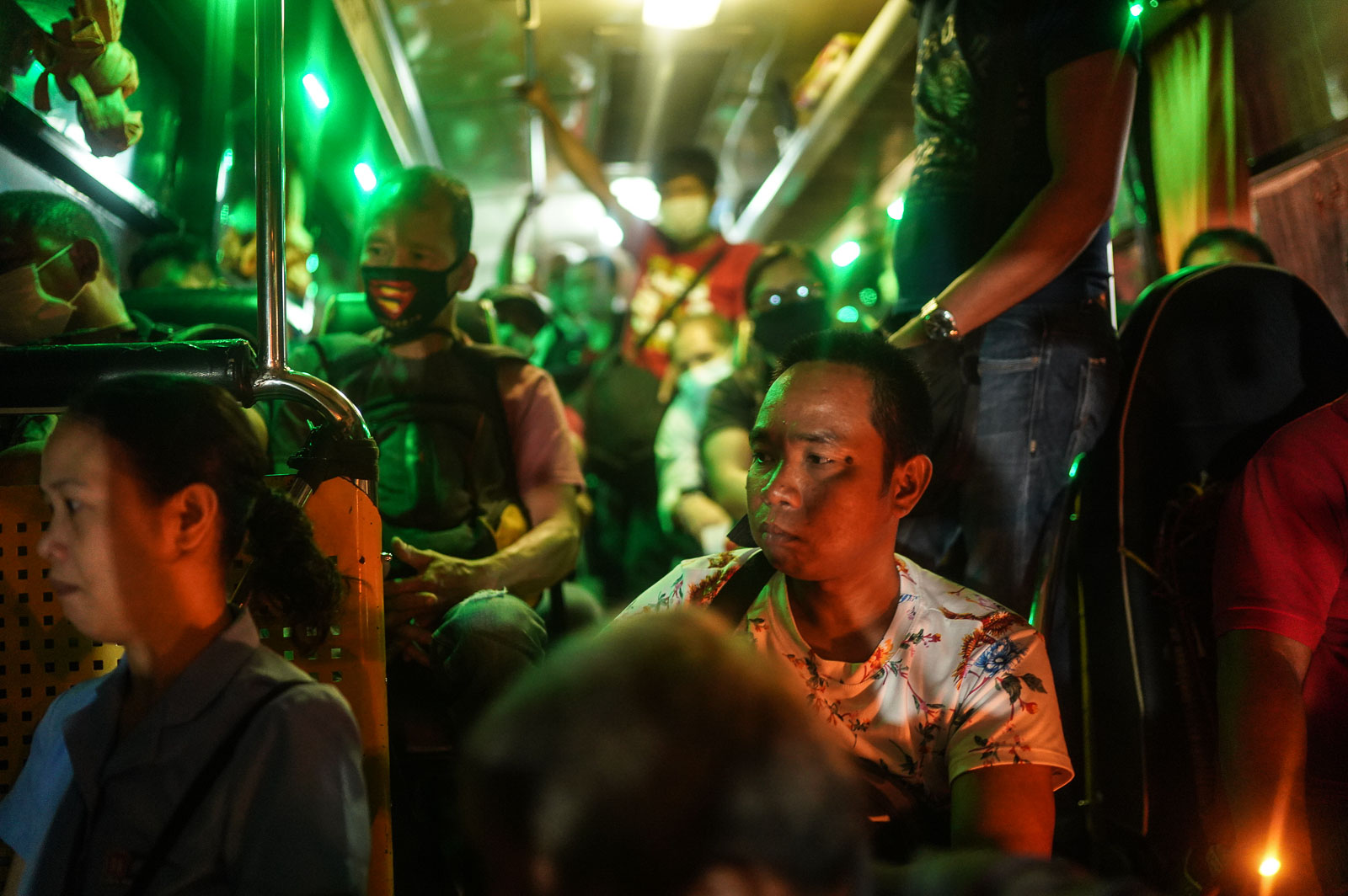
Option 2: Modified quarantine measures are implemented after April 12
This option is favored by some lawmakers and members of the business community. Here, a calibrated lockdown will be implemented where some physical distancing measures will remain in place, but certain segments of the economy will be able to resume activity.
Presidential Adviser for Entrepreneurship Joey Concepcion had proposed to shift to selective quarantine at the barangay level instead of the entire Luzon after a meeting with 60 business leaders and 6 government officials.
Under this option, local government units and their respective mayors will implement lockdown measures, based on guidelines from the government’s coronavirus task force.
The checkpoint system will also be replaced with barangay-level quarantines for areas with confirmed cases.
The option sees all manufacturing, construction, and agricultural activities operating again, based on demand. Aside from this, government is to ensure the unhampered flow of all cargo from “essential manufacturing” and “essential infrastructure” activities, as well as agriculture activities.
“All sectors still to be encouraged to work from home but permit physical work in the largest employment groups such as construction, non-food manufacturing, energy infrastructure, and government,” Concepcion said in a letter to the sub-group on “forward-planning” headed by NEDA.
Meanwhile, mass gatherings will remain banned, and schools and malls will remain closed. High-risk individuals and students will also remain in their homes.
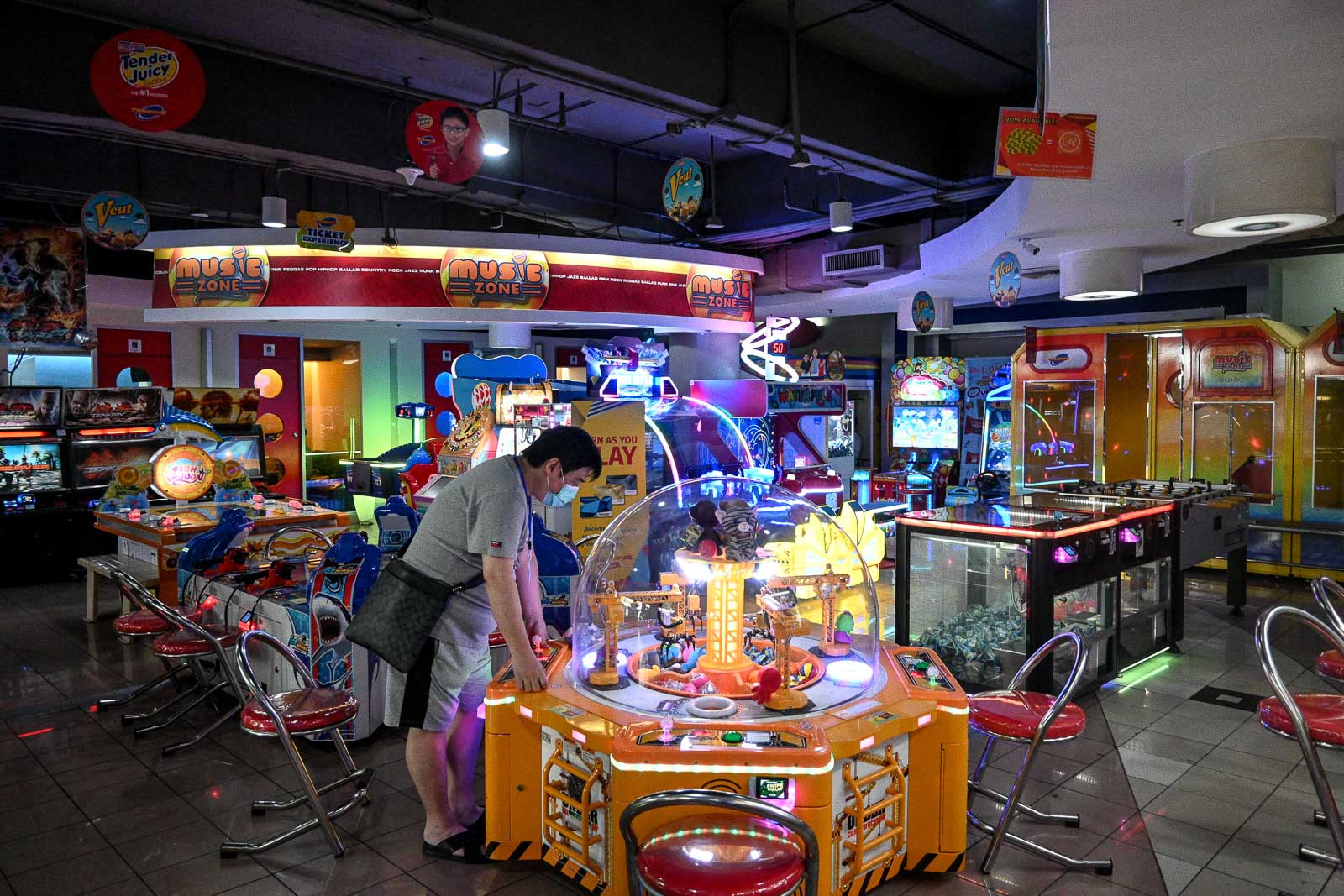
In Concepcion's proposal, public transportation may be allowed to operate at a "reduced level" to ferry workers. Private vehicles, bicycles, and certain types of vehicles consistent with physical distancing would be allowed.
Trave restrictions for flights to and from Luzon will also remain in place.
A modified lockdown, the UP study said, could still lead to a peak in cases, but one that is lower if no physical distancing measures were in place.
In an interview with Rappler, former DOH secretary Manuel Dayrit said that with a calibrated lockdown, the government must see to it that this goes hand in hand with measures to isolate patients under investigation.
“It is too late if we isolated a person only after s/he was confirmed to be positive,” he said.
Dayrit added that masks for everyone should likewise be the order of the day.
Former health secretary Dr Jaime Galvez Tan told Rappler that such a option may also be feasible for areas with no confirmed cases.
But before imposing a modified lockdown, government, Tan said, should ensure hospital organization networks are clear, a system for the management of suspected coronavirus cases is in place, supply of masks can be assured, and widespread testing can be done.
Option 3: Lockdown measures are extended throughout the Visayas and Mindanao
The strict quarantine measures that we now see in Luzon will become the new reality for residents in the Visayas and Mindanao.
While there are already several areas in the Visayas and Mindanao that declared their own lockdowns, strict physical distancing measures in Luzon will extend to the rest of the country.
So far, this is not a likely option. According to Dr Edsel Salvana – an infectious disease expert part of the advisory group to the IATF – there is not enough data to support this decision.
"Most cases are still in NCR. More localized measures may suffice," he said.
At least 67 cases have been reported in 9 provinces and 5 independent cities in the Visayas, while 104 cases have been reported in 11 provinces and 5 independent cities in Mindanao as of Sunday, April 5.
Option 4: Lockdown is lifted after April 12
This is a most unlikely scenario as risks that come with lifting quarantine measures and returning to daily routines are high.
"I don't think the lock down will be lifted totally. There will probably be compulsory lockdown, particularly for vulnerable persons and older age groups," Dayrit said, describing a more likely outcome.
The option was favored by neither business groups nor health experts.
Protection
Whether the government decides to extend, modify, or lift the lockdown, Dayrit said that if they are to protect themselves and those around them, Filipinos must understand that they can be possible carriers of the coronavirus.
Failing to do so, he said, can expose others to the risk of developing severe conditions from the disease and even death.
“If people can accept this reality, not be in denial, and religiously take the proper steps to protect himself/herself, the family, and close everyday contacts, that's all one can do,” Dayrit said.
The buck, however, will stop with President Rodrigo Duterte who will ultimately decide on whether or not to approve, modify, or reject recommendations made by the government’s coronavirus task force and its advisers. – Rappler.com