A visitor is hurtling through the void, a silent, ancient vagabond from an alien star system, and by the end of the week, it will make its closest ever approach to Earth. This is no ordinary comet; it is 3I/ATLAS, only the third interstellar object ever confirmed, and its fleeting presence is granting astronomers an unparalleled peek at the birth of a world beyond our own. Forget everything you know about comets — this mysterious traveller is behaving in ways that defy our textbooks, from its seemingly controlled path to an unusual tail pointing in the wrong direction.
Discovered on July 1, 2025 by the NASA-funded ATLAS telescopes in Chile, this cosmic stranger has been traversing the Milky Way galaxy for billions of years. Its path through our solar system is hyperbolic, meaning it is here now, but it will soon be ejected back into the interstellar medium, never to return. This 'untainted data' — material formed in the swirling protoplanetary disc of gas and dust around a star far, far away — is the astronomical gold standard.
Scientists are watching with bated breath, because this is their only chance to compare its composition with that of our own, familiar solar system objects. Rest assured, while this is a close encounter on a cosmic scale, there is no need for alarm: on Friday, Dec. 19, 2025, 3I/ATLAS will be approximately 270 million kilometres away from Earth, a distance almost double that between our planet and the sun.

The Peculiar Anti-Tail of 3I/ATLAS: Is It a Reconnaissance Mission?
The most captivating mystery surrounding this object is its odd behaviour. Some astronomers have privately speculated — strictly as a discussion point, they stress, without any evidence of artificial origin — that 3I/ATLAS appears to be on a 'reconnaissance mission,' owing to its remarkably stable distance from our planets and what looks like a 'controlled trajectory'. The real shock, however, lies in its physical structure.
Comets usually leave a prominent tail that is pushed away from the sun by solar radiation. Yet, images from the Hubble Space Telescope have repeatedly captured a strong, visible anti-tail on 3I/ATLAS, pointing directly toward the sun. This strange feature was not a viewing illusion, appearing in images taken from July through to November 2025, confirming it as a genuine, physical structure. Scientists are scrambling to explain this defiance of known physics.
Three proposals are currently on the table: two peer-reviewed papers suggest the anti-tail is created by sunlight scattering off tiny ice fragments that evaporate before solar pressure can properly push them; meanwhile, a third paper, published on Dec. 8, 2025, posits a more complex cause, suggesting the feature is the result of objects lagging behind the comet due to non-gravitational acceleration away from the sun. Only further analysis by instruments like Hubble can settle this profound cosmic question.
The Hunt for 'Alien' Water and How to Watch 3I/ATLAS
The fundamental purpose of this intense scrutiny is to unlock the secrets of planet formation elsewhere in the galaxy. As the comet nears the sun, the heat causes its icy nucleus to release dust and gas — a process known as outgassing.
By studying this specific material, researchers can gain crucial insight into the conditions under which the comet formed. Was the 'water' of its home star system dramatically different from ours? Did it form much further out than our own comets?
Observations from multiple space agencies, including new images from the Hubble Space Telescope and the JUICE Jupiter probe, are tracking its rapid movement through our inner solar system to gather this vital data.
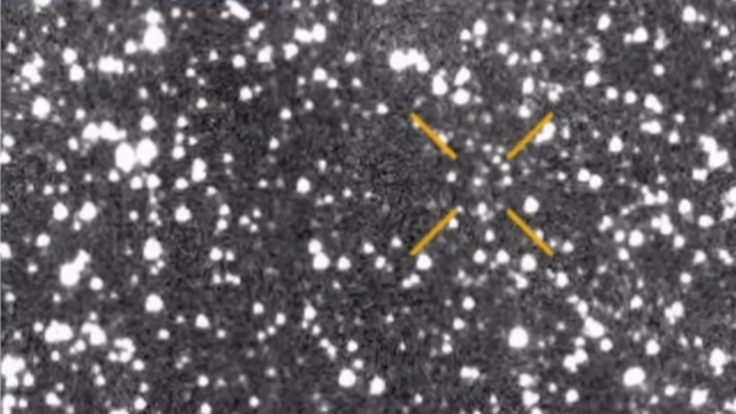
The approach of 3I/ATLAS is not just a scientific event; it is a profound spectacle for all of us. On the evening of Dec. 18, the public will have an opportunity to witness the closest passage of this rare visitor. A free livestream of the event, hosted by Gianluca Masi through the Virtual Telescope Project, is scheduled to begin at 0400 GMT on Dec. 19, weather conditions permitting. This is truly a once-in-a-universe sighting, offering a fleeting, unforgettable glimpse of material forged at the edge of another star system.
This ancient traveller, 3I/ATLAS, is giving humanity an unprecedented, fleeting look into the chemical origins of another star system. As astronomers race against time to capture every last photon and solve the mystery of its peculiar anti-tail, the wonder is shared by all of us looking up.