Thirty-one prefectural governments have withheld the names of medical institutions designated to provide novel coronavirus consultations, according to a Yomiuri Shimbun tally.
Some prefectures have decided to publicize the names as withholding them makes it difficult for people to find out where they can be tested.
"There are fears that some medical institutions could be inundated with patients or become the victims of harmful rumors if the names were publicized," said an official of the Tokyo metropolitan government, which has decided not to disclose the names of the institutions.
Prefectural governments designate medical institutions such as hospitals and clinics to conduct testing for the novel coronavirus. People who think they might be infected are being advised to first contact their primary care doctors by phone. If the medical facility of their primary care doctor is not a designated institution, the patients will be referred to one nearby.
Because many medical institutions in Tokyo requested not to have their names disclosed, the metropolitan government decided the only way it would be able to get their cooperation is by not publicizing the information, according to an official.
As a result, Tokyo was able to designate the target number of 3,000 institutions. This makes it possible to collect up to 65,000 test samples per day, which would exceed the expected peak demand for testing.
There are concerns that the decision to not disclose the names of the sites could result in the Tokyo metropolitan government's consultation centers being inundated with calls from people who want to be tested. But according to an official, they are "sufficiently prepared to handle it."
The Health, Labor and Welfare Ministry announced Thursday that 24,629 institutions had been designated by prefectural governments to offer coronavirus consultations as of Tuesday.
However, the ministry is "leaving the decision [to disclose the names of institutions] up to each local government," a ministry official said.
According to the Yomiuri Shimbun tally, 31 prefectures had not disclosed the names of institutions as of Thursday. Ten prefectures, including Fukushima, Toyama and Aichi, had disclosed the names of some medical institutions that had given their consent. Only Saitama and Kochi prefectures had disclosed the names of all designated institutions.
A Saitama prefectural government official said: "Consultation centers would be overloaded if the information wasn't disclosed. We must avoid a situation in which patients are unable to go anywhere."
Saitama aims to designate 1,200 medical institutions, but only 824 have been designated so far.
The prefectural government has adopted its own measure to meet the target, offering 500,000 yen to each hospital that signs up. "We want more medical institutions to cooperate," the official said.
-- Capacity fears
The testing capacity of all designated institutions announced by the health ministry on Thursday meets the maximum demand in all prefectures. "The minimum number of institutions needed has been secured," a senior ministry official said.
However, there are fears that some patients may not be able to get tested due to high concentrations of patients at some medical facilities. Some local governments think more facilities are needed.
The Yamagata prefectural government has designated 257 locations, ensuring a capacity of 4,400 tests per day, which exceeds the expected maximum demand.
However, a prefectural government official said: "The number is just sufficient to meet the demand. We need 300 locations to be able to respond adequately."
Meanwhile, the Gunma prefectural government has so far designated 329 institutions, falling short of its target of 400.
"Hospitals are concerned about treating many patients on top of their primary care patients, in addition to a fear of the spread of hospital-acquired infections," said Takashi Kawashima, vice chairman of the prefectural medical association.
A lack of financial support has also been noted. Subsidies for designated institutions are only provided if the number of patients received per day does not exceed the estimate.
"Even if we tried our best to see more patients than had been expected, it wouldn't be to our benefit if we received no subsidies," a doctor in Maebashi said.
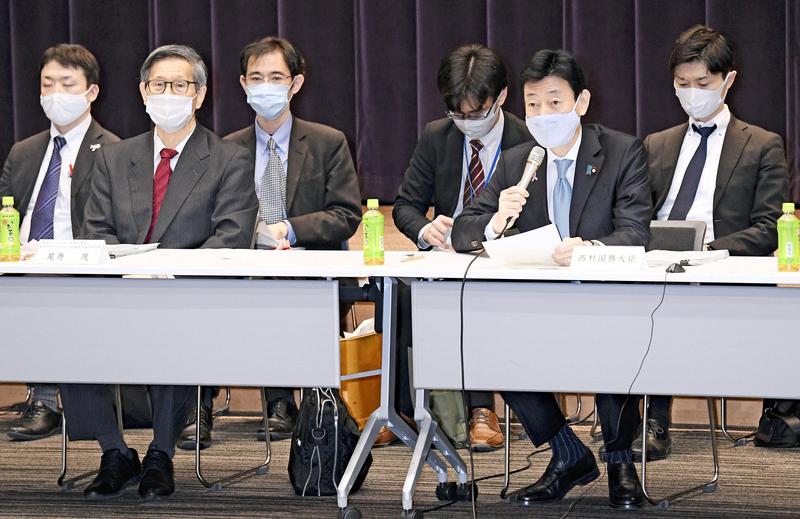
The National Governors' Association issued an urgent proposal to the central government during an online meeting on Thursday with Yasutoshi Nishimura, the minister in charge of economic revitalization, calling for improved support for designated medical institutions.
The proposal calls for increasing the estimated number of patients, which is the basis for calculating subsidies, support based on the number of patients received, and provisions for financial assistance.
"While it would be preferable to have the names of designated institutions publicized so that medical examinations and tests can be carried out promptly, the concerns of hospitals are understandable," said Nobuhiko Okabe, director-general of the Kawasaki City Institute for Public Health and a member of a government panel on COVID-19 countermeasures. "The first step is to let the public know that the procedure to get tested has changed."
Read more from The Japan News at https://japannews.yomiuri.co.jp/