
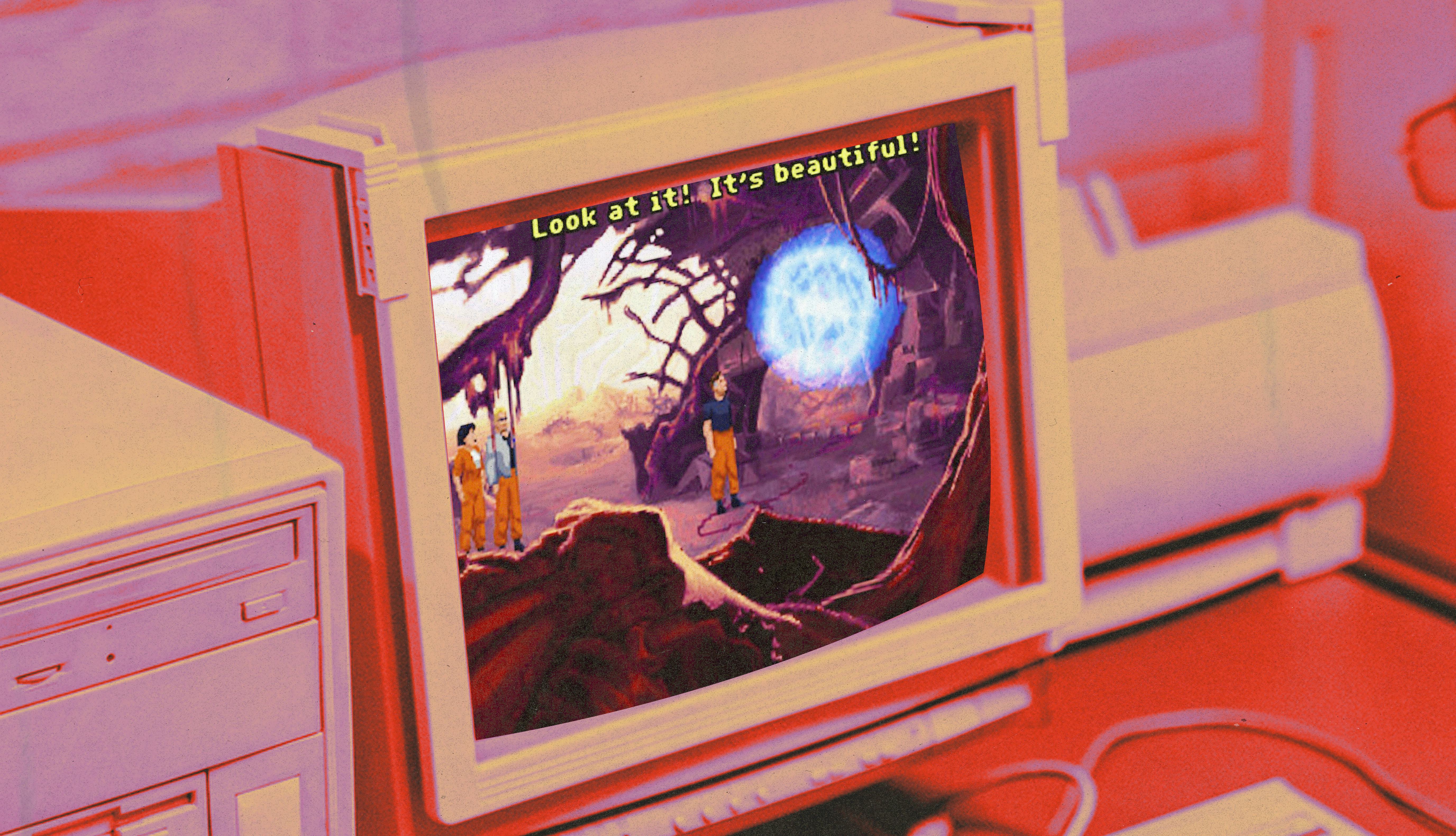
Science fiction stories — from books to TV to film — are very often about more than just explosions and weapons that go pew-pew-pew. But in the gaming world, finding a science fiction game that really captures something without violent conflict is tricky. In the modern era, we’ve got cozy games like the 2021 masterpiece Sable, in which exploration in a Dune-like world is made even sweeter by a wonderful score from Michelle Zauner of Japanese Breakfast.
But, if you want to talk about retro-sci-fi coziness within an utterly wonderful game, then we have to travel back in time exactly 30 years to the heyday of LucasArts. Yes, the Star Wars games of the 1990s from LucasArts were groundbreaking, but it’s tough to describe the stressful nature of Dark Forces or Rebel Assault as “cozy.” However, in 1995, LucasArts released an original science-fiction puzzle game with an incredible and oddly relaxing narrative. It was called The Dig, and it might be the best example of a cozy sci-fi game ever.
Like LucasArts’ 1992 game Indiana Jones and the Fate of Atlantis, The Dig is primarily a point-and-click game. And, like the title suggests, there’s an archaeological aspect to the story. Basically, The Dig starts off as the movie Armageddon, but then turns into Indiana Jones meets Myst. The player controls an everyman astronaut named Boston Low, a truly generic character who, retroactively, gives Andy Weir’s equally generic narrator of The Martian a run for his that’s-what-she-said money. The dialogue for The Dig was written by Orson Scott Card, who at the time was everyone’s favorite sci-fi novelist because of Ender’s Game. I suppose this would be a little like if George R.R. Martin were writing some edgy new first-person shooter, but of all the things that are great about The Dig, Card’s 1990s shot at Hollywood cliches has aged the poorest.
That said, Brian Moriarty and Steven Spielberg also co-wrote The Dig with Card, and when the story’s unique lore is unfurled, the collaboration between these three really pays off.
Sent to remove a rogue asteroid from Earth orbit, Boston and his crew discover that the asteroid is really an alien artifact, and that’s when things get interesting. You’re transported to an alien world, and then have to solve a series of complex puzzles to figure out why and find your way back. And it’s in these puzzles that The Dig is a cozy, calming gaming experience.
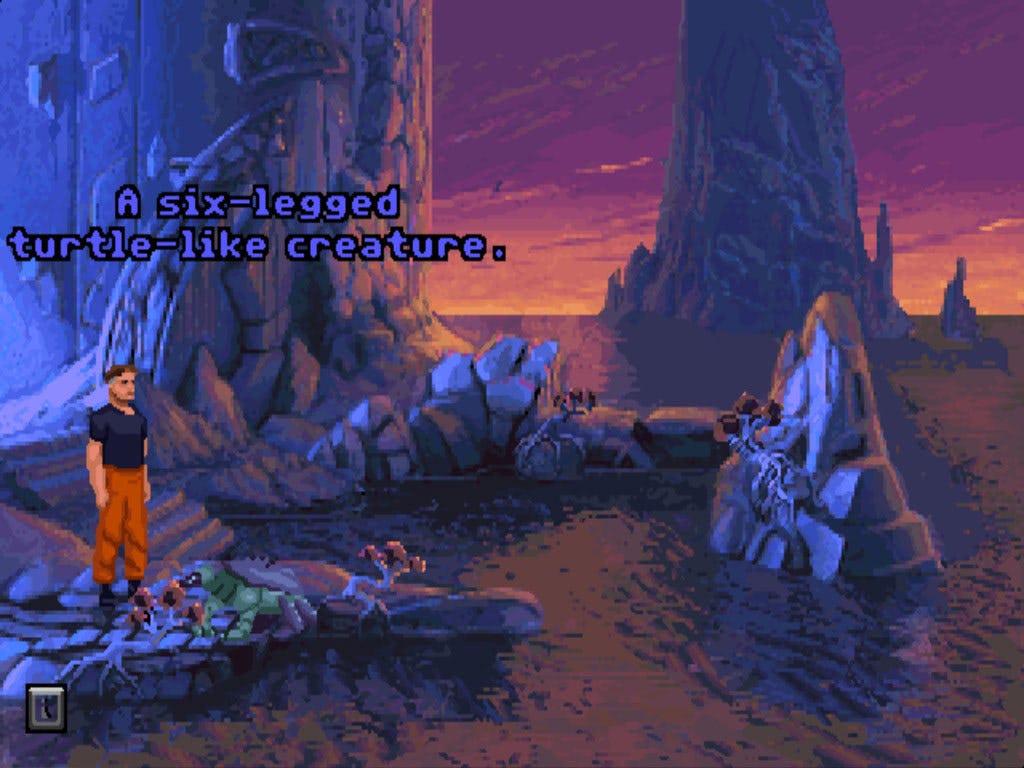
The player is encouraged to be methodical about the various alien puzzles, and though there’s a sense of menace lurking around every corner, it’s not stressful. Perhaps the best way to think about the mood of the game is to imagine the moment when Dallas is exploring the Space Jockey ship in the original Alien, but then imagine that there are no Chestbursters and Facehuggers to worry about, just interesting alien artifacts.
This isn’t to say there’s no conflict in The Dig. There are some space monsters scurrying around, not to mention at least one secret betrayal lurking in your crew of wayward astronauts. At the time, the SCUMM game engine was state of the art, and with cutscenes created by Industrial Light and Magic, it really felt like the future of sci-fi cinema might have been in gaming.
But, of course, The Dig is too plodding to really be a sci-fi cinematic experience. Even if you tried to adapt it into a prestige Expanse-style show today, it would be too slow. The overall alien mystery is somehow not quite enough for a TV show, but just right for hours and hours of placing alien jawbones into slots and hoping something shiny happens.
This is the paradox of a cozy sci-fi game: It needs to be both original enough to entertain us, but slightly boring enough not to excite us too much. As a teen, I fell asleep staring at my PowerMac trying to solve all the puzzles in The Dig, and as a 40-something, I can say the game’s soothing power is still there. The synthesizer score from Michael Land is perfect for a moody sci-fi game that is basically about nothing and everything simultaneously.
There’s a reason The Dig didn’t become a franchise. It’s a self-contained story that is more or less resolved if you solve the puzzles all the right ways. It’s a corny sci-fi Choose Your Own Adventure book turned into a Spielbergian fever dream. If you’re missing the strange way that the sci-fi aesthetics of the ’80s lingered in the ’90s, firing up The Dig will make you feel a certain kind of way that can only be replicated by drinking Mountain Dew at midnight at watching reruns of SeaQuest. In other words, perfect.