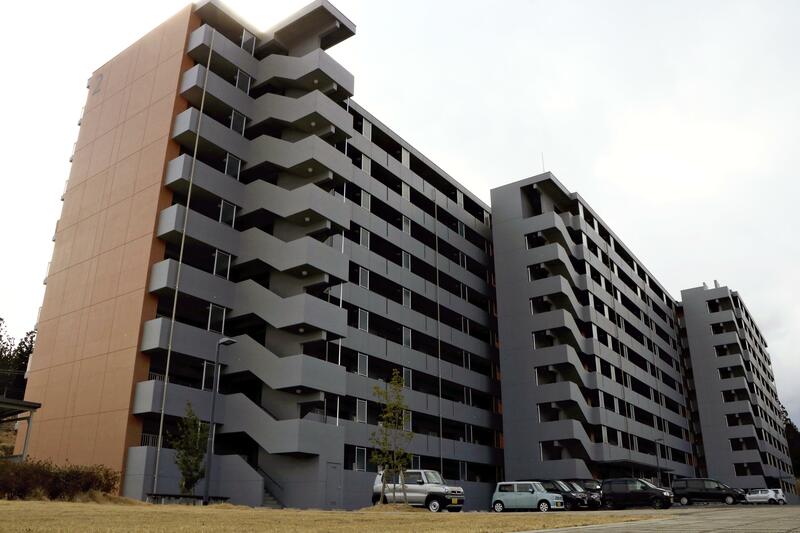
Detached houses accounted for nearly 30% of about 30,000 public housing units built for disaster victims after the Great East Japan Earthquake, and the per-unit cost was about 5.5 million yen less than the apartments constructed, according to a recent survey conducted by The Yomiuri Shimbun.
It takes longer to build detached houses than apartments, due to such procedures as acquiring land. However, the survey found that 18 municipalities in the hard-hit Tohoku prefectures of Iwate, Miyagi and Fukushima chose to build only detached houses for disaster victims, based on the needs of residents and other factors.
Public housing is provided by local governments at low rents for residents who lost their homes in disasters. Each municipality decides the type of buildings, and commissions builders to construct them.
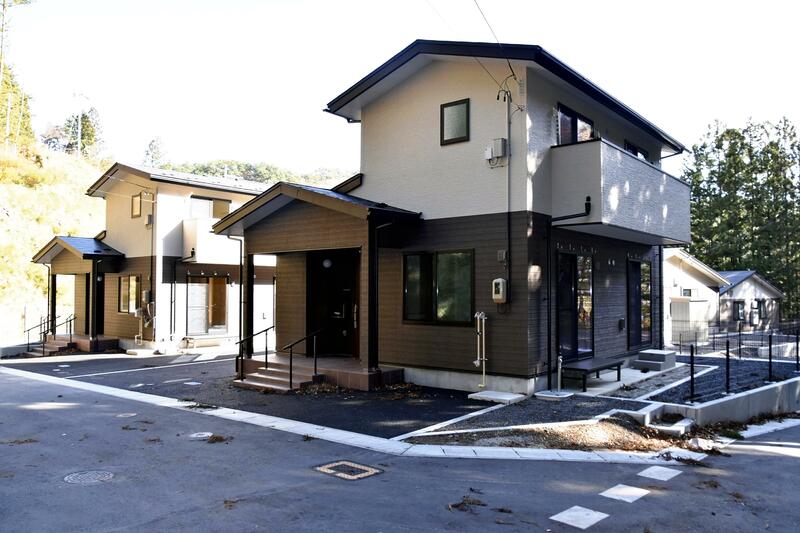
In January and February, The Yomiuri Shimbun conducted a survey asking 56 municipalities in the three prefectures, as well as the Iwate and Fukushima prefectural governments, about their public housing projects. Of a total of 29,649 units completed by the end of last year, 21,587, or 73%, were apartments, while 8,062, or 27%, were detached houses, including row houses.
According to the 2008 Housing and Land Survey by the Internal Affairs and Communications Ministry, detached houses accounted for 70% of all housing units in the three prefectures, compared to the nationwide average of 58%. The 18 municipalities in the Tohoku region decided to build only detached houses for their public housing because there had always been a large number of detached houses in these areas.
In contrast, 895 units built in Iwate Prefecture's Rikuzentakata and 532 units in Miyagi Prefecture's Tagajo were all apartments. An official of the Rikuzentakata city government said speed was an important factor behind the decision.
The average construction cost per unit, excluding the cost of land, was 21.41 million yen for the detached houses and 26.86 million yen for apartments. Building apartments is costly because of the expenses for installing elevators and assembly halls, among other facilities, as well as making them earthquake-proof.
Following the 1995 Great Hanshin Earthquake, about 25,000 housing units were constructed for disaster victims, and almost all of them were apartments. For people affected by the 2004 Niigata Prefecture Chuetsu Earthquake, 71 out of 336 units, or about 20%, were built as detached houses.
-- Fear of isolation
In Rikuzentakata, which was devastated by the 2011 tsunami, a total of 895 public housing units were completed in the six years after the disaster. All of them are apartments.
"There was not much flat city-owned land suitable for building houses," recalled a former senior city government official who was involved in the construction project. "Some of the people living in the temporary housing said they wanted to move into stable houses as soon as possible, so we decided to build apartments, which would allow us to construct a large number of units quickly."
However, while apartments protect the privacy of residents, there is the risk that people will become isolated.
In Tagajo, where all of the 532 housing units were built as apartments, a man living alone was found dead in May 2016. He is believed to have died in March of the same year. Residents of public housing apartments have also died in Rikuzentakata and Sendai.
In Otsuchi, Iwate Prefecture, 545 units, or more than 60% of 876 public housing units, were built in the detached style, including row houses.
Former Otsuchi Mayor Yutaka Ikarigawa, who led the town's reconstruction plan, said the Otsuchi municipal government emphasized communication among residents in proceeding with the plan. "If neighbors don't know each other in a disaster, they can't help each other," Ikarigawa said. "We based our decisions on the public housing partly on the opinions of residents."
However, as it took a long time to secure land and conduct other procedures, it took until November 2019 to complete all the houses in the town, 2-1/2 years later than in Rikuzentakata.
"I waited a long time, but I'm used to living in a detached house, so it was comfortable and I feel at home," said a 72-year-old man who chose to live in a detached house in the town so that he could enjoy gardening.
Detached houses are also relatively easy to sell to residents. For instance, the Soma city government in Fukushima Prefecture had sold a total of 81 houses as of the end of last year.
"We were able to prevent the outflow of the town's population while maintaining local communities, as well as reduce the burden on the municipality," of building the houses, said a city government official.
"Detached houses are suited to the lifestyle in regional areas, but there are people who want the more closed living space typically seen in urban areas, so building apartments is also necessary," said Iwate University Prof. Tetsu Mugikura, an expert in disaster sociology. "Both types have their advantages and disadvantages. It's a difficult decision for local governments, so they need to create an environment based on the characteristics and lifestyles of local communities, so that residents can establish a relationship of mutual help."
Read more from The Japan News at https://japannews.yomiuri.co.jp/