Nissan Motor Co., Renault SA and Mitsubishi Motors Corp. have decided to move toward a comprehensive tie-up, ranging from development and production to distribution, as they need to slash costs drastically amid fierce competition, especially in the development of electric vehicles.
The three automakers are struggling in their core markets, and the focus will be on whether their tie-up will prove effective in recovering earnings.
The three-way alliance was previously led by Carlos Ghosn, who had strong authority, and his leadership produced results in cutting costs through the joint procurement of parts. However, in the development and production fields, many people have raised questions about the alliance. "It was just a formality, and it didn't work. There were many side effects," former Nissan President Hiroto Saikawa said of the three-way tie-up.
Currently, the three companies are considering creating guidelines for their partnership. This is intended to make the details of their tie-up easier to understand by stipulating in writing such matters as fields and regions where the companies will work together. The companies envision a strategy to achieve steady results through a practical partnership based on certain rules, even without a strong leader.
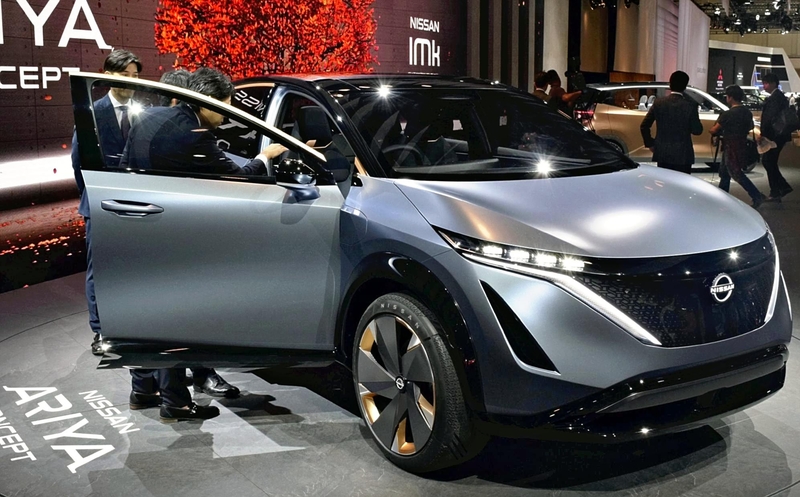
One of the pillars for their strengthened partnership is the joint development of EVs. The three companies started developing EVs early on, with each having already introduced its own model: Nissan's Leaf, Renault's Zoe and Mitsubishi's i-MiEV. However, like other automakers, they face many obstacles to the wide adoption of EVs by the public, such as high prices and the short distance that can be traveled on a single battery charge. In light of this, the three companies aim to launch affordable EVs by promoting the standardization of chassis and other parts for their models.
As for self-driving technology, Nissan, which has an advanced position in developing such technology, will consider matters including providing the technology to Renault and Mitsubishi and conducting joint research.
"We'll deepen the alliance in the spirit of nothing being off the table," a Nissan executive said.
However, as the development team of each company has a particular passion for such advanced technologies, it is not easy to standardize related parts. For example, the shape of the charging plug and most of the parts differ between the Leaf and the Zoe.
Even if unified production of particular parts is assigned to particular regions, coordination will inevitably be difficult if issues such as job cuts are involved. As the three companies have excess production capacity worldwide, a source close to Renault said, "There is little room [for Renault] to bother asking Nissan and Mitsubishi for production [help]."
Read more from The Japan News at https://japannews.yomiuri.co.jp/