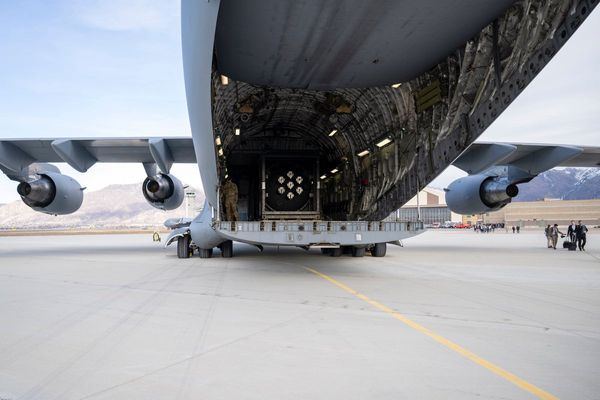
The new coronavirus was detected in three Japanese people who returned to this nation on the first government-chartered flight from Wuhan, China, an official of the Health, Labor and Welfare Ministry said Thursday.
The second flight arrived at Tokyo's Haneda Airport on Thursday morning, carrying 210 passengers. At least 13 people on the second flight were said to have symptoms, including fevers.
The three people found to have the virus were a man in his 50s who was hospitalized with a fever and a sore throat, and a man in his 40s and a woman in her 50s who both had no symptoms upon arrival. The latter two were staying at a hotel in Katsuura, Chiba Prefecture, that was arranged by the government.
This represents the first time that infected persons without symptoms have been confirmed in Japan. The number of confirmed cases in this nation has reached 11.
Of the 206 people who returned to Japan on the first flight on Wednesday, 201 were found to be negative for the new virus. Three were found to have the virus and two refused to be tested. The government allowed 210 passengers to board the second flight after obtaining their consent to be tested.
Ministry to speed up steps
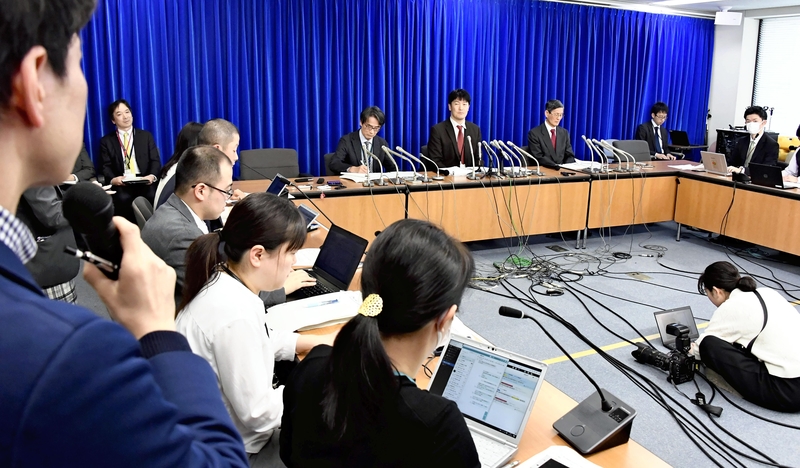
At an emergency press conference in Tokyo on Thursday, the health ministry expressed its intention to quickly implement measures related to people who are infected but have no symptoms.
"This is a new development that people have tested positive for the virus but have no symptoms. It's important to take countermeasures, bearing in mind cases in which infected people without symptoms could spread the virus to others during the incubation period," said Eiji Hinoshita, chief of the ministry's section to deal with tuberculosis and infectious diseases.
According to the health ministry, the two people did not show symptoms either during quarantine on the flight or in a medical examination after arrival in Japan. They each stayed with another person at the hotel in Katsuura after arriving, but neither of their roommates reported ill health.
Among the returnees from Wuhan to Japan on the first government-chartered plane, those who were not confirmed during the in-flight quarantine to be infected included other two persons who refused to take the medical examination and returned home. The ministry said it plans to continue to confirm the health condition of the other two people and ask them to see a doctor if they have symptoms.
An expert who attended the press conference said: "In China, some people were confirmed to have been infected from others who had no symptoms. It is better to take countermeasures, taking into account the possibility of such infections in Japan as well."
An official in charge at the National Institute of Infectious Diseases who also attended the press conference said, "It's necessary to closely watch the health condition of the infected people without symptoms."
All the other returnees who stayed at the hotel tested negative for the virus. However, in response to the fact that people without symptoms were found to have been infected with the virus, the ministry made clear its policy to stop allocating shared rooms at temporary facilities for returnees.
Mitsuyoshi Urashima, a professor of public health at the Jikei University School of Medicine, said: "It's possible that people infected with a seasonal flu virus have no clear symptoms. It's vital to observe the changes in the health condition of such infected people."
According to Urashima, small splashes that disperse after sneezing could float in the air for a certain amount of tiem.
"It's important to ventilate often. It's highly possible to be infected with a virus through mucous membranes, so it's good to attach a mask tightly to your face," Urashima said.
Read more from The Japan News at https://japannews.yomiuri.co.jp/