Drastically slashing your handicap is no simple task, but over the course of this season it's absolutely possible to see it tumble with the right tips, guidance and strategy advice.
The truth is there are many things you can do to cut your handicap in 2026, but according to the latest Shot Scope data these are three key areas you should focus on as a high-handicapper looking to get into the mid-handicapper club.
Increasing the distance you can hit the golf ball, perhaps by boosting your clubhead speed, is an absolute non-negotiable.
Alongside that, making smarter decisions on the golf course to reduce the number of double-bogeys (or worse) and improving their ability to hit the green from outside 150 yards.
In this article, we dive deeper into the data and explain how you can use this information to supercharge your game...
3 Key Data Differences Between A 15- and 25-Handicapper
I've been on a very similar journey myself over the past few months, carrying out an improvement plan that helped me shoot my best ever round (statistically) not once, but twice!
The focus of that program incorporated each of the three key areas listed above, but also included dedicated golf exercises that helped me to become a better golfer in just 30 days.
This partnership between technical work and fitness has helped me to shake my high-handicap status, or at least I am sure it will have done when weather and course conditions permit counting rounds to qualify.
The biggest contributing factor to my improvement, in my opinion, is improving how far I can hit the ball with each club - so let's start there.
1. Increasing Distance
The latest Shot Scope data tells us that a 15-handicapper hits every single club in the bag further than a 25-handicapper, on average.
Whether you look at driver (236y vs 204y), 6-iron (162y vs 137y) or pitching wedge (121y vs 90y), the difference is at least 25 yards and often more.
As part of my winter golf rebuild I was able to achieve a 106% power boost which delivered an increase of around 11 yards on my previous driving distance average.
As a result, I am now hitting driver over 240 yards (which is longer than the average 15-handicapper) and shooting scores that are around six or seven shots better than last year.
Whether you try Top 50 Coach Alex Elliott's simple formula to increase driving distance or you work on ensuring a centred strike with driver more consistently, adding distance (especially off the tee) is an absolute must for amateur golfers looking to improve their handicap index.

2. Making Better Decisions
Many amateur golfers, especially high-handicappers, accept that double-bogeys are inevitable. While this might be true to some extent, we can reduce the number of big scores on the card by making some simple (but smarter) strategy changes.
A 15-handicapper (4.68) makes around half the number of double bogeys (or worse) of a 25-handicapper (9.18) per round.
This might sound obvious, but turn those doubles into bogeys and we are making serious inroads.
Things like decisions around par-5s, club selection and course strategy can help you to achieve this improvement.
On a par-5, for most amateurs, see it as a par-6 or par-7. Accept it will likely take you four shots to reach the green, then trust yourself to two-putt for a six... which for most of you will likely be a nett-par.
Going for the green in two or three with the hero shot can lead to balls being lost or placed in difficult spots, as you sacrifice control for unrealistic power, so keep the ball in-play and plot your way to the green instead.
With club selection on approach shots into the green, take more club than you need to avoid the danger that often lurks short of the green.
Shot Scope data also tells us that the majority of amateurs miss the green short, often due to an impulse to flag hunt. Remember, the back of the green is good and if you the strike isn't perfect you might just fluke one to the middle of the green.
Hitting The Green From 150 Yards Or More
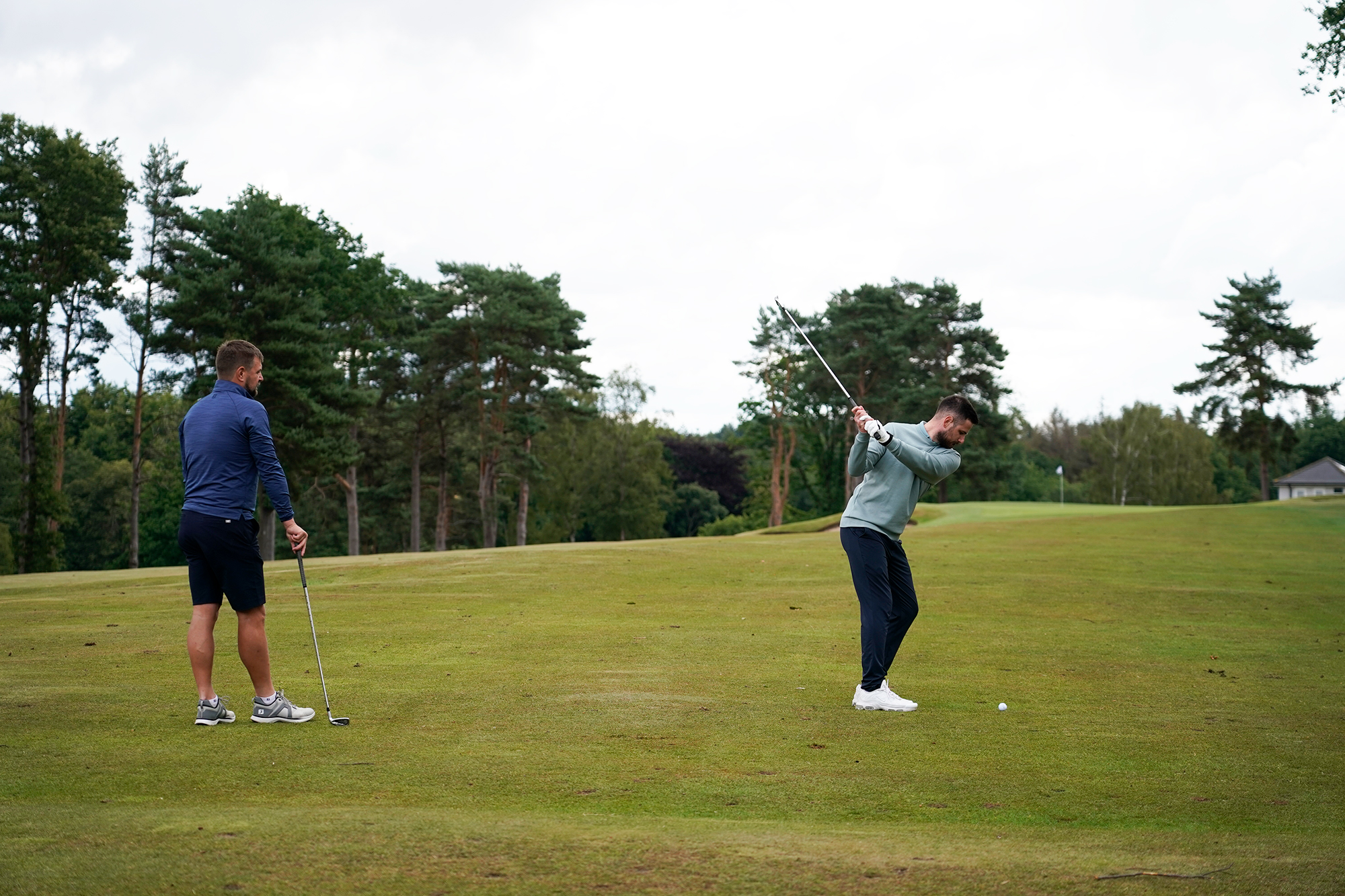
This has certain links to point two, above, as the latest Shot Scope data suggests that 25-handicappers hit the green from 150 yards just 13% of the time, which is far lower than 15-handicappers who do so 24% of the time.
Success reduces to just 8% for 25-handicappers from 175 yards, compared to 19% for 15-handicap players, but beyond that the Shot Scope data gives just a 1% chance of the higher-handicappers actually hitting the putting surface.
By working on the two points listed above, the third point should come on immeasurably.
Adding distance with each club through a more centred strike with irons and increased clubhead speed will mean more scoring clubs on approach, while a better strategy that is focused around avoiding coming up short and taking enough club to get there will help you navigate your way to the green in fewer shots.