Despite some prodding from the government, it remains unclear if companies will offer to raise wages by 3 percent during annual shunto labor-management negotiations in spring.
Labor unions of major companies including automakers and electronics manufacturers had presented management with their wage increase demands by Thursday, which started the shunto negotiations in earnest. The focus of these negotiations is on whether companies will offer a 3 percent pay raise -- a figure Prime Minister Shinzo Abe has publicly called for. However, it appears tough for companies to deliver on this suggestion.
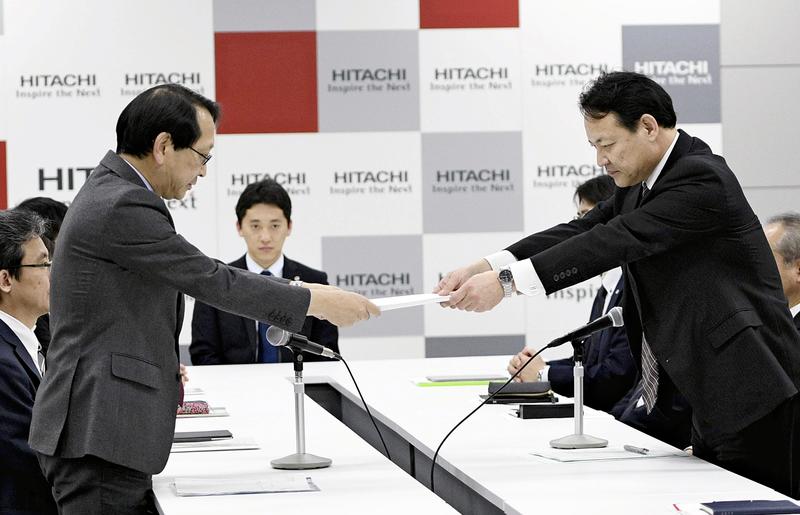
The unions of many major electronics companies, acting in concert, presented management with their written demands for a wage increase Thursday. At Hitachi, Ltd.'s headquarters in Chiyoda Ward, Tokyo, labor union leader Tatsuya Sakamoto displayed an unbending approach as he delivered the demands to management. "We decided on our demands after calmly analyzing the current living conditions of union members," Sakamoto said.
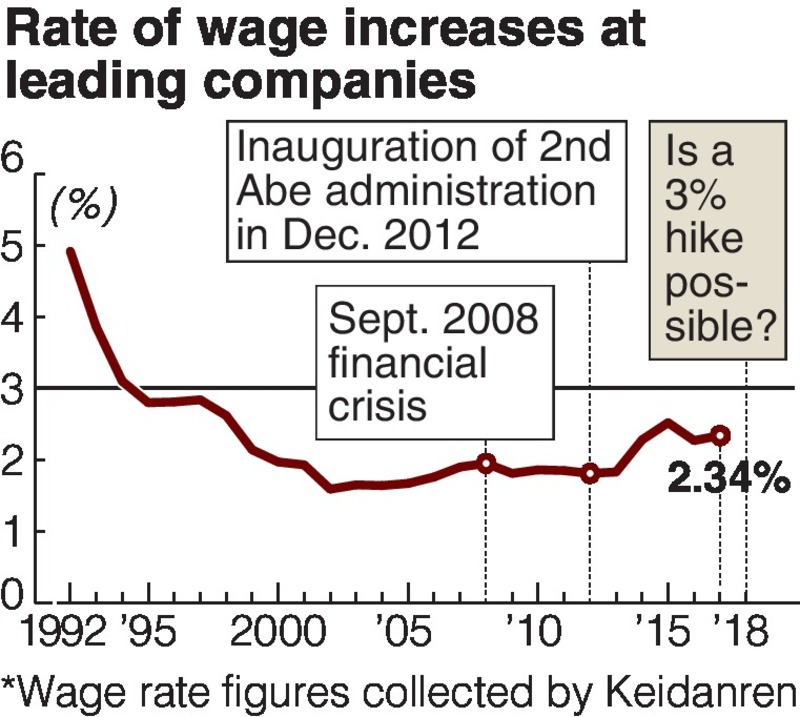
This year's shunto negotiations are taking place after Abe himself took the unusual step of mentioning the concrete figure of "3 percent" last autumn as he seeks to lift the economy out of deflation. The second Abe Cabinet was launched in 2012, and this will mark the fifth year of shunto talks in which the government has had a hands-on role in urging pay hikes. However, wage increases offered in 2016 and 2017 shunto negotiations were sluggish, indicating the approach might be running out of steam. The government believes raising wage levels holds the key to lifting the economy out of deflation, so Abe apparently aimed to revive momentum for wage increases by mentioning the figure of "3 percent."
The management at some companies appears willing to go along with the request for higher pay. "We must seriously accept that the prime minister himself mentioned the figure of 3 percent," the head of a major company in the manufacturing industry said. Companies including Daiwa Securities Group Inc. and Asahi Breweries, Ltd. have decided in advance they will offer pay increases of 3 percent or higher.
Many companies in major manufacturing industries anticipate they will make record profits in the business year ending in March 2018. Some management teams are positive about channeling these profits to their employees. "We want to pass on as much as we can through better wages," an executive at a major electronics company said.
Tough negotiations
However, the actual negotiations are likely to be tough ahead of the days in mid-March when many management teams give their replies to union demands. A center of attention is the negotiations over a base-pay increase, in which the level of basic salaries is bumped up across the board. The unions of major automakers such as Toyota Motor Corp. and electronics makers such as Hitachi were in lockstep as they requested basic monthly pay be raised by 3,000 yen.
Labor unions have made securing annual pay raises, in which a worker's salary increases in accordance with their age and length of time working at a company, a major way of maintaining workers' standards of living. Management is very unlikely to instigate a review of these annual increases unless a company has fallen into a financial crisis or some other major difficulty.
Even so, labor and management clash bitterly when it comes to base-pay increases. Once base pay has been hiked, cutting it again later has customarily been difficult. For workers, a large increase in base pay will bring significant benefits for many years into the future. For this reason, labor unions strongly emphasize this issue during negotiations.
In contrast, management takes a more cautious approach to boosting base pay. "We can't give base pay a hefty increase just because business is good at the current time," a company boss in the manufacturing industry said.
Biggest since '94?
Toyota's union has considerable influence on the overall tone taken during the shunto negotiations. This year, the union called for a 2.9 percent per month increase from a combination of a base-pay hike and annual pay raises. Many other companies' unions have sought increases of less than 3 percent at their demand stage. When added to demands for bonuses, the increase in annual base salary finally creeps above 3 percent.
The management side has responded that it is unclear if Abe's "3 percent" comment was referring to monthly wages or annual salaries. They strongly believe increases should be paid as much as possible as bonuses, which can be easily adjusted up or down depending on a company's business performance.
According to the Japan Business Federation (Keidanren), the last time monthly wages jumped by more 3 percent was in 1994, when they rose by 3.1 percent. The largest increase since the government began weighing in on shunto talks was 2.52 percent in 2015. "Achieving monthly pay hikes of 3 percent will, in reality, be very difficult," a senior Keidanren executive said.
The 2017 shunto negotiations were tough for labor unions at major electronics companies and other firms, with the agreed pay raise across the board dropping below that offered the previous year. The success -- or otherwise -- of this year's shunto talks likely will be determined based on by how much the results eclipse last year's numbers.
Read more from The Japan News at https://japannews.yomiuri.co.jp/