
War, what is it good for? For European equities, nothing. European markets would have preferred to avoid the selloff following the strikes in Iran. While U.S. equities are only slightly down since the start of the week, the Euro Stoxx 50 index has already erased the last three months of gains. With oil prices surging and no end of the fighting in sight, are international stocks now an asset class to avoid? Not necessarily—in fact, investors might be able to find some quality stocks on sale for the first time in a while.
European Equities Hardest Hit by Geopolitical Tensions
Whenever geopolitical tensions turn from sabre-rattling to violence, European markets tend to drop more than other global markets. But this particular conflict is affecting Europe from several angles, which is why the Stoxx 50 dropped more than 7% over the four trading sessions following the start of the war.
- Energy Shock: Europe is uniquely vulnerable to a long conflict in Iran. With more than 20 million barrels of petroleum flowing through the Strait of Hormuz each day, an extended war risks cutting off one of the world’s most crucial shipping routes. The United States can rely on domestic production to brace some of the shock, but Europe lacks the domestic capabilities to handle another energy crisis, especially with long-term supplies already dwindling due to the war in Ukraine.
- Interest Rate Risk: European investors had been expecting the European Central Bank and the Bank of England to continue cutting rates amid declining Eurozone inflation. But Europe now faces higher inflation expectations amid skyrocketing oil prices, which could prompt central banks to pause easing when they meet later this month. Traders now see coinflip odds on whether the Bank of England will cut this month, down from nearly 80% a week ago.
- Market Rotation: Going short USD and long European equities was one of the best trades of 2025, but no trade works forever, especially when a global catalyst changes the equation. Sector rotation has been a big trend in U.S. equities so far this year, and that theme could be extending to international markets.
3 European Stocks Built to Withstand Shocks
This downswing in European equities could be a dip buying opportunity for high-quality companies, especially those unaffected by geopolitical headwinds. The following three companies weren’t just bus riders on the 2025 rally; they spent most of the time in the driver’s seat and will likely lead again when European markets rebound.
ASML Holdings N.V.: Insulated by Structural Demand
ASML Holdings NV (NASDAQ: ASML) has emerged as one of the most crucial chokepoints in the semiconductor supply chain. The company’s Extreme Ultraviolet (EUV) lithography machines have no rival in the industry, given their size, complexity, and unique processing ability. ASML sells only about 40 units annually, but each machine costs more than $200 million and requires extensive assembly and upkeep. With no competitor on the horizon, ASML’s place in the supply chain is secure for years to come.
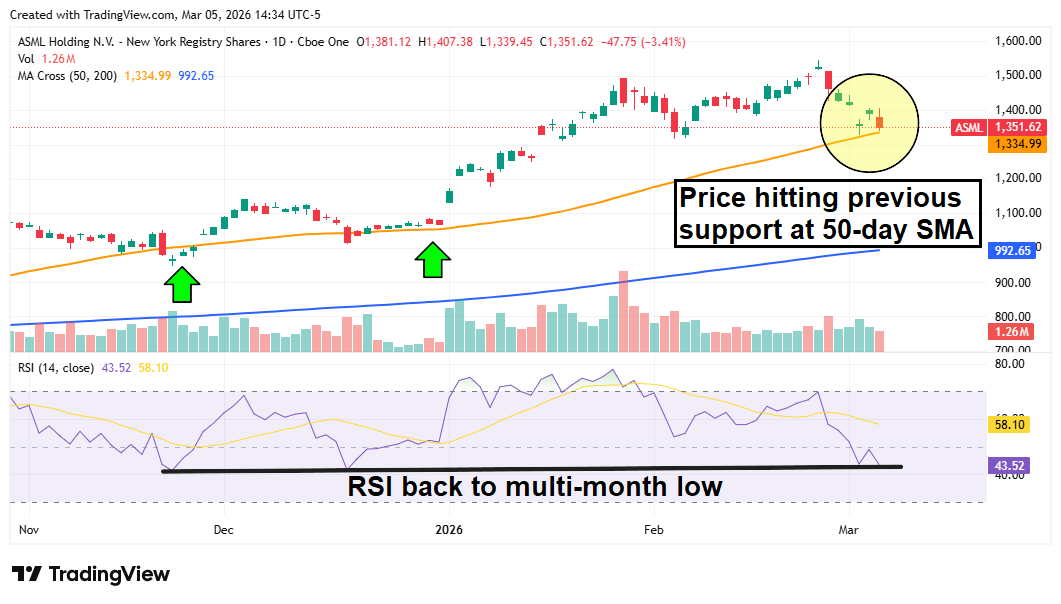
ASML is also hitting a key technical level that could present a quality buying opportunity. The stock price has retreated to the 50-day moving average, which had been a strong area of support in 2025. The Relative Strength Index (RSI) is also out of overbought territory, which could signal to investors that the coast is clear to resume buying.
BAE Systems plc: Beneficiary of Increased European Defense Spending
Increased defense spending had already been a tailwind for European defense contractors in 2025, and now those decisions are looking prudent with multiple wars affecting the Eurozone's security. BAE Systems plc (OTCMKTS: BAESY) is a direct beneficiary of this policy, and its stock finally broke out to new all-time highs last October. With a record backlog and strong earnings growth, any dip is likely a good chance to buy, plus the stock is showing strong technical signals for the first time since last fall.
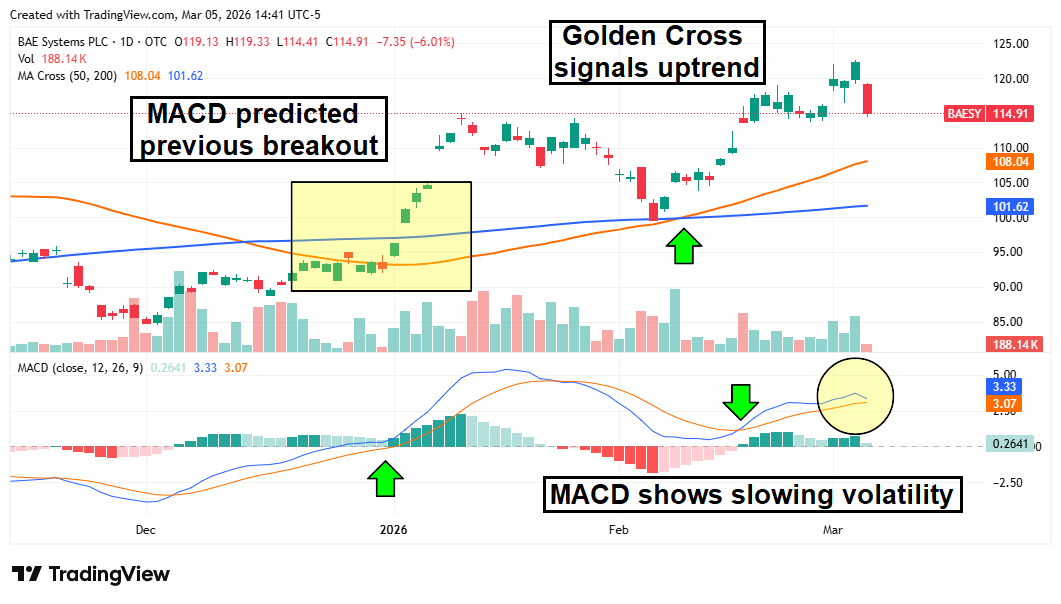
BAESY shares ended 2025 on a down note, but the decline was short-lived. The stock retook the 50-day and 200-day SMAs at the end of December, and it found support at the 50-day SMA again in February. A Golden Cross signals that the upward momentum has strength, and the Moving Average Convergence Divergence (MACD) hints that volatility in the stock is beginning to wane.
HSBC Holdings: Revenue Streams Outside of Europe
HSBC Holdings plc (NYSE: HSBC) rode the European bank stocks rally to a 12-month gain of nearly 50%, before losing nearly 10% in the week following the war’s outbreak. This move is likely an overreaction, though, as HSBC’s business has a global footprint, and its Asian-based revenue streams insulate it from European economic turbulence. Additionally, if European interest rates remain higher for longer, HSBC’s net interest income will also expand.
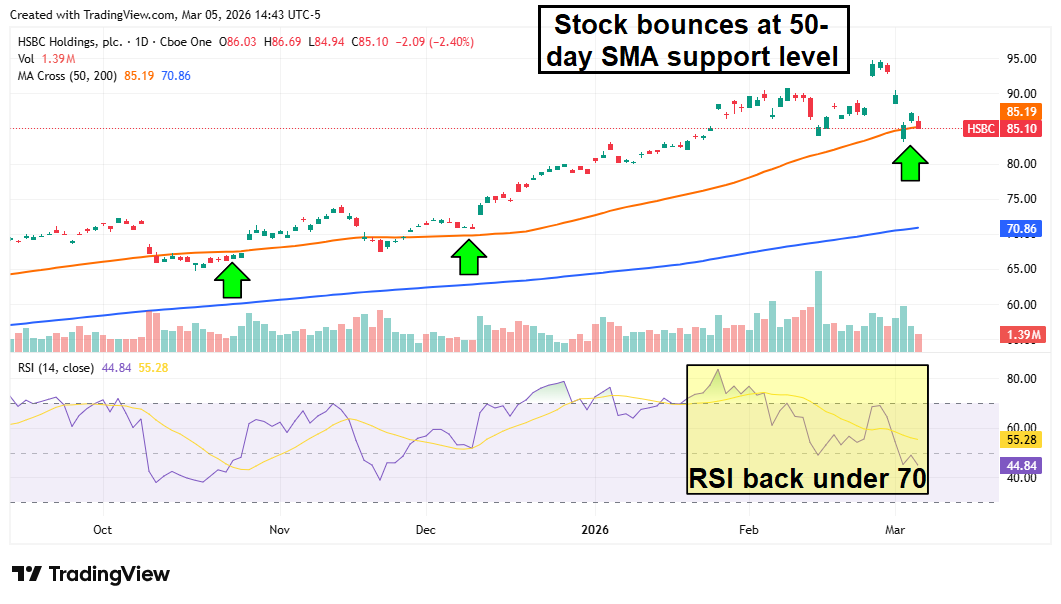
Like ASML, HSBC shares are back at the 50-day moving average following a lengthy uptrend, which presents an enticing buying opportunity once again. The RSI trending back under 70 also gives the green light to investors looking to open new positions on the stock.
Where Should You Invest $1,000 Right Now?
Before you make your next trade, you'll want to hear this.
MarketBeat keeps track of Wall Street's top-rated and best performing research analysts and the stocks they recommend to their clients on a daily basis.
Our team has identified the five stocks that top analysts are quietly whispering to their clients to buy now before the broader market catches on... and none of the big name stocks were on the list.
They believe these five stocks are the five best companies for investors to buy now...
The article "3 European Stocks for Riding Out Market Volatility" first appeared on MarketBeat.