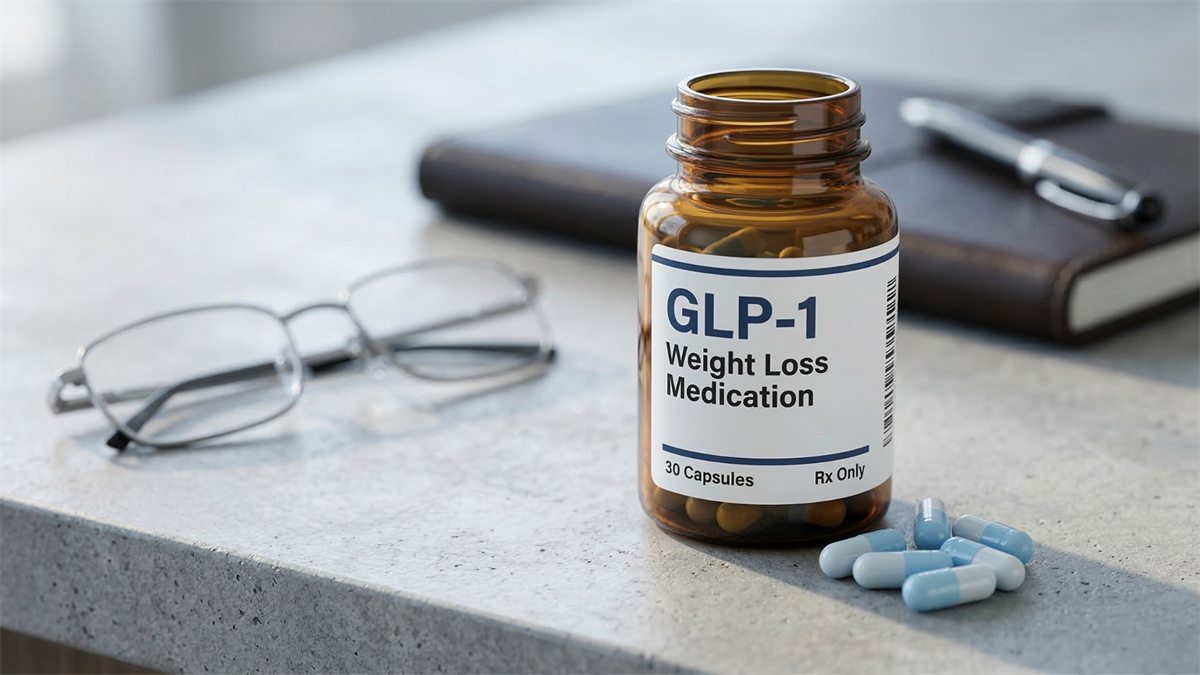
Though the first GLP-1 agonists date back more than 20 years, it's only in the last couple of years that they began to dominate the pharmaceutical space for their massive potential as weight loss drugs. With some estimates placing the market at nearly $63 billion in early 2026, forecasts call for the GLP-1 industry to roughly triple over the coming decade.
It's no surprise that the biopharma industry is racing to capture a share of that growth as GLP-1 use accelerates. Dozens of new GLP-1 receptor agonist medications are in development across nearly as many firms—and it's not just major pharma names that are getting involved, either. The medicine is evolving quickly, having already expanded to include oral treatments with the first-ever FDA approval for a GLP-1 pill for weight loss for Wegovy at the end of 2025. Amid the significant turbulence and hype surrounding this fast-growing space, the companies below may be particularly interesting to watch.
Multiple Products and Geographies Could Cement Eli Lilly's Dominance
Eli Lilly and Company (NYSE: LLY) is one of the biggest pharmaceutical companies in the world, with a market capitalization approaching $1 trillion as shares have climbed by almost 20% in the last year.
This massive size plays to Eli Lilly's advantage as it seeks to expand its GLP-1 agonist program globally. The firm plans to spend $3 billion in China over the coming decade to expand its supply chain and build local manufacturing capacity, including for GLP-1 medications.
This would not only enhance its access to China's growing weight-loss market but also shore up global supply.
Also in China, Eli Lilly recently filed for approval of a new GLP-1 treatment and completed a Phase 1 trial for a related medication.
Last quarter, the company submitted its drug orforglipron, a new GLP-1 agonist, for obesity treatment in the United States and more than three dozen additional countries, with an expected domestic launch by mid-2026. Lilly's massive R&D budget has also allowed it to focus on retatrutide, a so-called "triple-agonist" combining GLP-1 properties with other medications, that is currently in trial.
Eli Lilly is thus positioning itself to dominate the GLP-1 space with multiple products—including in pill form—launched around the world. With 45% year-over-year (YOY) revenue growth in 2025, this continued effort could help to sustain rapid top-line gains going forward as well.
Viking's Dual Agonist Drug Shows Potential As It Moves Through Trial Process
A much smaller firm than Eli Lilly, Viking Therapeutics Inc. (NASDAQ: VKTX) has not yet brought a GLP-1 drug to market. Rather, it is VK2735, a dual agonist of both GLP-1 receptors and glucose-dependent insulinotropic polypeptide (GIP) receptors, that has been working its way through clinical trials. In January 2025, the firm published results of a Phase 2 trial for VK2735 with strong potential, including up to nearly 15% of baseline body weight lost in trial participants without a clear plateau.
Viking is developing VK2735 in both oral and injectable forms and should begin Phase 3 trials for the oral form in the coming months. So far, the drug seems to have excellent potential, helping VKTX shares to rise by nearly 20% in the last 12 months.
However, investors may be concerned about the company's likelihood of bringing this drug to market quickly enough to capture a sizable customer base, given that many alternatives are already available or are rushing through development.
The company is also not currently profitable, although as of the latest quarter, it is sitting on a healthy $706 million in cash reserves.
Structure's GLP-1 Pill Could Be Big, But Trial Results Will Confirm
Shares of Structure Therapeutics (NASDAQ: GPCR) have far outperformed both of the companies above in the last year, rising by over 150% during that time as investors have grown enthusiastic about aleniglipron, the firm's GLP-1 agonist candidate.
Perhaps surprisingly, analysts still think that GPCR stock could nearly double again, with upside potential forecasted at over 90% based on a consensus price target of $107.90.
Compelling results from the Phase 2B trial made headlines in December 2025, and now investors are waiting for additional data.
With anticipation of aleniglipron being a strong contender in the still-emergent GLP-1 pill space, investors who take a chance on GPCR shares may be rewarded with a bump when new results do become available, although this is, of course, a risk.
Where Should You Invest $1,000 Right Now?
Before you make your next trade, you'll want to hear this.
MarketBeat keeps track of Wall Street's top-rated and best performing research analysts and the stocks they recommend to their clients on a daily basis.
Our team has identified the five stocks that top analysts are quietly whispering to their clients to buy now before the broader market catches on... and none of the big name stocks were on the list.
They believe these five stocks are the five best companies for investors to buy now...
The article "3 Companies at the Forefront of the GLP-1 Pill Wars" first appeared on MarketBeat.