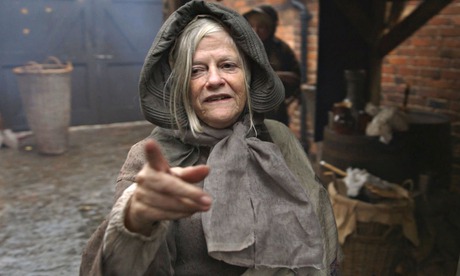
In the sour depravity of historically recreated Victorian Britain, Alistair McGowan is being schooled on precisely which kind of animal poop is best for leather tanning. His teacher is expert Ruth Goodman who takes a hands-on approach to history. Walking through some ruins talking to camera isn’t enough for her. To really capture history you must live all the details you can reasonably get past a health-and-safety officer, and that means pulling on some crinoline, loading up on borax and investing a lot of emotion into the outcome of some nettle soup.
The best way to think about 24 Hours In The Past is as a streamlined reissue of Ruth’s previous TV history shows. Like Victorian, Edwardian and Wartime Farms, Georgian Apothecary etc, the path is roughly the same, just a bit less bucolic and meandering. Here, there’s no time to run through the intricacies of mechanised agricultural developments, or twine-based arts and crafts. In the fast-paced, semi-industrial past, 24 hours is all we’ve got. It’s the hip, snappy timeframe du jour, grandpater.
What’s more, Ruth’s usual boys-in-the-field Tom Pinfold and Peter Ginn have been sacked off and replaced by presenter Fi Glover and the kind of showbiz personalities who might lead an edgy M&S seasonal knitwear campaign: Miquita Oliver, Colin Jackson, Zöe Lucker, Alistair McGowan, Tyger Drew-Honey and er, Ann Widdecombe. In an exciting, I’m A Celebrity Get Me In A Workhouse twist, each has to earn their crust, sifting through dust heaps and cramming in as much manual labour as they can in the hope of being chucked a few farthings to survive on.
The opening episode heads straight to the heap. When it comes to rubbish sorting, it seems the Victorians took a nose-to-tail approach. The cinders from fires were sifted for brick-making, effluent was sorted into various subcategories, and the contents of communal toilets were turned into fertiliser. The stars should count themselves lucky to be up close with such a rich, exciting history. “It’s what our ancestors would have done,” shrugs Ann. I wonder if, after her 24 hours of toil, Ann thought about the stereotypical life of the working class today – one of Riley on several kinds of benefits – and pondered whether, in fact, it was the only dignified way to live. Certainly, after spending 24 hours in the past, a whole existence of Jeremy Kyle seems less a symptom of a broken society and more a sign of progress.
The stars are overseen by real-life scrapyard owner Dan Hill. Much like that of the dust sifters and their gaffer, I feel this is a mutually beneficial arrangement. The producers got a real-life cockney to add to the insalubrious vibes, and Dan got to gurn, “Where there’s muck, there’s brass!” in a stovepipe hat. And it’s from his yard that the celebrities are forced to reconsider their declarations that they “love the Victorian way of life”. As Fi points out, 75% of Victorians were working class, and the celebrities find themselves at the bottom of the pile, literally and figuratively. Fighting through the general fug, facts come at you fast: rent was extortionate, levels of gender inequality would make the average Twitter feminist keel over.
Without Ruth’s impassioned engagement with history, without sunsets over wheat fields and Somerset’s foremost combustion engine expert looking on in a tweed cap, events can far too easily take a turn for the Little Dorrit snuff redux. Certainly Ruth’s natural zeal doesn’t rub off on the celebrities. The only joy they seem to find, as they huddle together for warmth, comes from playing with a few pilfered buttons and slugging a skinful of gin. Miquita Oliver tells a video diary her appreciation for central heating has never been greater. Tyger turns to alcohol and petty crime.
Many times you’ll have imagined celebrities sitting before their agent, having a bare-bones convo re: how low they should, could and would sink. Only now do we get to see the grim reality of Zöe Lucker scraping through literal faeces with her bare hands for tuppence. It’s grim in t’past.
Tuesday, 9pm, BBC1