INDORE: Severe malnourishment among kids has risen by 22% in Indore district in the first six months of the fiscal, shows data from Nutrition Rehabilitation Centres (NRC).
According to NRC records, there were 404 admissions of severely malnourished children between April and September this year, while the entire year saw 662 admissions in the previous 12 months.
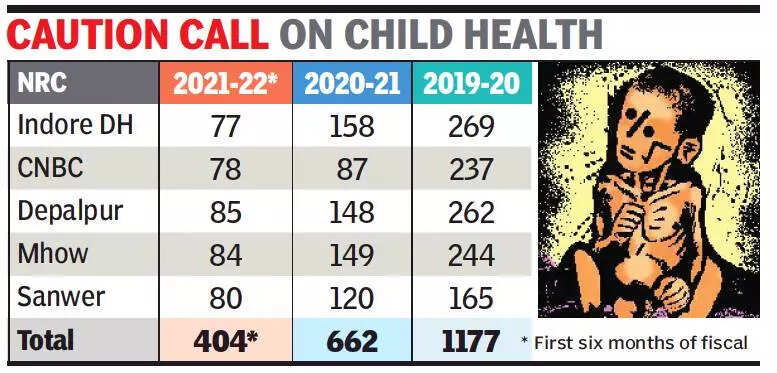
Officials attribute this to better monitoring “NRCs reported an increase in admission of severely malnourished children this year because of pro-activeness of health staff and officials,” said Dr Hemant Dwivedi, who heads the District Hospital NRC. “In the first two months of this fiscal, despite the devastating second wave, health workers remained in contact with children identified as severely malnourished. The kids were given supplementary diet packs and other support. All such children were admitted as these centres were opened,” said Dr Dwivedi.
When pointed out that Covid affected NRC’s operations last year, too, he said: “Yes, because of the outbreak, the closure time was initially long. But a couple of NRCs were made operational at 50% capacity to take care of children who needed urgent medical attention.”
Asked about criteria about admission to NRC, Dr Dwivedi said, “There is a protocol set up by the ministry of health and family welfare, based on a child’s weight, height and any possible swelling of the limbs,” said Dr Dwivedi.
Malnourishment higher in rural areas
Children aged 0-5 years are admitted, if required, on these parameters. They are identified through grassroots health workers like anganwadi workers or through OPDs,” said Dr Dwivedi. According to an estimate of the health department, there are around 1,000 malnourished kids in the district. They are being put on a three-month POSHAN programme to improve their health. The records suggest malnourishment and its severity are higher in rural areas. “This is because of lack of awareness in those areas,” Dr Dwivedi said.