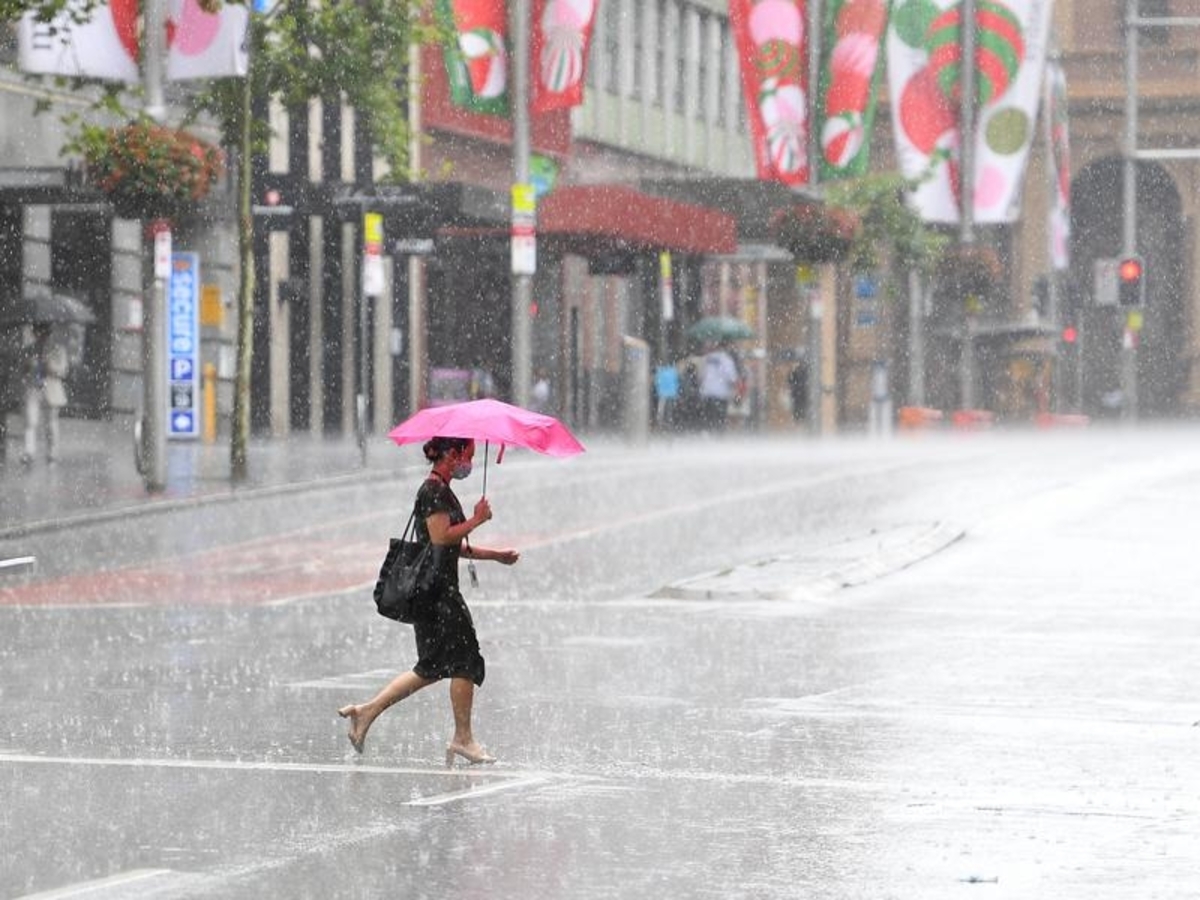
November rainfall reached record levels in Australia before 2021 officially became the country's coolest year in almost a decade, the Bureau of Meteorology says.
BOM's annual climate statement on Thursday has revealed 2021 was the wettest since 2016, with states receiving rainfall up to 30 per cent above average thanks to unprecedented showers late last year.
Overall rainfall in Australia was nine per cent above average in 2021, with the wettest November registered since national records began in 1910.
BOM senior climatologist Dr Simon Grainger said it had ensured the majority of the country was not experiencing rainfall deficits or drought for the first time in five years.
"After three years of drought from 2017 to 2019, above average rainfall last year resulted in a welcome recharge of our water storages but also some significant flooding to eastern Australia," he said.
Overall above average rainfall was observed for NSW (30 per cent above average), Western Australia (nine per cent), Queensland (eight per cent), Victoria (five per cent), Northern Territory (three per cent) and Tasmania (one per cent).
Only South Australia missed out, with rainfall two per cent below average in 2021.
Dr Grainger said the rainfall was influenced by the impacts of a negative Indian Ocean Dipole - a period of warmer than usual temperatures in the western Indian ocean - and La Nina, cooling of the central and eastern tropical Pacific Ocean.
Dr Grainger said they also had an impact on Australia's mean temperature for 2021, which was 0.56C above average (1961-90 climate reference period) but still the coolest year since 2012.
"It turns out 2021 was almost 0.4 degrees cooler than the average temperature over the last decade (since 2012)," he said.
Temperatures were above average for most of northern Australia, Tasmania and WA's west coast but below average for parts of inland NSW and around the southern border of the Northern Territory and WA.
"The cooler and wetter conditions because of that meant we continued our recovery from the really extreme drought we had over 2017-19 period," Dr Grainger said.