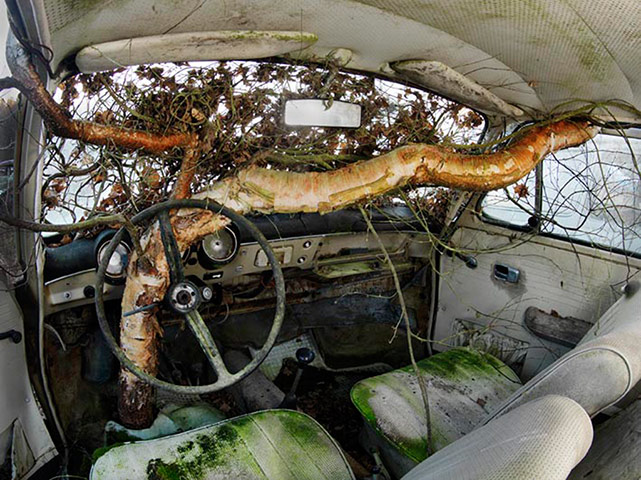
Prizewinner Pål Hermansen's work comes from visits to a 60-year-old car scrapyard in central Sweden, where he found a thriving habitat of animals, plants and insects. This birch tree has grown to substantial dimensions inside the old Volkswagen, demonstrating the real power of nature. The wrecked vehicles often act as greenhouses for the plants, making them grow faster and bigger than in nature. Hermansen explains: 'To me, experiencing nature is a matter of existence, of wellbeing. Without the possibility to spend time outdoors, life seems not worth living. Photography provides a way to go even deeper into nature and explore the vital aspects, of both the landscape itself and the different life forms it contains. A very important point for nature photography is the fact that our activity can make a difference to nature conservation' Photograph: Pål Hermansen/GDT Fritz Pölking Prize 2013
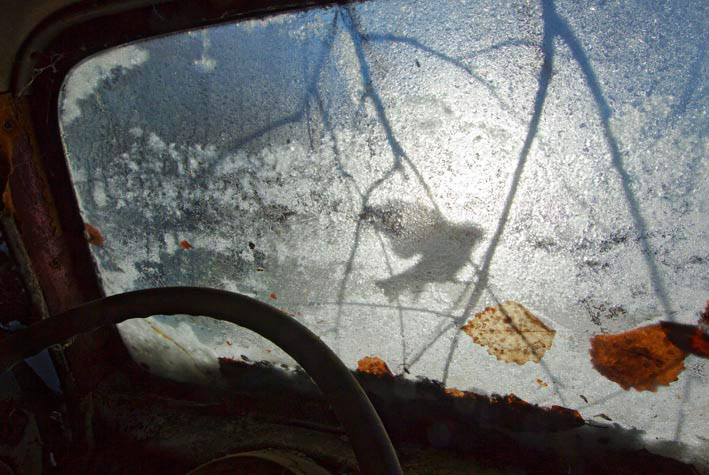
In winter, the birds frequently search in and around the cars for food as both insects and seeds are plentiful. '... people, especially children, have to be made aware, otherwise we will be getting more and more alienated from nature, looking at it as a theoretical value. But it is equally important to include people in the images in different ways, therefore one of my favourite topics is the interaction between humans and nature' Photograph: Pål Hermansen/GDT Fritz Pölking Prize 2013
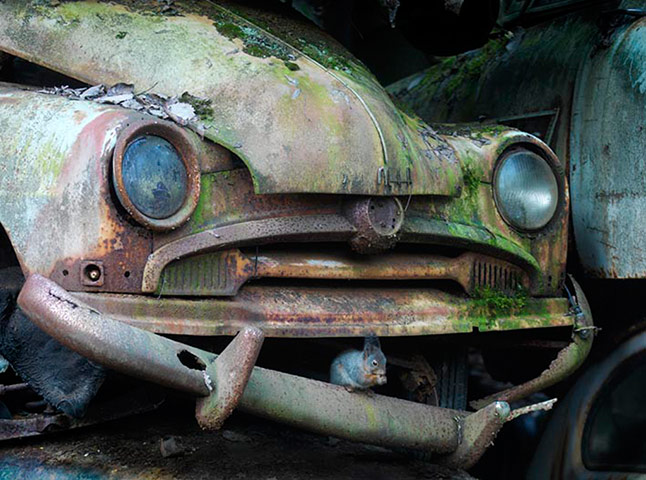
This squirrel is a regular visitor, and one of its favourite spots was in the 'mouth' of this old Simca Photograph: Pål Hermansen/GDT Fritz Pölking Prize 2013
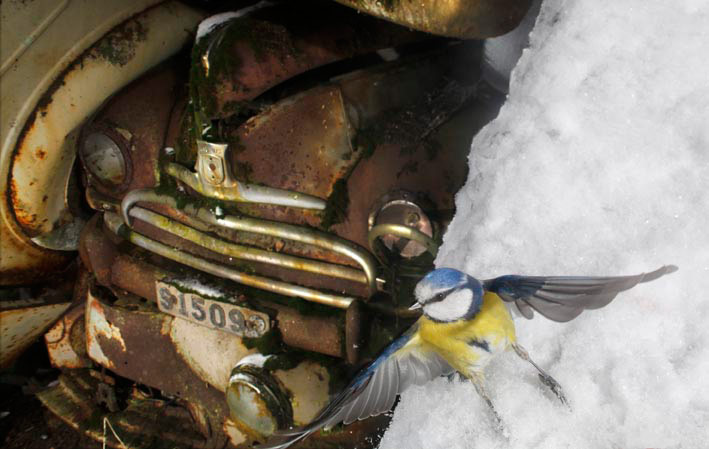
A blue tit has just finished its search for food in this snow-free hollow in between the Saab cars and heads off to the next location. 'The old cars also present numerous hiding and nesting places for birds and other animals and often act as greenhouses for trees and plants. The density of bird's nests, for example, is much higher than in a forest habitat' Photograph: Pål Hermansen/GDT Fritz Pölking Prize 2013
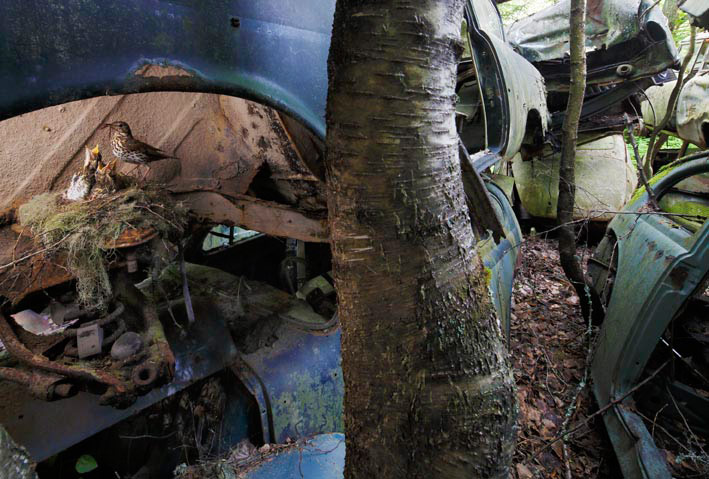
The shy song thrush couple chose the perfect nesting ground in an old Opel to raise their young. 'Nature conservationists in the local municipality would like to see the cars removed, while culture conservationists want to make it a cultural monument. I hope that the nature conservationists will begin to realise that nature is already doing a good job in taking this site over and that they eventually join the culture conservationists to make it a combined nature and culture reserve' Photograph: Pål Hermansen/GDT Fritz Pölking Prize 2013
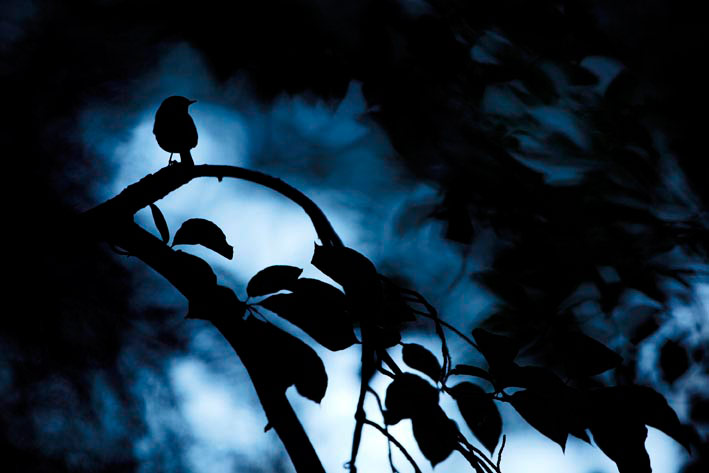
'Searching for food, robins can often be seen hopping along the ground. But as soon as night falls, they retreat to the shrubs for safety to sing their typical tuneful songs.' This image was among the portfolio entitled 'The Wilderness of the Ruhr Region', which won the junior award for 19-year-old Hermann Hirsch Photograph: Hermann Hirsch/GDT Fritz Pölking Junior Prize 2013
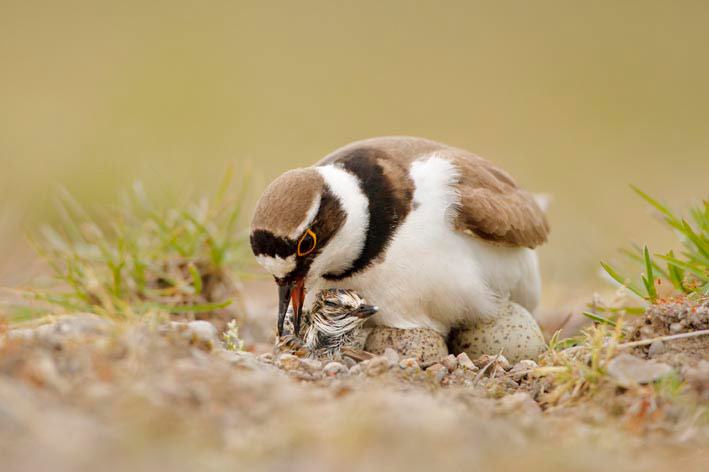
The little ringed plover feels at home in an industrial wasteland with poor vegetation. In fact, these areas present the most common breeding places of this species in North Rhine-Westphalia. Hirsch explains: 'The German Ruhr region - for many this is the epitome of urban life. Grey concrete structures, coal mines and industrial areas stand out everywhere. Here, nature has very little space to unfold and is very little taken care of. But when you walk around this region with open eyes - like me - you will come across beautiful oases of nature with unexpected animals at almost every corner' Photograph: Hermann Hirsch/GDT Fritz Pölking Junior Prize 2013
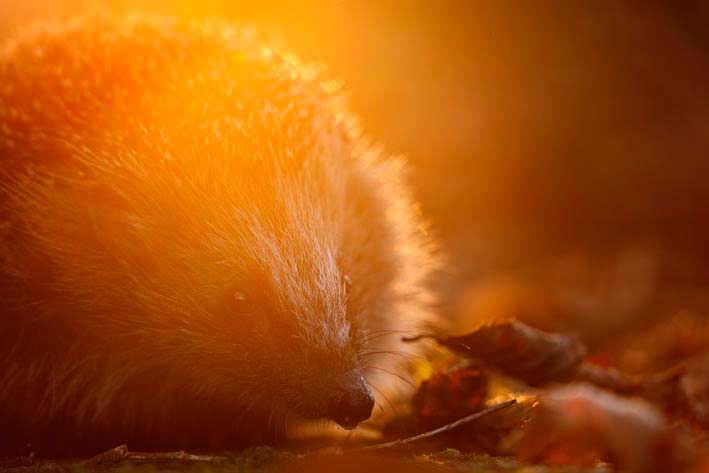
'One or two hours after sunset, hedgehogs leave their day-time hiding places and roam suburban gardens looking for food' Photograph: Hermann Hirsch/GDT Fritz Pölking Junior Prize 2013
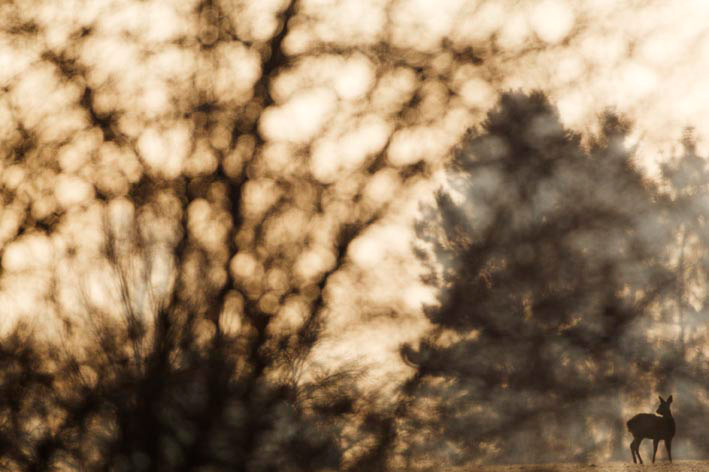
'In many places roe deer do suffer from a rapid loss of habitat, but a hidden mode of life and the use of agricultural areas help them to adapt' Photograph: Hermann Hirsch/GDT Fritz Pölking Junior Prize 2013
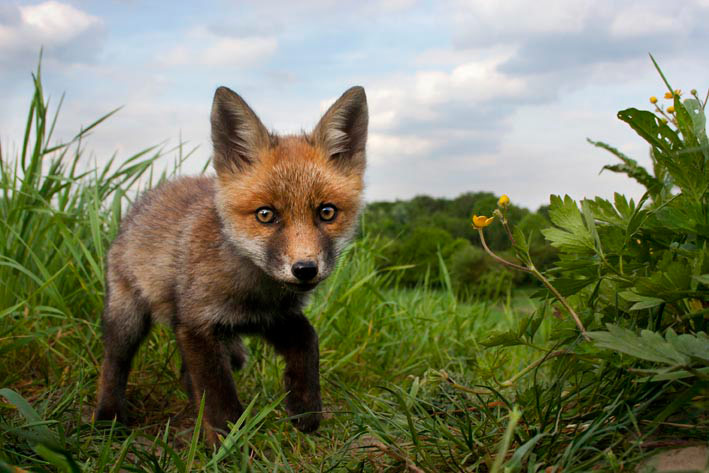
'Straight ahead a railway line, a housing estate to the left, a principal road to the right, the city is at my back. Foxes are not very picky when it comes to choosing their habitat. A quiet little spot is sometimes enough to raise a whole litter of cubs' Photograph: Hermann Hirsch/GDT Fritz Pölking Junior Prize 2013