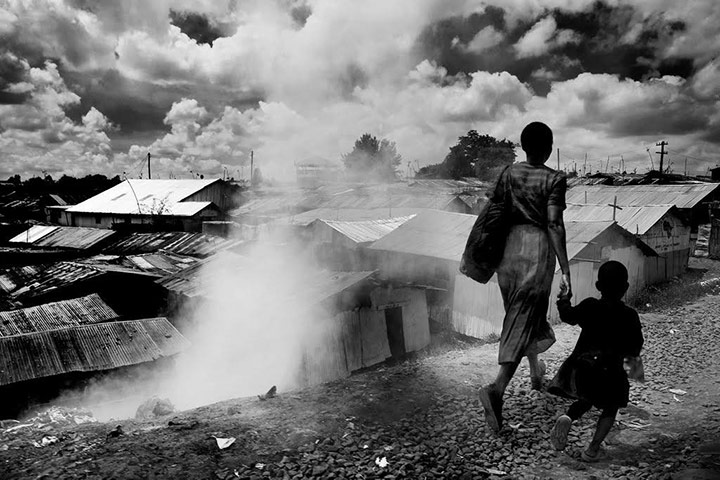
Kibera – The Shadow City, 2007-09
Kibera residents come from all the major ethnic backgrounds with some areas being specifically dominated by one tribe. This multi-ethnic culture, coupled with the tribalism of Kenyan politics, has led Kibera to be the site of ethnic conflicts throughout its near 100-year history, most recently in 2008 Photograph: Christian Als/Prix Pictet
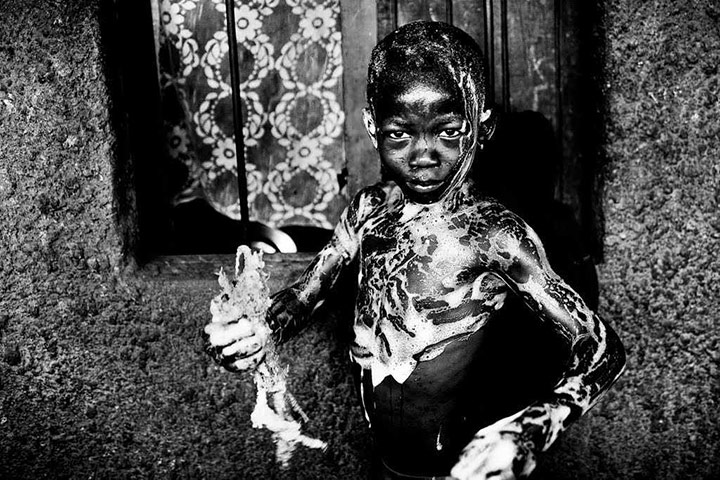
Kibera – The Shadow City, 2007-09
The inhabitants of Kibera, Nairobi pay more per litre of water than people living in New York or London. The average person living in Kibera does not have running water or electricity. Public latrines routinely overflow, children scamper barefoot through festering heaps of waste Photograph: Christian Als/Prix Pictet
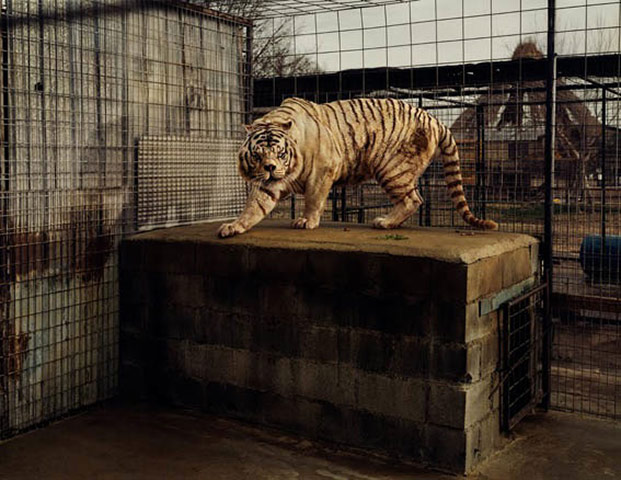
An American Index of the Hidden and Unfamiliar, 2007
Kenny the white tiger at Turpentine Creek wildlife refuge and foundation, Eureka Springs, Arkansas. In the United States, all living white tigers are the result of selective inbreeding to artificially create the genetic conditions that lead to white fur, ice-blue eyes and a pink nose. Kenny was born to a breeder in Bentonville, Arkansas, on 3 February 1999. As a result of inbreeding, Kenny is mentally retarded and has significant physical limitations. Due to his deep-set nose, he has difficulty breathing and closing his jaw, his teeth are severely malformed and he limps from abnormal bone structure in his forearms. The three other tigers in Kenny’s litter are not considered to be quality white tigers, as they are yellow-coated, cross-eyed and knock-kneed Photograph: Taryn Simon/Prix Pictet
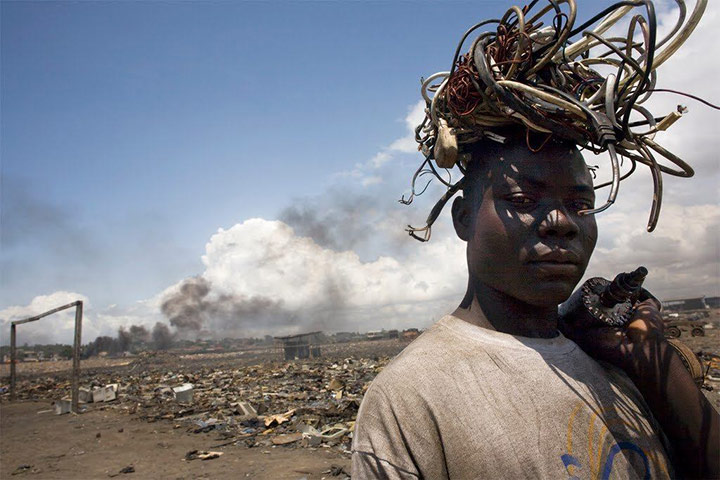
The Hell of Copper, 2008, Accra, Ghana
Over the past few years Ghana has become one of the principal recipients of electrical waste materials from Europe and the United States. These masses of used computer parts have dramatic consequences for the environment and the health of the workers who handle them
Photograph: Nyaba Leon Ouedraogo/Prix Pictet
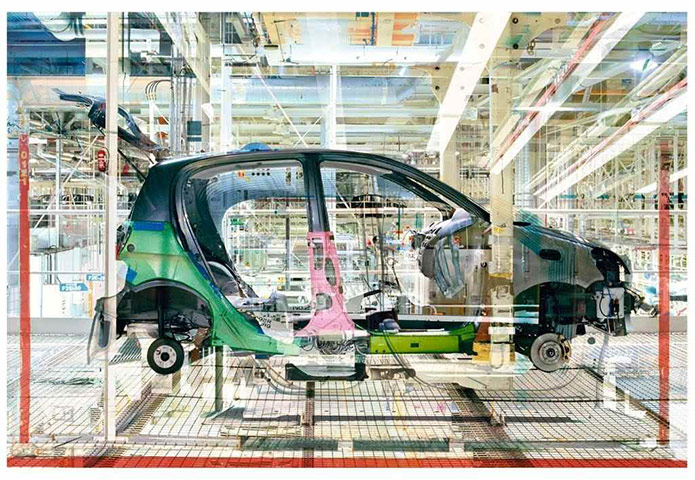
Usine Toyota n°20 from the series Melting Point, 2005
Large-scale time-exposure colour photograph depicting a high-tech Toyota assembly plant in Valenciennes, France. These images document the perpetual movement of industry – rationalised, disembodied, automated and more and more subject to the silent logic of profit. Melting Point is a continuation of projects exploring how modern cultures simultaneously construct and destroy Photograph: Stéphane Couturier/Prix Pictet
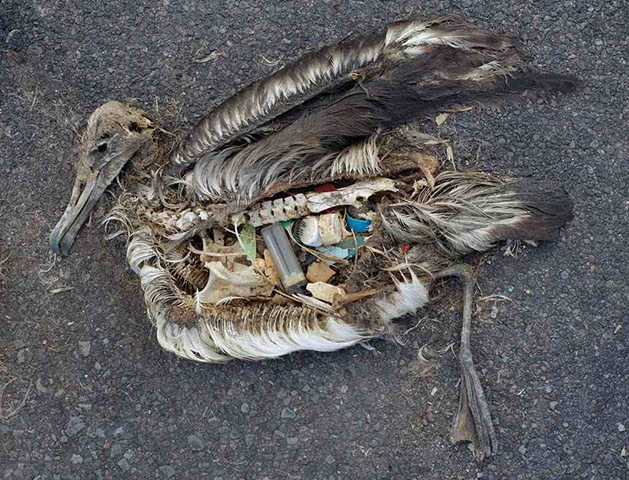
Midway: Message from the Gyre, 2009
These photographs of albatross chicks were made in 2009 and 2010, on Midway Atoll – a tiny stretch of sand and coral near the middle of the north Pacific. The nesting babies are fed bellyfuls of plastic by their parents, who soar out over the vast polluted ocean collecting what looks to them like food to bring back to their young. On this diet of human trash, every year tens of thousands of albatross chicks die on Midway from starvation, toxicity and choking. To document this phenomenon as faithfully as possible, not a single piece of plastic in any of these photographs was moved, placed, manipulated, arranged or altered in any way. These images depict the actual stomach contents of baby birds in one of the world’s most remote marine sanctuaries, more than 2,000 miles from the nearest continent Photograph: Chris Jordan/Prix Pictet
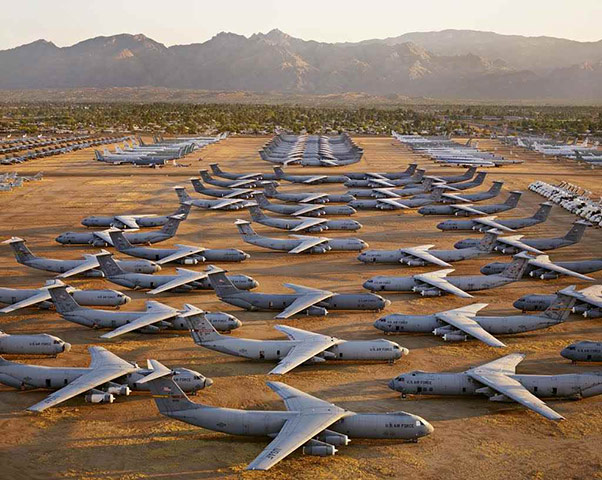
Aircraft Maintenance and Regeneration Centre, Davis-Monthan Air Force Base, Tucson, Arizona, 2006. From the series Oil, 1997-2009
• See more of Burtynsky's work here Photograph: Edward Burtynsky/Prix Pictet
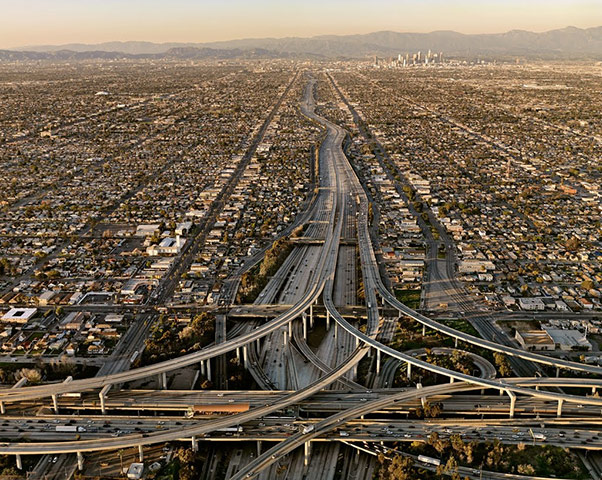
Highway #5, 2009, Los Angeles, California, USA. From the series Oil, 1997-2009 Photograph: Edward Burtynsky /Prix Pictet
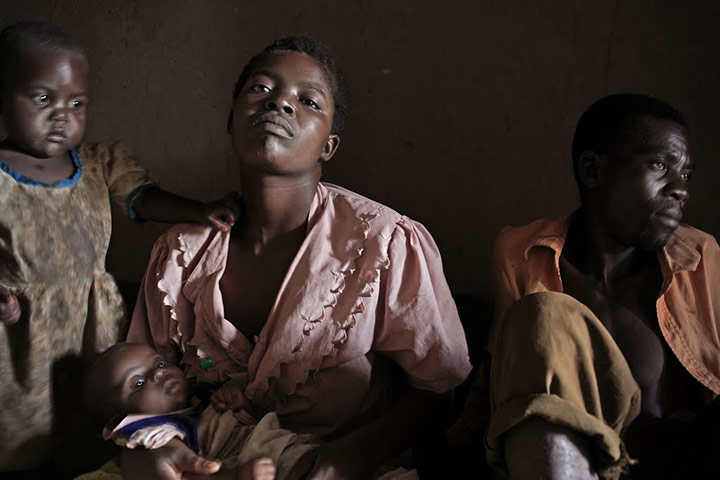
Emily, Alefa, Gloria Banda and Muyeso Makawa from the series Petros Village, Malawi, 2006
This series documents the lives of the inhabitants of Petros village, Malawi – a community faced with a precarious future in the wake of crop failure Photograph: Guy Tillim/Prix Pictet
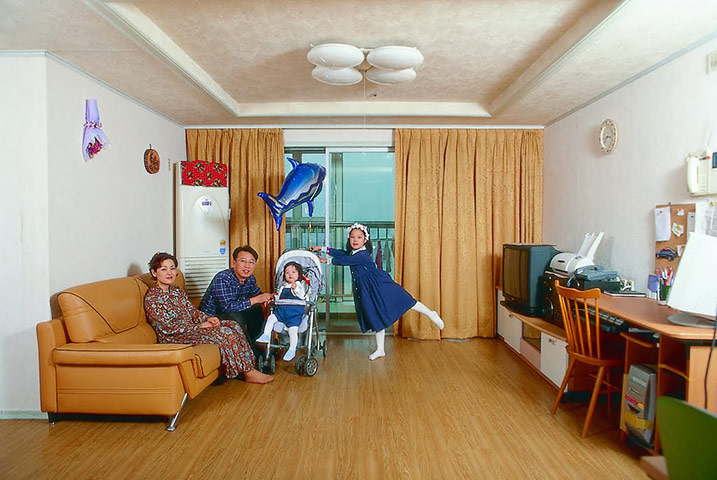
2001, Gwangjin-gu, Seoul detail from the series Evergreen Tower, 2001
The series consists of 32 family portraits from an apartment block, Evergreen Tower, in Gwangin-gu Gwangjang-dong, Seoul. The repetitive nature of the lifestyles of the residents in this Korean apartment block is captured with parodic effect. Modern Seoul city attracts all sorts of people from around the country for many reasons, some who work in factories and others in offices. These strangers seek homes for their families, and the Evergreen Tower presents a standardised real estate for these workers. The 150 square foot of identical living room space is heavenly ground for the tired salarymen returning from their hardworking routine to their warm-hearted families. A modern, loving family scene is replayed up and down this concrete square tower Photograph: Yeondoo Jung/Prix Pictet
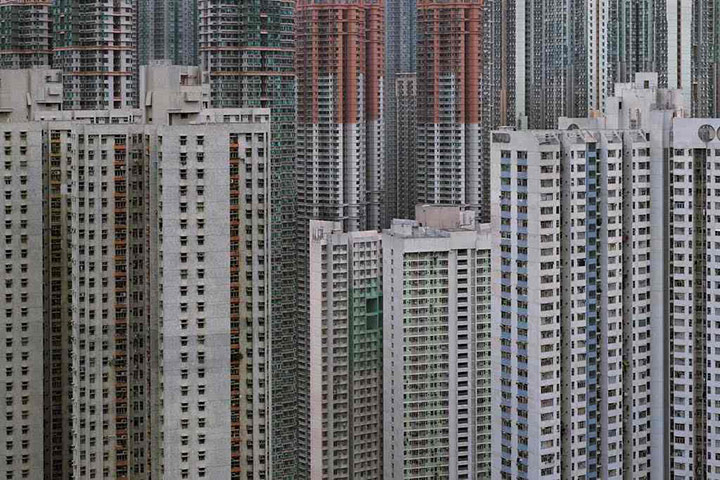
aod #45, 2006, Hong Kong from the series Architecture of Density, 2005-2009
Hong Kong is one of the most densely populated metropolitan areas with an overall density of nearly 6,700 people per square kilometre. The majority of Hong Kong's citizens live in flats in high-rise buildings that can house as many as 10,000 people. Architecture of Density investigates these enormous city blocks and finds a mesmerising abstraction in the buildings’ facades. On close inspection of each photograph, the anonymous public face of the city is full of rewarding detail, with large swatches of colour give way to smaller pieces of people's lives Photograph: Michael Wolf /Prix Pictet
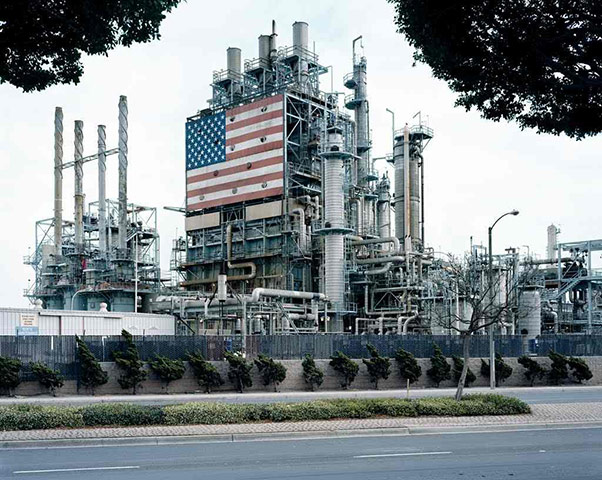
BP Carson Refinery, California 2007 from the series American Power, 2003-2008
This series is the result of a five-year-long, 25-state project, examining the role of energy in America and consumerist society inured to the consequences of unbridled consumption. Epstein juxtaposes images of suburban houses overshadowed by energy providers, their residents despairing their polluted water and air, but without the economic resources to relocate. Growth no longer means progress but self-destruction. American Power is an active response to the American Dream gone awry
• See more of Epstein's work here Photograph: Mitch Epstein/Prix Pictet
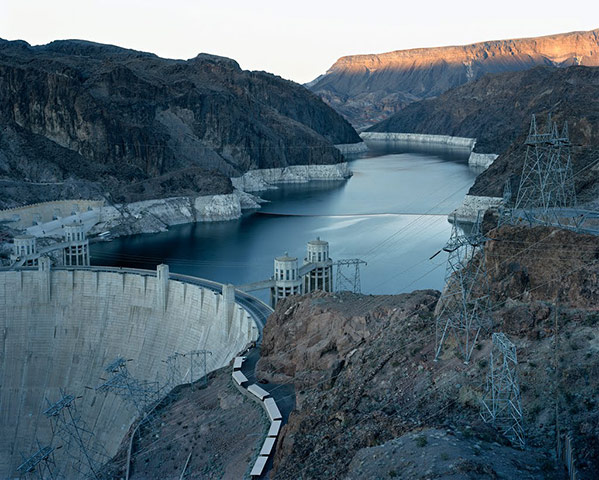
Hoover Dam and Lake Mead, Nevada/Arizona 2007 Photograph: Mitch Epstein/Prix Pictet
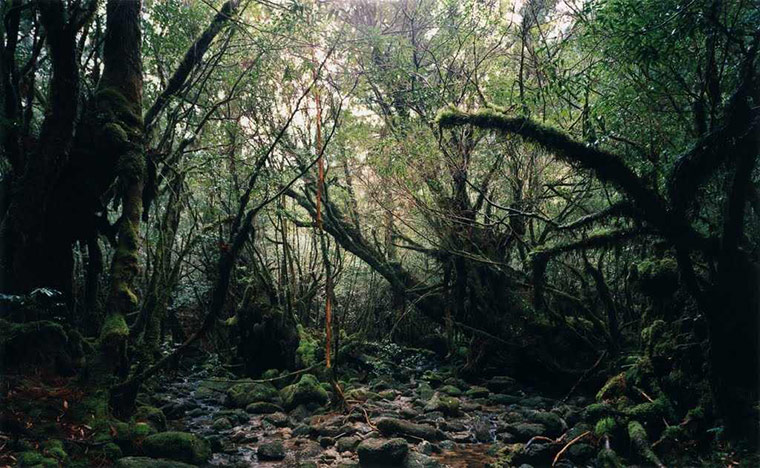
PARADISE 15, 1999, Yakushima, Japan from the series Paradise, 1998-2006
The Paradise series rejects the usual image of ‘paradise’ as a utopian garden, immaculate and enclosed behind walls. Instead, this paradise is the wilderness of the jungle which appears as the result of unchecked and untamed growth, representing a small section of a broad network extending beyond our view Photograph: Thomas Struth/Prix Pictet
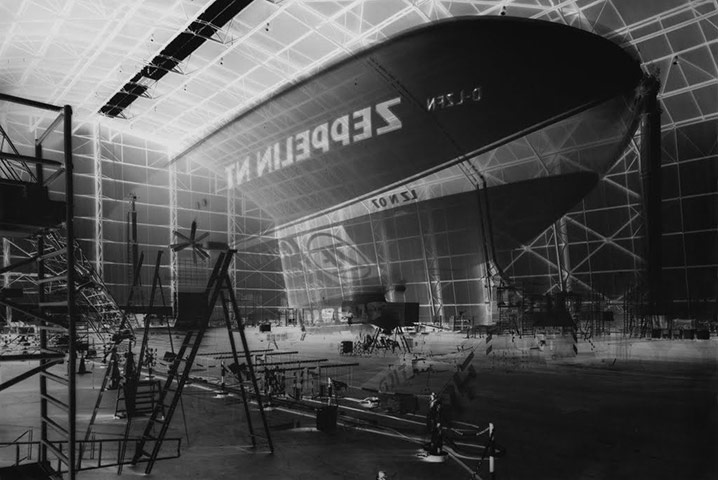
Zeppelin, Friedrichshafen, I: August 10–13, 1999
Vera Lutter’s work explores the beauty found within the destructive power inherent in many industrial advances, photographing shipyards, airports, abandoned factories, and other industrial sites that pertain to transportation and fabrication including the hangar in which a Zeppelin was constructed. The intention was to focus on the monumental, the sublime and the overbearing appearance and threatening function of these objects. Her photographic process involves capturing an immediate imprint of her experience by turning whole rooms into large pinhole cameras and exposing images directly on to wall-size sheets of photographic paper Photograph: Vera Lutter /Prix Pictet