The government is coordinating to provide 200,000 yen in cash per household as a measure for families and others facing income loss due to the spread of the new coronavirus, according to sources.
The government is considering implementing the measure on a self-reporting basis, with the cash being paid after applicants report the amount they earn and their income loss from the virus epidemic, the sources said.
The cash payouts will become a pillar of an emergency economic package to be compiled by the government next week. This measure is aimed at supporting mainly low-income earners and households that have seen a sharp drop in income. The government and ruling parties intend to enact a supplementary budget bill that will include funding for the economic package before the start of the long holiday in May, aiming to provide the cash early.
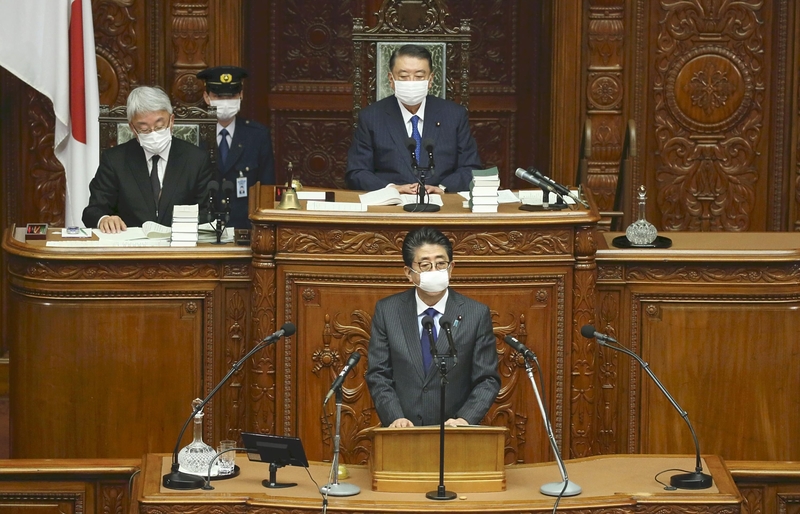
At a plenary session of the House of Representatives, Prime Minister Shinzo Abe said Thursday, "We'll speed up consideration for specific measures to provide the necessary support as soon as possible for struggling small and midsize businesses and people who could have difficulty making a living, rather than giving support across the board."
The provision of such aid has been called for by the ruling parties. Komeito, the junior coalition partner of the Liberal Democratic Party, proposed to Abe a cash payout of "100,000 yen per person." The government concluded that providing cash to each household is reasonable to prevent inequality among households.
It appears that the government used as a reference bold cash payouts implemented by other countries such as the United States, which has decided to pay up to 1,200 dollars (about 130,000 yen) per adult. The Japanese government plans to make households with income above a certain level ineligible for the envisaged cash payouts as the economic impact of the outbreak is relatively small for them.
The cash provided under this measure is planned to be exempt from tax. The government took a similar special measure in 2009 shortly after the collapse of Lehman Brothers. At the time, 12,000 yen per person was provided free of tax while those aged 18 or younger and 65 or older were given 20,000 yen each.
The government is coordinating with the ruling parties to design a system. The focal point is where to draw the line for an income cap. Coordination could also become difficult if the ruling parties call for an increase in the amount of payments.
The government is envisaging self-reporting because it is difficult to confirm whether applicants' earnings actually declined. With such an approach, the government aims to minimize the economic impact by providing aid swiftly.
However, this method of self-reporting has raised concerns, with a senior ruling party member saying, "False reports could be made one after another." In light of this, the government intends to consider plans that will require applicants to attach certification documents or impose penalties on those making improper applications.
Read more from The Japan News at https://japannews.yomiuri.co.jp/