Some of the members of a volunteer group that provided interpretation services during the 1964 Tokyo Paralympics have reunited to deepen public understanding of people with disabilities ahead of the 2020 Tokyo Games.
The language volunteer group (see below) is inviting disabled athletes from Japan and overseas to their homes to mingle with locals at social events. Its members also are speaking about their own experiences from the 1964 Games.
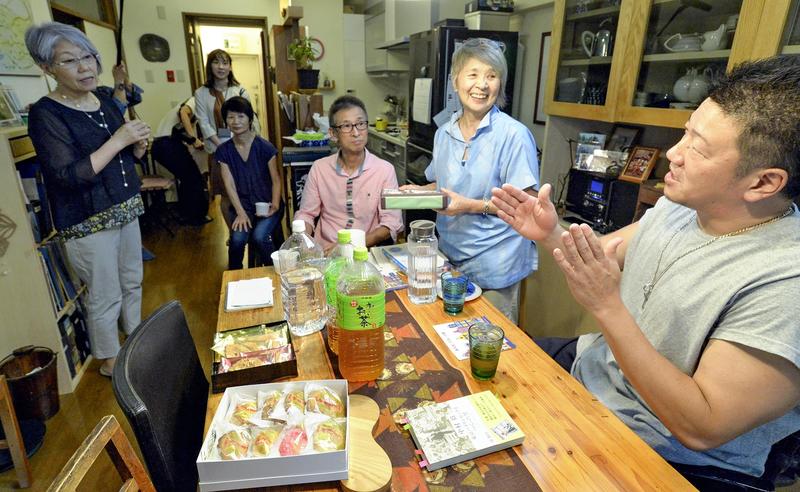
In late September, about 20 people attended a social event held at the Yokohama apartment of Saeko Yoshida, a former member of the volunteer group. "At that time in Japan, it was rare to see people in wheelchairs out and about," said Yoshida, as she recalled the first Games held in Tokyo. "I was surprised at how active athletes from overseas were."
Last summer, Yoshida, 76, and some of her colleagues from the language volunteer group formed a general incorporated association to convey the legacy of the 1964 group. As head of this association, Yoshida has started activities such as inviting disabled athletes from Japan and disabled people from overseas to members' homes to share a chat with participants over cups of tea. The new group now has about 30 members, and so far about 20 people with disabilities have been invited to take part in its activities.
Powerlifter Masaharu Ishihara, who is aiming to represent Japan at next year's Paralympics, was the guest at the event held at Yoshida's home. Students, teachers and housewives were among the attendees who listened intently as Ishihara, 47, spoke about his life, including how he has used a wheelchair since a motorcycle accident when he was 17. "It's inconvenient at times when I have only limited routes available, but with each movement of my arm, I can move forward a few meters," Ishihara said.
A 44-year-old junior high school teacher from Hiratsuka, Kanagawa Prefecture, who participated in the event, said: "I was impressed by how positively he spoke even after he began using a wheelchair. I'll closely watch the optimistic attitudes of the energetic para-athletes next year and cheer them on."
Yoshida started these activities to sweep away prejudice and help others gain new insights through their interactions with disabled people. Yoshida still remembers watching overseas athletes at the 1964 Games. "They turned my impression of people with disabilities upside down," she said.
The 1964 Paralympics were just the second such event, following the 1960 Rome Games, so public awareness of the tournament was still relatively low. In Japan, people with disabilities mostly stayed in institutions and other facilities, and very few pursued outdoor activities or played sports. However, the Italian athletes Yoshida interpreted for had hobbies, held down jobs and were married. In their spare time, they packed their wheelchairs in a taxi and went sightseeing in the Asakusa district of Tokyo's Taito Ward.
Also eye-opening for Yoshida was the easily accessible facilities for the competitors, which included handrails in the toilets and ramps installed in the athletes' village. Such considerations were still rather unusual in Japan at that time. After graduating from university, Yoshida became a registered architect with a first-class license and designed homes that gave special consideration to the needs of people with disabilities.
More than half a century has passed since the previous Tokyo Paralympics, and people with disabilities are becoming increasingly active in a growing range of fields, including in Japan. However, Yoshida believes there is still lingering prejudice toward disabled people, with some assuming they live a "sad existence." As the second Tokyo Paralympics approach, Yoshida has one big goal in mind.
"I hope this tournament will help everybody make their hearts more easily accessible to disabled people," Yoshida said.
-- Language volunteer group
A group of volunteers that interpreted for athletes from each nation and supported their activities during their stay for the Tokyo Paralympics held from Nov. 8 to Nov. 12, 1964. About 150 people, including university students, participated in the group formed by the Japanese Red Cross Society. Before the Games, the volunteers made preparations to welcome para-athletes from overseas, such as learning English and holding exchange events with disabled people at institutions.
Read more from The Japan News at https://japannews.yomiuri.co.jp/