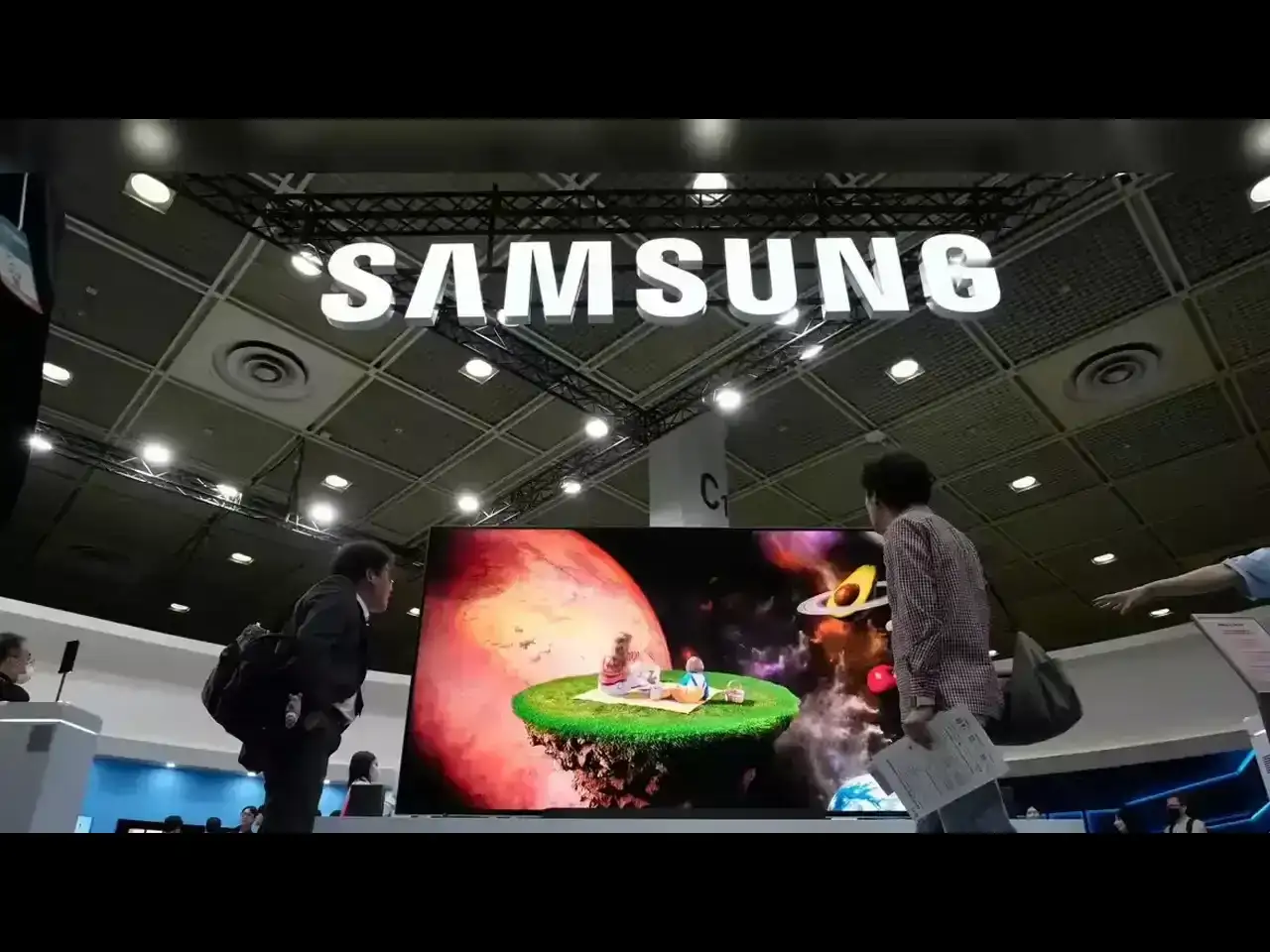
The Samsung strike scheduled for May 21 is not just a labour dispute. It is a referendum on who wins in the age of artificial intelligence — and who gets left behind in the factories that make AI possible. Forty-five thousand Samsung workers are prepared to walk off the job for 18 days, in what would be the largest strike in the South Korean conglomerate's entire corporate history. The ripple effects could reach every AI data centre, every Nvidia GPU shipment, and every laptop manufactured anywhere on Earth.
Samsung Electronics is the world's top memory chipmaker by sales. It is also the company that supplies critical components for AI systems built by Tesla, Nvidia, and the world's largest cloud providers. When that supply chain stutters — even for 18 days — the cost to global technology is staggering. JPMorgan has estimated that this Samsung strike could cost the company between $14 billion and $20.79 billion in lost operating profit. Sales losses alone could reach $3 billion.
But the real story runs deeper than dollars. This Samsung strike is rooted in a fundamental question that the global AI boom has forced into the open: when one part of a company prints extraordinary profits while another part bleeds billions in losses, what is a fair wage? The answer may determine not just Samsung's future — but the shape of the global semiconductor industry for years to come.
45,000: Workers threatening strike action
18: Days of planned work stoppage
$20.8B: Estimated max profit impact (JPMorgan)
Samsung Strike 2026: The Bonus Gap That Broke a Company Culture
For decades, Samsung ran a relatively unified culture inside its Device Solutions Division — the sprawling arm that houses memory chips, system logic chips, and foundry manufacturing. Workers across these three businesses broadly shared the same bonus structure. That changed when the AI boom arrived and made Samsung's memory division spectacularly profitable, almost overnight.
Samsung's memory chip business is riding the global AI wave. Data centres need enormous volumes of high-bandwidth memory to run large language models, and Samsung produces more of it than almost anyone else.
The company proposed bonuses of 607% of annual salary for its 27,000 memory chip employees — a number specifically designed to beat rival SK Hynix, which had abolished its bonus cap and offered its own workers more than three times what Samsung had been paying.
For Samsung's other 23,000 workers — the engineers and technicians building logic chips, base die components for Nvidia AI processors, and foundry silicon for Tesla — the proposed bonus sat between 50% and 100% of annual salary.
These workers often share the same buildings as their memory colleagues. They work on components that are just as critical to the AI supply chain. And they would receive, under Samsung's proposal, roughly one-sixth of what their neighbours earn.
Union leader Choi Seung-ho put the arithmetic plainly during internal negotiations. "If the memory division gets 500 million won while the foundry division only gets 80 million won, what motivation would those employees have to keep working?" The transcript of that exchange, reviewed by Reuters, captures a divide that has been quietly building inside Samsung for years — and has now broken into the open.
"I no longer have pride in Samsung. I attended the rally because I am infuriated." — Senior Samsung chip researcher, 30 years of service, speaking at an April worker rally
Why Is the Samsung Strike Threatening Global AI Supply Chains?
To understand why this Samsung strike sends fear through the global technology industry, you need to understand what Samsung actually makes. Its memory chips — DRAM and NAND flash — sit inside virtually every AI server, every smartphone, and every laptop on the planet. Its logic chip foundry produces advanced silicon for Nvidia and Tesla. Its base die components are integral to the AI chips that power modern data centres.
There is no easy alternative supplier standing by. Samsung holds a commanding share of the global memory chip market. Its competitors — SK Hynix and Micron — cannot simply absorb Samsung's volume if production halts.
An 18-day Samsung strike would not merely inconvenience chip buyers; it would create a supply shock that propagates through the entire AI hardware ecosystem, delaying GPU shipments, pushing up server costs, and stretching delivery timelines across the industry.
The American Chamber of Commerce in Korea stated that this kind of labour uncertainty could damage South Korea's reputation as a dependable partner in global manufacturing.
Samsung's own chairman warned in an internal memo that a strike could trigger capital outflows, a drop in tax revenue, and a weakening of the won. South Korean President Lee Jae Myung publicly signalled concern in late April, in remarks widely interpreted as directed at the unions.
What makes the Samsung strike especially consequential is its timing. The global AI buildout is running at full speed. Hyperscale data centres are ordering memory and compute components at record pace. A disruption now — in the middle of this buildout cycle — could delay projects that are themselves worth hundreds of billions of dollars in eventual economic output.
A Talent Drain Already Underway — and a Strategic Vision Under Threat
The Samsung strike may be the headline, but there is a quieter crisis already in motion inside the company. Workers in Samsung's logic chip and foundry divisions — the people building AI silicon for Nvidia and Tesla — are leaving. Some are moving to Samsung's own memory division for better pay. Others are jumping to SK Hynix or applying to Micron.
The Samsung strike is both a symptom and an accelerant of this drain.
A foundry engineer based in Pyeongtaek told Reuters that his team has shrunk sharply over the past two years. Colleagues moved to Samsung's memory division. Others left for SK Hynix.
Two other employees, speaking anonymously, said many of their remaining colleagues are actively applying for positions elsewhere right now. This exodus matters enormously because Samsung Chairman Jay Y. Lee has stated publicly that he wants Samsung to be the clear number one in the logic chip market by 2030.
That ambition rests on a premise that is genuinely unusual in the chip industry. Samsung wants to be the world's only semiconductor company offering a true "one-stop shop" — memory, logic design, and foundry manufacturing all under one roof. No other company attempts this at Samsung's scale.
TSMC focuses on foundry. Micron focuses on memory. Nvidia focuses on chip design. Samsung alone is trying to do everything, simultaneously, for everyone.
The Samsung strike has exposed how that ambition creates structural tensions. Samsung's memory business is funding losses in its foundry business. Foundry workers know it. And now they are being asked to accept bonuses that reflect those losses — not their strategic importance, not their workload, and not the market rate that rivals like SK Hynix are willing to pay.
Yonsei University professor Namuh Rhee said Samsung's move to bundle different businesses together created a complex structure that produces both a valuation discount and damaging internal conflicts of interest.
What Does the Samsung Strike Mean for the Future of AI Chip Pricing and Supply?
The Samsung strike carries implications that extend well beyond South Korea's labour law. If 45,000 workers walk out for 18 consecutive days, the immediate effect is a significant reduction in memory chip output — chips that sit inside AI training clusters, inference servers, and the devices that run AI applications for billions of users worldwide.
That supply reduction will tighten an already constrained market and put upward pressure on memory prices at a moment when demand from AI data centres is already driving prices higher.
Longer term, the Samsung strike may reshape how the global semiconductor industry thinks about worker compensation. Korea University law professor Park Ji-soon noted that if Samsung sets a precedent in which union demands are met through strike pressure, other major manufacturers could find themselves in a structurally weaker bargaining position.
Conversely, if Samsung holds firm and the strike inflicts serious production damage, it could accelerate efforts to diversify chip supply chains away from single-source dependencies — a trend that policymakers in Washington, Brussels, and Tokyo have already been pushing for years.
The Samsung strike also raises a broader question that the AI era is forcing on every major technology company: when artificial intelligence dramatically amplifies the productivity and profitability of some parts of a business while leaving others behind, how do you share the gains fairly?
Samsung's union argues for a percentage of operating profit to flow directly to workers — a kind of profit-sharing model tied to company performance. Samsung's management argues that performance bonuses should reflect the performance of the individual division, not the company as a whole. Neither answer is obviously wrong. Both have real consequences for how global chip supply chains hold together.
The workers on Samsung's factory floors did not create the AI boom. But they are the ones making it physically possible.
As one Samsung chip researcher with thirty years of service told a rally of roughly 40,000 workers in late April: "I no longer have pride in Samsung." That sentence, from a man who has spent his career helping build one of the most powerful technology companies on Earth, may be the most consequential line in this entire dispute. A company cannot lead the world in semiconductors if the people building those semiconductors no longer believe in it.