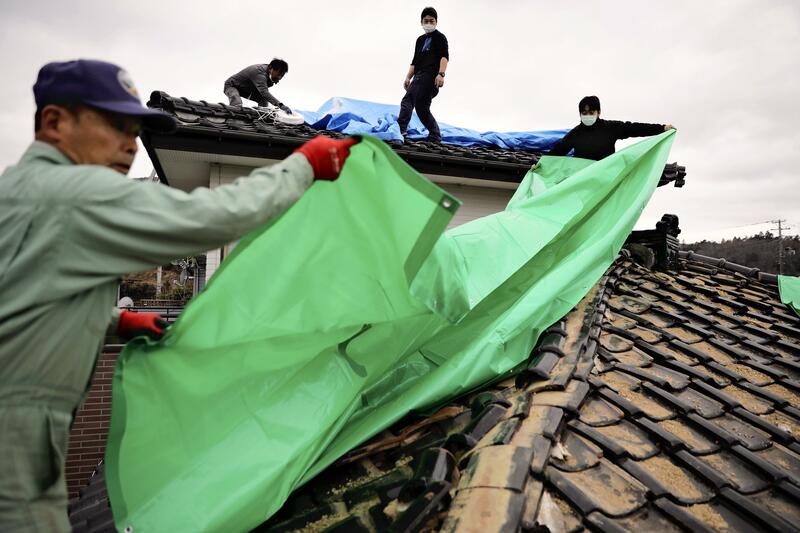
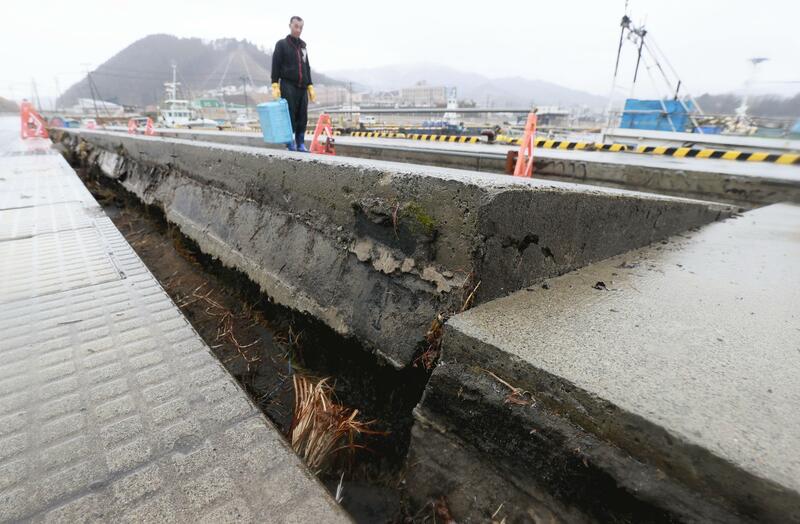
A total of 158 people were injured and 1,759 buildings were damaged by the strong earthquake that hit Saturday, according to data collected by The Yomiuri Shimbun.
The quake caused tremors of upper six on the Japanese intensity scale of seven mainly in Fukushima and Miyagi prefectures. By midnight Monday, 65 earthquakes had occurred that were deemed to be aftershocks of Saturday's earthquake. According to the Japan Meteorological Agency, there are fears of heavy snowfall or blizzards in the Tohoku region.
Because a strong earthquake of upper six on the intensity scale may occur again, the agency is calling on the public to be cautious.
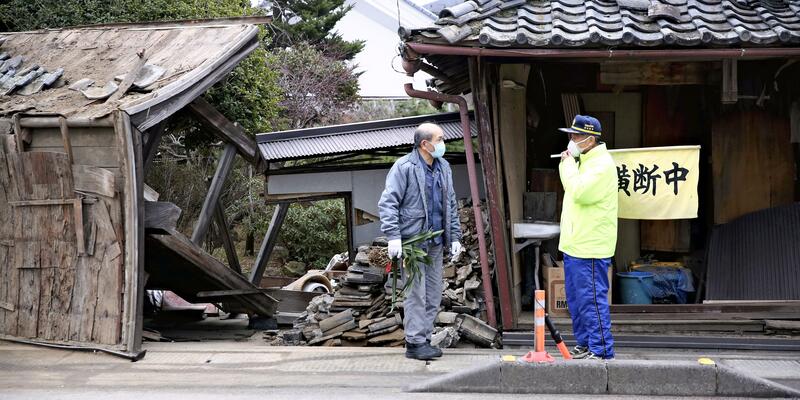
According to Yomiuri data as of 8 a.m. Tuesday, 85 people had been injured in Fukushima Prefecture, and 51 in Miyagi Prefecture. In the Tohoku and Kanto regions, a total of 158 people were injured by the earthquake.
There have not been reports of fatalities or missing persons.
A total of 1,530 buildings were damaged in Fukushima Prefecture and 191 in Miyagi Prefecture.
Water supply was cut off in Yamamoto, Miyagi Prefecture, where tremors of lower six were recorded. All six elementary and junior high schools in the town were closed Monday, with classes resuming on Tuesday. Students commuting to school on Tuesday were seen alongside damaged houses covered with plastic sheets.
In Miyagi and Fukushima prefectures, shelters were set up at 149 locations at one point.
Service on the Tohoku Shinkansen bullet train line was suspended between Nasu-Shiobara and Morioka stations, as utility polls were damaged. After repair work and safety checks were completed, service between Ichinoseki and Morioka stations resumed on Tuesday. Only 12 inbound and outbound extra trains ran.
Service between Nasu-Shiobara and Ichinoseki stations continued to be suspended.
East Japan Railway Co. (JR East) said all of the Tohoku Shinkansen line will reopen around Feb. 24. Extra services of high-speed buses and airlines were available.
According to the Education, Culture, Sports, Science and Technology Ministry, 34 government-designated cultural assets were also damaged. At Zuiganji temple in Matsushima, Miyagi Prefecture, which is a national treasure, several roof tiles fell off its main hall and the priests' quarters.
Read more from The Japan News at https://japannews.yomiuri.co.jp/