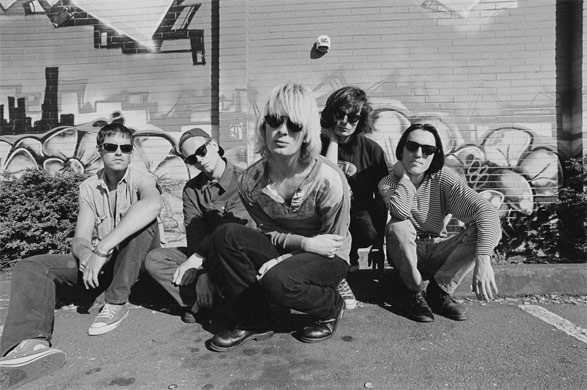
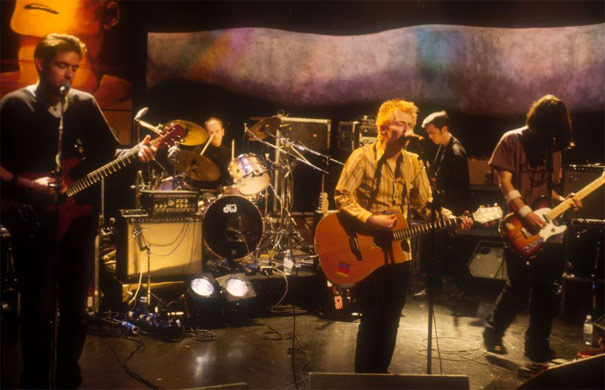
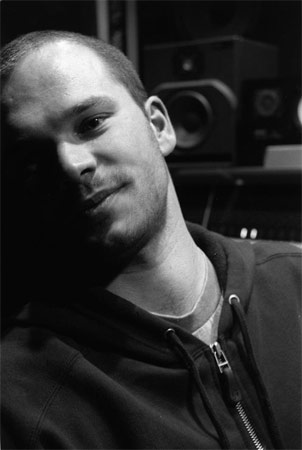
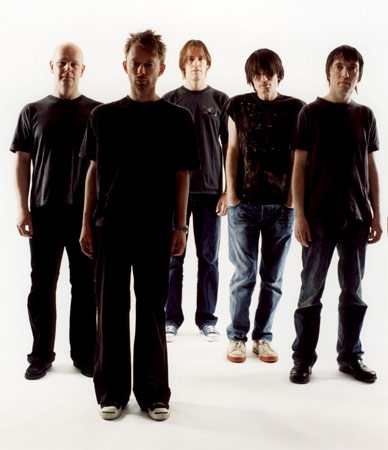
Radiohead in Seattle in 1993, the year their debut album Pablo Honey was released. Since forming (as On a Friday) in 1986 as students at a boys-only public school, the lineup has remained the same. From left to right, that's guitarist Ed O'Brien, drummer Phil Selway, singer Thom Yorke, bassist Colin Greenwood, and lead guitarist Jonny Greenwood. Thankfully, some things have changed, like the band's over-the-top love of sunglasses. Photograph: Karen Mason Blair/CorbisRadiohead are revered now in the UK, but when the Drill EP was released in 1992, it was largely ignored. It took single Creep's success in Israel and then the USA in 1993 to make the band known at home. That song - along with Beck's Loser - captured the slacker zeitgeist, and many critics viewed Radiohead as one-hit wonders. They certainly didn't expect what came next. OK, yes, they did expect the single Anyone Can Play Guitar. What they really didn't expect came a couple years later...Photograph: Bob Berg/Getty... And that was The Bends. Featuring such songs as Fake Plastic Trees, Just, High and Dry and Street Spirit, this album landed a place on many critical 'top albums of 1995' lists. Here, the band hide behind instruments, mic stands and hair to perform on Later with Jools Holland in May of that year.Photograph: Andrew Csillag/Rex
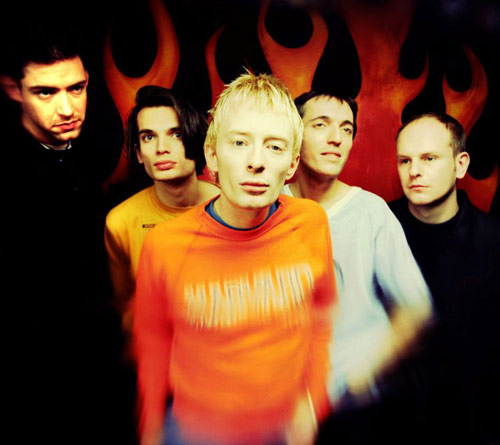
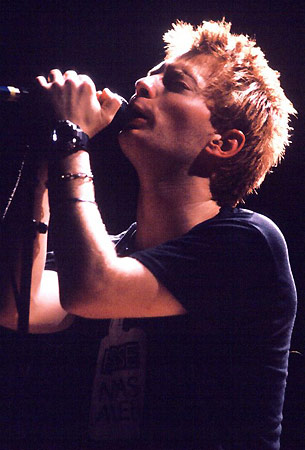
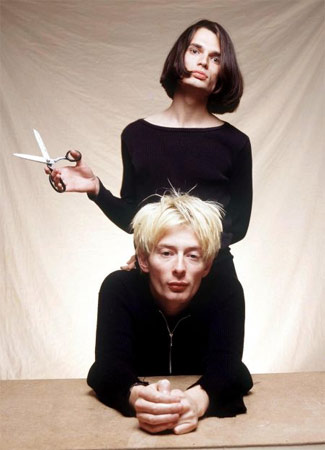
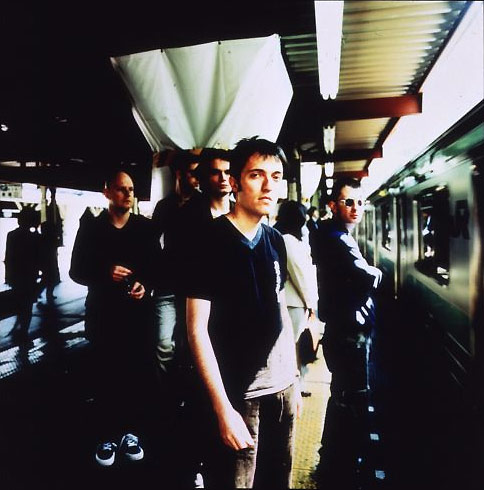
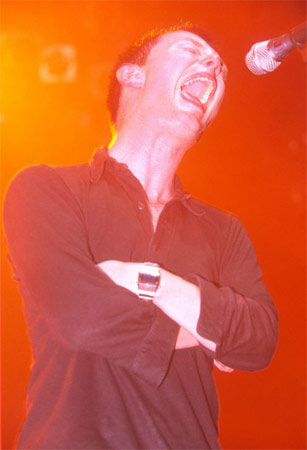
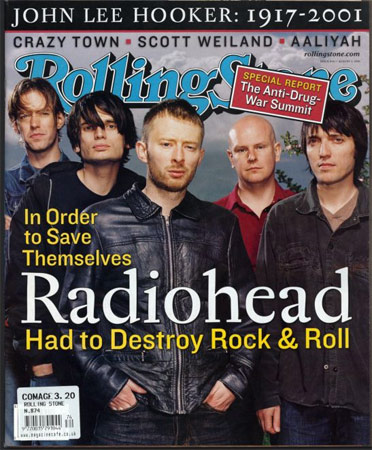
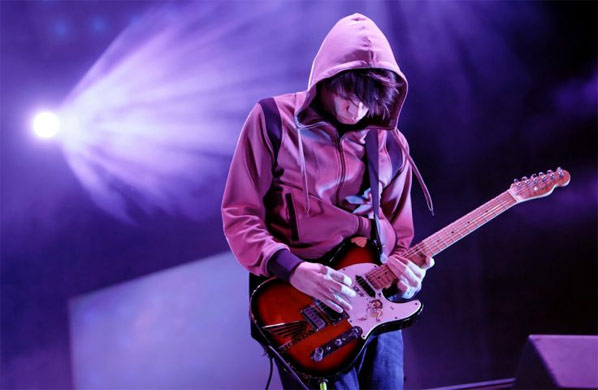
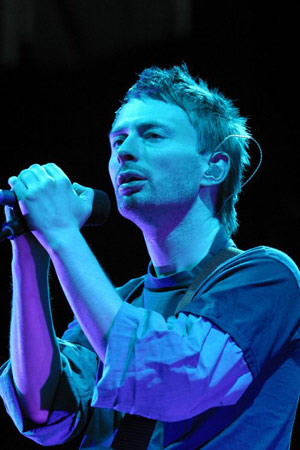
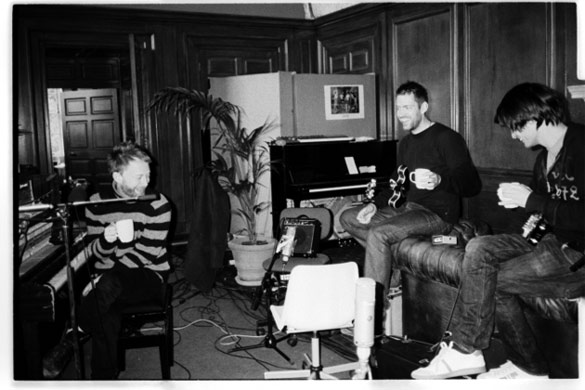
Thom Yorke developing his patented 'chicken dance' in 1995. The Observer listed the Bends - the title refers to decompression sickness suffered by divers - as one of the 50 albums that changed music: 'In parallel with Jeff Buckley, Radiohead's Thom Yorke popularised the angst-laden falsetto… Without this Coldplay would not exist, nor Keane, nor James Blunt.' Talk about a backhanded compliment.Photograph: Tim Mosenfelder/GettyIn the beginning, Thom Yorke was singled out as Radiohead's cranky, lazy-eyed genius, but as the band's popularity increased Jonny Greenwood - pictured here considering murdering Thom with scissors in 1996 - was identified as the second-in-command. The long-haired heartthrob is the only classically trained member of the band and is known for his string arrangements and sonic experimentation, as well as his awesome axe skills.Photograph: Pat Pope/RexReleased in 1997, OK Computer is Radiohead's 'classic', a guitar-driven concept album about modern alienation that managed both popular and critical success: it hit No 1 on the UK charts and now regularly features on lists of the best albums of all time. Here, the band are pictured in a publicity still taken by a confused photographer who thought the album was called OK Commuter. (We think.)Photograph: PRWith the great success of OK Computer came great happiness for the band. Wait, no. It made them miserable, especially Yorke, who was already miserable as it was. Yorke's petulant period is captured in the documentary Meeting People Is Easy, but the film is basically summarised by Yorke's body language here, singing in Barcelona in 1997.Photograph: Roger Sargent/RexAs the magazine cover says, Radiohead had to destroy rock'n'roll in order to save themselves. They did so with 2000's Kid A and, its sister album, 2001's Amnesiac. Gone were (most of) the guitars and in came piano, electronic blips and jazzy brass. Fans were happy to follow wherever Radiohead went by this point, however, and Kid A was the first of the band's albums to top the charts in the US as well as the UK. And Canada. And France. And Ireland...Photograph: PRAs important to the band's success as Thom and Jonny (and the other three, of course) is producer Nigel Godrich, the "sixth member of Radiohead". He started to work with the band on 1994's My Iron Lung EP and has been involved in every release since (including Yorke's solo album, The Eraser). Borrowed by the likes of Beck and Paul McCartney from time to time, Godrich won a Grammy for producing Kid A.Photograph: PRWhere would Radiohead go next? 2003's Hail to the Thief turned out to be a greatest hits album - except all the songs on it were brand new. The band's cultish fans sacrificed goats to celebrate, but not everyone was impressed. '[N]either startlingly different and fresh nor packed with the sort of anthemic songs that once made them the world's biggest band,' wrote Guardian critic Alexis Petridis.Photograph: PRAfter Hail to the Thief, the band took some time off to relax and indulge in various side projects. Jonny Greenwood recorded the score for a documentary called Bodysong, and the ensuing soundtrack album was the first solo release by a member of Radiohead. Pictured here playing at the V Festival, Jonny's next score is for Magnolia director Paul Thomas Anderson's upcoming film There Will Be Blood. Rom-com, maybe?Photograph: Leon Neal/AFPThom Yorke's electronic solo album, The Eraser, followed in 2006. It was nominated for the Mercury Prize. Among its highlights was a - gasp - cheery song called Atoms for Peace about conquering your depression and looking on the bright side of life. Then there was Harrowdown Hill, a song where Thom's usually abstract lyrical paranoia became uncomfortably literal for the first time. About the death of David Kelly, it includes the lyrics, "Did I fall or was I pushed?"Photograph: Matt Carmichael/GettyRadiohead relax with a cuppa after finishing In Rainbows, their seventh studio album. It is released electronically today and downloaders can pay whatever they want for it. While the method of delivery has excited and/or frightened the music industry, fans are more interested in knowing what it will sound like.Photograph: Radiohead.com/PR
Sign up to read this article
Read news from 100’s of titles, curated specifically for you.