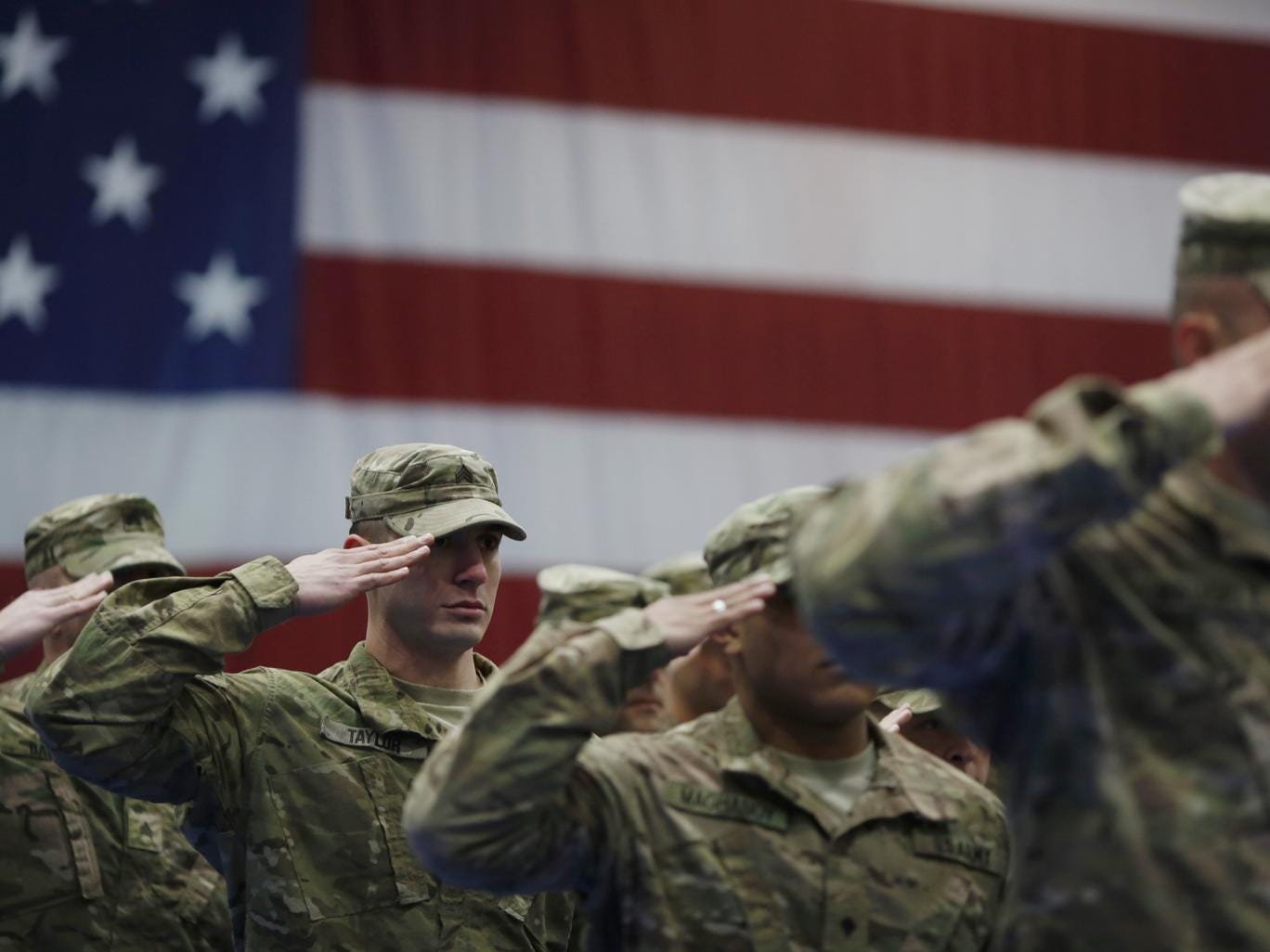
The US military is unquestionably the world's strongest force with the world's largest defense budget.
But throughout the 2000s, the Pentagon spent $51.2 billion on 15 major programmes “without any fielded systems to show for it,” according to a new Center for Strategic and International Studies report.
The abandoned projects are largely due to a lack of funding attributed to the Budget Control Act and sequestration.
Sequestration, which is indiscriminate budget cuts across-the-board that affect every portion of the military equally, is the greatest threat to the US military currently, Former Defense Secretary Robert Gates told Business Insider.
Below are a series of military modernisation projects that were canceled partially due to a lack of funds.
Future Combat Systems
Branch: Army
Sunk Costs: $18.1 billion
Follow-On: The project was ultimately superseded by the Ground Combat Vehicle Program. This program was also ultimately canceled.
Source: Center for Strategic and International Studies
RAH-66 Comanche Armed Reconnaissance and Attack Helicopter
Branch: Army
Sunk Costs: $7.9 billion
Follow-On: The helicopter was superseded by the later canceled Armed Reconnaissance Helicopter project.
Source: Center for Strategic and International Studies
National Polar-orbiting Operational Environmental Satellite System
Branch: Air Force and National Oceanic and Atmospheric Administration
Sunk-Costs: $5.8 billion
Follow-On: The program was replaced by the now-canceled Defense Weather Satellite System (DWSS). The DWSS is slated to be restarted as the Weather Satellite Follow-On.
Source: Center for Strategic and International Studies
Airborne Laser
Branch: Air Force
Sunk Costs: $5.2 billion
Follow-On: The project was canceled without an identified replacement.
Source: Center for Strategic and International Studies
VH-71 Presidential Helicopter
Branch: Marine Corps
Sunk Costs: $3.7 billion
Follow-On: The project was restarted as the VH-92A Presidential Helicopter.
Source: Center for Strategic and International Studies
Expeditionary Fighting Vehicle
Branch: Marine Corps
Sunk Costs: $3.3 billion
Follow-On: The project was ultimately superseded by the Amphibious Combat Vehicle program.
Source: Center for Strategic and International Studies
XM2001 Crusader Self-Propelled Howitzer
Branch: Army
Sunk Costs: $2.2 billion
Follow-On: The project was superseded by the Non-Line-of-Sight Launch System which was also then canceled.
Source: Center for Strategic and International Studies
E-10 Multi-sensor Command and Control Aircraft
Branch: Air Force
Sunk Costs: $1.9 billion
Follow-On: The program was superseded by the Joint Surveillance Target Attack Radar System Replacement Program.
Source: Center for Strategic and International Studies
Space Based Infrared Systems - Low
Branch: Air Force
Sunk Costs: $1.5 billion
Follow-On: The program was superseded by the Space Tracking and Surveillance System.
Source: Center for Strategic and International Studies
Advanced SEAL Delivery System
Branch: Navy
Sunk Costs: $0.6 billion
Follow-On: The project was superseded by the later canceled Joint Multi-Mission Submersible.
Source: Center for Strategic and International Studies
Armed Reconnaissance Helicopter
Branch: Army
Sunk Costs: $0.5 billion
Follow-On: The project was deferred following the Army's decision to field a mix of drones and AH-64Es instead.
Source: Center for Strategic and International Studies
Aerial Common Sensor
Branch: Army/Navy
Sunk Costs: $0.4 billion
Follow-On: The project deferred in favor of the Navy's P-8 program and upgrades to Army aircraft.
Source: Center for Strategic and International Studies
CG(X) Next Generation Cruiser
Branch: Navy
Sunk Costs: $0.2 billion
Follow-On: The project was deferred, and the Navy purchased additional DDG 51 destroyers instead.
Source: Center for Strategic and International Studies
CSAR-X Combat Rescue Helicopter
Branch: Air Force
Sunk Costs: $0.2 billion
Follow-On: The project was ultimately restarted as the Combat Rescue Helicopter.
Source: Center for Strategic and International Studies
Next Generation Bomber
Branch: Army
Sunk Costs: $18.1 billion
Follow-On: The project was restarted as the Long Range Strike-Bomber.
Source: Center for Strategic and International Studies
Read more:

• Switzerland might be ending banking as we know it
• It's starting to look like Russia will have the biggest impact on oil prices this year
• 'Everybody says payments will be on the blockchain in the future'
Read the original article on Business Insider UK. © 2015. Follow Business Insider UK on Twitter.