
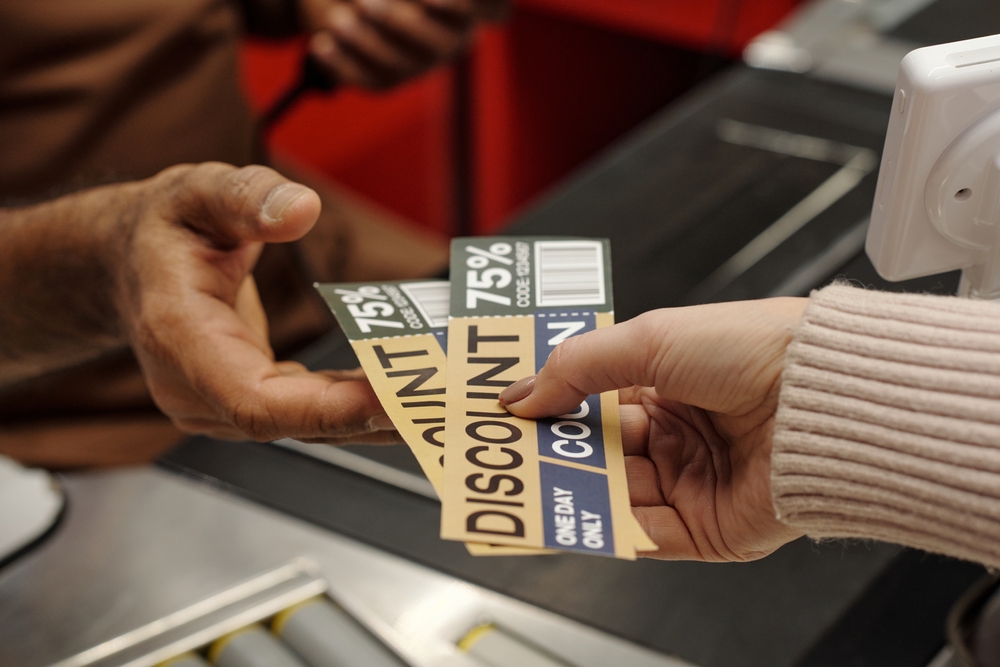
Shelf tags and coupon stickers can make you feel like you’re scoring amazing deals just for paying attention. But many of those bright savings signs only pay off if you follow very specific fine print rules that are easy to miss when you’re shopping with kids, watching your budget, and racing the clock. One tiny line on the tag can be the difference between saving real money and paying more than you expected at the register. The good news is that once you know the most common tricks, you can spot them in seconds and decide whether the deal is actually worth it. Let’s walk through the sneaky coupon setups that look generous but quietly protect the store’s profit, not your wallet.
1. The “Buy 3 to Save 50¢” Trap
Those tags that offer a discount only when you buy three or more look tempting at first glance. Often, the savings per item are tiny compared to the extra cash you’re forced to spend. You may walk away with more cereal, snacks, or soda than your family can use before it goes stale. If you wouldn’t normally buy that many, the coupon is doing the store more favors than you. Always check the per-unit price and ask whether the deal actually fits your meal plan.
2. Only Good on the Largest Sizes
Some shelf coupons only apply to “family size,” jumbo packs, or the largest bottle on the shelf. Those giant packages seem like the best value, but that’s not always true when you compare the unit prices. Sometimes two smaller packages with no coupon are still cheaper than one huge bag with a discount. Large packages also encourage overuse, so you may go through snacks or detergent faster than usual. Before you grab the biggest item, compare prices and think about how quickly your family truly uses that product under those fine print rules.
3. When Fine Print Rules Beat the Big Print
You’ll sometimes see a bold promise like “Save $2 on snacks” paired with tiny text that narrows what qualifies. The tag might only work on a specific flavor, size, or new product line tucked off to the side. If you grab the wrong version, the discount won’t come off and you may not notice until later. These tricks rely on shoppers seeing the big words and not the small ones. Slow down just enough to check that the item in your cart matches those fine print rules exactly.
4. Excludes Clearance or “Manager’s Special” Items
A shelf coupon can sit right next to clearance stickers, even though the offer doesn’t apply to marked-down products. You may assume the discount stacks automatically, only to learn at checkout that the system treats clearance as ineligible. Because the clearance tag looks like part of the same display, it’s easy to mix up qualifying items. This setup nudges you toward full-price versions that actually trigger the coupon. When you see clearance plus coupons together, double-check the wording or be ready for the discount not to apply.
5. Store Brand vs. Name Brand Confusion
Some coupons are good only for the store brand or only for specific national brands, and the layout can blur the difference. The tag might hang on the same rail as competing products, making everything feel “included.” If you’re in a hurry, you might grab a similar-looking item and assume the price will drop. At checkout, the discount doesn’t appear because the barcode doesn’t match the stated brand. Always match the exact brand name and size on the coupon to the product label before it goes in your cart.
6. Digital-Only Coupons That Require Extra Steps
Many deals are now “digital-only,” which sounds simple (albeit potentially discriminatory) until you’re standing in the aisle without the offer loaded. These coupons often require you to create an account, download an app, or clip offers online before you shop, and those fine print rules can easily trip you up mid-aisle. If you forget, the tag still lures you into buying, but the savings never hit your receipt. Some apps also limit how many times you can use a deal, even if the shelf tag looks unlimited. Build a habit of loading digital offers at home and taking a quick look at your clipped list before you leave.
7. “One Per Transaction” Limits That Kill Stacking
A tag might advertise a great discount, but the phrase “one per transaction” quietly stops you from buying multiples cheaply. That rule means you can’t stock up in a single trip without paying full price on the extras. If you’re counting on that coupon for a big stock-up, the final total may shock you. Splitting your purchase into separate transactions is sometimes allowed, but that costs extra time and energy. Decide whether the savings justify the hassle, especially if you have kids with you or a long line behind you.
8. Mix-and-Match Requirements That Aren’t Really Flexible
“Mix and match” sounds like you can choose any combination of items, but many tags hide limits. The offer may only apply to a short list of participating products that are scattered across the aisle. If you guess instead of reading closely, one or two items might not qualify, blocking the whole deal. Stores count on busy shoppers missing the details and tossing in the wrong things. When a deal claims flexibility, scan the list of included items and stick to those specific products.
9. Product Variants That Don’t Quite Qualify
A shelf coupon might show a photo of one flavor or scent while the text quietly excludes it. For example, seasonal or “limited edition” versions are sometimes left out of the promotion. If you reach for the special flavor pictured on the shelf, you may assume it’s covered. At the register, the system treats that version as separate and skips the discount. When you see special variants, check the wording for “excludes seasonal,” “excludes limited,” or similar phrases before you commit.
10. Short Expiration Dates That Sneak Up on You
Some offers look generous but expire in just a few days, which isn’t obvious from across the aisle. You might assume the tag will be good all week or all month and plan a later stock-up run. By the time you return, the promotion is gone, and the regular price feels steep. This tactic encourages impulse buying from shoppers who don’t want to “miss out.” If the end date is close and the item isn’t a priority, it’s okay to walk away.
11. Loyalty Card Requirements You Forgot About
Plenty of shelf coupons require you to scan a loyalty card before the discount applies. If you don’t have one or forget to enter your phone number, you pay more than the tag suggests. Guests and out-of-town shoppers are especially vulnerable to this trick. The tag looks universal, but the savings are locked behind membership. Whenever a deal mentions “with card,” decide if it’s worth signing up or if a different store with straightforward pricing makes more sense.
12. No Stacking With Manufacturer Coupons
Some shelf offers look like they’ll stack beautifully with paper or digital manufacturer coupons. Then, in tiny text, you see “not valid with any other coupon” or similar wording. If you plan a big haul, assuming double discounts, the register will disappoint you. Stores often prioritize their own offers and block extra savings from manufacturers. Before you plan a complex stack, choose the single discount that gives the best value under the fine print rules and skip the rest.
13. Location-Specific Deals That Don’t Travel
Chains sometimes run promotions that only apply in certain regions or specific store locations. You might see a deal online, then head to your local branch and find a similar tag that doesn’t quite match. If the barcode or wording is different, your store may not honor the promotion the same way. This can be frustrating when you’re trying to copy a savings strategy you saw on social media. When possible, rely on the tags in your own store and keep your expectations flexible with out-of-town or travel shopping.
Reading the Fine Print Like a Savings Pro
Once you learn how these tricks work, those bright tags start to lose their power. You can still snag great deals, but you’re doing it on your terms instead of letting fine print rules steer your cart. A quick pause to compare sizes, check dates, and match product names can save you from surprise totals at checkout. Over time, this habit turns you into the shopper who spots the real bargains and skips the fake ones. That’s how you protect your grocery budget while still enjoying the thrill of saving smart.
What’s the most frustrating shelf coupon “gotcha” you’ve ever run into, and how did you handle it at the register?
What to Read Next…
- The One Checkout Mistake That Replaces Your Coupon With the Store’s Price Instead
- 7 Red Flags That a Rebate Offer Might Be a Marketing Trap
- The Real Reason Coupons Are Vanishing From Sunday Papers
- The Hidden Trade-Off: How Rebate Apps Use Your Data (And What You Get in Return)
- Why Rich Shoppers Still Clip Coupons (and Pretend They Don’t)
The post 13 Shelf Coupons That Only Work Under Fine Print Rules appeared first on Grocery Coupon Guide.