
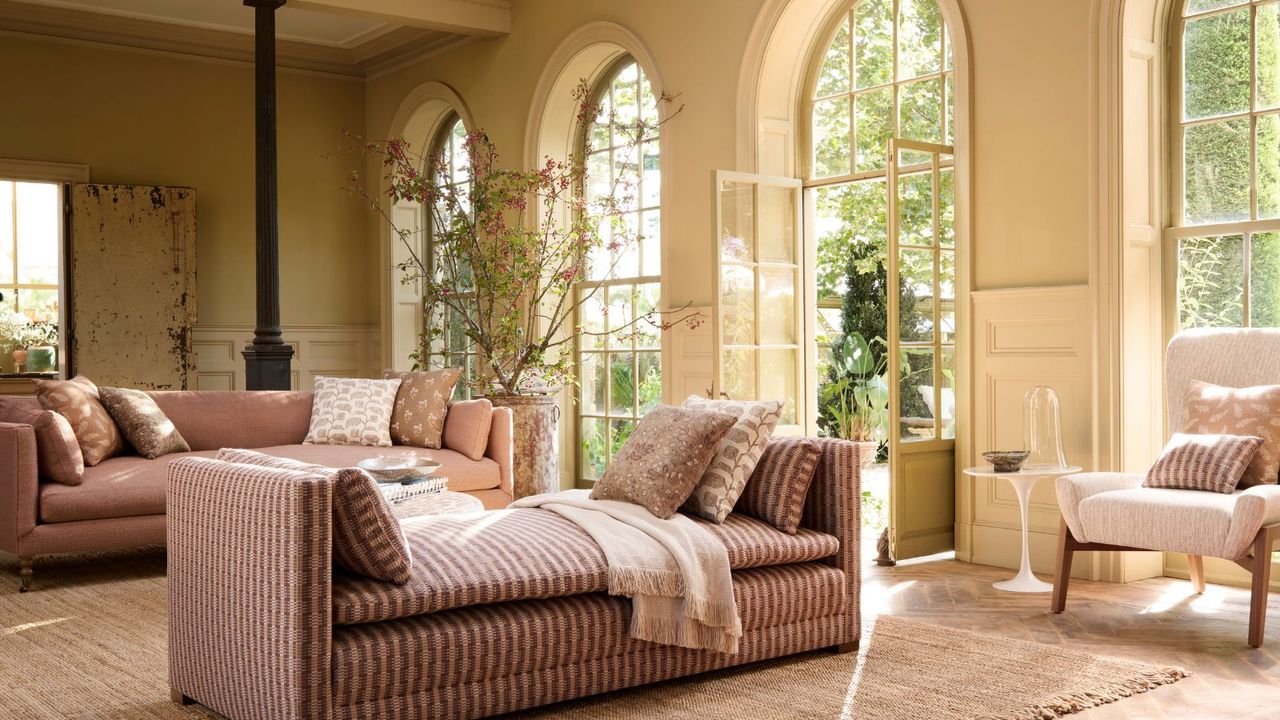
It's easy to see why sunrooms remain one of the most coveted spaces in the home. Positioned between indoors and out, they invite daylight to flood in while offering uninterrupted views of the garden throughout the changing seasons. But the most successful sunrooms are about far more than glazing and good views. They are thoughtfully designed rooms that feel every bit as comfortable and considered as the rest of the house.
That starts with function. Before choosing sunroom furniture, fabrics or paint colors, it's worth asking how you actually want to live in the space. Will it become a quiet morning room, somewhere to entertain friends, a family dining room, or a peaceful spot to work from home? Once that purpose is established, every other design decision – from layout and lighting to window treatments and upholstery – becomes much easier.
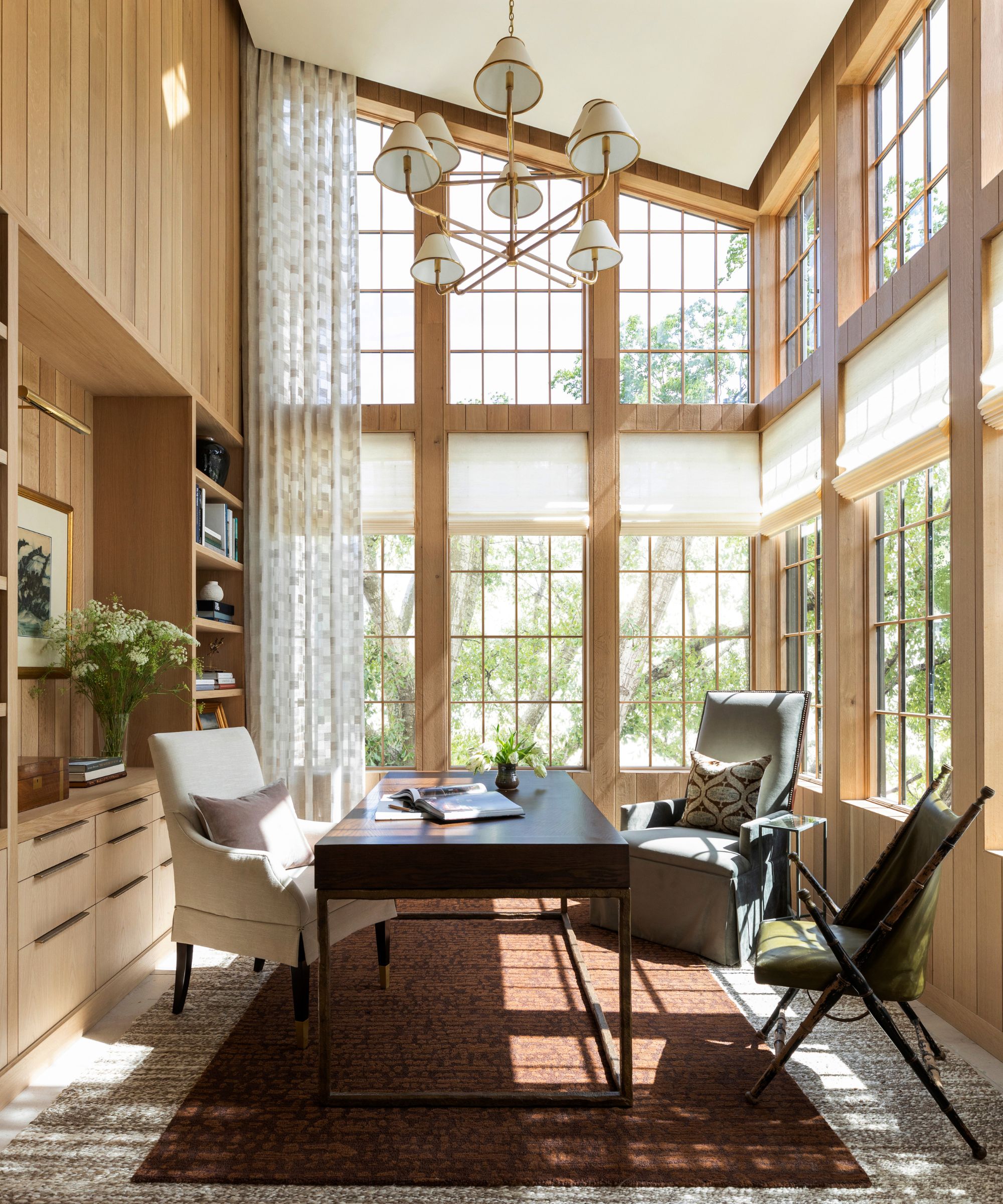
The best sunrooms also strike a careful balance between embracing natural light and creating genuine comfort. Soft furnishings, layered lighting, window treatments, and carefully chosen materials temper the abundance of glass, transforming what could feel like an enclosed patio into a welcoming room you'll happily retreat to on rainy afternoons, crisp winter mornings, and long summer evenings alike.
‘Carrying similar colors, materials and furnishings from adjacent rooms into the sunroom creates a seamless transition,’ suggests Greg Voorhis, Executive Design Director at Sunbrella. ‘We're seeing homeowners move away from traditional conservatory styling in favor of spaces that feel comfortable, layered and connected to the rest of the home.’
Whether you're planning a new addition or refreshing an existing sunroom, these designer-approved ideas and expert advice will help you create a space that feels beautiful, functional and welcoming in every season.
1. Decide How You Want to Use Your Sunroom
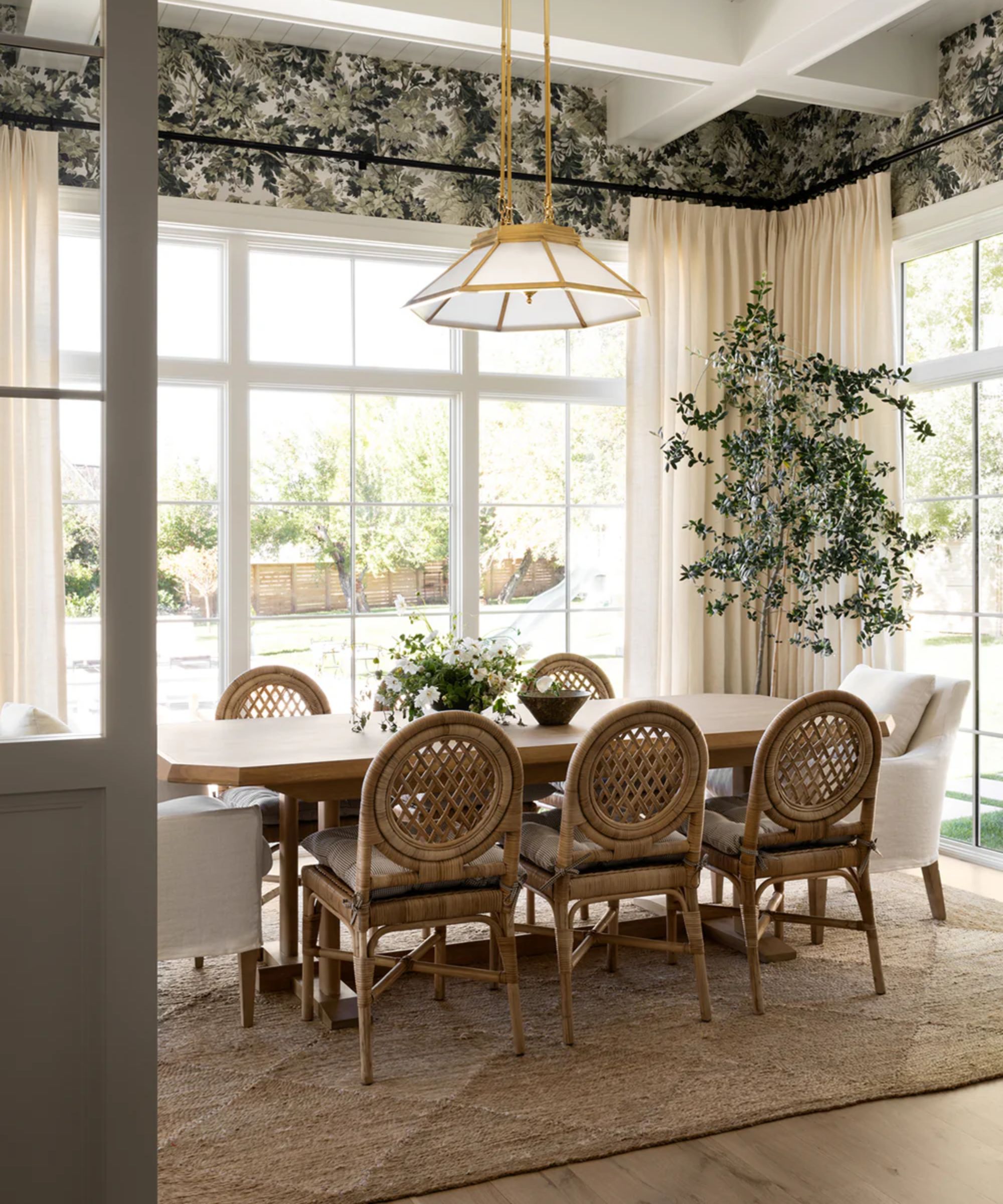
Before thinking about color schemes or furniture, decide how your sunroom will be used. While natural light is its greatest asset, it shouldn't dictate how the room functions. The most successful schemes are designed around everyday living first, allowing the decorating decisions to follow naturally.
‘Function should always come before decoration,’ stresses Hattie Hansard, designer at Joanna Wood Interiors. ‘Think about how you'll actually use the room. Will it be somewhere for family lunches, reading, entertaining or simply enjoying the garden? Once you've established its purpose, the decorative scheme tends to follow naturally.’
Melissa Lee, founder of Bespoke Only, takes a similar approach. ‘I always like to picture the room being used in a scene,’ she says. ‘How are people spending time there? What time of day is it? What are they doing? How do they move through the space? Once that story becomes clear, we begin placing each piece as part of the setting — furniture, lighting, materials, even the smallest details — all working together to complete the scene.’
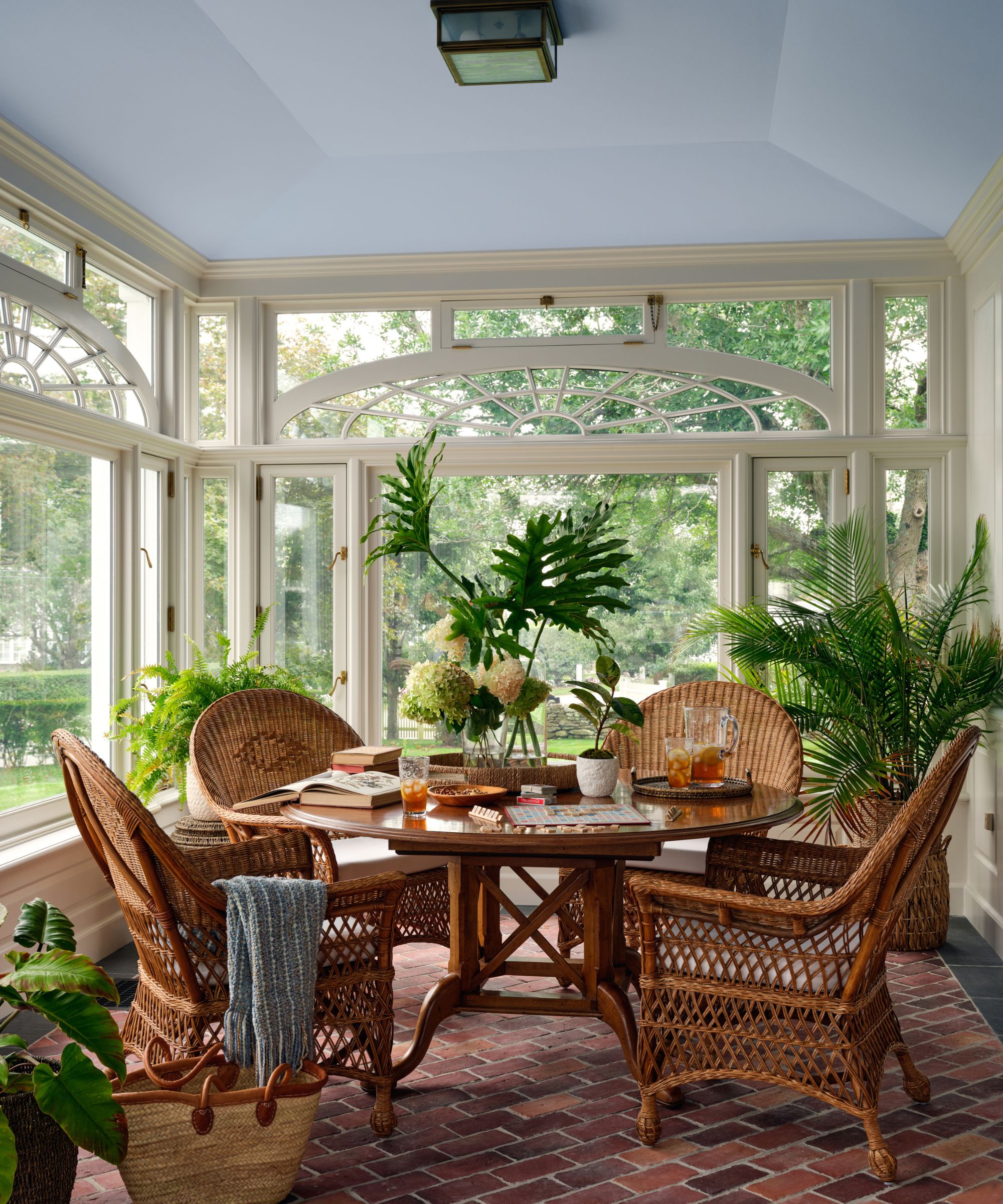
That vision will shape every design decision that follows. A sunroom designed as a reading nook might call for a generous armchair, layered lighting, side tables and built-in bookshelves, while one centered around dining – like the above example by Meg McSherry – benefits from durable seating and a layout that encourages easy indoor-outdoor entertaining. ‘A small dining area can double as a game table, and a sofa perfect for afternoon naps can just as easily serve as seating for entertaining’, explains Meg. ‘Flexibility is key, but so is being realistic about how the space will be used most often.’
If you're dreaming of a tranquil morning room, think relaxed seating, a soft, nature-inspired palette and perhaps a small coffee station that makes lingering over your first cup of the day irresistible. Those working from home should position desks to make the most of natural light while avoiding screen glare, incorporating practical storage that keeps the room feeling calm rather than cluttered.
For households that love to entertain, having room to pivot is a must. ‘Sunrooms are wonderfully multifunctional,’ says Lauren Carlucci. ‘The same room can be enjoyed alone with a cup of tea in the morning and then used to serve cocktails with friends before dinner.’ She recommends creating several seating areas rather than relying on one large sofa, allowing the room to adapt effortlessly throughout the day, whether you're hosting weekend brunch, evening drinks or simply unwinding with family after dinner.
2. Choose The Right Layout For Your Size and Space
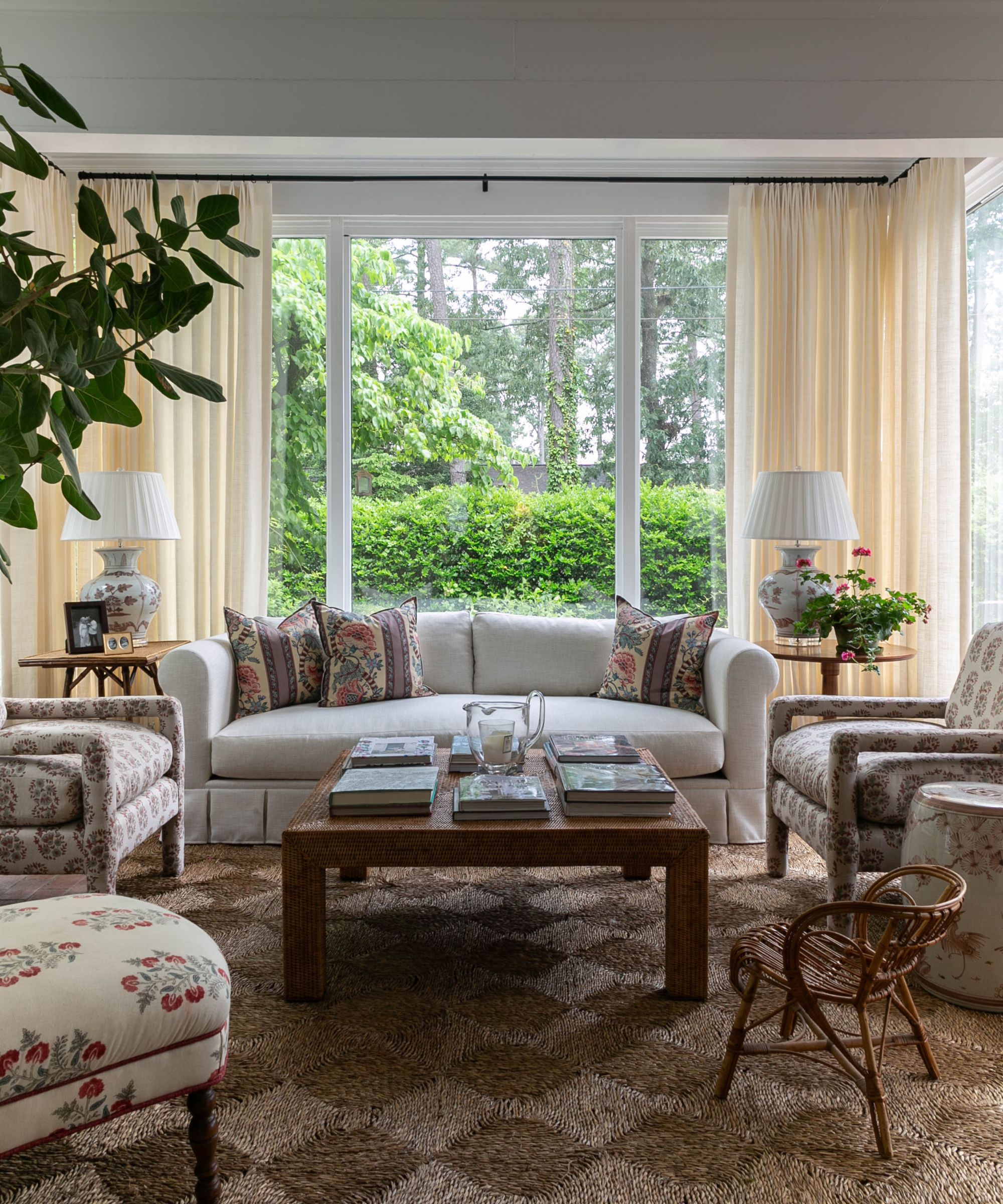
A beautiful sunroom is rarely the result of buying the right sofa. More often, it's about arranging furniture in a way that works with the architecture rather than against it. Views, circulation, glazing and natural light should all influence where furniture sits. Instead of pushing every piece against the walls, designers increasingly create intimate seating arrangements that encourage conversation while preserving easy movement through the room.
'Living inside/outside is every homeowner's daydream and what better way than in a sunroom?' says Sarah Latham of Latham Interiors. 'Arranging furniture in an open format to allow for transition spaces yet pulling together seating arrangements for gathering is key. A natural aesthetic always suits a sunroom best, but be prepared to invest in good window coverings to protect the overly exposed furniture.'
Small Sunrooms
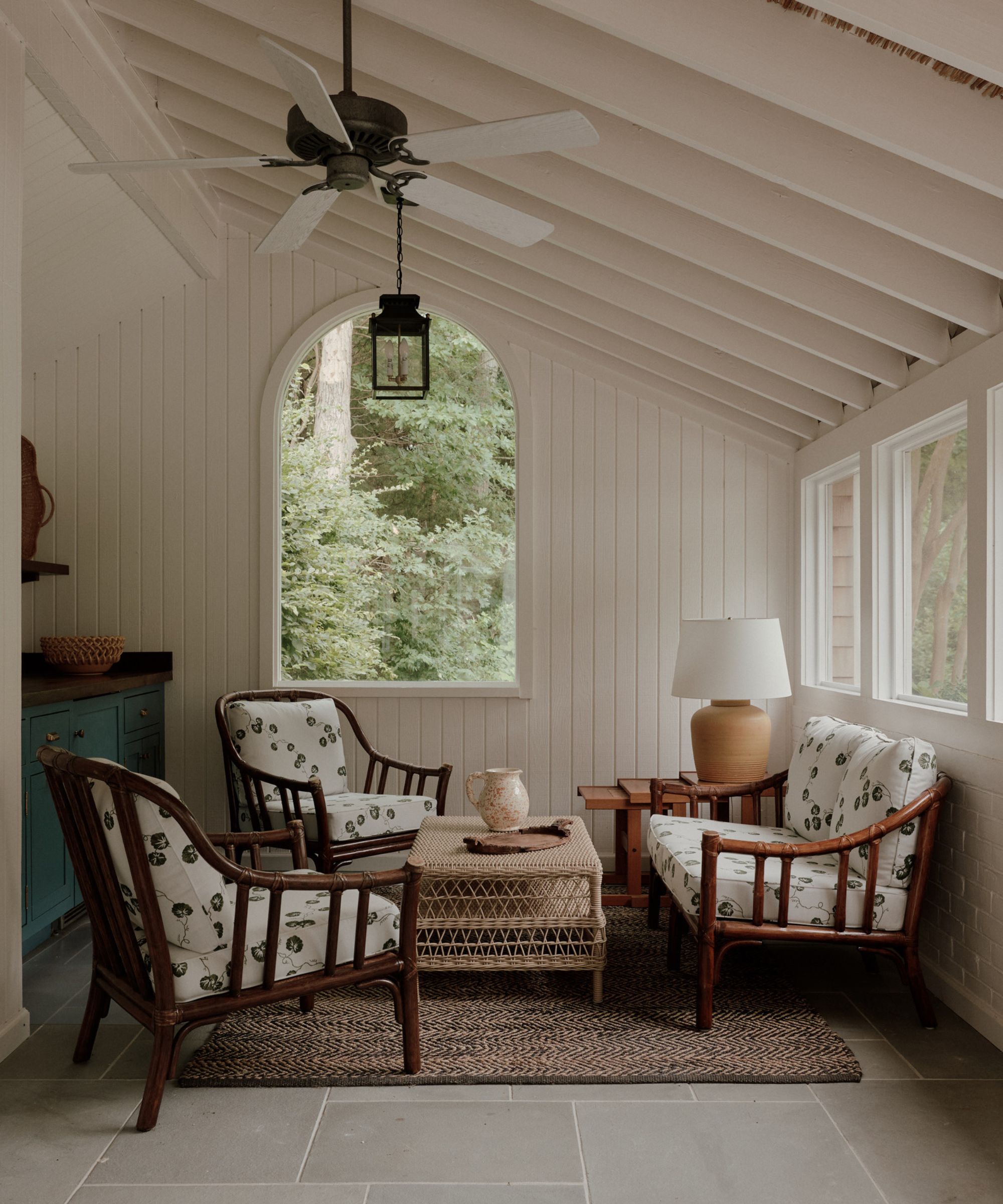
In compact sunrooms, every piece should earn its place. Rather than filling the perimeter with furniture, leave breathing room around larger pieces so the architecture can shine. Floating a pair of chairs opposite a small sofa – like this petite sunroom by Bespoke Only – often creates a more generous feel than lining everything against the glazing.
Narrow Sunrooms
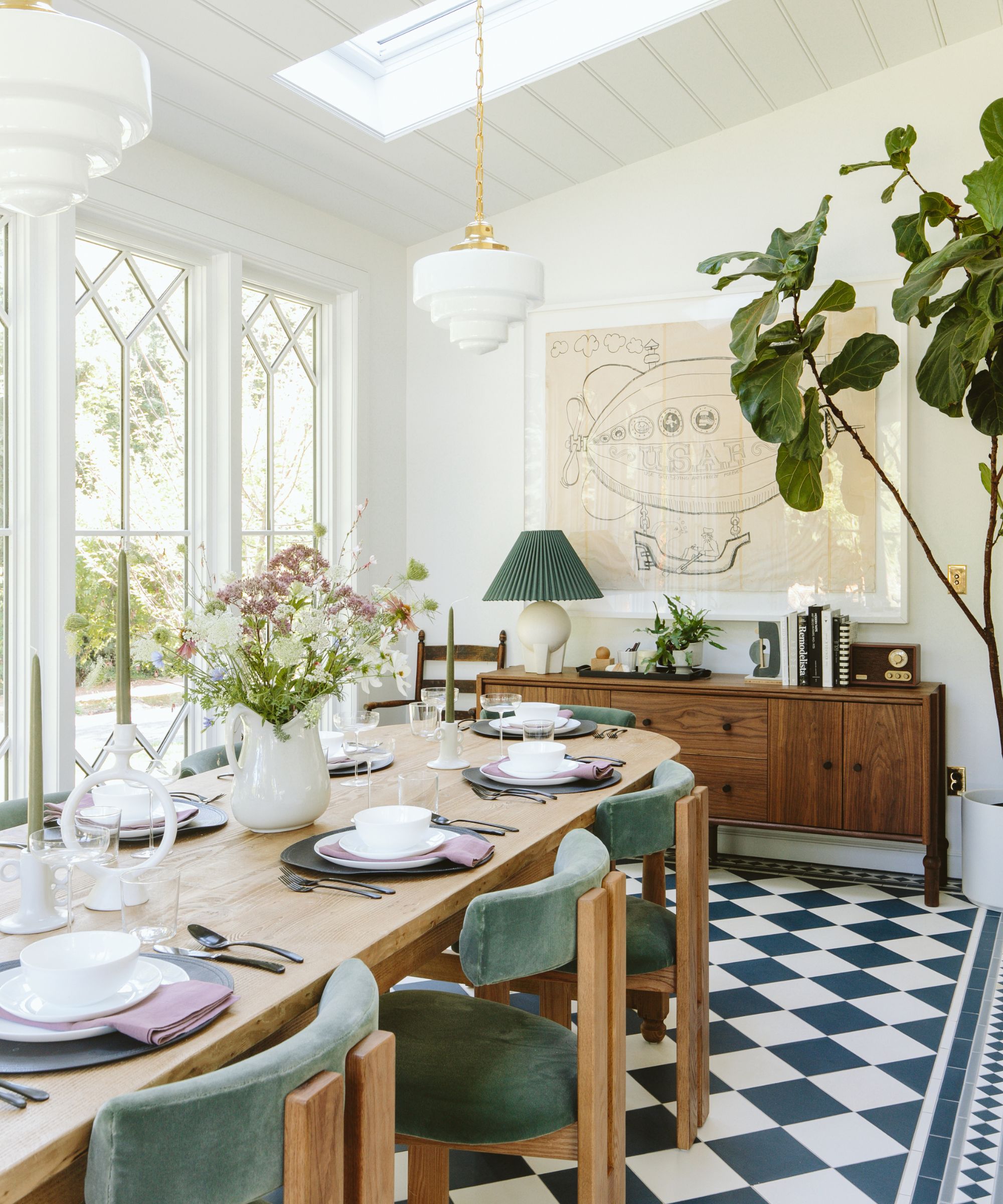
If your narrow sunroom has a view, take full advantage by arranging your sunroom furniture depending on the location of the windows. In this short-on-space sunroom, designer Emily Henderson positioned a long, narrow dining table in the center of the space, grounding it with a console at the top of the room to create a symmetrically satisfying room.
Symmetry can also help long spaces feel calmer. Repeating furniture shapes, matching table lamps, or pairing chairs opposite one another creates rhythm without making the room feel overly formal.
Open-Plan Sunrooms
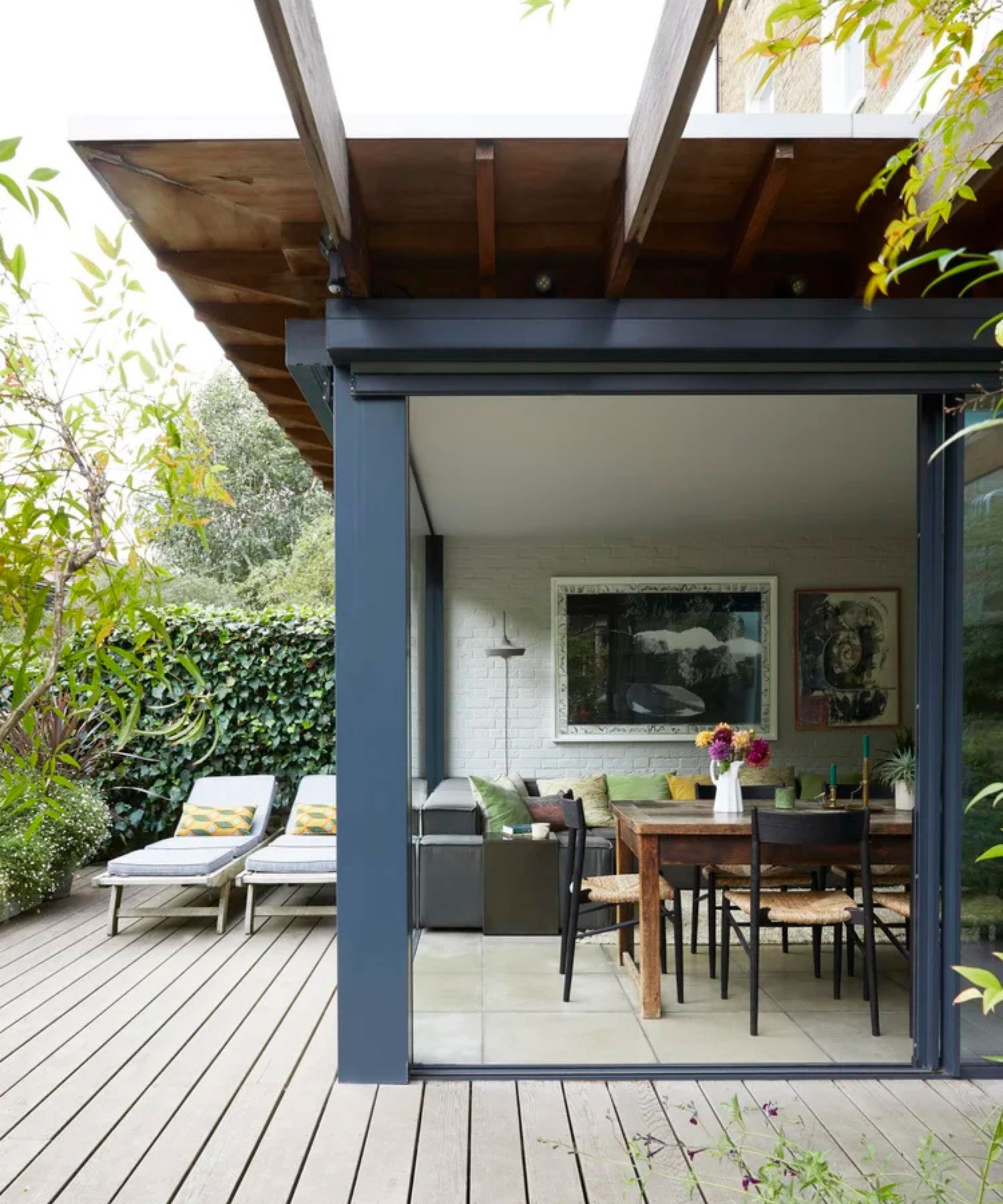
In larger sunrooms, resist the temptation to treat the space as one oversized room. Instead, define individual zones using area rugs, lighting, and carefully grouped furniture. A comfortable sitting area can sit alongside a dining table, while occasional chairs or benches create quieter corners for reading or enjoying the backyard.
A bespoke L-shaped banquette in this sunroom by Cave Interiors hugs one side of the room, freeing up valuable floor space while comfortably accommodating family meals. Opposite, lightweight rush-seated chairs can easily be moved around depending on how the room is being used.
‘The room needed to work hard,’ explains Georgina Cave. ‘It functions as both a dining space and somewhere to unwind with a book or watch television. Positioning the bespoke seating against the wall allowed room for a generous antique farmhouse table while keeping the layout relaxed and informal.’
3. Select Furniture That Feels Like It Belongs Indoors
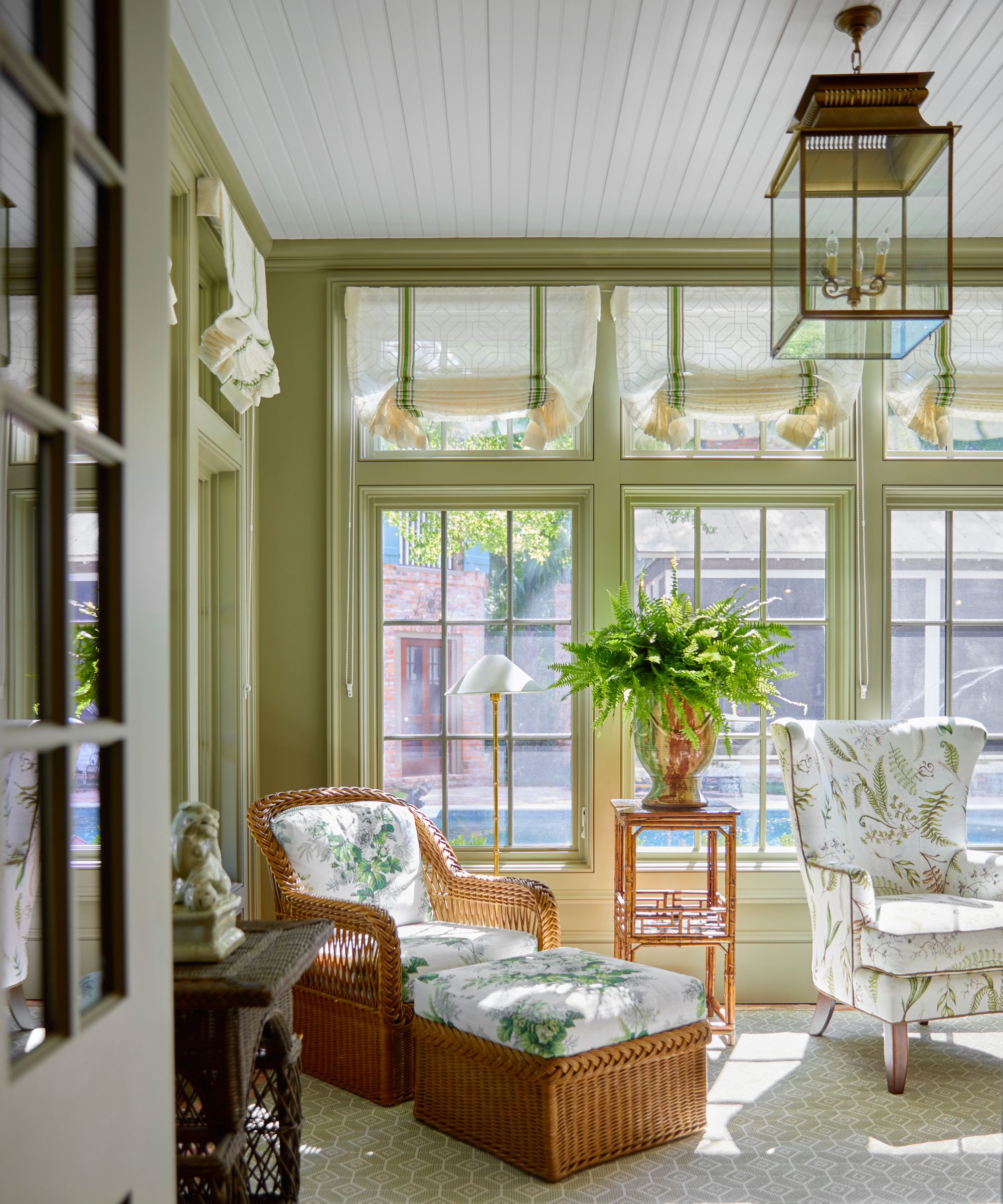
Choosing furniture for your sunroom is a little more complex than that for other rooms. Of course, the same concerns of style, size, and comfort come into play, but so must thoughts of durability, UV resistance, and the effect of the seasons.
‘A sunroom should never feel like an afterthought,’ says Chuck Chewning, who designed the botanical-inspired space above. ‘It deserves the same level of consideration as a living room because it's often one of the most-used spaces in the home. The furniture should invite you to settle in.’
Performance fabrics have also transformed what's possible. Advances in textile technology mean today's indoor-outdoor fabrics are almost indistinguishable from traditional upholstery, allowing you to choose lighter colors and softer textures without worrying about fading or everyday wear. ‘Comfortable upholstered seating paired with high-performance fabrics creates a space that feels welcoming while standing up to intense sunlight, fluctuating temperatures and daily use,’ says Greg Voorhis, Executive Design Director at Sunbrella. ‘The goal is to balance long-term durability with the comfort people expect from the rest of their home.’
Look to capitalize on natural fabrics and materials like woven rattan or wood, but also don't be afraid to introduce soft upholstery in various floral prints to reflect the view outside. 'I love the way that a well-designed sunroom can be such a nice bridge between indoor and outdoor space,' says designer Kathy Kuo. 'When designing your sunroom keep in mind that in the warmer months, you may want to bring some of your sunroom furniture out to your yard or patio occasionally,' she advises. 'I love the idea of using a few pieces of furniture in a sunroom that are suitable for both indoors and outdoors.'
Rather than matching furniture sets, combine painted timber with woven rush, rattan, cane, linen and oak. These natural materials echo the landscape beyond the glazing without becoming overly thematic. Lauren Carlucci often introduces vintage wooden side tables alongside contemporary upholstery to create a room that feels collected over time rather than newly furnished. ‘It's important that a sunroom feels connected to the rest of the house,’ she explains. ‘Mixing antique and contemporary pieces stops the room feeling too polished and gives it the warmth that encourages people to actually use it.’
4. Layer In Textiles
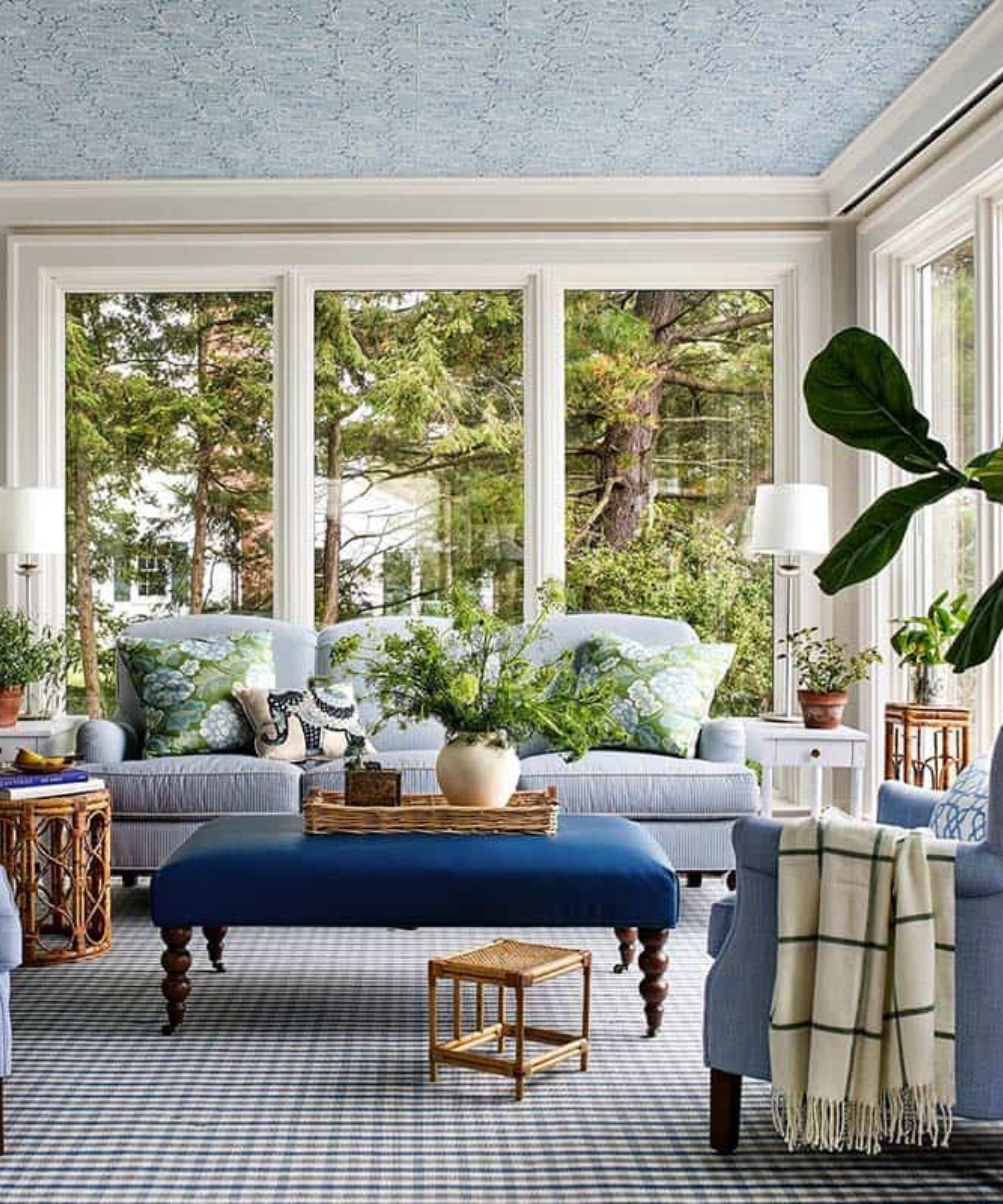
Glass, stone and painted timber may define a sunroom architecturally, but it's the softer layers that make it somewhere you'll genuinely want to spend time. Without rugs, curtains, cushions and upholstery, even the most beautifully designed sunroom can feel acoustically harsh and visually cold. Thoughtful layering tempers all those hard surfaces while helping the room feel connected to the rest of the home.
‘In any room, but especially a sunroom, the biggest asset is the light, but all hard surfaces create a lot of sound reverberation, and fabric helps with sound’, explains designer Marika Meyer. ‘Floor coverings, cushions, window treatments, texture on the walls and ceiling all break the sound. For this project on Gibson Island, we did a fabric-backed ceiling for that reason.’
You can also achieve a similar impact with rugs. Take inspiration from cozy living room ideas and pair soft furnishings such as rugs and cushions with layered lighting schemes and warm hues. 'I enjoy putting large area rugs into sunrooms because they help the room to feel like a space on its own. The right rug also adds a cozy element which will be appreciated in the colder months when you’re watching the rain or snow falling outside. When selecting a rug, I look for tight stitching and durable texture, especially if your sunroom has an entry point into your house. Having a rug that is easy to clean and will not be damaged by shoes is a great way to reinforce the feeling of an indoor-outdoor room,' says Channa Alvarez, production designer at Living Spaces.
Carley Summers, designer and author of Sacred Spaces, follows a similar approach. ‘I love adding a natural rug so I can build color and texture through chairs and pillows,’ she says. ‘Florals with pinks, greens and neutrals always work well because they feel traditional, relaxed and slightly whimsical without overpowering the space.’
Meg McSherry adds, ‘Use a textured floor like brick or stone that leans toward the outdoors, but include finishes found throughout the rest of the home. Ceramic lamps with linen shades, wood furniture and vintage wool rugs all belong in a sunroom.’
5. Get the Window Treatments Right
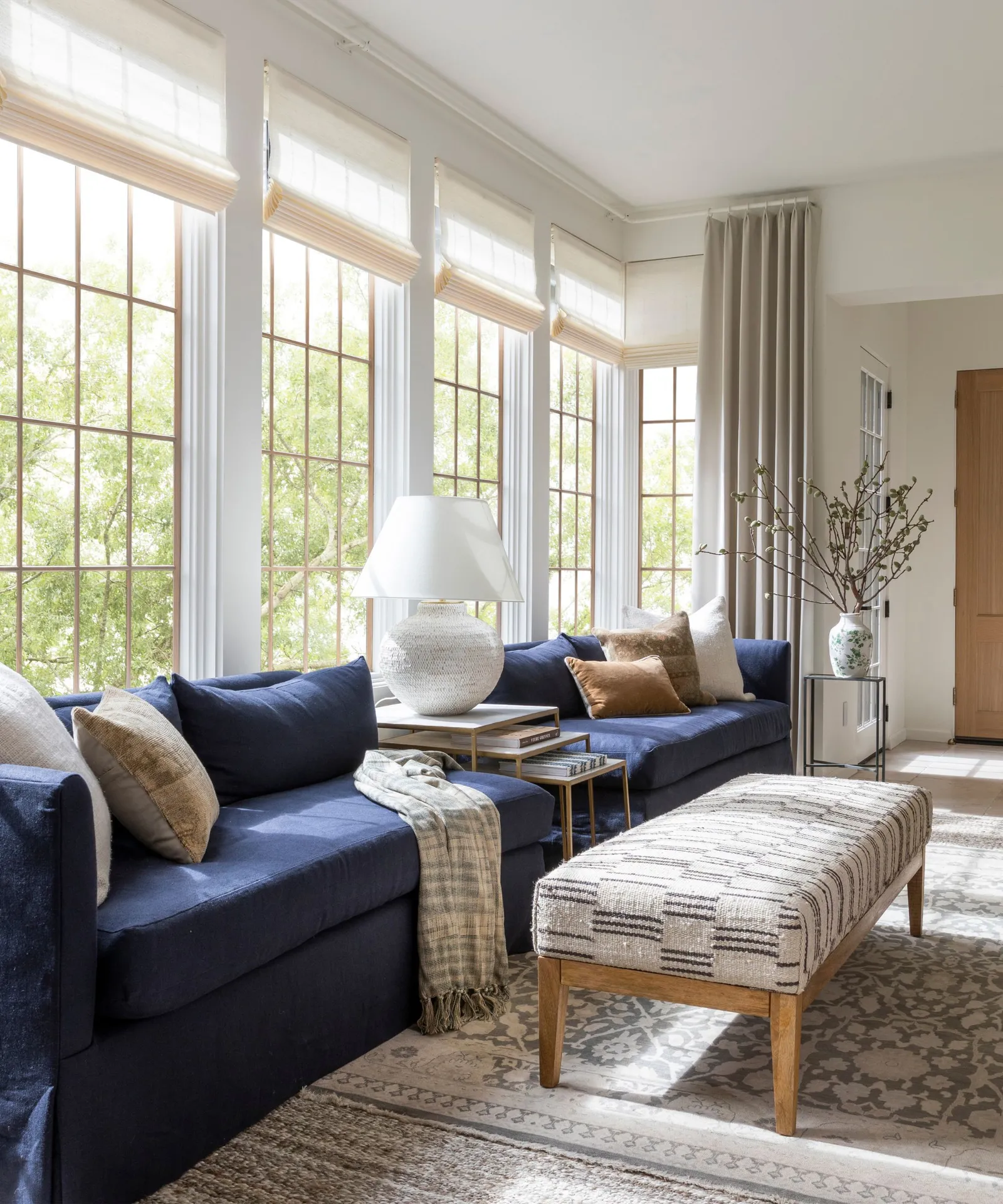
Leaving every window completely bare may seem like the obvious way to maximize natural light, but designers rarely recommend it. Thoughtfully chosen window treatments help regulate temperature, reduce glare, protect furniture from UV damage, and introduce another important layer of softness.
Temperature is the biggest challenge of a sunroom design. Get it right, and you’ll have a space that is usable all year round, but get it wrong, and you’ll find yourself struggling whenever the thermometer edges to one extreme. Window blinds are the quickest and easiest way to control heat.
‘To dress sunroom windows, consider using a combination of window treatments such as sheer curtains or shades, along with heavier drapes or shutter ideas. This will provide privacy while also allowing natural light to filter through,’ advises Artem Kropovinsky, interior designer and founder of Arsight. ‘Additionally, using light-colored window treatments and keeping the windows shaded during the hottest parts of the day can also help to keep the room cool.’
Designer Marie Flanigan, who designed the space above, suggests: 'Embrace the natural light by using sheer curtains or light-filtering shades to maintain brightness while offering some privacy. Choose natural finishes like wood, rattan, and stone to make the space feel like an extension of the outdoors, enhancing the connection to nature. Maximize seating by incorporating sofas or built-in benches – thoughtful seating choices are essential, so consider how you envision the room being used, whether for lounging, reading, or entertaining guests.'
Lauren Carlucci frequently chooses tailored linen Roman blinds and Chik blinds because they soften incoming light without interrupting the view. ‘I often like to dress sunroom windows, even minimally. Chik blinds are a beautiful option because they gently filter the light while introducing an organic texture that helps bring the outside world in.’ They also work particularly well where furniture sits close to glazing or where full-length curtains might feel too bulky.
For roof glazing, Hattie Hansard recommends considering integrated solar blinds from the outset. ‘People often focus on wall windows but forget about the roof,’ she observes. ‘Managing overhead light is just as important if you want the room to remain comfortable throughout summer.’
6. Bring In Plants
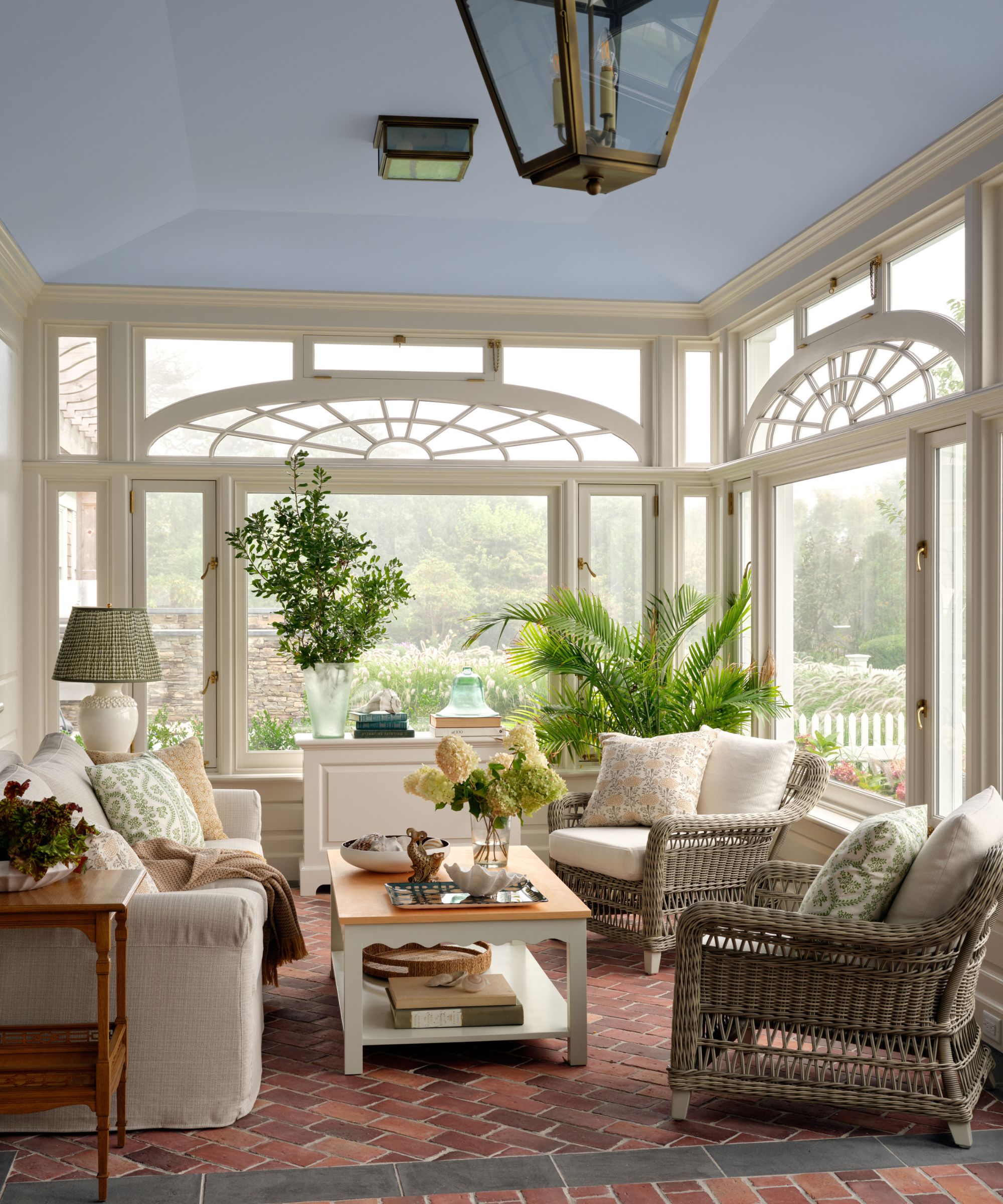
No room benefits from greenery quite like a sunroom. Plants reinforce the connection between house and yard, soften the architecture, and introduce another layer of texture that evolves throughout the year. Rather than treating them as decorative afterthoughts, designers increasingly use planting as an architectural element in its own right.
‘When we're designing a sunroom, we think about greenery as part of the furniture plan,’ says Melissa Lee. ‘Plants help blur the threshold between inside and outside, making the room feel like it belongs within the landscape rather than simply overlooking it.’
While shelves of trailing plants can certainly add character, a single statement tree often has far greater impact. Olive trees, fiddle-leaf figs, citrus trees and mature ferns all provide height and sculptural form, naturally drawing the eye upward towards the glazing. Position larger specimens where they'll catch the light without interrupting circulation through the room, and opt for varieties that can comfortably tolerate the fluctuating temperatures and changing light conditions typical of a sunroom. This is especially important if your space experiences intense summer sun or cooler winter nights.
Just as you'd layer furniture, vary the height and scale of your planting. Combine floor-standing trees with pedestal planters, low ceramic bowls filled with seasonal bulbs and smaller pots arranged on side tables or shelving. The result feels far more natural than lining identical pots along a windowsill. Choosing decorative planters in natural terracotta, aged stone or textured ceramics also helps integrate planting into the wider interior.
Carley Summers regularly begins with one oversized plant before layering around it. ‘Two of my favorite design tricks for a sunroom are adding one large statement tree and incorporating soft window treatments,’ she reveals. ‘Together they immediately make the room feel warm, welcoming and connected to nature.’
7. Make Your Sunroom Comfortable All Year
A truly successful sunroom shouldn't sit empty for half the year. While it's easy to focus on maximizing daylight, comfort ultimately determines whether the room becomes part of everyday life or simply somewhere to admire from afar.
That planning begins long before the furniture arrives. ‘Keeping your sunroom warm starts in the planning stages,’ says Merry Albright, creative director at Border Oak. ‘It's much harder to introduce insulation later. A solid roof where appropriate can make the room feel far more usable throughout the year, while also providing additional opportunities for insulation and artwork.’
A three-season sunroom is designed primarily for spring, summer and fall, often relying on natural ventilation rather than permanent heating. A four-season sunroom, however, is insulated to the same standard as the rest of the house, with high-performance glazing, dedicated heating and careful temperature control. Although the initial investment is greater, it creates a room that functions as genuine living space throughout the year.
‘If clients tell us they want to use their sunroom every day, we encourage them to design it as a four-season room from the outset,’ notes Melissa Lee. ‘The extra planning pays dividends because the room naturally becomes part of the home's daily rhythm.’
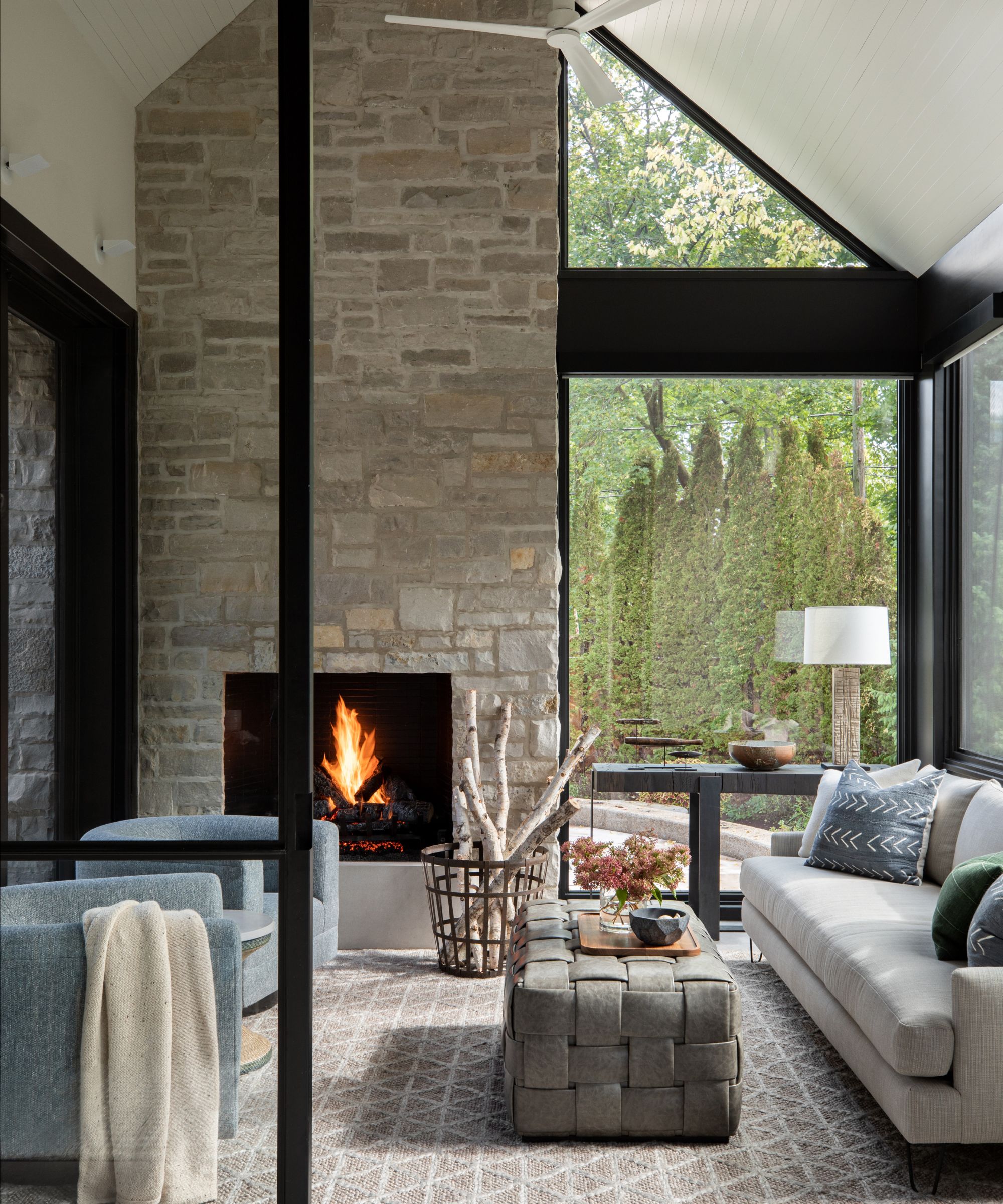
The above project in Illinois by Andrea Goldman perfectly illustrates how a fireplace transforms a sunroom from a seasonal retreat into a year-round destination. Whether it's a traditional wood-burning stove, a contemporary gas fire or a discreet electric model, introducing a focal point that provides both warmth and atmosphere immediately changes how the room is experienced.
Sunrooms are designed to let as much light in as possible, which means lots of windows. That also means these rooms typically have less insulation and lose heat faster in the winter. If you're planning a home addition, consider fireplace ideas, which could be a new model — or perhaps you can build your sunroom ideas around an existing chimney to create a cozy ambiance regardless of the temperatures outdoors.
Incorporating a fireplace can transform your sunroom into a cozy retreat even during colder months, making the space more versatile and inviting. Opt for a gas or electric fireplace for ease of installation and maintenance to provide the ambiance and warmth of a traditional fireplace without the need for extensive modifications.
8. Plan For Summer As Well As Winter
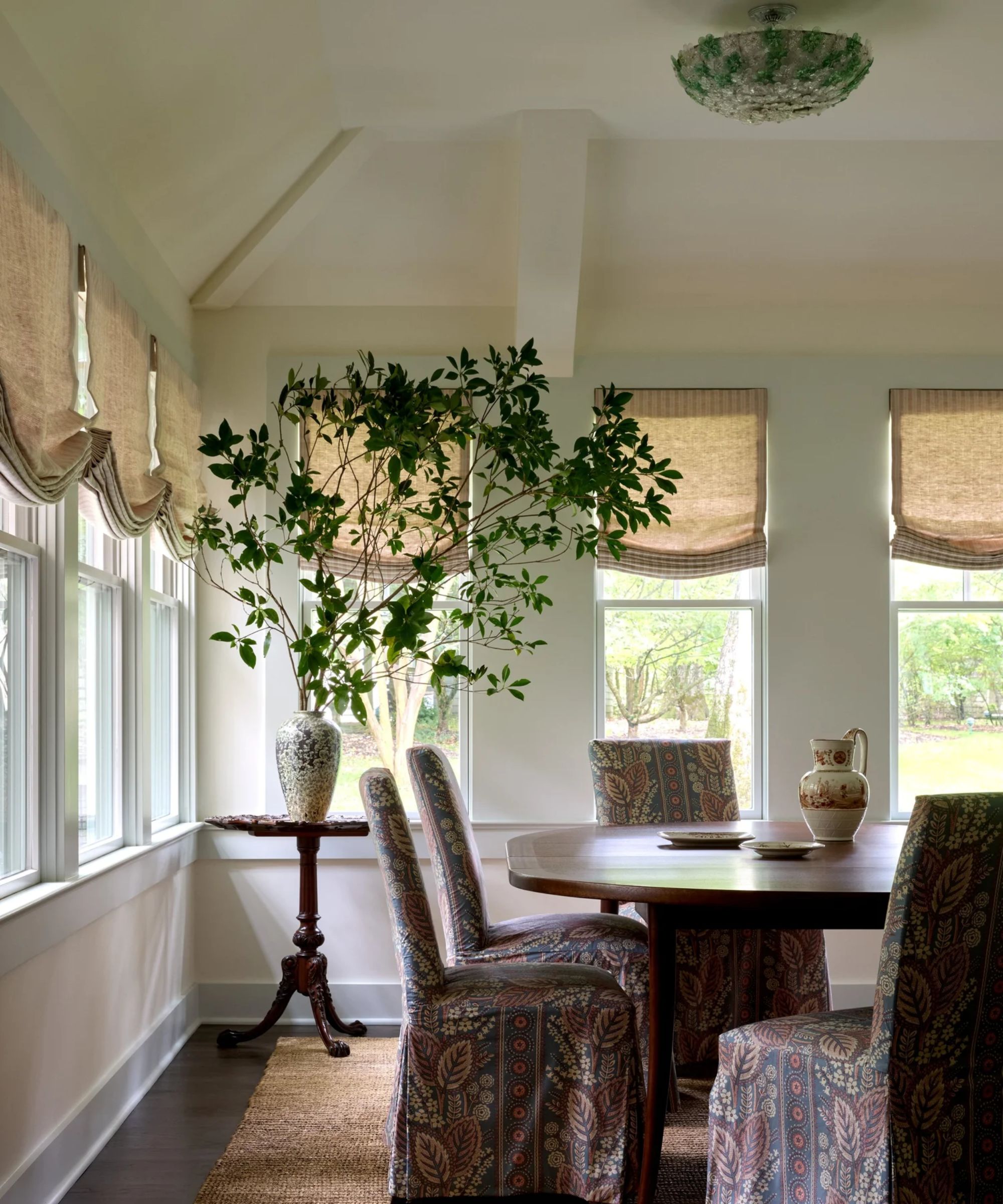
Keeping a sunroom cool deserves just as much consideration. Roof blinds or integrated solar shades help manage overhead sunlight, while opening windows on opposite sides of the room creates effective cross-ventilation. Ceiling fans improve airflow without compromising the room's relaxed aesthetic, and thermal curtains can be drawn during the hottest part of the day to reduce heat gain.
Hattie Hansard recommends considering these practical details early in the design process. ‘People often underestimate how much difference good solar control makes,’ she says. ‘Managing both light and temperature ensures the room remains enjoyable throughout every season.’
9. Add Designer-Approved Finishing Touches
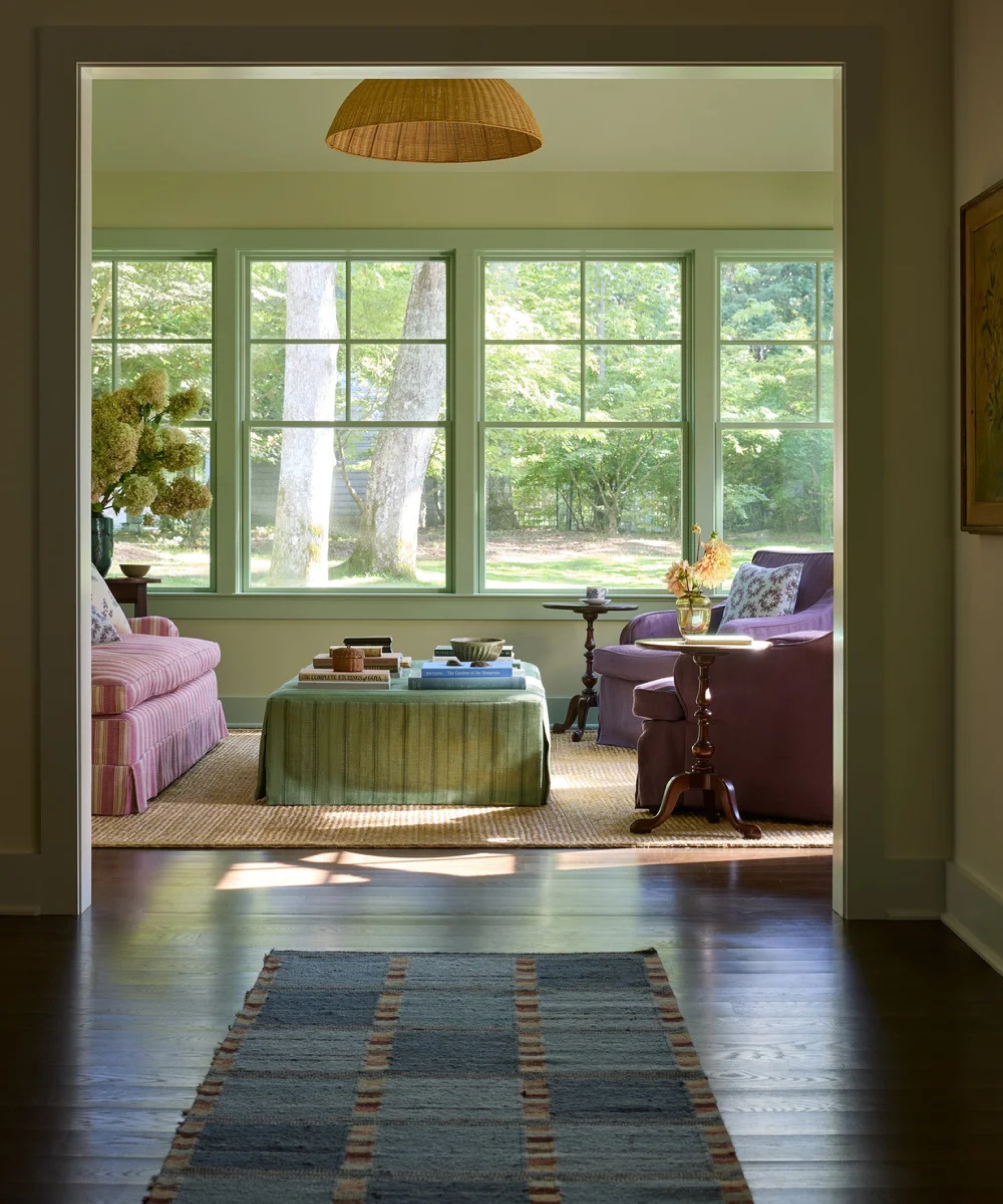
Once the larger decisions have been made, it's the smaller details that transform a beautifully designed sunroom into one that feels genuinely lived in. The temptation is often to fill every available surface, but restraint almost always creates the more sophisticated result. The most memorable interiors are carefully edited, allowing individual pieces to tell a story rather than competing for attention.
‘We're always looking for signs of life,’ says Melissa Lee. ‘Books that are clearly being read, ceramics collected over time, flowers picked from the garden. Those personal touches make a room feel authentic.’
A sunroom shouldn't feel stylistically separate from the rest of the house. Artwork, sculptural lamps, antique side tables and collected ceramics all help reinforce the sense that this is simply another beautifully furnished room rather than an enclosed garden space. When considering color palettes for sunrooms, Marika Meyer turns to the sight line of the exterior, ‘blue and green always perform well, along with light neutral tones and natural materials like woods, rattan, and sisal.’
And while natural light may define a sunroom during the day, thoughtful lighting is what allows it to transition seamlessly into the evening. Combine decorative table lamps with picture lights, wall sconces or discreet floor lamps to create a softer atmosphere after sunset. Candles and rechargeable portable lamps also work beautifully for informal entertaining. As Lauren Carlucci, who designed the East Hampton sunroom above, points out, ‘If the lighting only works during daylight hours, you're missing half the room's potential.’
Sunroom FAQs
Why Is My Sunroom So Hot (Or Cold)?
Temperature fluctuations are one of the most common challenges in a sunroom because glazing naturally allows heat to enter during summer and escape more quickly during winter.
If your room overheats, start with the simplest solutions before considering structural alterations. Solar shades, thermal curtains, ceiling fans, and opening windows to encourage cross-ventilation can all make a significant difference. Window films may also help reduce solar gain without noticeably affecting natural light.
If the room feels cold during winter, improving insulation and upgrading glazing will have the greatest long-term impact. Underfloor heating, fireplaces and well-positioned rugs also make the space feel noticeably warmer, while insulated flooring materials such as engineered timber help improve comfort underfoot.
Can A Sunroom Be Used Year-Round?
Absolutely, provided it's designed as a four-season room rather than a three-season addition. Four-season sunrooms incorporate insulation, high-performance glazing and permanent heating, allowing them to remain comfortable throughout the year. Three-season rooms typically rely on natural ventilation and are intended for use during milder weather.
Window treatments also play an important role. Layered curtains, Roman blinds and solar shades help regulate temperature throughout the seasons, while thoughtful ventilation ensures the room remains comfortable during warmer months.
With careful planning, a sunroom can become one of the hardest-working rooms in the house, serving as a living room, dining room, workspace or entertaining space regardless of the weather outside.
Can You Put A Regular Couch In A Sunroom?
Yes, you can put a regular couch in a sunroom – however, it is best to opt for a light-colored design as this will prevent it from fading over time.
'When it comes to a couch, I encourage everyone to go with the option that is most comfortable and inviting to them. Couches are meant to be sat on and if yours isn’t comfortable you’ll never end up using it! If you’re looking to create an indoor-outdoor look, I’d recommend trying out wicker furniture because this material is made for outdoor use but can be dressed up with plush cushions, pillows, and throw blankets. To me, dressed-up wicker couches are the perfect blend of durability and cozy for a sunroom,' says Channa Alvarez, production designer at Living Spaces.
How Much Does A Sunroom Cost?
If you're building your sunroom from scratch or planning one as part of a new construction, you'll need to set a budget for the space. So how much does it cost to add a sunroom?
Like all construction projects, the range is wide and depends on the size of your space and the finishes you choose.
According to Home Advisor, the average cost to build a simple covered patio enclosure ranges from around $8,000 to over $25,000, with the average national cost hovering around $16,000. If you're building a sunroom as part of a home addition, sunroom costs average just over $46,000.
The most beautiful sunrooms aren't defined by a particular architectural style or decorating trend. Instead, they're shaped by thoughtful planning, beginning with how the room will actually be used before introducing furniture, lighting and decorative details that support everyday life.
Treating a sunroom as a true extension of the home rather than a separate glass addition makes all the difference. Comfortable upholstered seating, carefully considered layouts, layered textiles, natural materials and well-chosen planting work together to create a room that's every bit as inviting in January as it is in July.
Ultimately, the most successful sunrooms blur the boundary between indoors and out. They celebrate changing light, seasonal gardens and uninterrupted views while providing all the comfort, warmth and personality of your favorite living room.
Love beautiful design ideas, expert advice, and inspiring decor trends? Sign up for our newsletter and get the latest features delivered straight to your inbox.