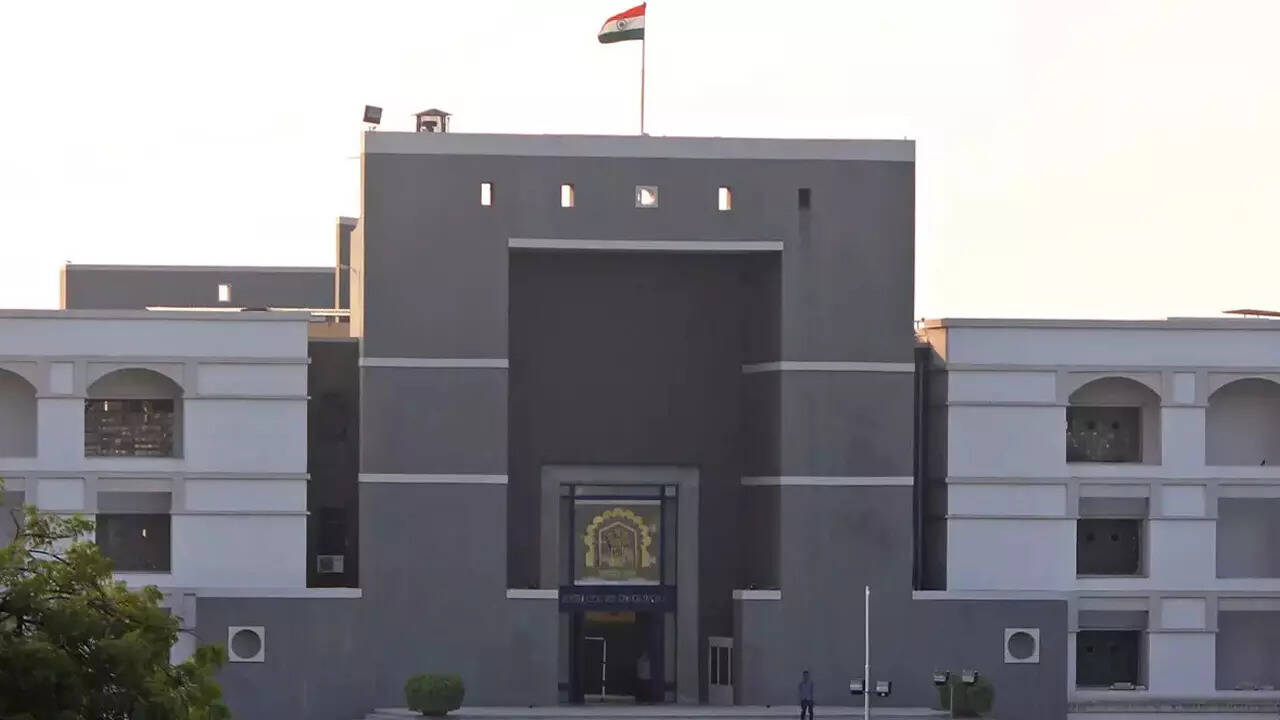
AHMEDABAD: The Gujarat high court has refused to interfere with a family court order and waive the six-month waiting period for a divorce decree for a couple whose marriage lasted only 12 days.
The couple involved in this divorce proceedings married on December 8, 2020. They separated on December 20, 2020. They pressed for criminal charges against each other as well. On October 18, 2021, they prepared an MoU for mutual divorce and decided to withdraw the criminal allegations.
With the MoU, the couple approached the family court for a divorce decree and requested the court to suspend the mandatory cooling-off period of six months. The courts normally use that period to explore opportunities for reconciliation between couples. Looking at the short marriage span and the separation period of less than a year, the family court sent their case for mediation for reconciliation. However, on December 31, 2021, a report was submitted stating that the mediation effort had failed.
The family court on January 4 rejected the application to waive the cooling-off period.
In rejecting the request, the family court cited a Supreme Court order. The apex court had waived such a cooling-off period by using its powers under Article 142 of the Constitution in Section 13B(2) of the Hindu Marriage Act. The family court said that it does not have this power. The family court said the Supreme Court has observed that for waiving the cooling-off period, the court has to look into such factors as the length of time of the marriage and a couple’s stay together.
The Supreme Court also wanted the consideration of the duration of separation and the possibility of reconciliation.
The couple approached the high court citing its powers under Article 227 of the Constitution and submitted that the family court had erred in not appreciating that the provisions of Section 13B(2) are discretionary and not mandatory. Justice A C Joshi heard the case on January 19 and upheld the lower court’s decision of not waiving the cooling-off period. The HC said that its powers under Article 227 can be used only sparingly.
It said: “An improper and a frequent exercise of this power would be counterproductive and will divest this extraordinary power of its strength and vitality.” The court added: “The power is discretionary and has to be exercised very sparingly on equitable principle.”