1. The soil
Coffee takes its distinct flavour from the soil, with a bit of help from the sun, the rain, and the farmer.
2. The flower
The white flower of the coffee tree has a delicate jasmine scent, and loses its petals a few days after it has been fertilised.
3. The altitude
The flowering of the coffee trees depends on the altitude, climate and the region they are grown.
4. The cherry
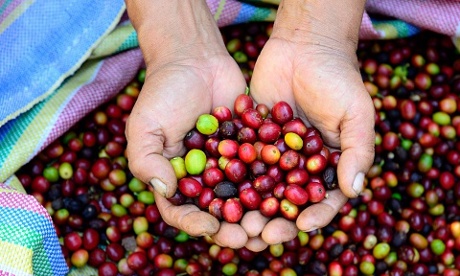
After a few months, the plant produces a red fruit, called the cherry. It usually contains two beans, though in a tiny percent it will yield a single, intense tasting nugget called a “peaberry”, named for its pea-like shape.
5. The pulp
Beans lie facing one another, surrounded by a parchment-like skin, a sticky fruit called “mucilage” and the red cherry skin, often referred to as the pulp. These layers are removed to reveal the green coffee.
6. Drupes
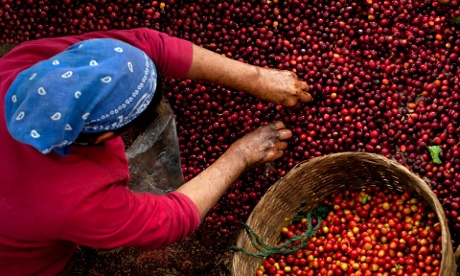
Cherries are also known as drupes. They are green at first, but turn orangey red as the fruits mature. (Except for the yellow bourbon variety.)
7. The tropics
Coffee is best grown in tropical regions because it needs warm temperatures and abundant rain.
8. Arabica
The fruity tasting arabica variety is grown at high altitudes. The best arabicas are produced close to the equator, at an altitude between 1,000 metres and 2,000 metres, where sunlight and cool nights slow down maturation. The fruit forms 6-8 months after flowering.
9. Robusta
The more rustic robusta grows on plains at an altitude between 100 metres and 800 metres in hot and humid climates. The fruit forms 9-11 months after flowering.
10. Flavour
Arabica coffee has the potential to more elegance and acidity, with a flowery, fruity character; while robusta retains a degree of bitterness and has more body.
11. The blends
Nespresso uses a blend of 95% arabica and 5% robusta in its Grands Crus. The alchemy between the two types of bean, selected from different regions, adds complexity, richness and structure to our blends.
Discover the Nespresso machine perfectly suited to you here.