

Settling down for retirement while also owning a car adds an additional $4,000 in costs to your yearly retirement budget. Why? Because retirees on average pay $3,989 yearly in car insurance, finance charges, gas, and maintenance and repairs. Thus, an easy way to save nearly $4,000 yearly during your retirement is to ditch your wheels and go carless.
Still, not every city is set up to accommodate a carless retirement. That’s why GOBankingRates recently held a study to find the 50 best places in America to retire without a car. To do so, GOBankingRates sought out cities in which at least 20% of the population was of retirement age, had high livability levels, and scored highly on the Environmental Protection Agency’s National Walkability Index (scores of 10.51 to 15.25 indicate a city with above-average walkability, and scores of 15.26 to 20 indicate the most walkable cities).
Read More: I Retired a Millionaire: The Best $20,000 I Ever Spent Preparing for Retirement
Find Out: 5 Clever Ways Retirees Are Earning Up To $1K Per Month From Home
Once GOBankingRates discovered the 50 best places in America to retire without a car, the list was then narrowed down to focus only on the great state of Texas. In the Lone Star State, GOBankingRates located 11 cities that would be great for retirees who plan to spend their golden years carless — keep reading to find the right one for you.
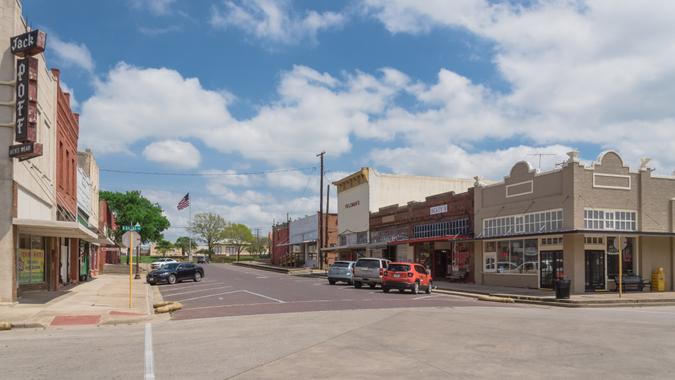
1. Lumberton
- Livability: 74
- Walkability: 16.8
- Cost of living (annually): $41,724
- Cost of transportation: 90.7
See Next: 21 Affordable Small Cities To Retire on the East Coast
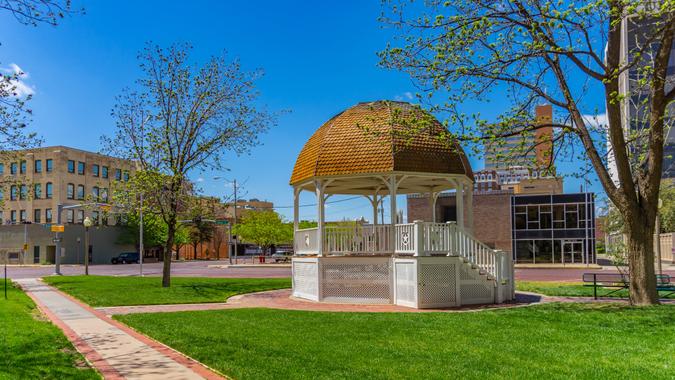
2. Fredericksburg
- Livability: 73
- Walkability: 15.3
- Cost of living (annually): $57,379
- Cost of transportation: 63.2
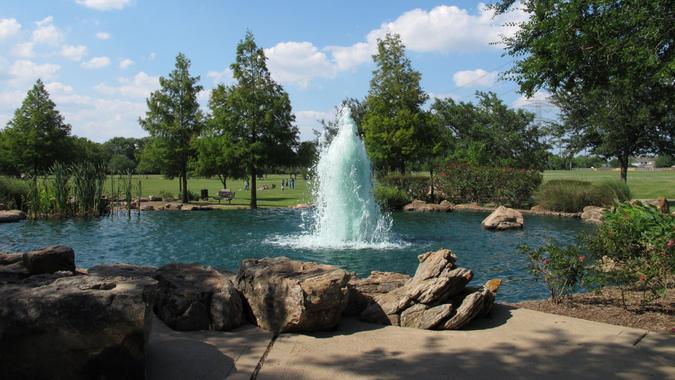
3. Lakeway
- Livability: 73
- Walkability: 15.0
- Cost of living (annually): $78,446
- Cost of transportation: 120.0
Watch Out: I’m a Financial Expert: This is the No. 1 Mistake Americans Make With Their Roth IRAs
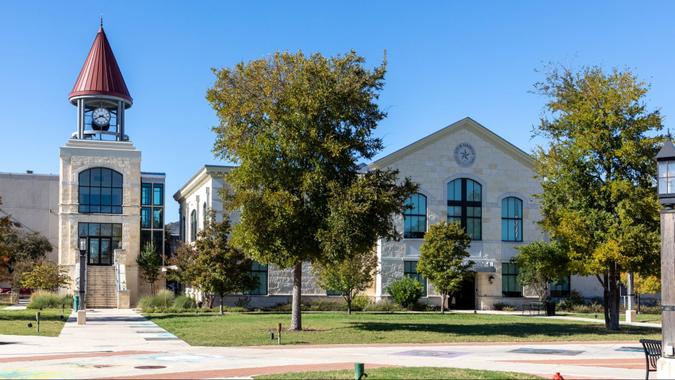
4. Kerrville
- Livability: 81
- Walkability: 11.2
- Cost of living (annually): $45,726
- Cost of transportation: 62.2
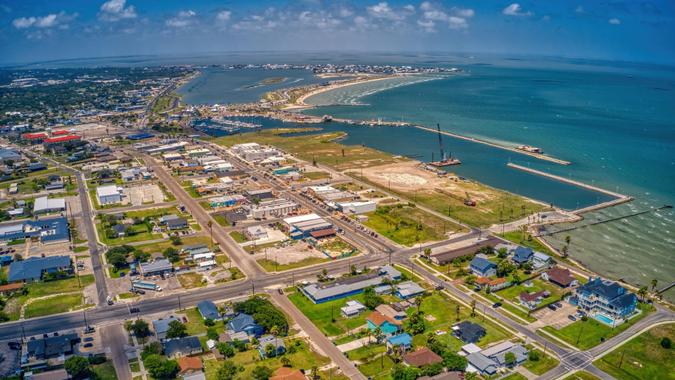
5. Rockport
- Livability: 69
- Walkability: 13.8
- Cost of living (annually): $44,448
- Cost of transportation: 75.6
Pay Attention: 6 Key Signs You’ll Run Out of Retirement Funds Too Early

6. Crayon Lake
- Livability: 66
- Walkability: 14.8
- Cost of living (annually): $52,079
- Cost of transportation: 104.6
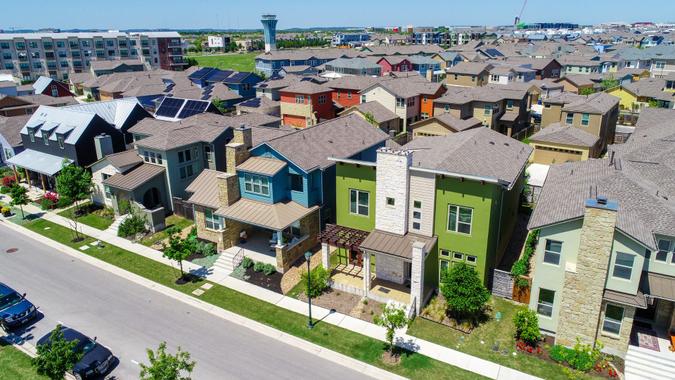
7. Fairview
- Livability: 69
- Walkability: 12.5
- Cost of living (annually): $69,456
- Cost of transportation: 100.0
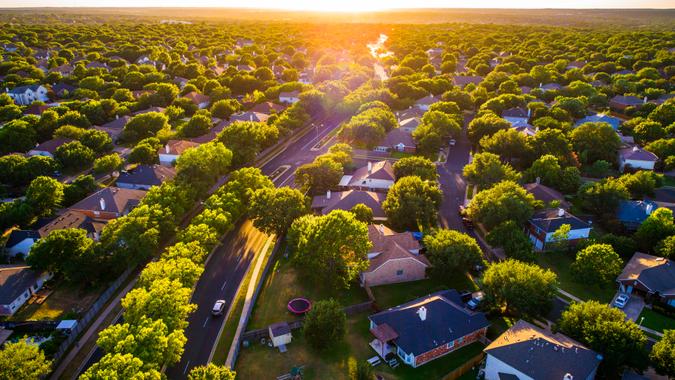
8. Tomball
- Livability: 72
- Walkability: 6.5
- Cost of living (annually): $49,281
- Cost of transportation: 117.8
Try This: Top 5 Things the Middle Class Should Sell Before Retiring — Even If It’s Begrudgingly

9. Georgetown
- Livability: 83
- Walkability: 1.8
- Cost of living (annually): $54,235
- Cost of transportation: 113.5
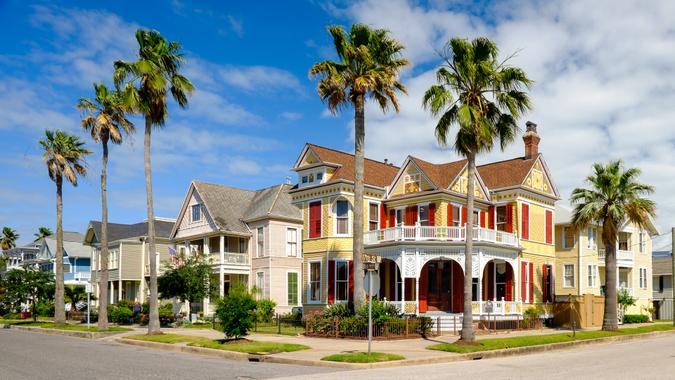
10. Galveston
- Livability: 77
- Walkability: 4.2
- Cost of living (annually): $45,215
- Cost of transportation: 77.8
Read More: Financial Advisors Weigh In: Whose Plan for Retirement Is Better, Dave Ramsey or Suze Orman?
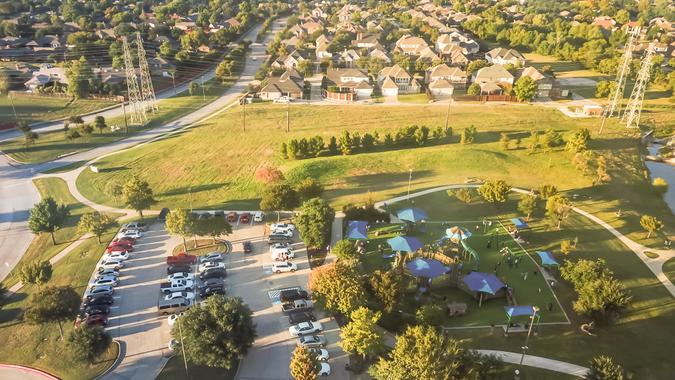
11. Granbury
- Livability: 67
- Walkability: 1.3
- Cost of living (annually): $50,662
- Cost of transportation: 115.0
Editor’s note: Photos are for representational purposes only and might not reflect the exact locations listed.
Methodology: Using the U.S. Census 2024 1-year American Community Survey, the total population, population ages 65 and over, total households, median household income, and mean household income were all sourced for this study. In order to qualify for this study, the city had to have a percentage of the population ages 65 and over or at least 20%. The cost of living indexes were sourced from Sperlings BestPlaces and by using the national average expenditure costs for retired consumer units as sourced from the Bureau of Labor Statistics Consumer Expenditure Survey for retired consumer units, the average expenditure costs can be calculated for each location. Using the transportation cost of living index for each city as well as the national average costs for various transportation-related expenses, the average cost of those services can be calculated for each city, showcasing an example of the savings someone can expect by not owning and driving a vehicle. The average single family home value was sourced from Zillow Home Value Index and by assuming a 10% down payment and using the national average 30-year fixed mortgage rate, sourced from the Federal Reserve Economic Data, the average mortgage can be calculated. Using the mortgage and expenditure costs, the total cost of living for necessities can be calculated. The livability index was sourced from AreaVibes and used to determine the quality of life. The walkability index was sourced from the Environmental Protection Agency’s National Walkability Index and used to determine the ability to live without driving a car. The livability was scored and weighted at 1.00, the walkability was scored and weighted at 1.00. The scores were summed and sorted to show the best places in America to retire without a car. All data was collected on and is up to date as of Oct. 20, 2025.
More From GOBankingRates
This article originally appeared on GOBankingRates.com: 11 Best Texas Cities To Retire Without a Car