PALESTINIANS are facing a “ceasefire in name only” as more than 1000 people have been killed since an agreement was announced last October, with the Gaza Strip’s shattered health system edges closer to total collapse.
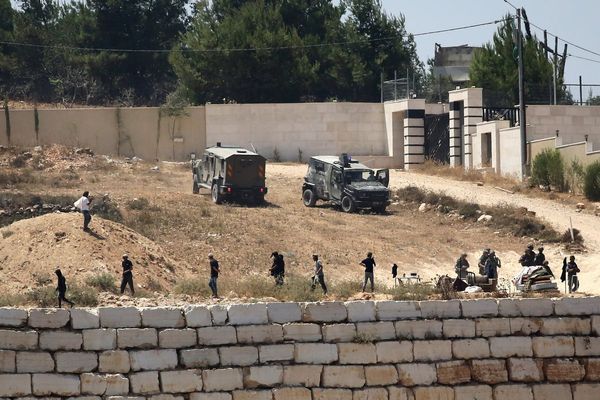
Medical Aid for Palestinians (MAP) says Palestinians are still being killed, starved and pushed into ever‑smaller areas of land as Israel expands its military control beyond the agreed “Yellow Line” demarcation.
According to Gaza’s Ministry of Health, Israeli forces have carried out more than 3000 violations since the ceasefire came into effect on October 10 2025, killing at least 1005 Palestinians and injuring a further 3157.
At the same time, Israel has moved Yellow Line concrete markers westward, consolidating control over around 60% of the territory and forcing families in eastern Gaza City and elsewhere to flee newly restricted zones.
MAP says the failure to enforce the deal or hold Israel to account for alleged breaches has come at a devastating cost for more than two million Palestinians trapped in Gaza.
Fikr Shalltoot, MAP’s Gaza director, said the latest death toll marked “yet another tragic milestone – a thousand people killed since leaders announced an end to the violence in October”.

"Since October, what we have witnessed cannot in any way be called a ceasefire,” Shalltoot added, arguing that continued bombardment and a near‑total siege had been allowed to replace genuine accountability, an end to the blockade and the free flow of medicine and aid.
The ceasefire was billed as a chance to start rebuilding Gaza’s devastated health system after almost two years of systematic attacks, but MAP and other agencies say little has improved on the ground.
Only 20 of 37 hospitals are even partially functional and none is operating at full capacity, while more than 1800 health facilities have been damaged or destroyed in repeated strikes. The World Health Organisation (WHO) recorded dozens of attacks on healthcare facilities in the early months of 2026 alone.
MAP further reports that only a handful of CT scanners are still working for Gaza’s entire population, and many cancer screening and laboratory services have shut down entirely. As a result, patients are increasingly dying from otherwise treatable conditions because they cannot be diagnosed or referred in time.
In April, around 62% of essential primary care medications were out of stock, compounding a deepening malnutrition crisis as most aid crossings remain shut.
Sally Saleh, MAP’s head of emergency in Gaza, said the consequences went far beyond oncology.
“Even routine conditions such as fractures or postpartum haemorrhage are becoming life‑threatening due to delayed diagnosis, lack of imaging, and inadequate laboratory support,” she warned, adding that infections were being treated “blind” without proper tests, driving avoidable complications and deaths.
Overall mortality and morbidity are rising, including from conditions that should be treatable in a functioning system.
MAP has also cited WHO‑linked figures suggesting at least 1700 healthcare workers have been killed in Gaza since October 2023, roughly 14% of the workforce, amid what the charity describes as a “war on healthcare”.
Earlier this month, emergency nurse Mohammed Mousa al‑Habil and his six‑year‑old son were killed in an airstrike in Gaza City, and he is believed to be at least the fifth health worker killed since the ceasefire took effect.
More than 43,000 Palestinians are now living with life‑changing injuries, a quarter of them children, while some 18,500 critical patients – including around 4000 children – remain trapped inside Gaza awaiting medical evacuation that may never come.
A joint UN and World Bank assessment has estimated that rebuilding the health sector alone will cost around $10 billion, a process that cannot begin while attacks continue and restrictions on vital supplies remain in place.