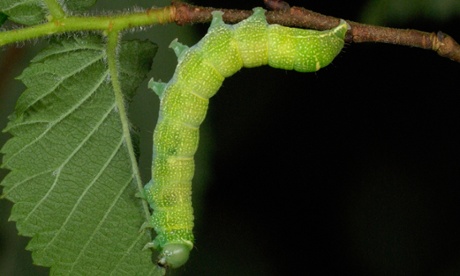
A friend has sent some insects for identification, asking if they are useful or harmful in a garden. The green caterpillar with yellow stripes and collar is the larva of the common quaker, a neat, drab-coloured moth, as its name suggests; this grub appears to flourish on the leaves of any tree, and it was engaged in devouring the foliage of the pear when it was found; it is abundant and destructive. But he also sent me two green larvae, somewhat slug-like in shape, but with the power of lengthening out after the manner of a leech; these are as much our friends as the other green grubs are our foes. These sluggish larvae, hardly noticeable as they cling to the underside of rose or fruit tree leaves, will eventually turn into those beautiful and exceedingly active flies which poise with whirring wings above the flowers in our gardens, every now and then darting to one side or the other with a sudden jerk. There are few more voracious devourers of aphides, or green flies, than these hover-fly larvae, and, as every gardener knows, the aphis is a destructive pest. There are many books dealing with insect pests, but few give any information about insect friends; it is true that the hover-fly larvae are mentioned as natural checks on the increase of green fly and other destructive insects in several Board of Agriculture pamphlets, but in one only have I seen any attempt to describe the insect, and no figure is given. How is the puzzled agriculturist to know what to kill and what to preserve?