.... Photograph: James L. Stanfield/guardian.co.uk
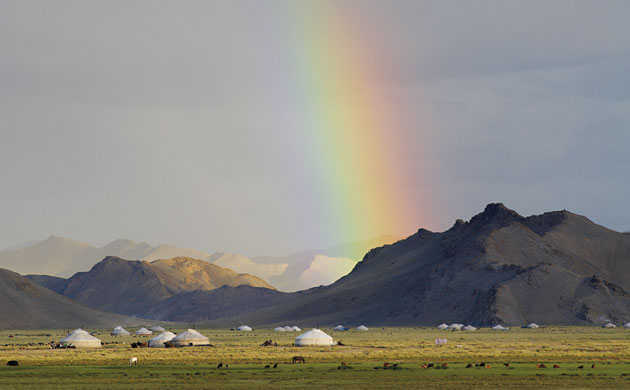
The nomads of Mongolia have roamed the plains of Central Asia for the last 3,000 years. They lead a pastoral way of life, moving around in search of pasture for their livestock and sites for their gers (their word for a yurt, a round, moveable dwelling). .... For Mongolian herdsmen and women, horses are indispensable. They provide transport and the mares supply milk, which is also fermented into the national alcoholic drink, airag. The herdsmen raise cows, yaks, sheep and goats and, in the Gobi Desert to the south, the breed camels as well. The cattle supply them with essential meat, milk, yoghurt and cheese, the sheep with wool for clothing and felt for the gers. Depending on the season, most Mongolian nomads move their campsite three times a year, but in the harsh south they can move up to 18 times a year.
.... Photograph: Bruno Morandi/guardian.co.uk
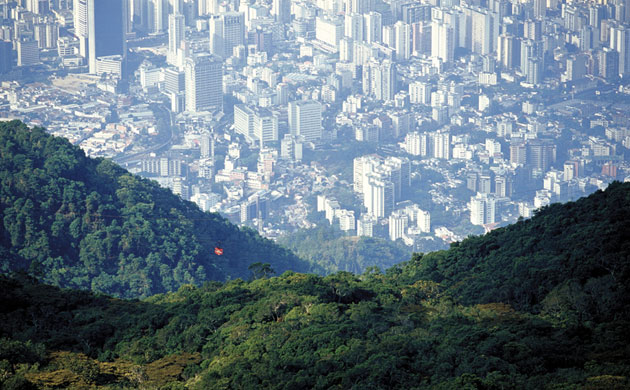
...... The war of independence finally ended in victory in 1821, a decade after Bolívar and his followers had prematurely proclaimed independence in Caracas. A year after the initial rebellion, an earthquake had destroyed the city and transformed the valley into a cemetery, an event viewed by the Spanish as divine retribution.
..... Around 4.3 million people live in Caracas, some two million in poorly built shanty towns or barrios on the slopes that surround the city, where landslides caused by heavy rain are a chronic problem. In 1999, 30,000 people were killed in one of the Americas’ worst natural disasters, when several days of rainstorms triggered flash floods, landslides and flows of debris in the coastal zone on the north slopes of Cordillera de la Costa just north of Caracas. Photograph: Zigy Kaluzny/guardian.co.uk
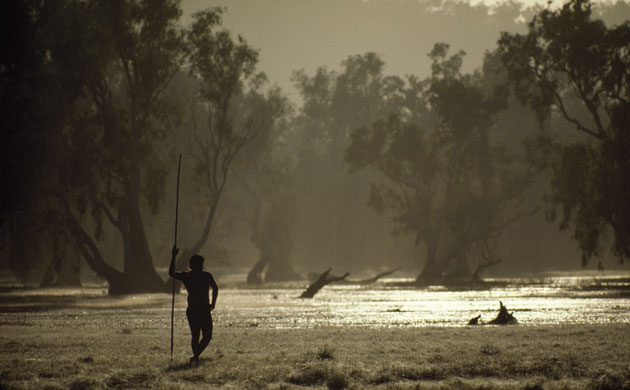
Aboriginal clans have occupied the land of Kakadu in the north of Australia for more than 40,000 years. Kakadu National Park is famous for its unique interaction between culture and nature, as exemplified by the 10,000-year-old stone paintings and remarkable variety of wildlife made possible by the diversity of its tropical climate. The lush, green wetlands of Kakadu support more than 60 species of water bird and, at the end of the northern summer, the wetlands attract about 30 species of migratory birds that have flown south to these warmer climates from their breeding grounds in Siberia and China. Along the flood plains of the wetland lie paperbark forests that sustain honeyeaters, lorikeets and other nectar-feeding birds. Paperbark trees are vital to the Aboriginal peoples, who produce canoes from them by folding a single, large piece of bark into a canoe.
.... Photograph: Belinda Wright/guardian.co.uk
....
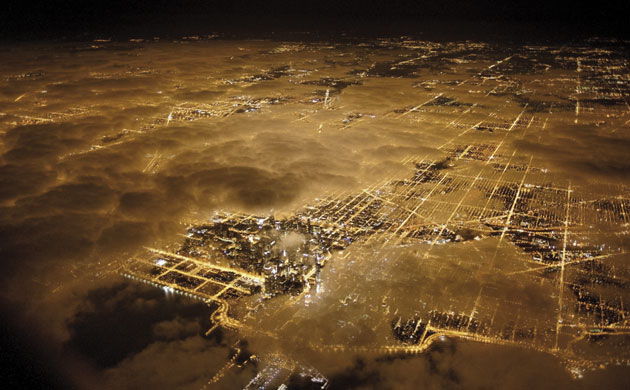
I Throughout the rest of the 21st century, Chicago could experience a gradual, dramatic increase in heatwaves and flooding due to global warming. Prolonged summer droughts and heavy rainfall would have a grave effect on its infrastructure and transport system. An increase in hot summer days with temperatures rising above 43°C, combined with unpredictable heavy rain and flooding, could cause more heat-related health problems and damage Chicago’s tourism industry. By the end of the century, the climate in Chicago could be similar to that of southern states like Texas and Alabama today. Photograph: Jim Richardson/guardian.co.uk
....
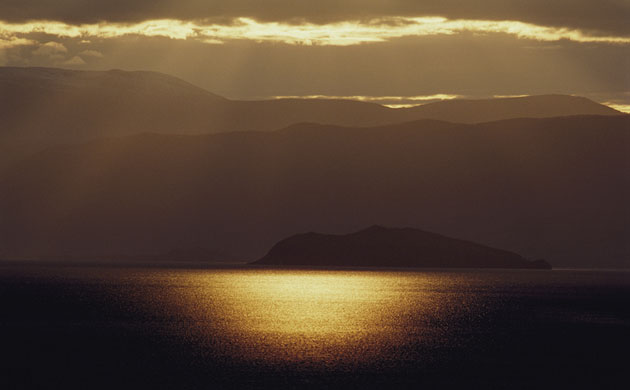
For a long time, Lake Baikal was believed to be unaffected by human activities, thanks to its unique self-cleansing ecosystem whereby the endemic zooplankton Epischura baicalensis suck particles of toxic waste out of the lake and clean the water. However, studies have now shown that the Epischura do not neutralise contamination after all but pass it on to other animals instead. Photograph: Sarah Leen/guardian.co.uk
....
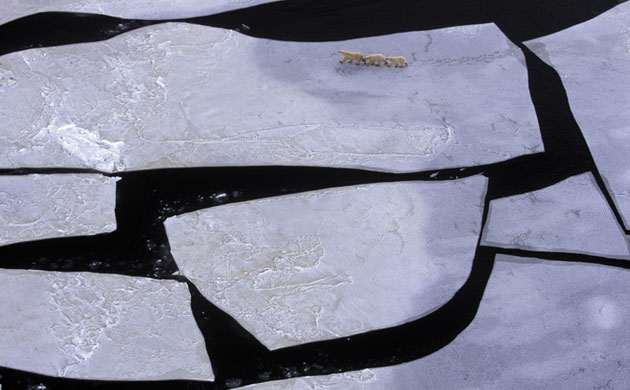
In Western Hudson Bay, the ice now breaks up three weeks earlier than it did in the early 1970s. Starvation has already reduced the survival rate of cubs and young bears, and made bears of all ages less healthy. Within the next 35 to 50 years, a decline in the overall polar bear population of more than 30% is expected, and within 100 years they may become extirpated from most of their geographic range. Photograph: Norbert Rosing/guardian.co.uk
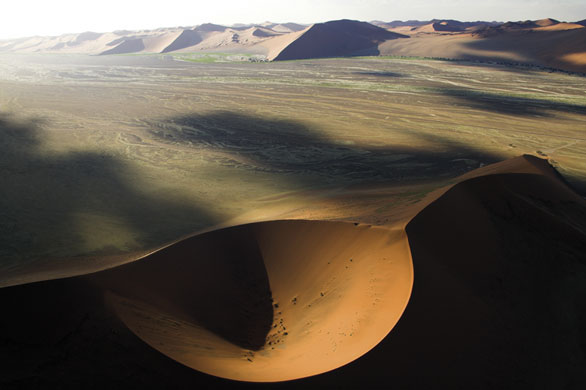
... It is estimated that a temperature rise of 2.1ºC would wipe out 41-51% of Namibia’s unique flora and wildlife. Within the next 80 years, temperatures are projected to rise by up to 3.5ºC. Photograph: Michael Poliza/guardian.co.uk
....
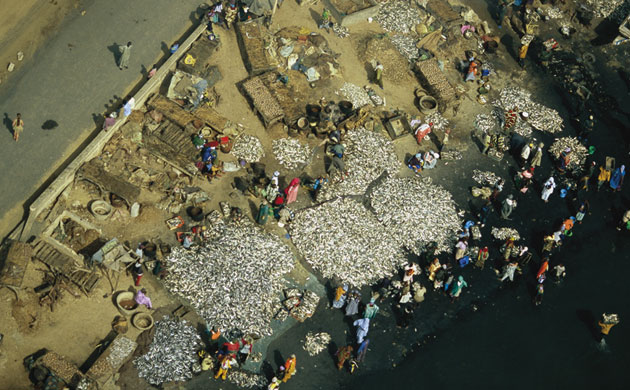
Saint-Louis is extremely exposed to flooding from the river, high tides and periodic heavy rainfall. Rapid urbanisation has forced many poor people to set up home on long dried-out riverbeds – virtually uninhabitable due to the risk of floods and landslides. Poor infrastructure and inadequate drainage networks are also core problems. With the sea level rising and more intense rainfall events predicted, flooding is expected to occur more frequently, with each new flood a further nail in the coffin of an ailing city and a further blight on the lives of already impoverished families and communities. Photograph: Bobby Haas/guardian.co.uk
.... Photograph: Sakis Papadopoulos/guardian.co.uk
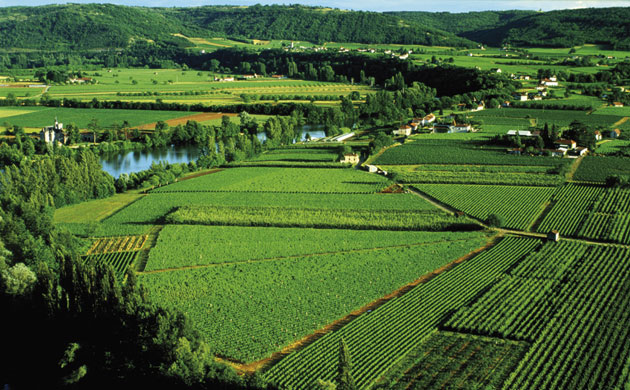
....
Summer temperatures are projected to rise by more than 6°C in the south of France by 2070-2099, which could put an end to traditional wine production in Cahors and many other parts of the country. Photograph: Jeremy Walker/guardian.co.uk
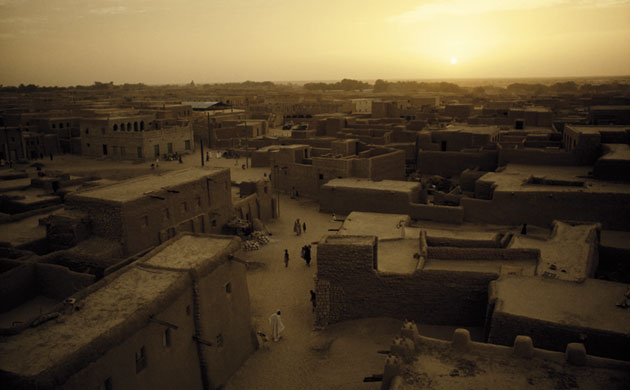
..... Photograph: James P. Blair/guardian.co.uk