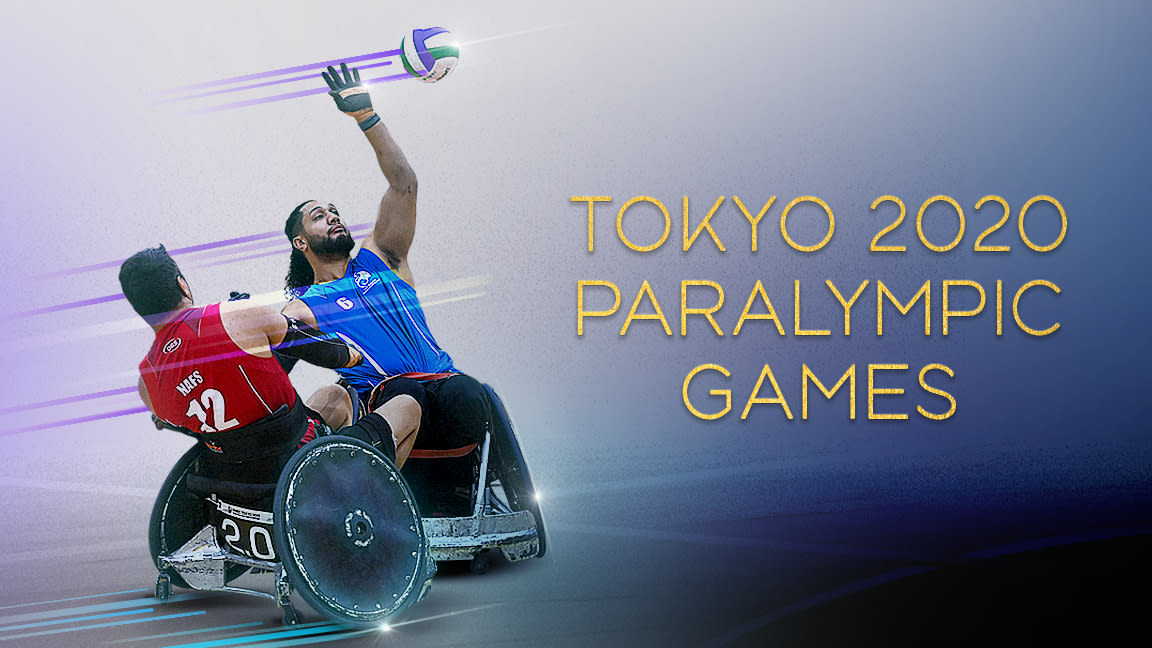
As the delayed Tokyo Paralympics finally open on Tuesday, University of Auckland professor Toni Bruce gives us 10 things to think about around the storytelling of the Games.
If we think of sports media as the storytellers of our time, it’s important to consider what story they are telling us about the Paralympics and Paralympians. I’ll be watching closely to see how our evolving understandings of disability sport reveal themselves in the live and online news coverage.
1. A win for women’s sport
The Paralympics, like the Olympics, offer another great chance to watch Kiwi sportswomen in action. My research on New Zealand news coverage of the Paralympic Games since 2008 reveals that gender inequality is not a major factor. In fact, sportswomen usually get more coverage than men. New Zealand’s best-known and most successful Paralympian is Sophie Pascoe, whose record 15 medal haul is likely to increase at her fourth Games.
2. Gender spread
Media are interested in the performances of men from many countries - 25 percent of the stories at the 2016 Rio Paralympics went to overseas males. But startlingly, they are uninterested in women from other countries – 90 percent of female stories went to Kiwi women. This suggests sportswomen are interesting as national representatives but sportsmen are interesting as athletes.
3. Tunnel vision
The media often have a narrow focus on one or two athletes. This pattern is worth looking out for, because it appears in Olympics coverage as well. Although many athletes receive a few stories and images, media often identify a favourite. In 2016, Pascoe and blade runner Liam Malone were the standouts. Pascoe was clearly the face of the Paralympics. With 33 images, she appeared in over 25 percent of all Paralympic photographs, and 50 percent of images of sportswomen. She even earned her own cartoon. Malone accounted for 57 percent of all images of sportsmen.
4. Growing public interest
We’ve come a long way from the early 2000s when an Olympic journalist claimed “No-one is interested. No-one wants to watch.” The TV audience has grown by 127 percent since 2004, and the 2016 Games smashed previous records, with over 4 billion viewers in over 150 countries, and over a billion viewers on digital media channels. TVNZ’s coverage attracted 2.2 million viewers.
5. Billing as a major event
From no live coverage at all in 2000 - only a measly two-hour daily highlights package - we now have daily live coverage from noon to 1am on TVNZ Duke, and highlights packages on TV One, TVNZ OnDemand and Attitude Live. One News has sent a reporter and camera operator to Tokyo, and two former Paralympians - swimmer Rebecca Dubber and wheelchair basketballer Grant Sharman - will join the live studio crew. All Kiwi Paralympians’ events will be shown live, with some delayed if two events clash. This is all good news, but the single channel of live coverage pales in comparison to Sky’s 12 channels of live Olympic coverage.
On the news side, 2,000 media were accredited to cover the 2016 Games (Covid-19 restrictions reduced access this year). The Herald and Stuff will both provide a dedicated Paralympics section online - a first for Stuff whose 2016 Paralympics coverage appeared under the Olympics tab. These decisions, and the growing TV audience, show how far the Paralympics have come in the public and media imagination since the early 2000s.
6. Closing the gap
The gap between the amount of Olympic and Paralympic news coverage is closing. In 2008, one New Zealand newspaper editorial defended the paper against public complaints by claiming Paralympic media coverage “has been more generous than remiss.” However, my analysis showed a huge discrepancy between the two events that year. The Olympics received 37 times more coverage despite only sending six times more athletes, and winning fewer medals. Positively, the discrepancy is decreasing as news moves online where space is not such a barrier. In 2012, it dropped from 37 to 17 times more Olympic than Paralympic news stories.
7. Athletes as athletes
Just as sportswomen are slowly being accepted as athletes rather than as female athletes, Kiwi Paralympians are often presented as athletes rather than as disabled athletes. Journalists and broadcasters present them primarily as New Zealanders winning on the world stage, and images focus on the black uniform with its visible silver fern, or highlight medals, the podium and joyous celebrations immediately after winning medals. This coverage closely aligns with coverage of able-bodied elite athletes.
In these stories, Kiwi Paralympians are presented primarily as athletes, with images that minimise or only discreetly highlight their disabilities. For example, in 2008 and 2012, less than one-third of photographs showed their disability. This coverage highlights success and nationalism in ways that make disability disappear, but also suggests some media discomfort in showing Kiwi athletes’ disabilities.

In 2016, this pattern was intensified by the constraints of the cropped thumbnail images that promote each online news article: only 18 percent showed disability. A good example was thumbnails of Malone, which were often from the waist up, although clicking on the article led you to the full images showing his running blades.
8. The exotic others
Paralympians from other countries are often represented as exotic others far removed from normality, via images of athletes with multiple limb disabilities competing without technological support, and captions that briefly note the athlete’s name and event. This pattern was strong in 2008, less visible in online images in 2012 and very rare by 2016. However, although the percentage of images highlighting overseas athletes’ disabilities dropped steadily - from 88 percent in 2008 to 44 percent in 2016 - the focus on visible disabilities remained significantly higher than for Kiwi Paralympians.
9. Normalising disability
There is some evidence that news media may be starting to normalise disability as integral to Paralympic performance. When I dived deeper into the 2016 stories, it became clear that the coverage acknowledged Paralympians as athletes and disabled. This shift is a form of normalisation, where disability is positively represented as an important aspect of a Paralympian’s athletic identity, rather than as something that moves them further away from being seen as one of us.
A good example is a story about an Egyptian table tennis player that appeared to exoticise him with the headline “The table tennis player with no arms” and a thumbnail that highlighted him playing with the table tennis bat in his mouth. In contrast to previous Paralympics, where such images usually appeared without a story, the full article was substantive, with live footage and three action photographs.
10. More diverse stories
The overwhelming focus on photographs of medal-winners that I observed in 2008 – 55 percent highlighted celebration, medals and winning - had dropped to 28 percent in 2016. This suggests media are finding ways to expand their depth and breadth of coverage. Even with constrained ‘people’ resources, the physical limitations of print pages no longer limit the number of stories that can be told.
Paralympians have won more medals than Olympians at every Summer Games since 1992. Even in 2016, with an Olympic medal haul of 18, Paralympians still came out on top, winning 21. Will New Zealand’s largest Paralympic team raise their game even further to exceed the Olympic team’s highest ever medal haul of 20 at Tokyo 2020? I look forward to finding out.